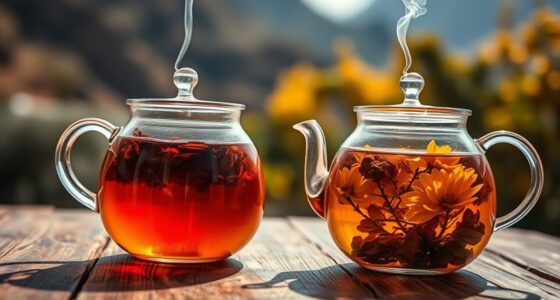
Oolong tea varies from lightly oxidized to heavily oxidized, impacting the flavor and aroma. Light oolongs, with about 10-30% oxidation, are fresh, floral, and delicate, emphasizing sweetness and clarity. Dark oolongs, with 50-70% oxidation, are richer, roasted, and complex, often with toasty or nutty notes. Understanding these differences helps you pick the right tea for your taste. If you keep exploring, you’ll discover even more about what makes each variety unique.
Key Takeaways
- Light oolongs have 10-30% oxidation, resulting in floral, fresh, and delicate flavors.
- Dark oolongs undergo 50-70% oxidation, developing deeper, roasted, and caramel-like taste profiles.
- Oxidation level influences aroma, with lighter varieties being more floral and darker ones more robust.
- Processing methods vary: light oolongs are minimally oxidized and often pan-fired, while dark oolongs are extensively oxidized and roasted.
- The oxidation spectrum between green and black teas creates diverse flavor profiles, with oolongs filling the middle ground.
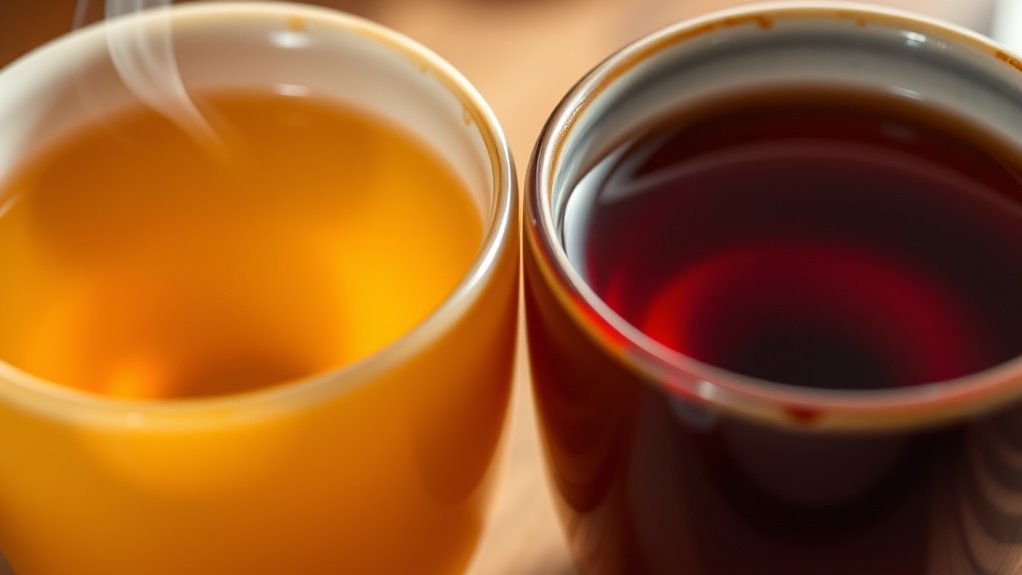
Have you ever wondered what gives oolong tea its unique flavor and aroma? The answer lies in its oxidation level, which directly influences its flavor profiles and processing techniques. Oolong teas sit somewhere between green and black teas, with oxidation levels ranging from about 10% to 70%. This variation creates a broad spectrum of tastes, from light and floral to rich and toasty. The processing techniques are key to achieving these different oxidation levels, as they determine how the leaves are handled after harvest. oxidation level plays a crucial role in shaping the final character of the tea.
Oolong tea’s flavor and aroma are shaped by its oxidation level, ranging from 10% to 70%, creating diverse taste profiles.
When making lightly oxidized oolongs, the process involves minimal exposure to air. After plucking, the leaves are withered to reduce moisture, then gently bruised to initiate oxidation. The oxidation is halted relatively early—often by pan-firing or steaming—to preserve fresh, green, and floral flavor notes. These teas tend to have a delicate aroma, often described as fresh, grassy, or with hints of orchid and lily. The flavor profiles are subtle, emphasizing sweetness and a light, smooth mouthfeel. These light oolongs are often enjoyed for their clarity and freshness, making them popular among those who prefer a more delicate tea experience.
On the other end of the spectrum are dark or heavily oxidized oolongs. Here, the leaves undergo a longer oxidation process, sometimes reaching 50-70%. After harvesting, the leaves are withered and then intentionally exposed to air for extended periods, allowing enzymes to react and develop deeper flavors. Sometimes, the leaves are roasted or fired multiple times during processing to enhance complexity. The result is a tea with robust, toasty, and even caramel-like flavor profiles. These darker oolongs often have a richer aroma, with notes of honey, roasted nuts, or dried fruit. The processing techniques used for these teas emphasize oxidation and roasting, creating a bold contrast to the lighter varieties. Their full-bodied taste and complex aroma make them ideal for those who enjoy a more intense tea experience.
In essence, the difference between light and dark oolongs comes down to how much the leaves are oxidized after harvest. The processing techniques tailored to each level of oxidation shape the flavor profiles, aroma, and overall character of the tea. Whether you prefer the bright, floral notes of a lightly oxidized oolong or the deep, roasted richness of a darker variety, understanding oxidation helps you appreciate the artistry behind each cup. It’s a fascinating journey through the nuances of tea processing, revealing how subtle changes can transform leaves into a complex, aromatic beverage that delights the senses.
Frequently Asked Questions
How Does Oxidation Affect Oolong Tea’s Health Benefits?
Oxidation impacts oolong tea’s health benefits by altering its antioxidant levels. As oxidation increases, it can reduce some beneficial compounds, but darker oolongs often develop unique antioxidants that support your health. Lightly oxidized oolongs tend to retain more of their original tea benefits, like boosting your metabolism. So, depending on the oxidation level, you’ll notice differences in the tea benefits and how they contribute to your overall health.
Can Oxidation Levels Be Customized During Tea Processing?
Yes, you can customize oxidation levels during tea processing through precise oxidation control. Tea masters use various processing techniques, such as adjusting fermentation time and environmental conditions, to achieve desired oxidation levels. By carefully managing these steps, they produce oolong teas with specific flavor profiles and health benefits. This customization allows for a wide range of oolong teas, from lightly oxidized to darker, more oxidized varieties.
What Storage Methods Preserve Oolong Oxidation Quality?
Did you know that properly stored tea can stay fresh for up to a year? To preserve oolong oxidation quality, you should store your tea in airtight, opaque containers that block light, air, and moisture. Keep these containers away from strong odors and heat sources. Proper storage maintains tea freshness, preserves its flavor, and keeps the oxidation level consistent. This way, your oolong stays delightful for longer.
Are There Differences in Flavor Longevity Between Light and Dark Oolongs?
You’ll notice that dark oolongs tend to have better flavor retention and aroma longevity than light ones. Their richer oxidation preserves more complex flavors, which last longer over time. Light oolongs, with less oxidation, might lose their delicate aroma and nuanced taste quicker. To maximize freshness, store your oolongs in airtight containers away from light, heat, and moisture, ensuring you enjoy their ideal flavor and aroma over time.
How Does Oxidation Influence the Brewing Process and Temperature?
Oxidation rate directly impacts your brewing process and temperature choices. Higher oxidation, like in dark oolongs, requires slightly cooler water and longer steeping to prevent bitterness. Conversely, lighter oolongs with lower oxidation need higher temperatures and shorter steeping to release their delicate flavors. Adjust your brewing temperature based on oxidation level to maximize flavor and aroma, ensuring a balanced cup every time.
Conclusion
Think of oolong oxidation as life’s journey—light oxidation shines like a gentle sunrise, revealing fresh beginnings and subtle nuances, while dark oxidation mirrors a twilight sky, rich with depth and mystery. Your choice between them reflects your taste and mood, guiding you through a landscape of flavors and stories. Embrace the symbolism, and let each sip be a step in your personal adventure—where every leaf whispers a tale, and every cup fuels your exploration.