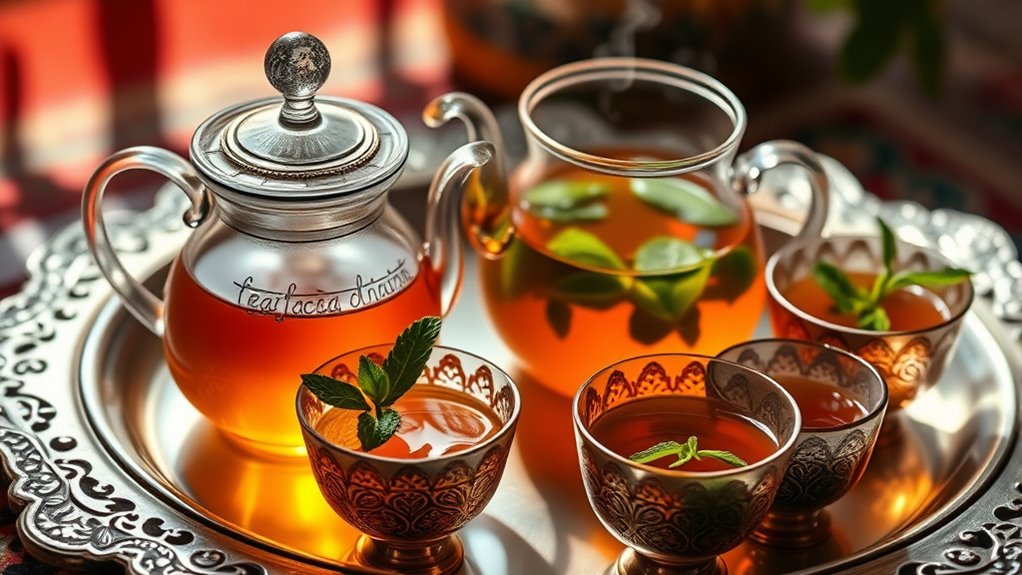

Moroccan mint tea, called “Moroccan whiskey,” is a symbol of hospitality and community, steeped in important rituals. You pour the tea from a height to show generosity, and offering seconds reflects kindness. The preparation involves fresh mint, green tea, and careful pouring to aerate and develop flavor. Serving with respect and warmth strengthens social bonds. To discover more about this colorful tradition and its unique etiquette, keep exploring how locals celebrate this sweet custom.
Key Takeaways
- Moroccan mint tea, known as “Moroccan whiskey,” symbolizes hospitality and social bonding in Moroccan culture.
- The traditional preparation involves pouring from a height to aerate the tea and enhance flavor.
- Serving tea with both hands demonstrates respect and warmth towards guests.
- Rituals like pouring from a height and offering seconds foster community and emotional connection.
- Modern variations include herbal infusions, vibrant presentation, and personalized sweeteners for enhanced enjoyment.
The History and Cultural Significance of Moroccan Mint Tea
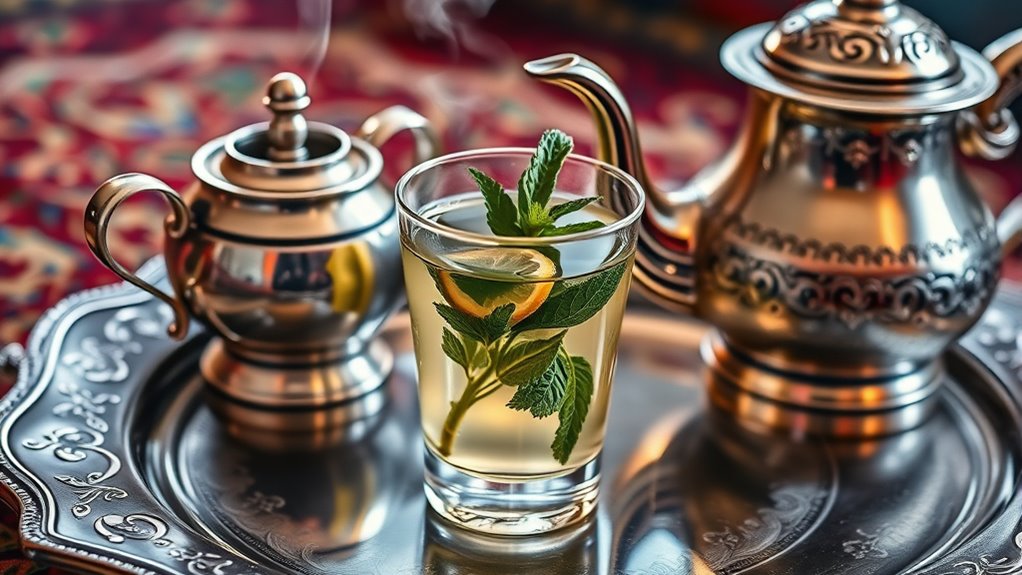
Moroccan mint tea, often called “Moroccan whiskey,” holds a special place in the country’s social and cultural life. When you participate in a traditional tea ceremony, you’re engaging in more than just drinking; you’re part of a centuries-old ritual that fosters social bonding. Sharing tea creates an environment of warmth and hospitality, where conversations flow easily. The ceremony often involves specific gestures, like pouring from a height to aerate the tea, symbolizing generosity. For Moroccans, tea is a symbol of friendship, respect, and community. It’s customary to serve guests with patience and care, emphasizing the importance of relationships. Over time, this tradition has become a cornerstone of Moroccan identity, uniting people through a simple yet meaningful act. The ritualistic aspects of Moroccan mint tea also highlight its role in promoting emotional intelligence and social skills within the community. Additionally, the cultural significance of tea involves intricate social customs that reinforce community ties and shared values. Incorporating traditional brewing methods enhances the authenticity and cultural depth of the experience. Moreover, understanding the history of tea culture in Morocco reveals how it has evolved alongside societal changes, enriching its symbolic meaning. Exploring personal development techniques, such as mindfulness during the ceremony, can deepen the appreciation of this cultural tradition.
The Traditional Preparation of Moroccan Mint Tea
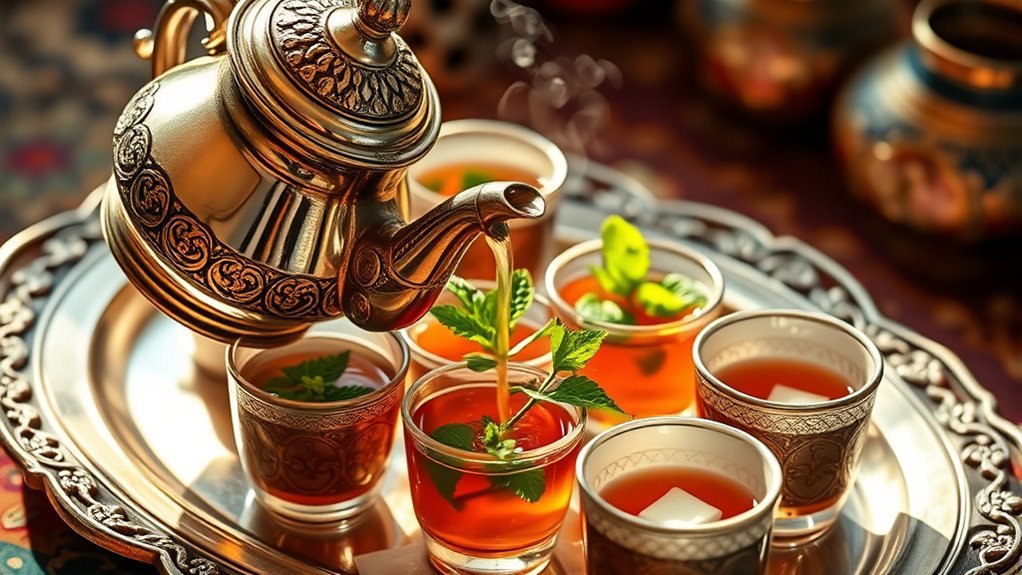
Preparing authentic Moroccan mint tea involves a deliberate and skilled process that highlights hospitality and tradition. Start by selecting fresh mint leaves—preferably young, fragrant sprigs. Boil water and pour a small amount into the teapot to warm it, then discard the water. Add a generous teaspoon of green tea leaves, followed by more hot water, allowing it to steep briefly. Next, pour the tea into glasses from a height, creating a frothy top and aerating the brew. Repeat this pouring process a few times to develop flavor and foam. This traditional tea-making techniques enhances the cultural experience and ensures authenticity, while paying attention to proper brewing methods helps preserve the tea’s flavor and aroma. Incorporating mindful handling of ingredients can also elevate the overall quality of the tea and deepen the cultural appreciation. Finally, add a handful of mint leaves and a generous amount of sugar, then serve by pouring tea from a height into small glasses.
Symbolism and Etiquette Surrounding Tea Serving

Serving mint tea in Morocco is more than just offering a refreshment; it’s a gesture of respect and hospitality. The tea etiquette reflects the deep hospitality symbolism embedded in Moroccan culture. When you serve tea, do so with both hands, pouring from a teapot held high to create a gentle flow. Present the glass with the right hand, using your left hand to support the base, demonstrating politeness. Wait for your guests to start drinking before taking your first sip, showing patience and respect. Offering seconds signals generosity, while declining politely indicates contentment. Maintaining a warm, welcoming attitude during tea service reinforces the cultural importance of community and kindness. Through these customs, you honor Moroccan traditions, emphasizing that tea is a symbol of friendship and respect.
Variations and Modern Twists on the Classic Recipe
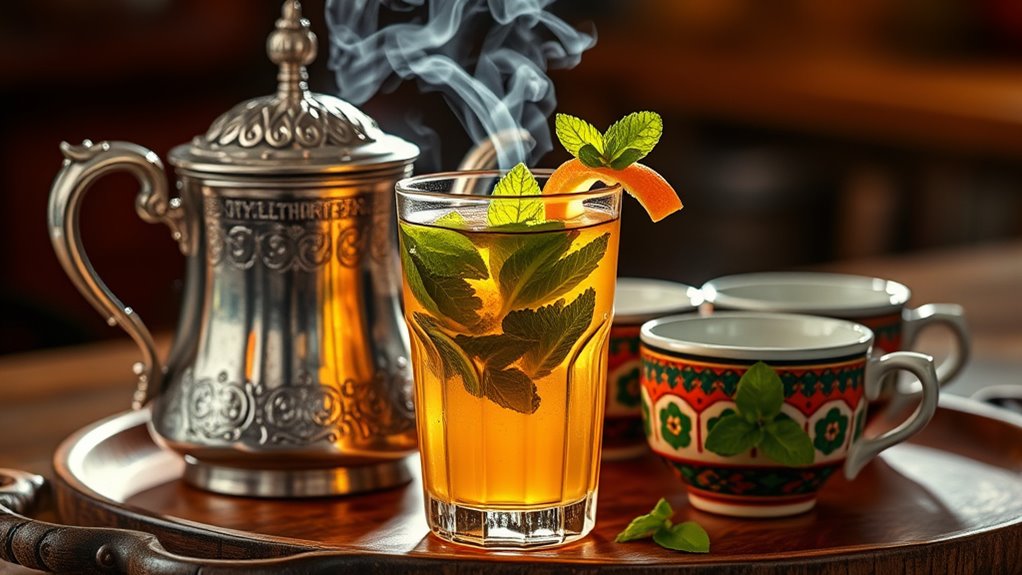
While the traditional Moroccan mint tea remains beloved, many modern variations incorporate unique ingredients and techniques to suit contemporary tastes. You might explore herbal infusions like chamomile, verbena, or hibiscus to add new flavors and health benefits. Some prefer using loose leaf teas or adding fresh fruit slices for a vibrant twist. Modern presentations often feature stylish glassware or layered serveware, making the tea visually appealing. You can experiment with different sweeteners, from honey to agave, to customize sweetness levels. Additionally, understanding tea storage can help maintain the freshness of your ingredients, ensuring the best flavor in your creative recipes. Proper storage methods can prolong the shelf life of your teas and herbs, preserving their aromatic qualities. These variations allow you to maintain the essence of hospitality while embracing innovation. By blending tradition with creativity, you create a personalized tea experience that also benefits from nutrition awareness, which can enhance your understanding of ingredient health profiles.
Experiencing Moroccan Mint Tea: Tips for Authentic Enjoyment

To truly enjoy Moroccan mint tea, focus on appreciating its aroma, vibrant color, and balanced sweetness. Embrace proper tea etiquette by pouring from a height to aerate the tea and offering it with a welcoming smile. When selecting mint varieties, choose fresh spearmint or Moroccan mint for the authentic flavor. To enhance your experience:
- Savor the aroma before taking a sip to deepen your appreciation.
- Sip slowly, appreciating the harmonious blend of mint and sweetness.
- Use traditional glasses to enjoy the tea’s vibrant hue and enhance the visual appeal.
Pay attention to cultural cues, such as serving with both hands or offering seconds, to fully immerse yourself in the tradition. Being mindful of the proper tea service enhances the cultural experience and shows respect for the tradition. Incorporating fresh mint, which is essential for the authentic flavor, can elevate your tea-drinking ritual to a new level. Additionally, understanding the tea preparation process can help you appreciate the skill and tradition behind each serving. Properly selecting and preparing the quality ingredients ensures a richer and more memorable experience. Paying attention to industry trends can also help you explore innovative ways to enjoy this timeless beverage.
Frequently Asked Questions
What Health Benefits Does Moroccan Mint Tea Offer?
You might wonder about the health benefits of Moroccan mint tea. It offers antioxidant properties that help protect your cells from damage and boost overall health. Plus, it supports digestive health, soothing indigestion and easing bloating. Drinking this tea can also keep you hydrated and provide a calming effect. So, enjoying Moroccan mint tea isn’t just a cultural experience but a way to promote your well-being naturally.
How Do Regional Differences Influence the Flavor of Moroccan Mint Tea?
Imagine taking a sip of Moroccan mint tea and noticing how regional spices and water quality shape its flavor. You’ll find that different regions add unique spices, like cinnamon or anise, which influence taste. Water quality also plays a role, affecting the tea’s smoothness and aroma. These regional differences create a rich variety, making each cup a distinctive experience that reflects local traditions and ingredients.
Can Moroccan Mint Tea Be Made With Herbal Substitutes?
You can definitely make Moroccan mint tea with herbal alternatives, which offers unique flavor variations. Instead of traditional mint, try basil, thyme, or lemongrass to create a fragrant, invigorating brew. These herbal substitutes bring different aromas and tastes, giving you a personalized twist on the classic. While it might not have the exact same taste, experimenting with herbal alternatives allows you to enjoy a delicious, aromatic tea experience tailored to your preferences.
What Are Common Accompaniments Served With Moroccan Mint Tea?
You’d think a simple cup of tea wouldn’t need much, but in Morocco, it’s a ritual. You serve it with sweet pastries that seem to whisper, “Indulge,” and fresh fruits that brighten every sip. These accompaniments turn a humble brew into a celebration, inviting you to linger longer. So, when offering Moroccan mint tea, don’t forget the sweet pastries and fresh fruits—they’re the perfect partners to elevate the experience.
How Has Moroccan Mint Tea Evolved in Contemporary Global Cuisine?
You’re curious about how Moroccan mint tea has evolved globally. Today, it blends into contemporary cuisine through fusion cocktails, combining traditional flavors with spirits like gin or rum. Chefs and bartenders present it with a modern twist, using innovative glassware and garnishes. This evolution keeps the tradition alive while appealing to modern tastes, making Moroccan mint tea a versatile and stylish addition to global culinary experiences.
Conclusion
Think of Moroccan mint tea as a warm, inviting bridge connecting hearts and traditions. With each sip, you’re stepping into a centuries-old dance of hospitality and friendship. Embrace the ritual, let its sweet aroma envelop you, and realize that every cup is a story waiting to be shared. Just like a cherished melody, this tea invites you to pause, connect, and savor life’s simple joys—one fragrant sip at a time.