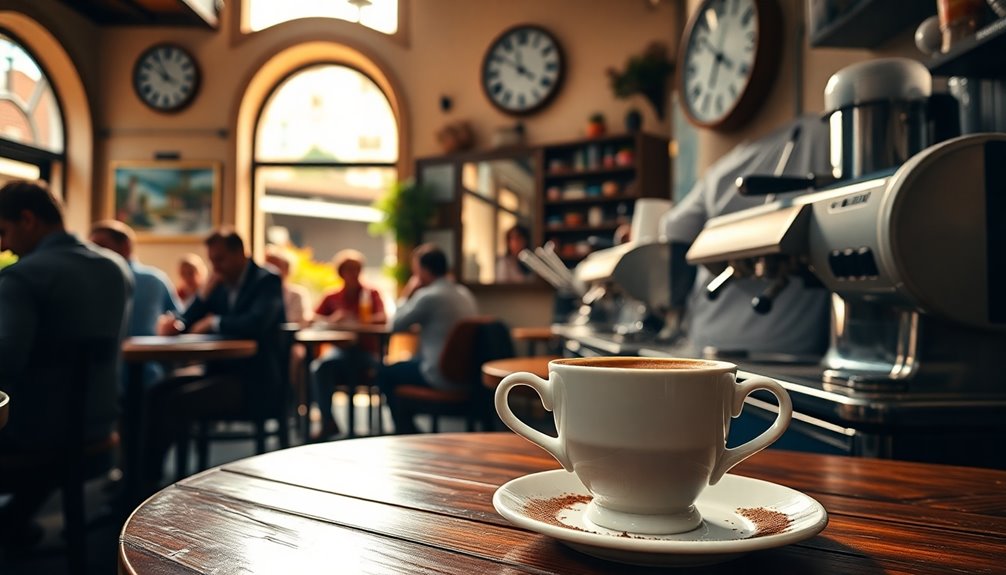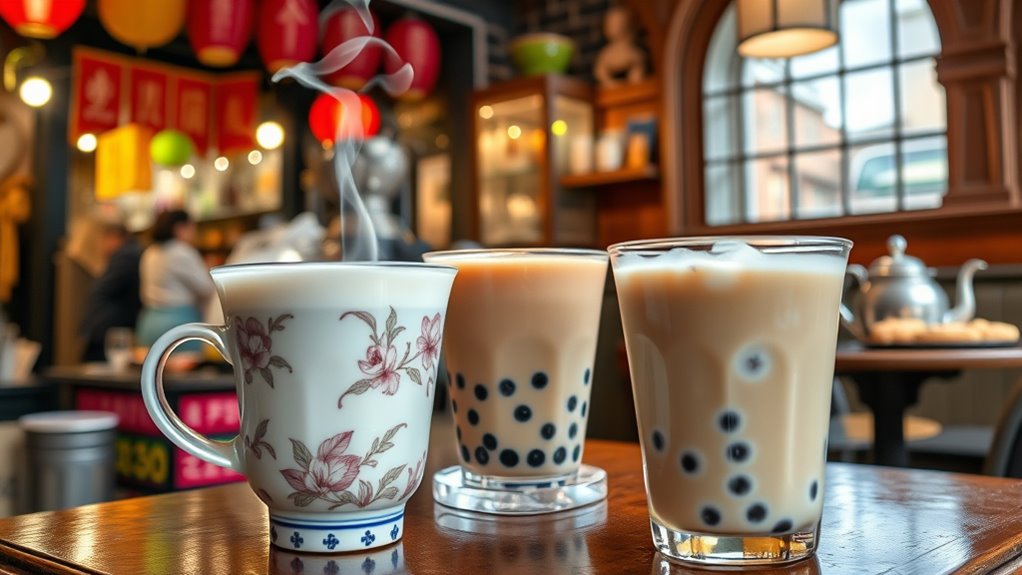

Discover how milk tea reflects each region’s culture. In Hong Kong, it’s known for smooth, refined brewing using meticulous techniques, symbolizing craftsmanship and colonial history. Taiwan’s milk tea is playful and innovative, blending traditional flavors with modern twists like bubble pearls and fruit syrups, creating a vibrant social scene. The UK favors strong black tea with milk, evolving from afternoon teas to flavored variations. Keep exploring to see how these traditions shape global milk tea styles.
Key Takeaways
- Hong Kong milk tea emphasizes refined brewing techniques, smooth texture, and colonial heritage, symbolizing local identity.
- Taiwanese milk tea is characterized by innovation, customizable flavors, and a social café culture centered on community and variety.
- British milk tea traditionally features strong black tea with milk, evolving to include flavor variations like vanilla and caramel.
- Cultural influences shape regional milk tea styles, blending tradition, colonial history, and modern trends across Hong Kong, Taiwan, and the UK.
- Each region contributes uniquely to global milk tea diversity through distinct techniques, ingredients, and social practices.
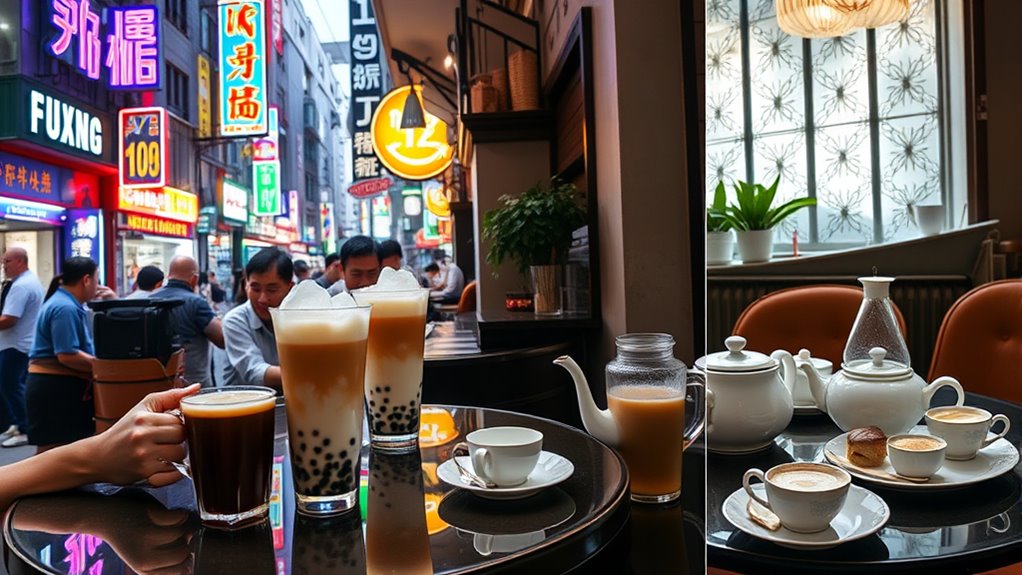
Have you ever wondered how milk tea became a global sensation? It all starts with the art of tea blending, which is central to how different cultures put their unique stamp on this beloved drink. When you think about milk tea, you might picture a simple mix of tea and milk, but in reality, its journey involves a complex interplay of cultural influences that shape each region’s version. In Hong Kong, for example, milk tea is crafted with a meticulous tea blending process, combining strong black teas like Ceylon or Assam with evaporated or condensed milk. This process results in a smooth, rich flavor that balances the robustness of the tea with the creamy sweetness of the milk. The cultural influences here are evident in the tradition of “silk-stocking” or “pantyhose” tea strainers, used to filter the tea multiple times, creating an incredibly smooth texture. This technique highlights the importance of precision and refinement in Hong Kong’s milk tea culture, which has become a symbol of local identity and a reflection of the city’s colonial history. Additionally, the detailed tea blending techniques used in Hong Kong exemplify how craftsmanship elevates the beverage to an art form.
Meanwhile, in Taiwan, tea blending takes on a different character, influenced heavily by local preferences for floral and fruity notes. Bubble tea, or pearl milk tea, originated here, combining black or green tea with tapioca pearls and often flavored with fruit syrups or jasmine. The Taiwanese approach emphasizes innovation and customization, allowing you to choose from a variety of toppings, sweetness levels, and tea bases. The cultural influences are evident in the playful, inventive spirit that characterizes Taiwanese milk tea culture. It’s not just about the taste but also the experience and social aspect, where cafes become hubs of community and creativity. The regional take on tea blending involves balancing traditional brewing techniques with modern twists, making Taiwanese milk tea a global phenomenon.
Across the Atlantic, the UK’s relationship with milk tea has evolved from traditional afternoon teas to more casual, modern interpretations. Historically, British tea culture emphasized black tea and milk, often brewed strong and served with a splash of milk. Over time, coffee shops and cafes introduced new ways to enjoy milk-infused teas, blending different types of teas and experimenting with flavors like vanilla or caramel. The cultural influences here are rooted in the colonial history of tea trade, which introduced a variety of teas and methods of preparation. Today, the UK’s milk tea scene blends tradition with contemporary trends, where tea blending involves infusing teas with flavors or adding milk alternatives to cater to diverse tastes. These regional variations demonstrate how cultural influences shape each society’s approach to milk tea, transforming it from a simple drink into a reflection of local history, preferences, and innovation. Whether it’s the refined craftsmanship of Hong Kong, the playful inventiveness of Taiwan, or the classic adaptability of Britain, each culture contributes to the rich, global tapestry of milk tea.
Frequently Asked Questions
How Did Milk Tea Originate in Each Region?
You discover that in each region, milk tea originated from unique tea flavorings and brewing techniques. In Hong Kong, locals mixed strong black tea with condensed milk for a creamy texture, while Taiwanese tea shops perfected the art of balancing tea flavorings with chewy tapioca. In the UK, traditional brewing techniques created a robust, milky brew, often enjoyed with a splash of milk. Each region’s approach reflects its cultural preferences and brewing styles.
What Are Regional Variations in Milk Tea Recipes?
Think of milk tea as a storybook with regional chapters. In Hong Kong, you enjoy silky, concentrated brews in tall glasses, emphasizing bold tea flavor profiles. Taiwan offers creamy, frothy drinks often served in ceramic cups, highlighting aromatic black teas. Meanwhile, in the UK, you get robust, milky brews in traditional teapots, balancing strong tea with milk. Each variation reflects local tastes and unique serving vessel styles, crafting a diverse global narrative.
How Do Cultural Customs Influence Milk Tea Consumption?
Your cultural customs shape how you enjoy milk tea, influencing flavor pairings and tea serving etiquette. For example, in some cultures, you might prefer sweetened milk tea with specific snacks, while others serve it plain during formal occasions. Tea etiquette guides how you hold the cup or stir, reflecting respect and tradition. These customs create unique experiences, making milk tea more than just a beverage—it’s a reflection of cultural identity.
Are There Specific Etiquette Rules for Drinking Milk Tea?
Yes, there are specific tea etiquette and drinking manners you should follow. When drinking milk tea, hold the cup gently and avoid slurping loudly to show respect. If served with a lid, remove it carefully to prevent spills. Use a straw if provided, but in formal settings, sip directly from the cup. Always thank the host after receiving your drink, demonstrating good manners and appreciation.
How Has Globalization Affected Traditional Milk Tea Practices?
They say “change is the only constant,” and globalization proves it’s true for milk tea practices. You now see fusion beverages blending traditional flavors with new ingredients, creating exciting twists. Social rituals evolve as cafes incorporate international styles, making milk tea a shared experience across cultures. You’re part of a global community, where local customs adapt, yet the essence of enjoying a warm cup remains a cherished tradition worldwide.
Conclusion
So, whether you’re sipping Hong Kong’s silky milk tea, slurping Taiwan’s tapioca pearls, or questioning the UK’s obsession with milky brews, one thing’s clear: milk tea isn’t just a drink, it’s a cultural passport. It’s the liquid love letter from East to West, with a splash of sugar and a dash of tradition. Next time you take a sip, remember—you’re part of a global milk tea rebellion, one bubble at a time. Cheers!