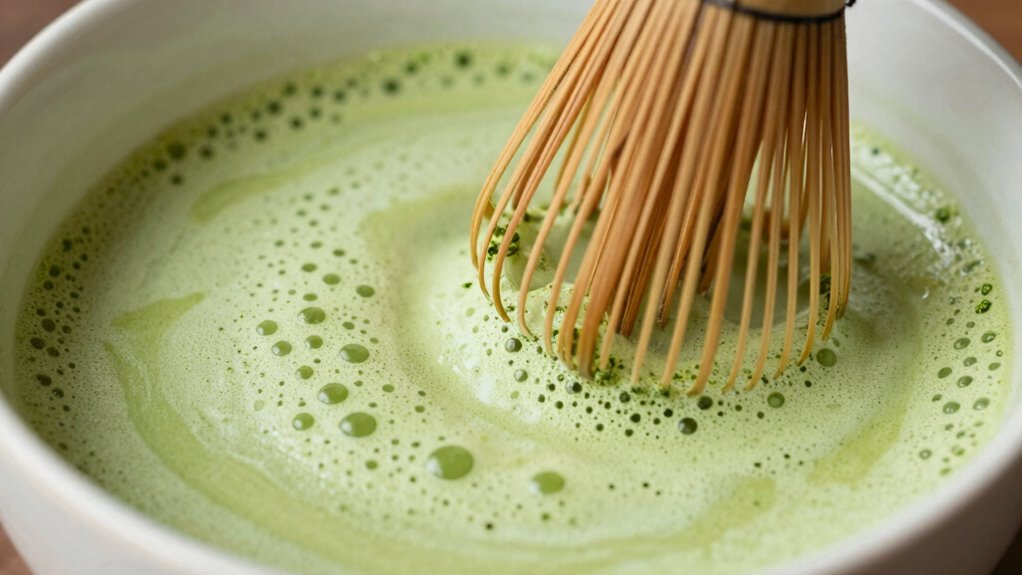

Your choice of matcha tools profoundly impacts its texture, clump formation, and foam quality. A bamboo whisk with fine tines helps aerate the tea smoothly, preventing lumps and creating a rich foam. Using a wide, rounded bowl allows you to whisk effectively without over-agitating the mixture. Proper technique, combined with the right tools, guarantees a silky, well-blended matcha with perfect foam. Keep exploring to discover how to optimize your matcha experience even further.
Open a free Amazon Business account
Business pricing, bulk buying and tax-exempt orders.
As an affiliate, we earn on qualifying purchases.
Key Takeaways
- The type and quality of the whisk, especially bamboo vs. metal, influence how effectively air is incorporated into the matcha.
- Proper whisking technique, including zigzag motions, prevents lumps and creates a smooth, frothy foam.
- Wide, rounded bowls allow better control and even dispersal, reducing clumps and enhancing foam formation.
- Light-colored or transparent bowls help monitor clump formation, aiding in achieving a smooth texture.
- Balanced, gentle whisking avoids over-aeration and excessive foam while ensuring a silky, lump-free matcha.
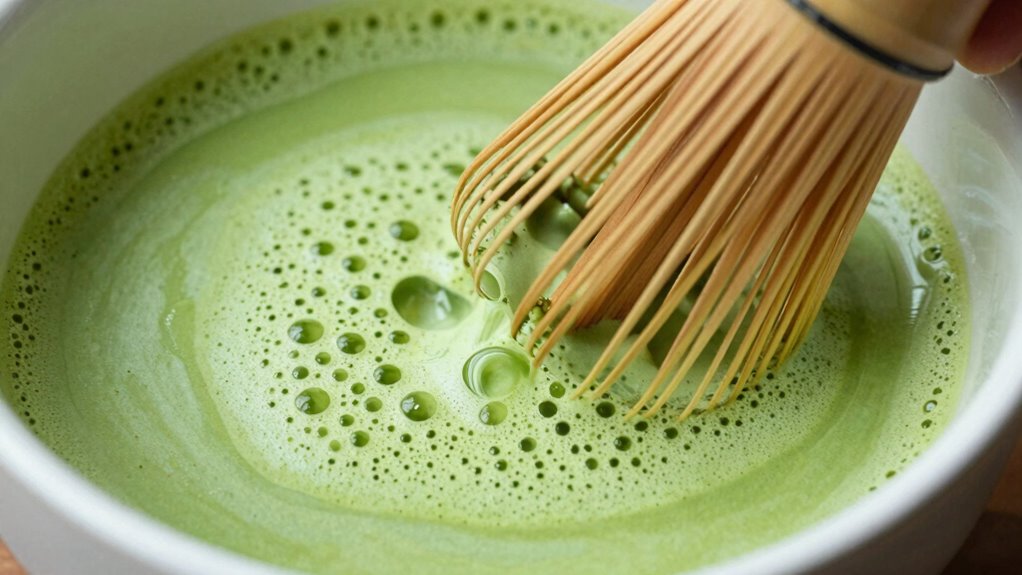
When preparing matcha, the tools you choose directly influence the texture of your tea and overall experience. The way you whisk your matcha powder, the design of your bowl, and even the materials you use all play a role in how smooth, frothy, and vibrant your final drink turns out. Proper matcha whisking, for example, is essential in breaking up clumps and creating the signature foam that makes matcha so enjoyable. A good bamboo whisk, or chasen, with its fine tines, allows you to incorporate air efficiently, producing a creamy foam without over-agitating the powder. The technique matters just as much as the tool; gentle, quick whisking motions help prevent the formation of lumps and activate the powder’s full flavor potential.
The bowl design also impacts the texture. Traditional matcha bowls, or chawan, are usually rounded with a wide opening, which makes it easier to whisk vigorously and control the movement of the whisk. A bowl that’s too narrow or shallow can restrict your whisking motion, leading to uneven mixing or the development of stubborn clumps. Conversely, a spacious, well-crafted bowl provides enough room for smooth, circular whisking motions, ensuring the matcha powder disperses evenly. The material of the bowl — whether ceramic, glass, or porcelain — influences heat retention and how easily you can see the mixture’s consistency. Clear or light-colored bowls allow you to monitor clump formation and foam development, giving you better control over the process.
When you focus on matcha whisking, you notice how the right technique can eliminate lumps that ruin the silky texture you’re aiming for. A quick, zigzag motion or a gentle “M” shape helps break down the powder and incorporate air, creating that desirable foam on top. If you whisk too aggressively, though, you risk over-aerating the tea or creating too much foam, which can alter its mouthfeel. On the other hand, too gentle whisking might leave clumps intact, resulting in a gritty texture. The key lies in finding the balance: steady, controlled whisking with a high-quality bamboo whisk in a well-designed bowl ensures your matcha is smooth, well-blended, and frothy.
As an affiliate, we earn on qualifying purchases.
Frequently Asked Questions
Do Different Matcha Tools Require Specific Cleaning Methods?
Yes, different matcha tools require specific cleaning techniques to maintain their effectiveness and guarantee tool longevity. For example, bamboo scoops should be hand washed gently and dried thoroughly, while metal whisks need rinsing and occasional gentle brushing. Using proper cleaning techniques helps prevent residue buildup, preserves the tool’s quality, and extends its lifespan. Always follow the manufacturer’s instructions for best results and to keep your tools in excellent condition.
How Does Tool Material Impact Matcha’s Flavor?
Did you know that tools made from natural bamboo can enhance matcha’s subtle sweetness? The material impacts flavor, as bamboo offers a neutral taste that doesn’t interfere. Your choice of tool aesthetics and material durability also matter—stainless steel lasts longer and may influence the flavor slightly through metal interactions. Selecting the right material guarantees your matcha retains its delicate flavor, and your tools stay in top condition for consistent enjoyment.
Can Using the Wrong Tool Damage Matcha Powder?
Using the wrong tool can damage matcha powder, especially if it’s not durable or designed for fine powders. You might crush or break the delicate leaves, reducing matcha’s freshness and altering its flavor. Low-quality tools may also introduce unwanted metal or plastic flavors. Choose a sturdy, appropriate whisk or sifter to preserve matcha’s quality, ensuring it stays fresh and maintains its smooth, frothy texture without clumping or flavor compromise.
Are Some Tools Better for Beginners Than Others?
Some tools are better for beginners because they simplify Matcha whisking techniques and feature ergonomic design, making the process easier. Bamboo whisks, for example, are gentle and intuitive, helping you avoid clumps and achieve smooth foam. Look for tools with comfortable handles and balanced weight, which improve control. Starting with a user-friendly whisk allows you to develop your skills without frustration, ensuring a more enjoyable Matcha-making experience.
How Do Storage Conditions Affect Tool Effectiveness?
Storage conditions profoundly impact your matcha tools’ effectiveness. If you keep them in a humid environment, moisture can cause clumping and reduce their performance. An airtight container helps protect tools from humidity and dust, preserving their sharpness and overall function. Make certain your tools are stored in a cool, dry place with low humidity, and always use airtight containers. Proper storage keeps your tools in top condition, making your matcha preparation smoother and more enjoyable.
Conclusion
As you whisk the vibrant green powder, each tool shapes the silky, frothy cloud that dances on your cup’s surface. A bamboo chasen creates delicate, airy foam, while a metal whisk offers a swift, robust blend, reducing clumps effortlessly. With each gentle swirl, you craft a velvety tapestry of flavor and texture, transforming simple matcha into an artful brew. The right tool turns your ritual into a sensory masterpiece, inviting warmth and serenity with every sip.
Flea & tick season Picks
flea and tick prevention
As an affiliate, we earn on qualifying purchases.