Regional spice traditions shape the unique flavors of masala chai, reflecting local ingredients, culture, and history. In North India, bold blends with cardamom and cinnamon are common, while South Indian versions incorporate dried ginger and fennel. These spice mixes are crafted to balance flavor and showcase local tastes. As you explore further, you’ll discover how these regional variations celebrate cultural identity and traditional techniques that make each cup special.

Get coffee and tea gear delivered free — and shop member deals
- Fast, free delivery on millions of items
- Access to Prime Big Deal Days deals on October 6–7
- Prime Video, Amazon Music and more included
Key Takeaways
- North Indian masala chai features bold spices like cardamom, cinnamon, and black pepper, reflecting regional taste preferences.
- South Indian blends incorporate dried ginger and fennel, creating a distinct flavor that highlights local ingredients.
- Spice mixes are crafted to complement regional teas, balancing flavors without overpowering the natural tea essence.
- Traditional recipes and spice combinations are passed down through generations, emphasizing cultural heritage.
- Regional spice traditions symbolize local identity, geography, and community influences, celebrating cultural diversity through tea.

Have you ever wondered what makes masala chai so irresistibly flavorful and comforting? It’s all in the rich tea culture and the unique spice blends that vary from region to region. When you sip a warm cup of masala chai, you’re experiencing more than just a beverage—you’re tasting centuries of tradition and local flavor profiles that define each area’s approach to this beloved drink. The foundation lies in the tea, but it’s the spices that truly make it special, and these vary widely depending on local ingredients, cultural influences, and personal preferences. From the bustling markets of North India to the coastal regions of the south, each place has its own twist on the classic spice mix, creating a tapestry of flavors that tell a story of regional identity.
Masala chai’s flavor varies regionally, reflecting local ingredients, traditions, and cultural influences.
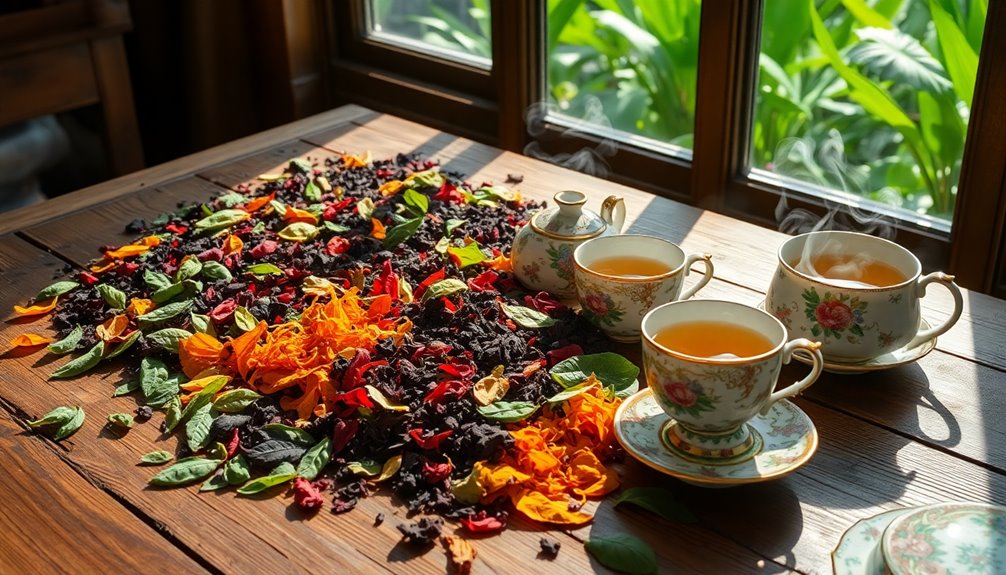
In North India, the spice blends tend to be bold and robust, often including cardamom, cinnamon, cloves, and black pepper. These spices are carefully combined to complement strong black teas like Assam, providing a warming, invigorating experience. In contrast, South Indian versions might incorporate dried ginger or a hint of fennel, emphasizing a slightly different flavor profile that pairs beautifully with their characteristic strong, dark teas. The spice mixes used in these regions are often crafted with a keen sense of balance, ensuring each ingredient enhances the overall flavor without overpowering the tea’s natural qualities. This regional variation in spice blends reflects local tastes and available ingredients, making each cup of masala chai a reflection of its place of origin.
As you explore different regional styles, you’ll notice that the tea culture surrounding masala chai is deeply rooted in social rituals and daily routines. In many parts of India, chai stalls serve as community hubs where people gather to chat, exchange news, or simply enjoy a moment of warmth. The preparation process itself can be a shared experience, with family members passing down recipes and techniques, emphasizing the importance of tradition. The spice blends are often customized, with some adding a touch of nutmeg or star anise, highlighting personal or regional preferences. This diversity in spice combinations not only enhances the flavor but also connects people to their cultural roots, making every cup a meaningful experience. Additionally, modern variations sometimes incorporate innovative techniques, blending tradition with contemporary tastes.
Ultimately, the regional spice traditions behind masala chai reveal a fascinating blend of history, geography, and community. Whether you prefer the fiery spices of the North or the more nuanced flavors of the South, each version invites you to appreciate the cultural richness embedded in every sip. It’s a perfect example of how a simple tea can carry the essence of a region’s identity, turning a daily ritual into a celebration of local spice artistry.
As an affiliate, we earn on qualifying purchases.
Frequently Asked Questions
How Did Masala Chai Originate Historically?
You might be surprised to learn that masala chai originated from India’s rich spice trade and tea plantations. Historically, locals blended black tea with spices like cinnamon, cardamom, and ginger to create a warming, flavorful beverage. As tea plantations expanded, this tradition spread across India, evolving into the beloved masala chai we enjoy today. Its roots highlight a fusion of trade, cultural exchange, and regional spice traditions.
What Are the Regional Differences in Spice Blends?
You might think all masala chai is the same, but spice blend variations tell a different story. In North India, you’ll find bold, robust flavors with cardamom and ginger, while South India favors milder, coconut-infused blends. In Kashmir, cinnamon and cloves reign supreme, and in Bengal, you might taste a hint of fennel. These regional flavor profiles reveal how local tastes shape a drink that’s surprisingly diverse, despite a common name.
Which Types of Tea Are Best for Masala Chai?
You should choose robust teas like black tea, especially Assam or Darjeeling, as they stand up well to the bold spice profiles in masala chai. These tea blends provide a strong base that balances the warmth of cinnamon, cardamom, and ginger. Opt for full-bodied options to guarantee the flavors meld harmoniously, creating a rich, invigorating cup that highlights the complex spice blends typical of traditional masala chai.
How Do Traditional Preparation Methods Vary Regionally?
Did you know that regional spice blending techniques considerably influence how traditional masala chai is prepared? In northern India, you’ll find a focus on cardamom and ginger, while southern regions favor cinnamon and cloves. Availability of regional ingredients shapes these methods, with some areas using fresh spices and others dry blends. You can experiment by adapting these techniques, adding local spices to create a chai that reflects your region’s unique flavor profile.
Are There Health Benefits Associated With Specific Spice Combinations?
You’ll find that specific spice combinations in herbal infusions, like in masala chai, offer health benefits through their antioxidant properties. For example, cinnamon can help regulate blood sugar, while ginger aids digestion. These spices may boost your immune system and reduce inflammation. When you choose your herbal infusions thoughtfully, you’re not just enjoying flavor but also supporting your overall health with natural, potent antioxidants.
Conclusion
Now that you’ve explored the rich spice traditions behind masala chai, imagine how each sip transports you across regions—where ancient recipes meet modern mornings. While the spices might be simple ingredients, their combination creates a complex tapestry of flavors that evoke warmth and tradition. Next time you brew a cup, remember: it’s more than tea; it’s a journey through history and culture, blending the old with your present moment.
Halloween Picks
halloween
As an affiliate, we earn on qualifying purchases.