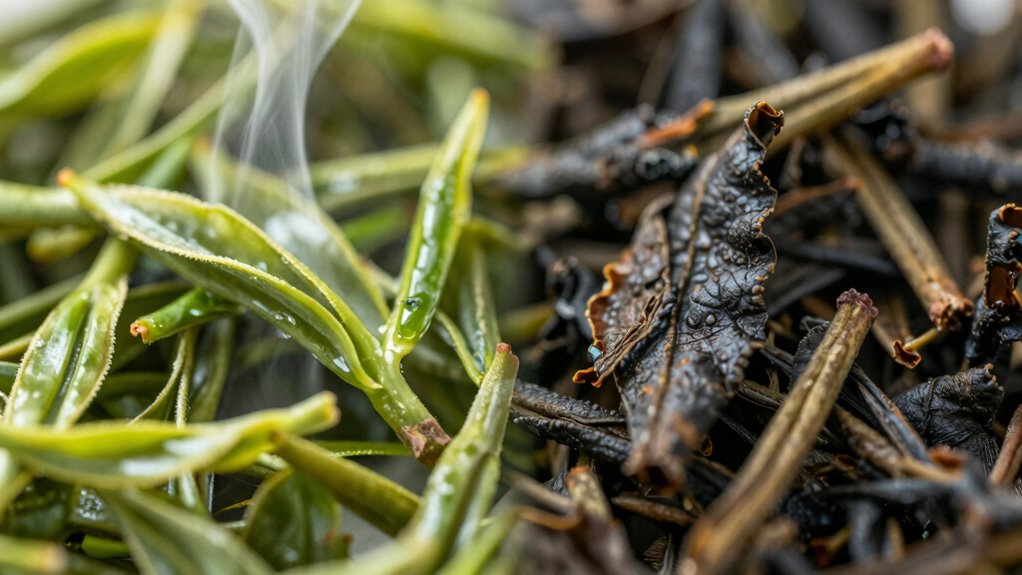

You’ll notice green tea tastes different depending on whether it’s steamed or pan-fired because the processing method influences its chemical reactions. Steaming quickly preserves bright, grassy, vegetal flavors, while pan-firing creates toasty, nutty, sometimes smoky notes. These techniques affect aroma, texture, and bitterness, giving each tea a unique character. Subtle differences in temperature and duration shape the flavor profile even more. If you want to discover the details behind these changes, keep exploring how each step transforms your tea experience.

Get coffee and tea gear delivered free — and shop member deals
- Fast, free delivery on millions of items
- Access to Prime Big Deal Days deals on October 6–7
- Prime Video, Amazon Music and more included
Key Takeaways
- Steaming retains fresh, vegetal flavors by quickly halting oxidation, resulting in a smooth, grassy taste.
- Pan-firing develops toasty, nutty, and sometimes smoky notes through dry heat exposure.
- The processing method influences chemical reactions, affecting aroma, bitterness, and texture.
- Variations in temperature and duration during processing create distinct flavor nuances within each method.
- Cultivation and harvest conditions set the foundation, but processing technique primarily shapes the tea’s flavor profile.
Green tea doesn’t always taste the same, even if you brew it the same way every time. One big reason for this variation lies in the way the tea leaves are processed after harvesting. The methods used—whether steaming or pan-firing—impact the flavor profile profoundly. When you understand how these techniques influence the final taste, you’ll see why green tea from different regions or even different batches can seem worlds apart.
Processing methods like steaming and pan-firing deeply shape green tea’s unique flavors and regional characteristics.
The journey begins with tea cultivation and harvesting techniques. The quality of the leaves you start with plays a vital role. Factors like climate, soil, and altitude shape the leaves’ chemical makeup, which ultimately affects how they respond to processing. For example, tea grown in humid, misty environments often develops a different flavor than tea cultivated in drier, sunnier areas. Once the leaves are plucked, the way they are handled—whether they’re gently withered or immediately processed—sets the stage for the flavor outcome.
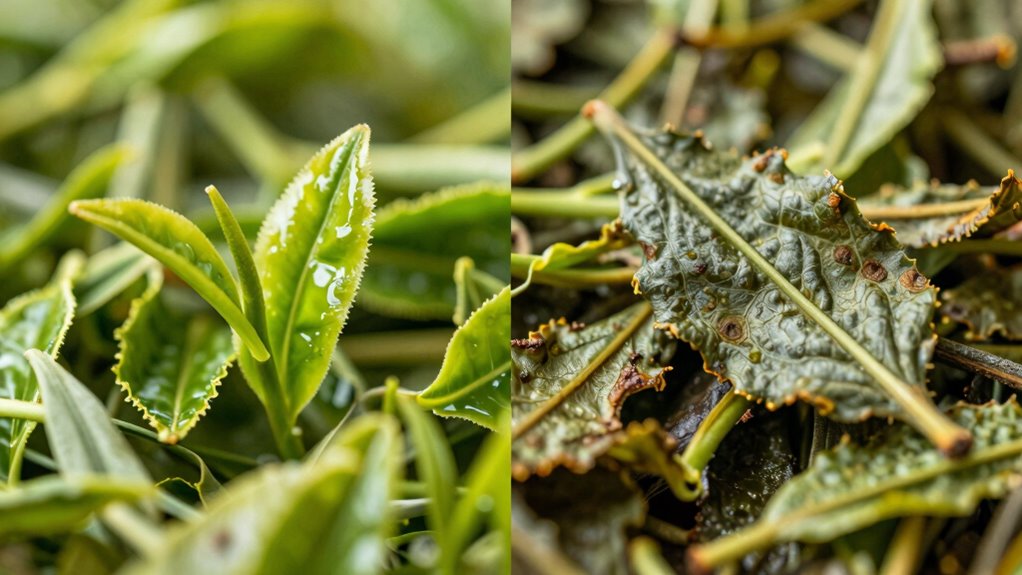
Now, consider the processing methods: steaming versus pan-firing. Steaming involves exposing the leaves to high-temperature vapor, which halts oxidation quickly. This method preserves a vibrant, grassy green flavor that’s often associated with Japanese green teas like Sencha. Steaming also helps retain the leaves’ fresh, vegetal qualities because it’s a quick process that locks in the chlorophyll. On the other hand, pan-firing involves heating the leaves in a dry pan or wok, a technique common in Chinese green teas like Longjing. Pan-firing offers a different flavor profile—more toasty, nutty, and sometimes with a slight smoky note—because the leaves are exposed to direct heat for a longer period.
The steaming or pan-firing process also influences the chemical reactions in the leaves, affecting bitterness, aroma, and texture. For example, steaming tends to produce a smoother, more delicate taste with less astringency, while pan-firing can bring out richer, more robust flavors. Even within the same type of processing, subtle differences in temperature, duration, and technique can produce distinct taste variations. Additionally, the processing methods themselves can be optimized to highlight certain flavor characteristics, making each batch unique.
Ultimately, if you want to understand why green tea tastes different depending on steaming or pan-firing, you need to look beyond just the processing. The initial cultivation conditions and harvesting techniques set the foundation, but how the leaves are then treated transforms that foundation into the unique flavors you experience in your cup. Each step, from tea cultivation to harvesting and processing, shapes the final taste, making green teas from different methods a diverse and fascinating world to explore.
As an affiliate, we earn on qualifying purchases.
Frequently Asked Questions
Does Steaming Green Tea Preserve More Antioxidants Than Pan-Firing?
Steaming green tea generally preserves more antioxidants than pan-firing because this processing technique uses lower temperatures and quicker steaming, which helps retain delicate nutrients. When you choose steamed green tea, you’re likely getting higher antioxidant retention, making it healthier. Pan-firing, on the other hand, involves higher heat, which can cause some antioxidants to break down. So, if antioxidant preservation is your goal, steaming is usually the better option.
How Does Moisture Content Affect Green Tea Flavor?
Like a delicate dance, moisture balance in green tea influences flavor development profoundly. Too much moisture, and the tea may taste dull or overly grassy; too little, and it can become harsh or astringent. This balance affects how flavors evolve during processing, preserving freshness or creating depth. You’ll notice that mastering moisture content reveal the tea’s true character, ensuring a harmonious, vibrant taste that resonates emotionally—like a gentle whisper of nature’s essence.
Can Steaming or Pan-Firing Influence Green Tea’s Aroma?
Yes, steaming or pan-firing can influence green tea’s aroma, affecting its flavor nuances. Steaming preserves the tea’s fresh, grassy aroma by maintaining more volatile compounds, while pan-firing can add roasted, nutty notes, altering the aroma profile. Your choice of method impacts aroma preservation, which in turn shapes the overall flavor experience. So, the process you select directly influences how the tea’s aroma and flavor nuances develop.
Are Certain Green Tea Varieties Better Suited to One Method?
Yes, certain green tea varieties are better suited to specific methods like steaming or pan-firing. For example, delicate teas with fine, tender tea leaf textures often thrive with steaming, which preserves their subtle flavors. Conversely, more robust leaves with consistent processing are ideal for pan-firing, enhancing their earthy notes. Matching the tea leaf texture to the processing method guarantees peak flavor and aroma, highlighting the tea’s unique qualities.
How Long Does Each Processing Method Typically Take?
You typically spend about 30 seconds to a minute steaming green tea, which helps retain its fresh, grassy flavor through shorter processing duration. Pan-firing takes a bit longer, usually 1-3 minutes, allowing for a richer, roasted taste. The processing duration directly impacts flavor retention, with shorter times preserving delicate notes and longer durations developing deeper, toasted flavors. Your choice depends on the flavor profile you prefer.
Conclusion
Just like the contrasting notes in a symphony, the choice between steaming and pan-firing shapes your green tea’s character. Embrace these differences, knowing each method offers a unique journey—one gentle and fresh, the other warm and toasted. As the ancient tea masters once knew, the way you treat the leaf echoes in every sip, revealing a story as layered and nuanced as a well-woven tapestry. So, explore each method and savor your personal harmony.
Halloween Picks
halloween
As an affiliate, we earn on qualifying purchases.