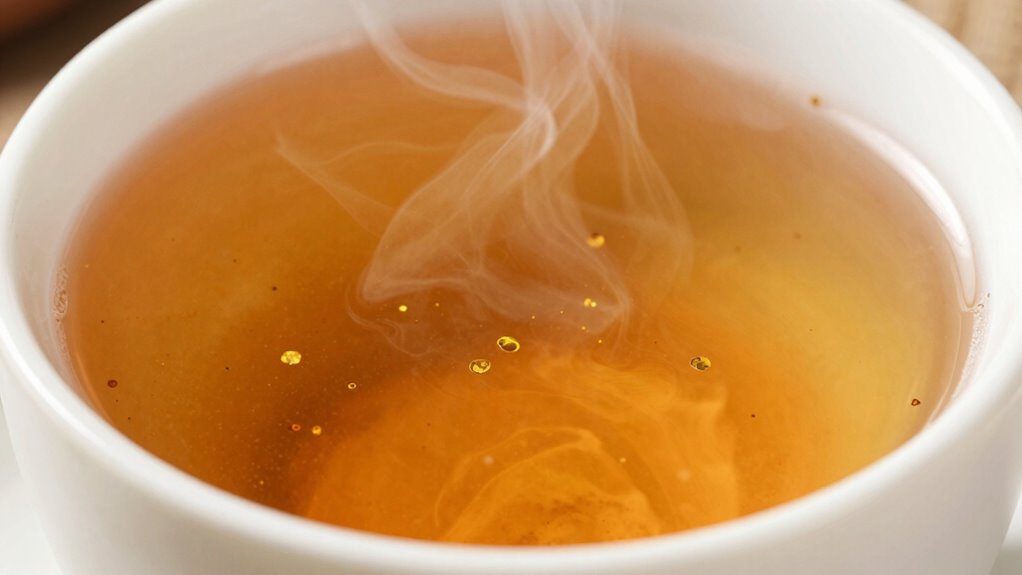

Some teas naturally feel creamy without milk because of their unique chemical makeup, which includes compounds like polyphenols and natural oils that coat your palate and create a full, velvety texture. Factors like brewing time, temperature, and the tea’s origin influence this sensation, enhancing richness and smoothness. Aromas and visual cues also heighten the perception of creaminess, engaging your senses. To understand exactly how these elements work together, keep exploring the fascinating science behind it.

Get coffee and tea gear delivered free — and shop member deals
- Fast, free delivery on millions of items
- Access to Prime Big Deal Days deals on October 6–7
- Prime Video, Amazon Music and more included
Key Takeaways
- Certain teas have natural compounds like polyphenols and oils that create a full-bodied, velvety mouthfeel.
- Flavor profile, aroma, and texture interaction generate an illusion of creaminess without dairy.
- Longer steeping and specific origins enhance extraction of compounds that boost perceived richness.
- Aromatic qualities like roasted or malty scents increase the sensation of thickness and indulgence.
- The brain combines flavor, aroma, and texture signals to perceive creaminess despite no added milk.
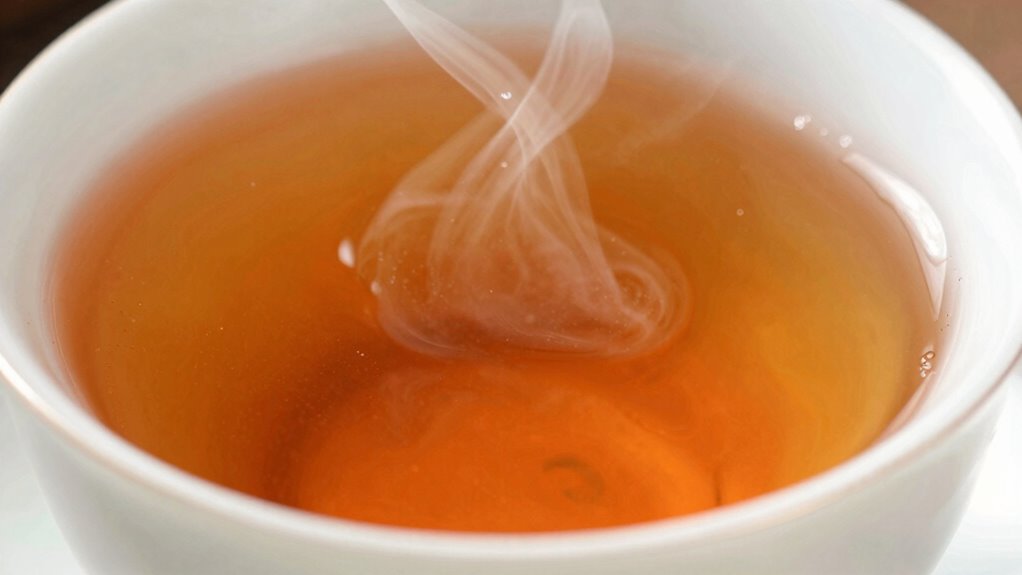
Have you ever sipped a tea that feels surprisingly creamy even without adding milk? It’s a curious experience that often leaves you wondering how something so smooth can come from a simple leaf infusion. The secret lies in the tea’s flavor profile and how it interacts with your sensory perception. Some teas naturally develop a rich, velvety texture that tricks your palate into thinking they contain dairy. This isn’t just about taste; it’s about how the tea’s flavor engages your senses, creating an illusion of creaminess that’s purely built on its composition.
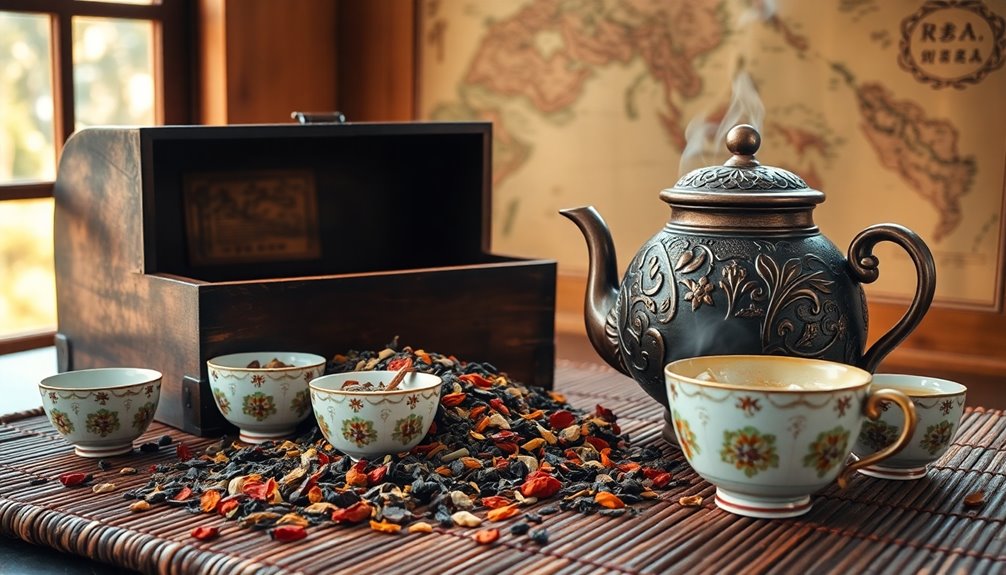
Certain types of tea, like black teas and some oolong varieties, have compounds that lend a naturally full-bodied and rounded flavor. These teas contain higher levels of polyphenols and other complex molecules, which contribute to a thicker mouthfeel. When you sip these teas, your sensory perception interprets the fullness, smoothness, and weight on your tongue as creamy. It’s not actual milkiness but a combination of flavor, aroma, and texture that evokes that sensation. The natural oils present in some teas also play a significant role, coating your palate and enhancing the perception of richness.
Full-bodied teas with natural oils create a creamy mouthfeel that satisfies the senses without any dairy.
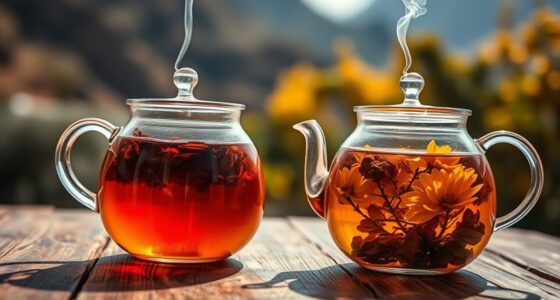
The brewing process can intensify this effect. Longer steeping times or higher temperatures extract more of these flavor-enhancing compounds, resulting in a tea that feels more substantial and luxurious. Additionally, the tea’s origin influences this sensation. For example, teas from specific regions or cultivars may have unique chemical compositions that boost their creaminess perception, even without any added ingredients. The tea’s aroma also contributes; warm, roasted, or malty scents can enhance the overall sensory experience, making the tea seem thicker and more indulgent. Interestingly, the chemical composition of the tea leaves plays a crucial role in this sensory trick, highlighting how natural factors shape our tasting experience. Moreover, the aesthetic presentation of the tea, including its color and clarity, can subtly influence how we perceive its texture and richness.
Your taste buds and olfactory senses work together to build this illusion. When you take a sip, your brain processes the combination of flavor, aroma, and texture signals, creating that sensation of creaminess. This is why some teas feel so satisfying and rich, despite having no dairy involved. It’s a fascinating interplay between the tea’s natural chemical makeup and your sensory perception, which is influenced by sensory interactions and how your brain interprets these signals. This phenomenon demonstrates that the richness of a tea isn’t solely dependent on what you add but also on what’s already present in the leaf.
As an affiliate, we earn on qualifying purchases.
Frequently Asked Questions
Do Certain Teas Naturally Have a Creamy Texture?
Yes, certain teas naturally have a creamy texture. This sensation often comes from specific tea flavor profiles, like those found in oolong or certain black teas, which develop a rich, smooth mouthfeel. Tea leaf processing methods, such as oxidation or roasting, can enhance this creaminess. When brewed properly, these teas deliver a velvety, almost dairy-like experience without any milk, making them a delightful choice for those seeking a creamy tea.
Can Brewing Time Influence a Tea’s Creaminess?
Yes, brewing time can influence a tea’s creaminess. Longer brewing boosts tea fermentation and leaf oxidation, which can release more natural compounds like amino acids and polysaccharides. These substances create a richer, creamier mouthfeel, even without milk. So, if you extend your steeping time, you might notice a creamier texture developing, especially in teas with higher oxidation levels, like black or oolong teas.
Are There Specific Tea Varieties Known for a Creamy Mouthfeel?
Yes, certain tea varieties are known for their creamy mouthfeel. Teas like Assam, Yunnan, and some oolongs have unique tea leaf characteristics and fermentation processes that develop natural oils and compounds, giving them a smooth, velvety texture. You’ll notice these teas feel rich and creamy without needing milk. The fermentation enhances their body, making them a delightful choice if you prefer a luscious, creamy experience in your cup.
How Does Water Temperature Affect Creaminess in Tea?
Water temperature acts like a maestro, conducting how creamy your tea feels. When you keep temperature control in check, hotter water releases more soluble compounds, enhancing creaminess. However, mineral content in your water also plays a role—hard water with minerals can amplify a silky mouthfeel. Too hot, and you risk bitterness; too cool, and the creaminess wanes. Find that perfect balance for a smooth, velvety sip every time.
Do Additives or Flavorings Enhance the Creamy Sensation?
Yes, flavor enhancers and textural additives can boost the creamy sensation in your tea. Additives like vanilla, honey, or almond extract introduce sweet, rich notes that mimic creaminess. Textural additives such as oat or almond milk alternatives, or even a small amount of coconut cream, create a smooth, velvety mouthfeel. These ingredients work together to make your tea feel indulgent and creamy without needing actual milk.
Conclusion
Think of your tea as a painter’s canvas, where natural oils and compounds are the vibrant colors blending seamlessly without added milk. When these elements are balanced, each sip feels like a smooth, creamy stroke—rich and velvety. Just as a master artist creates depth with subtle shades, the tea’s inherent qualities craft that luxurious, creamy sensation. Embrace these natural hues, and enjoy the artistry in every sip, no milk needed to complete the masterpiece.
Halloween Picks
halloween
As an affiliate, we earn on qualifying purchases.