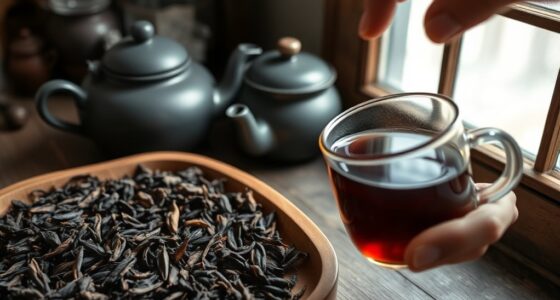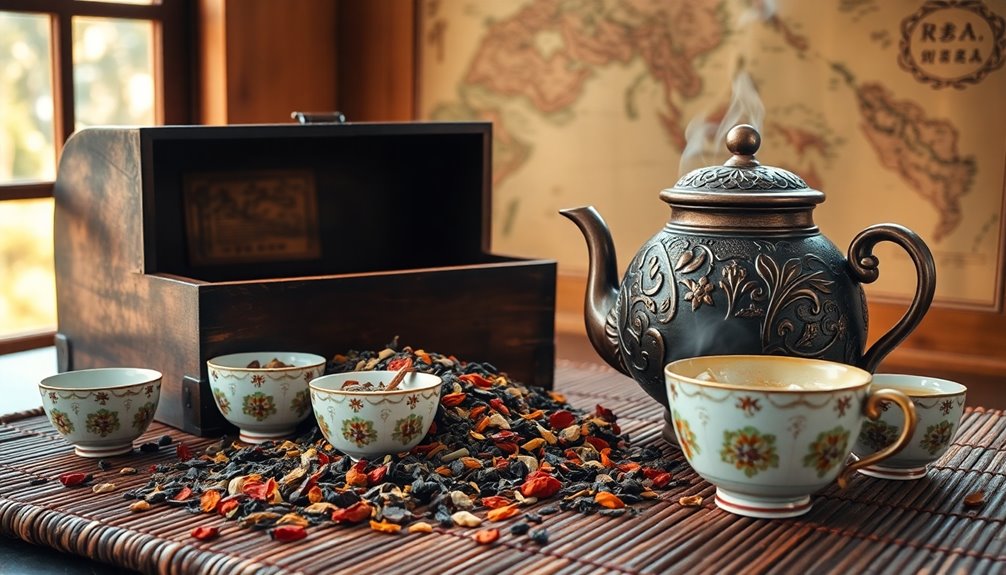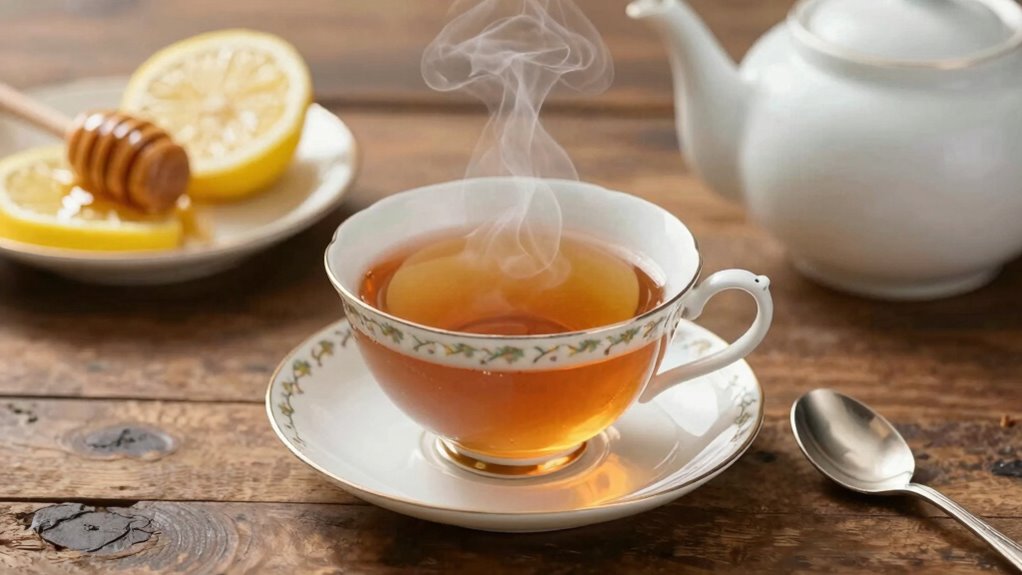

To appreciate tea even if you usually drink coffee, start by exploring its subtle flavors, like floral, fruity, or earthy notes, and learn how different brewing methods bring out these nuances. Practice patience with gentle steeping and proper temperatures to uncover each tea’s full potential. By embracing the mindful ritual of tea-making, you’ll discover new layers of flavor and aroma that deepen your appreciation. Keep exploring, and you’ll soon find tea offers a rich, calming experience beyond your usual caffeine routine.

Get coffee and tea gear delivered free with Prime
- Fast, free delivery on millions of items
- Prime Video, Amazon Music and more included
- Member-only deals all year
Key Takeaways
- Experiment with different brewing techniques to unlock tea’s nuanced flavors and develop a new appreciation.
- Savor tea slowly, focusing on aroma, taste, and aftertaste to enhance mindful enjoyment.
- Explore various tea types and origins to discover diverse flavor profiles beyond coffee’s boldness.
- Learn about tea processing and cultural traditions to deepen connection and appreciation.
- Approach tea as a calming ritual, cultivating patience and mindfulness similar to coffee’s ritualistic aspects.
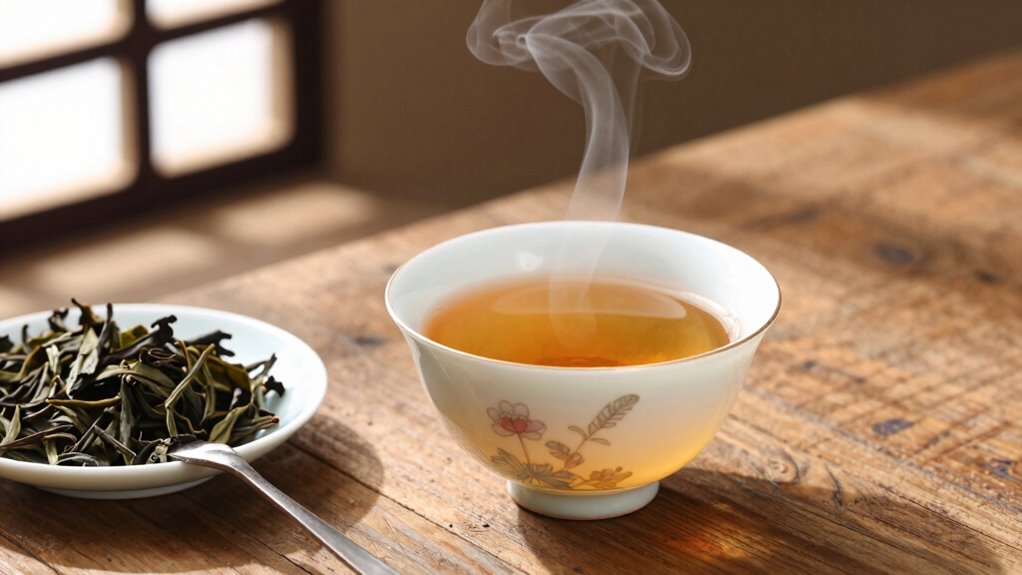
Tea is more than just a beverage; it’s a sensory experience that invites you to slow down and savor each moment. When you start exploring tea, one of the most exciting aspects is discovering its diverse flavor profiles. Unlike coffee’s often bold and bitter notes, tea offers a wide spectrum—from the delicate sweetness of white teas to the robust earthiness of pu-erh. To truly appreciate these nuances, you need to pay attention to how the tea’s flavor develops through different brewing techniques. The way you brew your tea greatly influences its taste, aroma, and overall experience.
Tea reveals a wide spectrum of flavors, inviting mindful brewing and savoring each unique nuance.
When trying to shift from coffee to tea, begin by experimenting with brewing methods. For instance, a gentle steep for green or white teas preserves their subtle flavors, while a longer or hotter brew can bring out more intense, earthy qualities in black or oolong teas. Using a thermometer to maintain precise water temperatures ensures you’re not over-extracting or under-extracting the leaves. Paying attention to brewing techniques allows you to better unlock the potential of each tea type and enhances your tasting experience. When you steep tea properly, you unlock its full potential, allowing the flavors to unfold gradually in your cup. This process is a stark contrast to coffee brewing, where extraction is often quicker and more straightforward. With tea, patience becomes part of the ritual, and that’s where appreciation deepens.
As you become more familiar with different tea types, you’ll start to notice how each has its unique flavor profile—floral, fruity, smoky, or spicy—shaped by the tea’s origin, processing, and brewing method. Tasting becomes a mindful act, where you focus on the subtle sweetness, the floral notes, or the lingering aftertaste. Recognizing the flavor profiles of different teas enhances your ability to appreciate their complexity and craftsmanship. Additionally, understanding the processing techniques used in tea production can deepen your appreciation for the craftsmanship involved. A better grasp of quality standards ensures that you select authentic and well-crafted teas, elevating your overall experience. Learning about tea origin can also deepen your connection to the cultural and geographical roots that influence each cup, enriching your appreciation even further.
Incorporating tea into your routine might seem simple, but it’s a journey of discovery. With each cup, you learn to identify different flavor profiles and refine your brewing techniques. Over time, you’ll find that tea doesn’t just quench your thirst; it becomes a calming ritual, a moment of pause that invites mindfulness and appreciation. Whether you prefer a light, delicate white tea or a complex, layered oolong, the key lies in being curious, patient, and present with each sip. That’s how you truly learn to appreciate tea, even if your usual drink is coffee.
As an affiliate, we earn on qualifying purchases.
Frequently Asked Questions
Can Tea Help Improve Alertness Like Coffee?
Yes, tea can help improve alertness, though it might not be as strong as coffee. Different tea flavor profiles, like black or green tea, offer varying caffeine content, which can boost your focus. You’ll find that black teas generally have more caffeine, providing a sharper alertness boost, while herbal teas have little to none. Experiment with different types to find the one that keeps you alert without the jitters.
Are There Health Benefits Unique to Tea?
Think of tea as a treasure chest of health benefits. Unique to tea are its herbal infusions and antioxidant properties, which can boost your immune system and fight free radicals. Unlike coffee, tea offers a variety of antioxidants that support cellular health. Drinking tea regularly can improve your overall well-being, making it more than just a comforting ritual—it’s a natural way to nourish your body from within.
How Do I Brew Different Types of Tea Properly?
To brew different types of tea properly, start with understanding their unique flavor profiles. For green tea, use water around 160-180°F and steep for 2-3 minutes to preserve freshness. Black tea needs near-boiling water and 3-5 minutes for full flavor. Oolong and white teas require slightly lower temperatures and shorter steeping times. Adjust brewing times and temperatures to enhance the flavor profiles, ensuring each cup highlights the tea’s best qualities.
What Are Some Tea Tasting Techniques?
You’re about to open the universe of tea tasting techniques! Start by inhaling deeply to savor the tea aroma, which reveals its true character. Then, sip at the perfect tasting temperature—hot enough to release flavors, cool enough to enjoy nuances. Swirl the tea gently in your mouth, noting the layers of taste and aroma. These techniques turn every cup into a sensory adventure, transforming your tea experience entirely.
Is It Okay to Add Milk or Sugar to Tea?
Yes, it’s perfectly okay to add milk or sugar to tea if that’s your preference. Cream addition can mellow out strong flavors, while sugar suits those who like a touch of sweetness. Don’t worry about traditional rules—your taste matters most. Experiment with different amounts until you find what enhances your tea-drinking experience. Personalizing your tea can make it more enjoyable and tailored to your unique sugar preference.
Conclusion
Remember, “a spoonful of honey is worth a ton of vinegar.” Even if you’re a coffee lover, giving tea a fair shot can open a new world of flavors and relaxation. Keep an open mind, explore different types, and savor each sip. With patience, you’ll find yourself appreciating tea’s subtle nuances. Sometimes, the simplest experiences bring the greatest joy—so take a moment, breathe, and enjoy your tea journey.
Evergreen bestsellers Picks
bestsellers
As an affiliate, we earn on qualifying purchases.