To brew Chinese Gongfu Cha traditionally, you’ll need small teapots, a gaiwan, and specific utensils. Start by selecting high-quality tea leaves like oolong or pu-erh, rinse them gently, then carefully pour hot water at the right temperature—around 75°C to 95°C—using steady, deliberate movements. Focus on your senses, appreciating the aroma and flavors with mindful attention. If you continue exploring, you’ll discover the rich techniques and regional customs behind this elegant tea ritual.
Key Takeaways
- Use small teapots, gaiwan, and tiny cups to control brewing and enhance flavor extraction.
- Maintain precise water temperature (75°C–95°C) and steady pouring techniques for optimal infusion.
- Rinse tea leaves briefly before brewing to remove dust and awaken aroma.
- Focus on sensory appreciation by savoring aroma, flavor, and multiple infusions systematically.
- Practice mindful, deliberate movements to embody respect, patience, and harmony in each step.
The Origins and Cultural Significance of Gongfu Cha
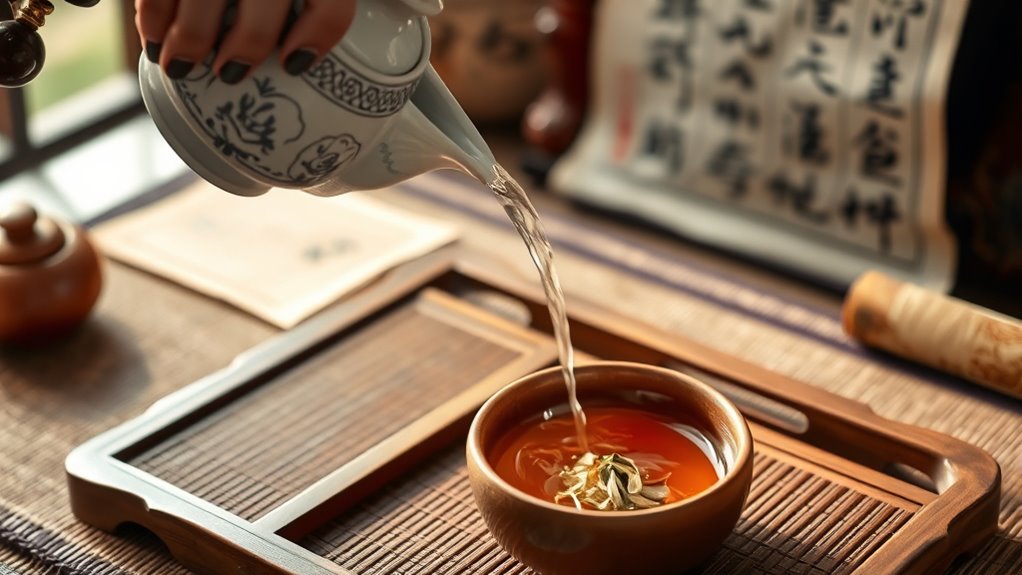
Gongfu Cha, which translates to “skillful tea making,” traces its origins to ancient China, where it developed as both an art form and a essential part of cultural heritage. This intricate tea ceremony emphasizes precision, patience, and respect, transforming tea brewing into a meaningful ritual. You participate in more than just preparing tea; you engage in a cultural tradition that highlights harmony, mindfulness, and social connection. The practice reflects centuries of history, embodying Chinese values and aesthetic principles. Mastering Gongfu Cha also involves understanding traditional brewing techniques, which are vital to achieving the perfect flavor and presentation. Additionally, proper tea utensil handling enhances the overall experience and respects the ceremony’s traditions. Developing refined brewing skills is essential to fully appreciating the subtle nuances of each tea type. Moreover, incorporating proper water temperature is crucial for unlocking the full aroma and taste of the tea. Achieving the correct tea leaf quantity ensures a balanced and flavorful brew. By mastering Gongfu Cha, you preserve a legacy that goes beyond taste, celebrating craftsmanship and cultural identity. It’s a ritual that honors tradition while fostering a deeper appreciation for tea’s role in Chinese society and history.
Essential Equipment for Gongfu Tea Brewing
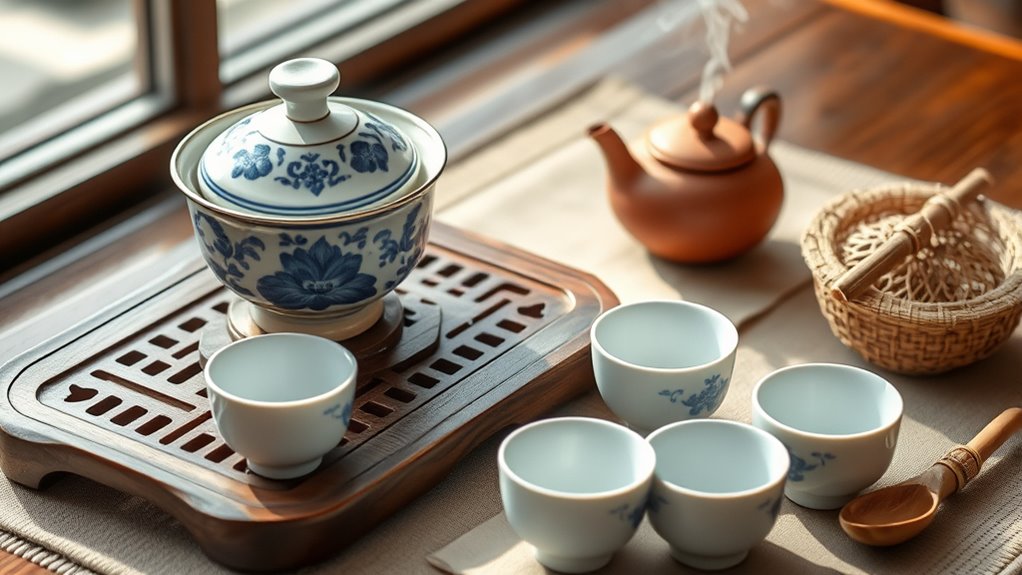
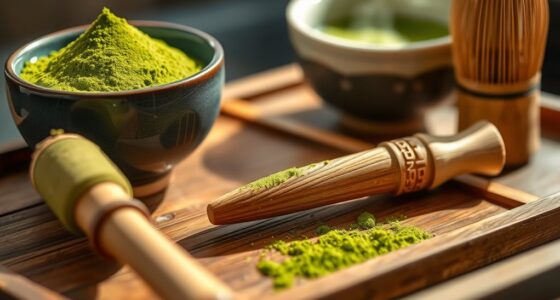
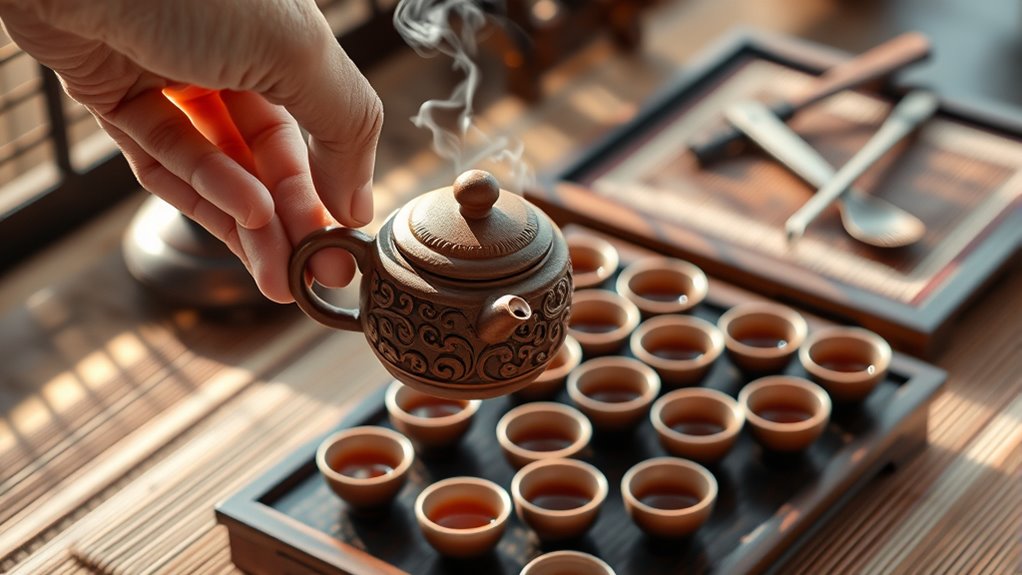
To fully appreciate the artistry behind Gongfu Cha, you need the right tools that facilitate precision and mindfulness. Essential equipment includes a small teapot, often made of Yixing clay or porcelain, designed for the delicate tea ceremony. You also need a gaiwan or brewing cup to control steeping times, and a fairness pitcher to ensure even distribution of flavors. Tea trays or trays with drainage help organize your setup while maintaining the aesthetic of the cultural heritage. Additionally, you’ll want tiny cups for tasting and a tea scoop for measuring leaves. Each piece enhances the sensory experience, honoring the centuries-old tradition. Using proper equipment transforms brewing into an art form, deepening your appreciation for the cultural heritage embedded in Gongfu Cha. Incorporating specialized teaware can improve temperature control and extraction, elevating the overall tea experience.
Selecting and Preparing High-Quality Tea Leaves

Selecting high-quality tea leaves is essential to achieving the best flavor and aroma in your Gongfu Cha. Focus on tea leaf selection by choosing leaves that feel firm, whole, and vibrant. Look for signs of proper leaf processing, such as uniform color and minimal broken pieces, indicating careful handling. Freshness is key—avoid dull or musty-smelling leaves. To prepare, gently rinse the leaves to remove dust and impurities. Proper preparation enhances the leaves’ natural qualities, allowing their aroma and taste to fully develop during brewing. Additionally, predictive analytics can help identify the best harvest times for premium tea leaves, ensuring optimal freshness and quality. Being aware of ear wax odor can help identify any potential issues with storage or handling that might affect tea quality. Monitoring storage conditions is also crucial to preserve the tea’s freshness over time. Use this table as a quick reference:
| Tea Leaf Selection | Leaf Processing | Preparation Tips |
|---|---|---|
| Firm, whole leaves | Even, intact leaves | Rinse lightly |
| Vibrant color | Minimal broken pieces | Avoid over-steeping |
| Fresh aroma | Proper drying process | Use the right amount |
The Art of Water Temperature and Pouring Technique
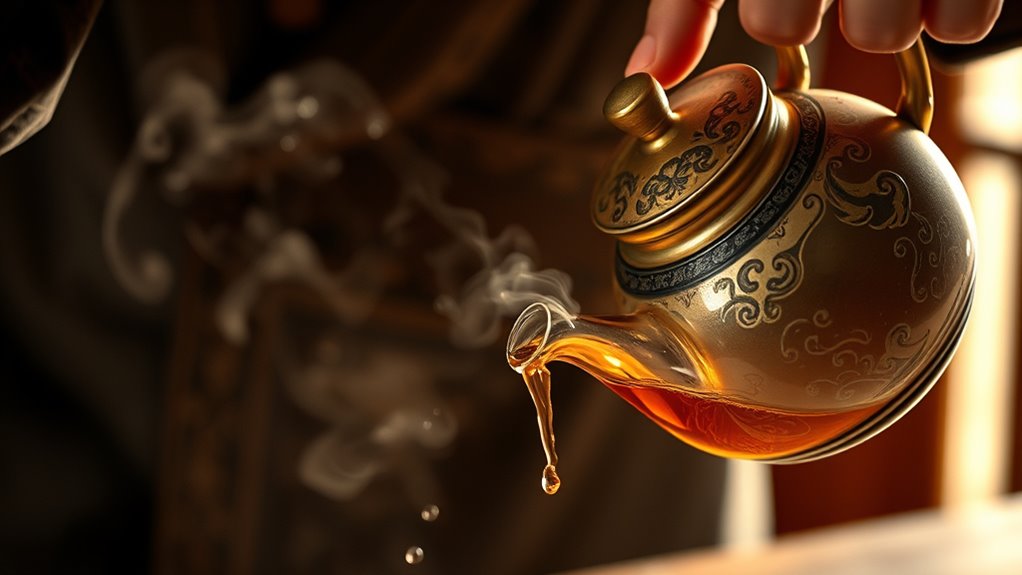
Mastering water temperature and pouring technique is essential for brewing perfect Gongfu Cha. You need to control the temperature precisely and pour with steady, accurate motions to bring out the tea’s best flavors. Maintaining a smooth water flow guarantees even extraction and an enjoyable tea experience. Additionally, paying attention to water quality can significantly influence the final taste of your tea. Proper tuning of your brewing process can further enhance the overall flavor profile and aroma of the tea. As the delivery of fresh, high-quality ingredients becomes more accessible, the potential for elevating your tea brewing experience continues to grow. Incorporating AI safety measures in your brewing setup can also help monitor and optimize water temperature and flow consistency for consistently excellent results. Furthermore, understanding storage conditions of your tea leaves and water can help maintain optimal freshness and flavor during the brewing process.
Optimal Temperature Control
Achieving the perfect brew in gongfu cha hinges on controlling water temperature and pouring technique, as both considerably influence the tea’s flavor and aroma. Optimal temperature ensures proper tea leaf oxidation, releasing nuanced flavors while preserving aroma. Water mineral content affects how the tea feels and tastes, with softer water highlighting delicate notes and harder water emphasizing robustness. Using the appropriate filtration technology can also help maintain water quality for optimal brewing results. Proper temperature control is essential for revealing the tea’s full potential, as it impacts both aroma and texture. Visualize this:
| Temperature Range | Effect on Tea |
|---|---|
| 75°C (167°F) | Bright, delicate, subtle aroma |
| 85°C (185°F) | Balanced, slightly fuller flavor |
| 95°C (203°F) | Rich, deeper oxidation, bold taste |
Additionally, mastering pouring technique ensures even extraction, which is vital for a well-balanced cup. Developing consistent pouring skills allows for better control over infusion time and flavor development. Incorporating water temperature precision into your brewing process can further enhance the overall quality of your gongfu cha.
Pouring Precision Skills
Perfecting your gongfu cha requires precise pouring techniques, which directly influence the tea’s flavor and aroma. During the tea ceremony, pouring precision ensures the water flows smoothly and evenly over the leaves, revealing their full potential. Focus on controlling your wrist movement to maintain a steady stream, avoiding splashes or uneven pours. The right water flow enhances extraction, affecting taste balance and aroma release. Pay attention to the pouring angle and speed, as these details help maintain consistent water temperature and saturation. Mastering this skill elevates your brewing process, creating a harmonious experience. Remember, the art of pouring isn’t just about water; it’s about cultivating mindfulness and respect for the tea, making each infusion a deliberate and refined act.
Maintaining Water Flow
Maintaining a consistent water flow during your gongfu cha requires careful attention to both water temperature and pouring technique. The flow rate influences how the tea leaves interact with water, affecting flavor extraction. To achieve this, consider your vessel design; some teapots or cups promote smoother, more controlled pouring, helping you maintain steady water flow. Use a gentle, even pour rather than a hurried stream, ensuring the water covers the leaves uniformly. Pay attention to the vessel’s shape and spout, which can impact flow consistency. Practice pouring slowly and steadily, adjusting based on how the water interacts with the vessel. Proper pouring technique is essential to ensure even steeping, maximize flavor, and preserve the traditional elegance of gongfu tea brewing. Additionally, understanding the water temperature control is crucial for optimizing flavor extraction and maintaining the integrity of the tea leaves throughout the brewing process. Being mindful of water flow rate helps prevent over-extraction or under-extraction, ensuring a balanced and flavorful brew.
Step-by-Step Gongfu Cha Brewing Process

To begin the Gongfu Cha brewing process, start by warming your teapot and cups with hot water. Next, select high-quality tea leaves suited for Gongfu brewing—such as oolong or pu-erh—since their flavor profiles shine through this method. Place the tea leaves into your brewing vessel, typically a small teapot or gaiwan, using about one to two teaspoons per infusion. Rinse the leaves briefly with hot water to awaken their aroma and remove any dust. Then, pour hot water over the leaves, filling the vessel, and allow the tea to steep for a short time—usually around 20 to 30 seconds for the first infusion. Repeat the process for multiple infusions, adjusting steeping times as you go. Using specialized brewing techniques can enhance the flavor extraction and overall experience. Paying attention to water temperature is crucial to achieve optimal flavor and avoid over-extraction. Ensuring proper temperature control helps preserve the delicate nuances of the tea and prevents bitterness. Additionally, maintaining the correct tea-to-water ratio ensures consistent flavor and strength across infusions.
Tasting and Appreciating the Flavors
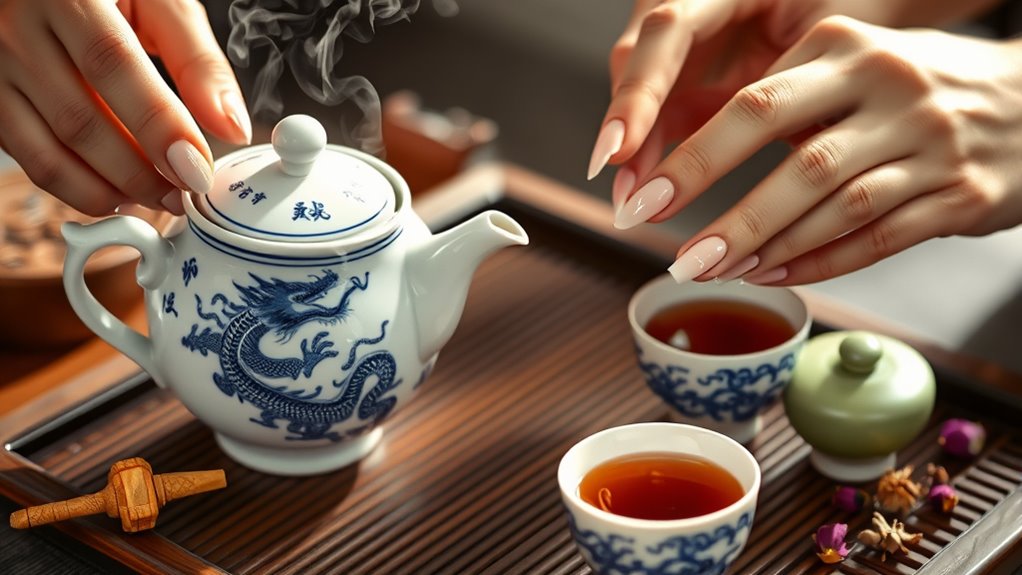
As you taste the tea, pay close attention to its flavor profiles, from sweetness to astringency. Use aroma appreciation techniques to identify subtle scents that enhance your experience. By focusing on these aspects, you’ll deepen your understanding and enjoyment of Gongfu tea. Incorporating knowledge of market research can help you better recognize which flavor profiles are most appreciated by different audiences.
Flavor Profiles Explored
When tasting Chinese Gongfu Cha, you’ll notice a wide range of nuanced flavors that reflect both the type of tea and the brewing process. The tea’s flavor complexity often results from varying levels of tea leaf oxidation, which influences sweetness, bitterness, and aroma. As you savor each infusion, you’ll detect subtle differences in taste and texture, revealing the depth of the tea leaves. The oxidation level impacts whether the tea offers a fresh, floral note or a rich, earthy undertone. Proper brewing highlights these distinctions, allowing you to appreciate the intricate balance of flavors. Remember, each brewing cycle can bring out new nuances, making Gongfu Cha a truly rewarding experience.
- Range from floral and fruity to woody and smoky
- Changes in sweetness and bitterness with infusion
- Depth influenced by oxidation levels
- Evolving flavor profile over multiple brews
Aroma Appreciation Techniques
Elevating your appreciation of Chinese Gongfu Cha involves honing your aroma senses through deliberate tasting techniques. To do this, focus on scent layering—deliberately inhaling the tea’s aroma at different stages to uncover its evolving complexity. As you pour the tea, notice the initial aroma extraction, capturing the fragrance released when the leaves meet hot water. Take slow, deliberate sniffs to identify subtle notes, from floral and fruity to earthy and woody. Practice deep inhalation to reveal hidden layers, and compare aromas from multiple infusions. By consciously engaging your nose, you deepen your understanding of the tea’s character and craftsmanship. Scent layering helps you appreciate the nuanced, multi-dimensional aroma profile that makes Gongfu Cha a sensory journey.
The Ritual and Mindfulness in Gongfu Tea Practice
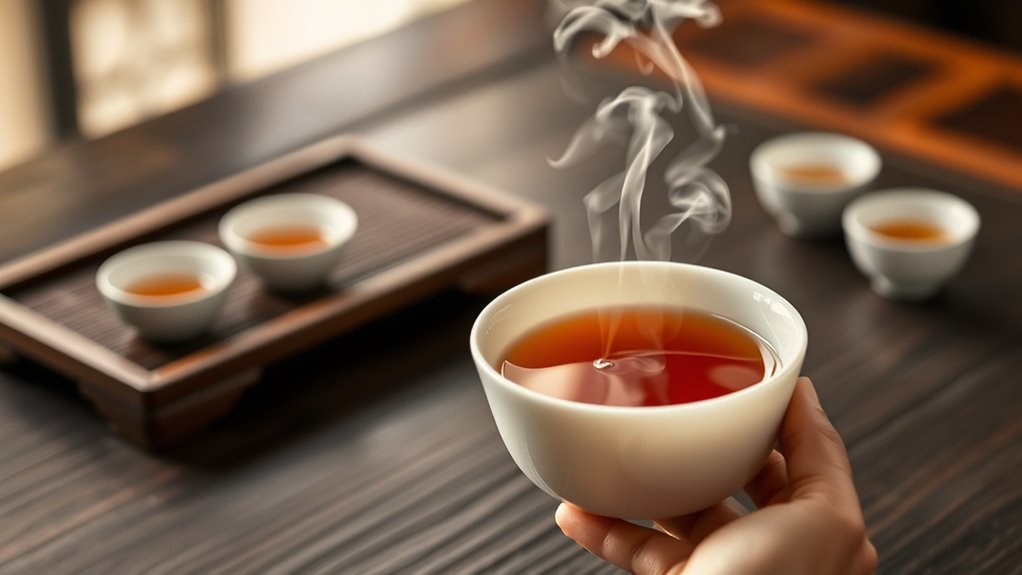
The ritual of Gongfu tea transforms simple brewing into a mindful practice by encouraging full presence and intentionality. As you engage in each step, you cultivate meditative focus, turning the process into a calming mindfulness practice. This deliberate approach helps you slow down and appreciate the moment, fostering clarity and tranquility. Pay attention to the sensations—the warmth of the teaware, the aroma of the leaves, and the flow of water. Let these sensorial experiences anchor your awareness. Embrace patience and precision, making each action meaningful. By practicing this mindful ritual, you deepen your connection to the tea and yourself, creating a peaceful space for reflection and relaxation.
- Savor each step with awareness
- Focus on sensory details
- Maintain steady, deliberate movements
- Cultivate a calm, focused mind
Variations of Gongfu Cha Across Different Regions
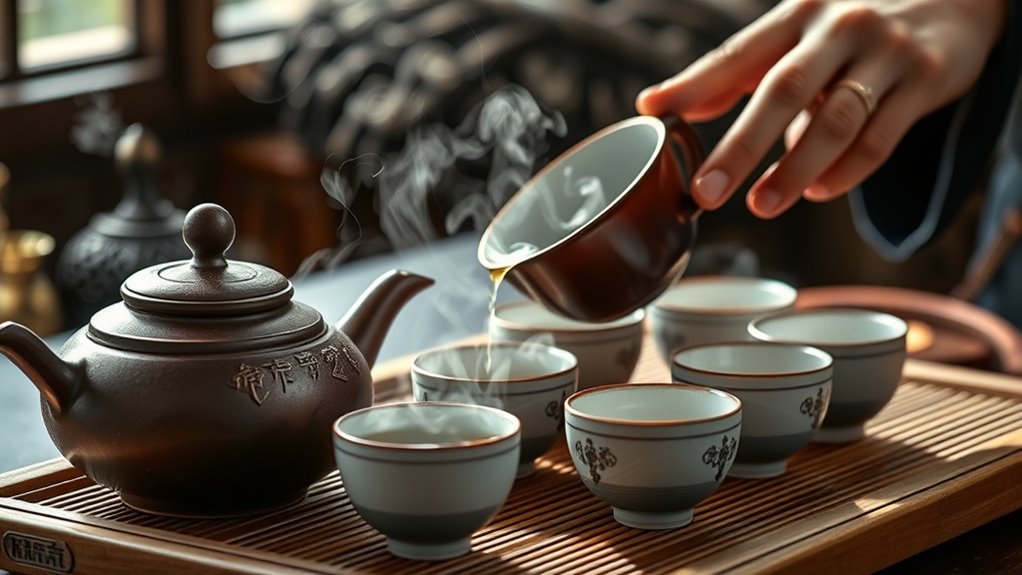
Gongfu cha, although rooted in Chinese tradition, exhibits rich regional variations that reflect local tastes, customs, and tea cultures. In different regions, you’ll notice unique approaches to tea ceremonies, adapting brewing techniques and utensils to local preferences. For example, in Fujian, the focus is on delicate oolong teas prepared with precise water temperatures and multiple infusions, emphasizing elegance and patience. In Guangdong, the emphasis is on quick, efficient brewing suited for social gatherings, often using small gaiwans and larger cups. Meanwhile, in Taiwan, the tea culture blends Gongfu principles with local innovations, showcasing a variety of teas and personalized rituals. These regional customs influence everything from teapot shapes to serving styles, making Gongfu cha a diverse and vibrant expression of Chinese tea culture.
Tips for Beginners to Master the Art of Gongfu Brewing
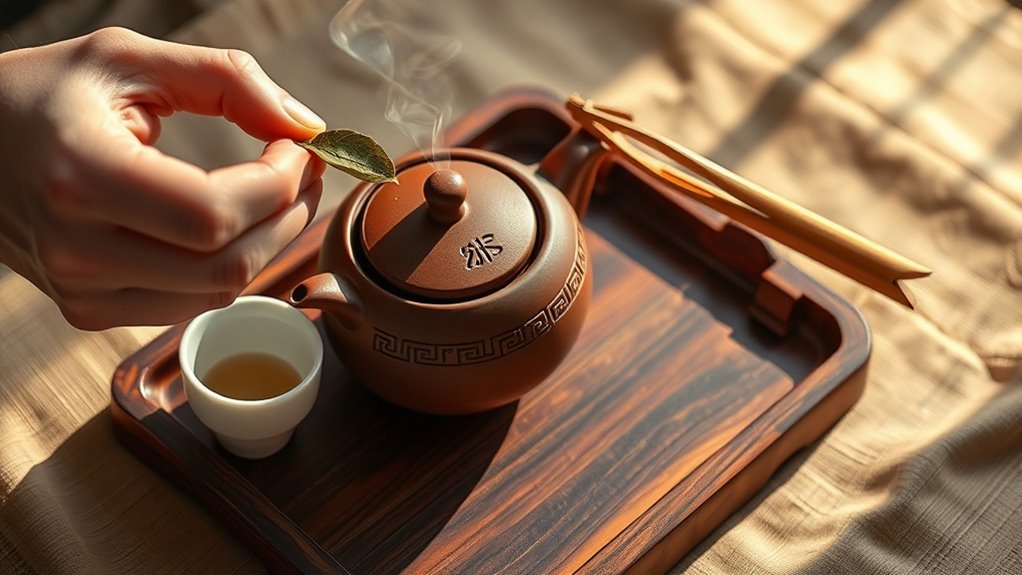
Mastering Gongfu brewing begins with understanding its fundamental principles and practicing patience. To start, pay close attention to tea leaf oxidation, which affects flavor and brewing time. Lightly oxidized teas need shorter steeping, while more oxidized leaves require longer infusion. Water temperature control is essential; too hot can scorch delicate leaves, while too cool may under-extract flavor.
Here are some tips to help you improve:
- Use a thermometer or temperature-controlled kettle for precise water temp.
- Experiment with steeping times to find the perfect balance.
- Choose high-quality, fresh tea leaves for better aroma and taste.
- Observe how different oxidation levels influence brewing and flavor profiles.
With practice, you’ll develop intuition and elevate your Gongfu tea experience.
Frequently Asked Questions
How Does Gongfu Cha Differ From Western-Style Tea Brewing?
You’ll notice that gongfu cha differs from Western-style brewing through its focus on traditional techniques and brewing precision. Instead of large teapots, you use small vessels and multiple short infusions, which extract flavors more delicately. You control steeping times carefully, often repeatedly pouring hot water over the leaves. This meticulous process emphasizes enhancing aroma and taste, creating a more refined tea experience compared to the often quicker, larger-batch Western methods.
Can Gongfu Cha Be Adapted for Herbal or Flavored Teas?
You can definitely adapt gongfu cha for herbal infusions and flavored teas. The process allows you to control steeping time and temperature precisely, enhancing the flavor and aroma. Use smaller teapots and multiple short infusions to maximize flavor extraction and achieve better flavor enhancement. This method works well for herbal and flavored teas, giving you a rich, nuanced experience that highlights the unique qualities of your herbal infusions.
What Are Common Mistakes Beginners Make in Gongfu Brewing?
Think of brewing gongfu tea as tuning a delicate instrument—you need precision. Beginners often rush, neglecting proper tea leaf selection or brewing temperature, which can lead to a bitter or flat taste. Avoid over-steeping or using water that’s too hot. Pay attention to these details, and you’ll reveal the full harmony of flavors. Remember, patience and attention to detail transform a simple brew into a true tea ceremony experience.
How Does Tea Ware Material Affect the Flavor and Aroma?
The material influence of your tea vessel greatly impacts flavor and aroma. For example, clay vessels absorb and enhance tea oils, adding depth, while glass vessels preserve pure, fresh notes without interference. You should choose your tea vessel based on the type of tea and desired taste, as different materials like porcelain, Yixing clay, or glass can subtly alter the brewing experience, making each cup uniquely aromatic and flavorful.
Is Gongfu Cha Suitable for Everyday Casual Tea Drinking?
You might think gongfu cha is too intricate for casual brewing, but it’s actually great for daily enjoyment. The process emphasizes quality over speed, so you can turn it into a relaxing routine rather than a formal event. With simple tools and a few minutes, you can enjoy a flavorful, aromatic tea every day, making your casual tea sessions more meaningful and satisfying without feeling overly complicated.
Conclusion
As you embrace the art of Gongfu Cha, you open a door to centuries of tradition and mindful serenity. Each pour and sip becomes a dance with time, allowing you to savor not just the tea, but the moment itself. With patience and practice, you’ll find yourself weaving tranquility into everyday life, like a delicate thread in a rich tapestry. Let this ancient ritual inspire you to cherish simplicity and mindfulness in every cup.