Black tea from Assam, Darjeeling, and Yunnan offers distinct flavors thanks to their unique climates. Assam’s tropical heat produces bold, malty teas perfect for breakfast blends, while Darjeeling’s cooler, high-altitude environment yields lighter, floral, and muscatel notes. Yunnan’s subtropical highland climate results in rich, earthy, and complex teas with hints of spice and fruit. Exploring these regions reveals how climate shapes each tea’s character—more details await if you keep exploring.
Key Takeaways
- Assam produces bold, malty black teas due to its tropical, humid climate that accelerates oxidation and leaf growth.
- Darjeeling’s high-altitude, temperate environment yields lighter, floral, and muscatel-flavored teas with delicate complexity.
- Yunnan offers rich, earthy, and full-bodied black teas shaped by its subtropical climate and diverse microclimates.
- Each region’s unique climate and terrain influence the flavor profiles and processing methods of their black teas.
- Assam is ideal for hearty breakfast blends, while Darjeeling and Yunnan are prized for their nuanced and robust teas.
Have you ever wondered where the world’s most famous black teas are grown? If so, you’re in for a fascinating journey through Assam, Darjeeling, and Yunnan. These regions each produce distinct black teas, shaped by their unique climates and traditional tea processing methods. Understanding how regional climate impacts influence tea quality helps you appreciate the differences in flavor, aroma, and character you experience with each cup.
Discover how Assam, Darjeeling, and Yunnan’s climates shape their unique black teas.
In Assam, the lush, tropical climate creates ideal conditions for robust, full-bodied black teas. The region’s heavy monsoon rains and warm temperatures foster rapid growth of tea bushes, leading to large, hardy leaves. The tea processing methods here typically involve withering, rolling, oxidation, and firing, which emphasize strength and malty flavors. The regional climate impacts the tea’s boldness—high temperatures and humidity accelerate oxidation, resulting in teas that are rich and invigorating. Assam’s teas are often used in breakfast blends for their briskness and strength, making them perfect for those who enjoy a hearty, energizing cup.
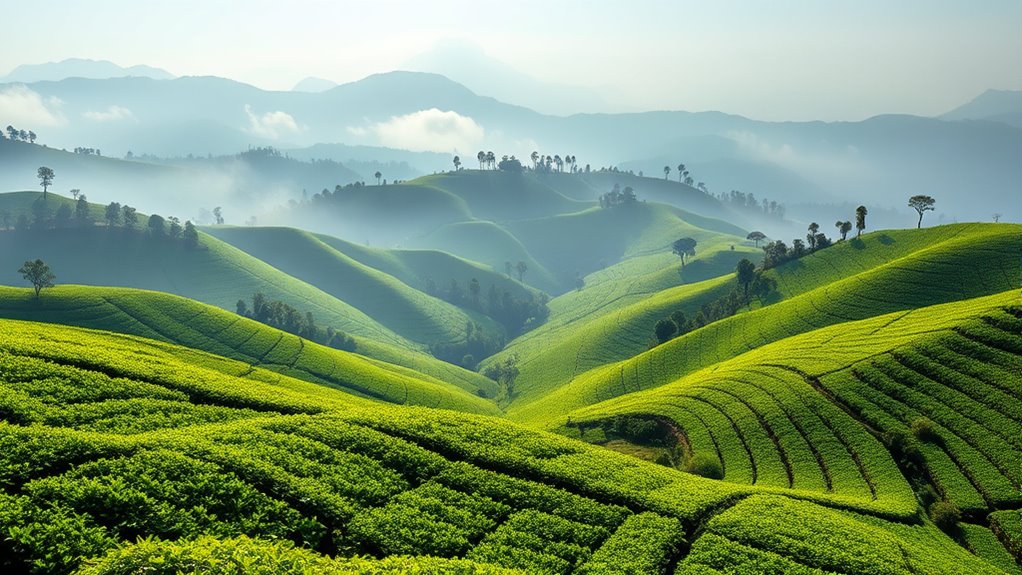
Moving west to Darjeeling, you encounter a very different climate. Nestled in the Himalayan foothills, Darjeeling experiences a cooler, more temperate climate with significant temperature variations and high altitudes. These conditions slow down the growth of tea bushes, producing smaller leaves with delicate characteristics. The tea processing methods here are more nuanced; they often involve careful oxidation and minimal firing to preserve the tea’s bright, floral, and muscatel notes. The regional climate impacts are evident in the tea’s subtlety and complexity—cool temperatures and misty mornings promote nuanced flavors, making Darjeeling teas some of the most prized and sought-after worldwide. The unique terroir here results in teas that are lighter, aromatic, and highly prized for their finesse. Additionally, the high-altitude environment enhances the development of unique flavor profiles, setting Darjeeling apart from other black teas.
Finally, in Yunnan, located in southwestern China, the climate is a mix of subtropical and highland conditions. The region benefits from a long growing season with ample rainfall and moderate temperatures, which contribute to the development of rich, full-bodied black teas. The processing methods in Yunnan often include traditional techniques like withering, rolling, oxidation, and firing, with some variations to enhance the tea’s earthy, malty qualities. The regional climate impacts Yunnan teas by giving them a robust, layered flavor profile, often with hints of spice and fruitiness. These teas are well-loved for their depth and complexity, reflecting the region’s diverse microclimates and centuries-old tea traditions.
Each of these regions offers a unique expression of black tea, shaped by their environments and processing styles. As you savor your next cup, consider how regional climate impacts and processing methods come together to create the distinctive flavors and aromas that define Assam, Darjeeling, and Yunnan teas.

Tea Kettle for Stovetop, Barista's Choice Gooseneck Pour Over with Flow Control, Food Grade Stainless Steel Water Kettle, Tea Pot for Home & Kitchen - Small 28oz, Silver
PERFECT GOOSENECK SPOUT: Chefbar pour over tea kettle is designed with a precise gooseneck spout nozzle to help...
As an affiliate, we earn on qualifying purchases.
Frequently Asked Questions
How Do Climate Differences Affect Black Tea Flavor Profiles?
Climate impact considerably influences black tea flavor differentiation. You’ll notice that warmer, humid conditions tend to produce richer, bolder flavors, while cooler, drier climates create more delicate, nuanced profiles. These climate variations affect leaf growth and oxidation, shaping the tea’s aroma and taste. By understanding these differences, you can better appreciate how regional climates craft unique black tea experiences, making each sip distinct and memorable.
What Traditional Processing Techniques Are Unique to Each Region?
Imagine you’re tasting history with each sip. In Assam, traditional rolling techniques crush the leaves to release bold flavors, while regional fermentation amplifies their malty notes. Darjeeling’s delicate aroma comes from gentle withering and careful rolling, preserving floral nuances. Yunnan’s unique processing involves a semi-oxidized method, giving it a rich, earthy profile. These regional techniques shape each tea’s unique character, making every cup a journey through tradition.
Are There Specific Health Benefits Associated With Teas From These Regions?
You can enjoy various health benefits from teas from these regions, like antioxidant properties that help protect your cells and boost immunity. These teas may also promote stress relief, helping you relax after a busy day. The unique processing methods enhance these benefits, making your tea-drinking experience not just enjoyable but also supportive of your overall wellness. So, choosing regional black teas can be a smart move for your health.
How Does Elevation Influence the Taste of Black Teas?
Elevation acts as a silent artist shaping your black tea’s essence, where higher altitudes create a delicate symphony of flavor. As the altitude impact deepens, it influences flavor development, making teas more nuanced and refined. You’ll notice brighter, more complex notes in teas grown at higher elevations, like Darjeeling’s signature brightness. Embrace this rhythm, as the mountain’s height elevates your tea experience, turning each sip into a poetic journey.
What Are the Best Brewing Methods for Each Regional Black Tea?
You should tailor your brewing methods to each regional black tea for the best flavor. Use fresh, cool water and brewing accessories like a teapot or infuser for Darjeeling, which benefits from a gentler steep. For Assam, opt for a stronger brew with a longer steep time, and store your tea properly in an airtight container. Yunnan teas often need a slightly cooler infusion, so adjust your tea storage and brewing temperature accordingly for ideal taste.

Bodum 34oz Pour Over Coffee Maker, High-Heat Borosilicate Glass with Reusable Stainless Steel Filter and Cork Grip - Made in Portugal
Pour Over Coffee: Manual Pour Over Coffee Maker allows you to brew an excellent cup of Coffee in...
As an affiliate, we earn on qualifying purchases.
Conclusion
Now that you’ve explored Assam, Darjeeling, and Yunnan, you see how each region’s unique climate and soil craft distinct black teas. Imagine sipping a cup of this centuries-old brew while waiting for your hoverboard to arrive in a bustling city of the future. These teas connect past and present, reminding you that no matter the era, a good cup of black tea always offers comfort, history, and a touch of adventure.

Philips 1200 Series Fully Automatic Espresso Machine, Classic Milk Frother, 2 Coffee Varieties, Intuitive Touch Display, 100% Ceramic Grinder, AquaClean Filter, Aroma Seal, Black (EP1220/04)
With Philips 1200 Series enjoy the delicious taste and aroma of coffee from fresh beans at the perfect...
As an affiliate, we earn on qualifying purchases.

Espresso Machine with Grinder, 20 Bar Professional Expresso Coffee Machines with Milk Frother Steam Wand, Espresso Maker with 60oz Removable Water Tank, Cappuccino & Latte Machine for Home (Black)
【Barista-Level Espresso Experience at Home】: The Espresso Machine with Grinder helps you brew rich, café-quality espresso and handcrafted...
As an affiliate, we earn on qualifying purchases.