
To move coffee with fewer emissions, the shipping industry is switching to sustainable fuels like biofuels, ammonia, and hydrogen that produce less greenhouse gases. Ships are getting upgrade with new technology and improved designs to run more efficiently on these greener options. Ports and industry players are collaborating to build better infrastructure. By adopting these innovations, you can help reduce environmental impact while enjoying your favorite coffee. Keep exploring to see how these changes are transforming maritime transportation.
Key Takeaways
- Switching to sustainable fuels like biofuels, ammonia, and hydrogen reduces emissions during coffee transportation.
- Upgrading port infrastructure supports the handling and storage of low-carbon fuels for shipping coffee.
- Shipping companies are adopting vessel modifications and efficiency technologies to lower fuel consumption and emissions.
- Industry collaboration and stricter regulations incentivize the use of cleaner fuels for transporting coffee globally.
- Using renewable energy sources and optimizing supply chain logistics further decreases the carbon footprint of coffee shipping.
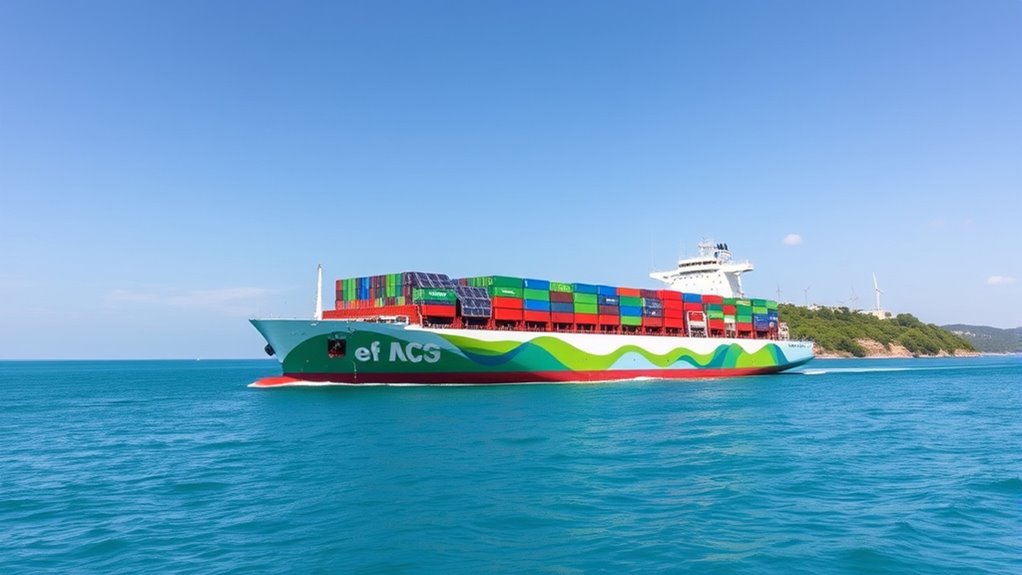
As the shipping industry accounts for a significant portion of global greenhouse gas emissions, adopting low-carbon strategies has become essential. One of the most promising approaches involves switching to sustainable fuel sources. Traditional fossil fuels like heavy fuel oil contribute heavily to carbon emissions, but sustainable fuels—such as biofuels, ammonia, or hydrogen—offer a cleaner alternative. These fuels are designed to reduce the carbon footprint of shipping activities while maintaining the energy density needed for large vessels. Moving to sustainable fuel not only helps lower greenhouse gases but also aligns the shipping sector with international climate commitments, making it a critical step toward emission reduction.
Switching to sustainable fuels reduces shipping emissions and supports global climate commitments.
You’ll find that integrating sustainable fuel into shipping operations requires technological adjustments, but the benefits are substantial. Ships powered by renewable and low-carbon fuels emit significantly fewer greenhouse gases, helping to curb the industry’s overall environmental impact. This shift also improves air quality by reducing pollutants like sulfur oxides and particulate matter. As more shipping companies adopt sustainable fuels, the industry moves closer to achieving meaningful emission reductions, which are vital for combating climate change. The move isn’t just about choosing cleaner fuels; it’s about reimagining how ships operate, from engine design to fuel storage, to optimize efficiency and sustainability.
Embracing low-carbon shipping solutions demands innovation and collaboration across sectors. Ports are upgrading infrastructure to handle alternative fuels, and shipbuilders are designing vessels that can efficiently utilize these new energy sources. Regulatory bodies are setting stricter emissions standards, encouraging companies to seek sustainable fuel options proactively. When you prioritize sustainable fuel, you’re actively participating in a broader effort to reduce the shipping industry’s carbon footprint. This approach supports global goals to limit temperature rise and protect vulnerable ecosystems affected by climate change. Additionally, understanding foraging range can help optimize supply chain logistics to reduce unnecessary transportation and emissions.
While the initial investment in sustainable fuel technologies can seem intimidating, the long-term benefits outweigh the costs. Reduced fuel consumption, lower emissions, and enhanced corporate sustainability profiles make the transition worthwhile. As a stakeholder in the supply chain, you can advocate for and adopt low-carbon practices, reinforcing the industry’s shift toward greener alternatives. The move to sustainable fuel is not just a trend but a necessity, enabling shipping to deliver goods while minimizing its environmental impact. By making conscious choices today, you help drive the industry toward a cleaner, more sustainable future—one where emission reduction is at the core of maritime operations.
Frequently Asked Questions
How Does Low-Carbon Shipping Impact Global Coffee Prices?
You’ll find that low-carbon shipping can stabilize global coffee prices by encouraging sustainable practices and reducing transportation costs over time. Carbon pricing incentivizes companies to cut emissions, leading to more resilient supply chains that are less vulnerable to disruptions. As a result, coffee prices may become more predictable, benefiting producers and consumers alike, while also supporting environmental goals through reduced emissions.
What Are the Main Challenges in Implementing Green Shipping Practices?
You face challenges in implementing green shipping practices, mainly due to the high costs of improving fuel efficiency and the need for infrastructure development. Upgrading ships and ports requires significant investment, which can slow adoption. Additionally, you may encounter resistance from stakeholders accustomed to traditional methods. Overcoming these obstacles involves coordinated efforts, policy support, and innovation to make low-carbon shipping more accessible and cost-effective.
Can Small-Scale Coffee Producers Access Low-Carbon Shipping Options?
You can absolutely access low-carbon shipping options, even as a small-scale coffee producer. With innovative small-scale logistics and local distribution efforts, you’re not limited by massive shipping infrastructure. By partnering with eco-friendly freight services or utilizing regional transport, you can dramatically reduce emissions. Imagine shrinking your carbon footprint as if you’re squeezing a mountain into a molehill—making sustainable shipping a feasible reality for your coffee business.
How Do Regulations Influence Low-Carbon Shipping Innovations?
Regulations considerably influence low-carbon shipping innovations by setting strict regulatory compliance and emission standards. You’re encouraged to develop new, cleaner shipping technologies that meet these standards, which push the industry toward sustainable practices. Governments and organizations often provide incentives for compliance, motivating you to adopt low-emission solutions. As a result, these regulations drive innovation, helping you reduce carbon footprints while maintaining efficient, eco-friendly shipping methods for coffee and other goods.
What Future Technologies Could Further Reduce Shipping Emissions?
Imagine you’re steering a ship into the future, where new technologies serve as your compass. You could harness renewable fuels to power your voyage, reducing emissions and safeguarding the environment. Electric vessels, like gleaming ships powered by invisible currents, promise even cleaner journeys. These innovations will cut emissions further, making shipping more sustainable. Embracing them now guarantees you stay ahead in the race toward greener, more efficient maritime transport.
Conclusion
You see, reducing emissions in shipping isn’t just about technology—it’s about making conscious choices. While ships still traverse vast oceans, cleaner fuels and innovative methods cut their carbon footprint. It’s a delicate balance: the vastness of global trade versus the urgency to protect our planet. As you consider how coffee journeys from farm to cup, remember that every small step toward low-carbon shipping adds up. Together, we can make a difference—one shipment at a time.