Imagine a decadent layer cake, its surface cloaked in a smooth, velvety buttercream that beckons you to take a slice. You might think that mastering this classic frosting is a daunting task, but it's actually quite achievable with the right approach. Once you understand the balance of ingredients and techniques, you'll find the possibilities are endless. So, what's the secret to achieving that perfect consistency and flavor? Let's uncover the essential steps that will elevate your baking and impress anyone lucky enough to indulge.
Key Takeaways
- Combine 1 cup of softened unsalted butter with 4 cups of sifted powdered sugar for a creamy base.
- Add 1 teaspoon of vanilla extract and a pinch of salt to enhance flavor.
- Gradually mix in 2-4 tablespoons of milk or heavy cream to achieve desired consistency.
- Beat the mixture on medium speed until fluffy and smooth, adjusting as needed.
- Store any leftover frosting in an airtight container for up to a week.
History

Buttercream frosting has a rich history that dates back to the 18th century, when early recipes first appeared in European cookbooks.
Initially, confectioners refined the technique of creaming butter with sugar, creating a smooth, sweet frosting that became known as buttercream. By the 19th century, the term gained popularity as bakers experimented with incorporating vanilla for added flavor.
In the United States, American buttercream emerged as a simpler version, celebrated for its ease of preparation and versatility on cakes. Traditional recipes highlighted the high-fat content of butter and sugar, resulting in a rich flavor and creamy texture.
The late 20th century saw a boom in decorative techniques, making buttercream the go-to choice for elaborate cake designs and celebrations.
Recipe
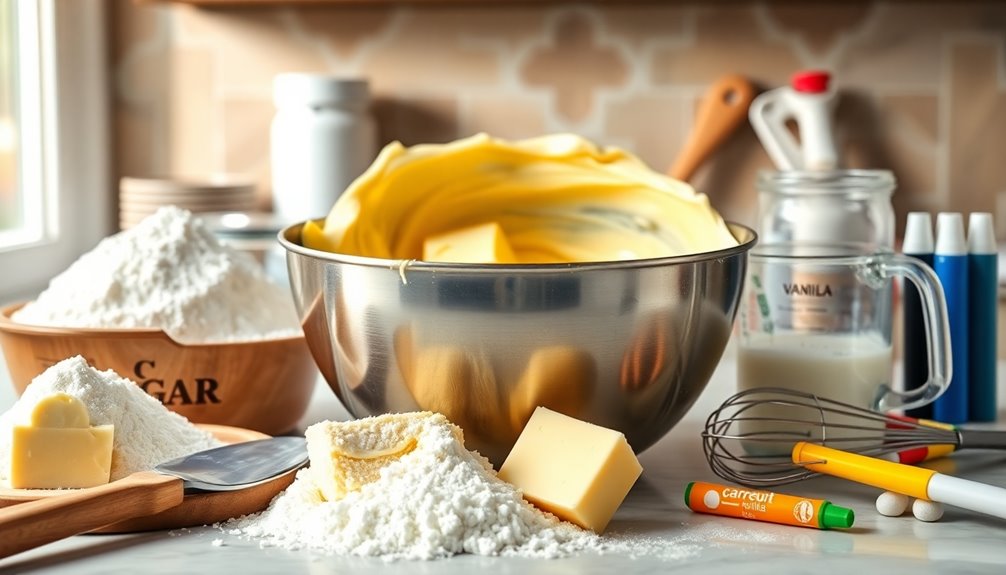
Buttercream Frosting Recipe
Buttercream frosting is a classic and versatile confection that will elevate any cake or cupcake to the next level. This creamy, sweet frosting is perfect for spreading, piping, or even decorating elaborate cake designs. With just a few simple ingredients, you can create a light and fluffy frosting that isn't only delicious but also visually appealing when enhanced with food coloring.
To achieve the perfect buttercream frosting, it's essential to start with softened unsalted butter, as this will ensure a smooth and creamy texture. Gradually incorporating sifted powdered sugar helps to prevent clumping and allows for better mixing. Depending on your desired consistency, you can adjust the amount of milk added, ensuring that your frosting is just right for your decorating needs.
Ingredients:
- 1 cup unsalted butter (softened)
- 4 cups powdered sugar (sifted)
- 1 teaspoon vanilla extract
- 2-4 tablespoons milk
- Food coloring (optional)
To prepare the buttercream frosting, begin by placing the softened unsalted butter in a mixing bowl. Beat the butter on medium speed until it becomes creamy and smooth. Gradually add the sifted powdered sugar, mixing on low speed to prevent a sugar cloud.
Once incorporated, pour in the vanilla extract and add 2 tablespoons of milk. Increase the mixer speed to medium-high and beat the mixture for about 5-7 minutes, until it's light and fluffy. If the frosting is too thick, add another tablespoon of milk; if it's too thin, add a bit more powdered sugar until you achieve your desired consistency.
For the best results, make sure your butter is softened to room temperature to create a creamy texture. When adding food coloring, start with a small amount and gradually increase until you reach your desired shade, mixing well to ensure even color distribution.
If you have leftover buttercream, store it in an airtight container in the refrigerator for up to a week, or freeze it for up to three months. Before using frozen buttercream, be sure to let it thaw and re-whip it to restore its original fluffy consistency.
Cooking Steps
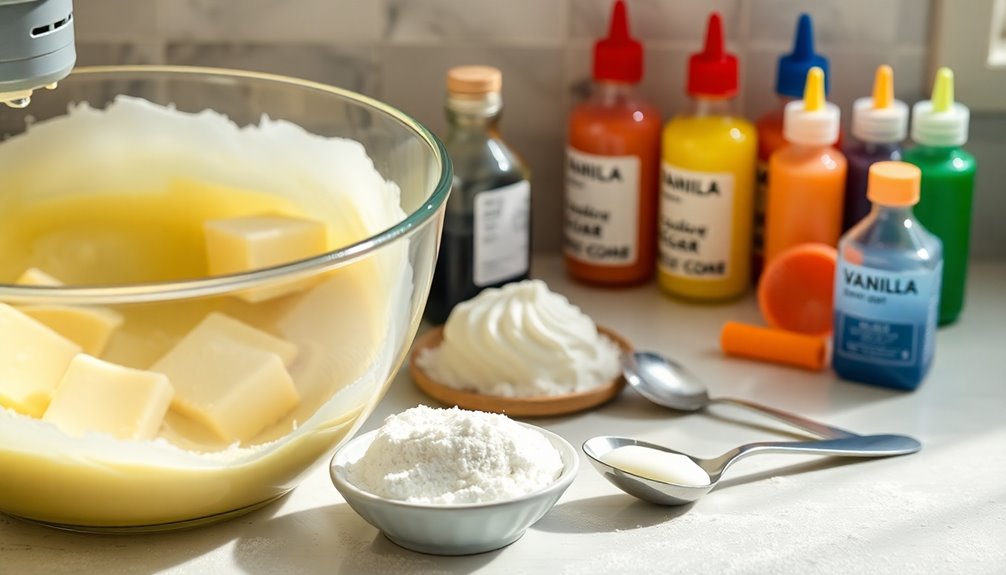
To make the perfect buttercream frosting, you'll want to start by measuring your softened butter accurately for that creamy base.
Next, add sifted powdered sugar gradually to mix it in without a mess, then incorporate milk and flavor extracts carefully to enhance the taste.
Adjust the consistency as needed, and you'll be well on your way to a delicious frosting!
Step 1. Measure Softened Butter Accurately

Accurate measurement of softened butter is crucial for achieving the perfect buttercream frosting.
To measure softened butter accurately, start with 1 cup of unsalted butter, which typically weighs about 227 grams. If you prefer measuring by volume, pack the softened butter into your measuring cup, ensuring you level it off with a knife for precision.
Make sure the butter is at room temperature, ideally left out for 30 to 60 minutes. If you're short on time, cut the butter into smaller pieces and microwave it at 50% power in 10-second intervals until it's just softened but not melted.
Always check the texture by pressing it lightly with your fingertip; it should leave an impression without being greasy or runny.
Step 2. Add Sifted Powdered Sugar

Adding sifted powdered sugar is a crucial step in creating smooth and fluffy buttercream frosting. Start by gradually adding sifted powdered sugar to the creamed butter, using your mixer on low to prevent a sugary cloud. Aim for a total of 4 cups, adjusting based on your desired sweetness.
As you add the sugar, regularly scrape down the sides of the mixing bowl to ensure you incorporate all ingredients evenly. Once all the sugar is added, increase the mixer speed to medium-high. This helps achieve that light, fluffy frosting texture that's perfect for decorating.
Step 3. Incorporate Milk for Creaminess

As you start incorporating milk into your buttercream frosting, gradually add 2 tablespoons to achieve the desired creaminess without making it too runny.
If you prefer a rich texture, consider using whole milk or heavy cream. This will enhance the smoothness and creaminess of your frosting.
After adding the milk, mix on medium speed to ensure even distribution and maintain fluffiness.
Adjust the amount of milk based on your intended use; add more for a spreadable icing or less for a stiffer piping consistency.
Step 4. Add Flavor Extracts Carefully

Once you've achieved the desired creaminess with your buttercream frosting, it's time to enhance its flavor. Start by adding flavor extracts carefully; a teaspoon of high-quality extracts like pure vanilla can really elevate the taste.
Incorporate extracts gradually, mixing well after each addition to gauge the flavor intensity before adding more. For a unique twist, try flavored extracts such as coconut or hazelnut, but remember to adjust the quantity to taste, as these can be stronger.
Always taste the buttercream after adding extracts to ensure a balanced flavor profile. If needed, adjust for sweetness and richness to create the perfect frosting that complements your baked goods.
Enjoy the process and make it your own!
Step 5. Adjust Consistency With Milk

To achieve the perfect consistency for your buttercream frosting, start by incorporating 2 tablespoons of milk into the mixture.
Mix on low speed to prevent splattering and ensure even incorporation. If your frosting is too thick, feel free to add more milk, one teaspoon at a time, until you reach that smooth, spreadable texture.
For a thinner consistency, suitable for drizzling, you can add up to 4 tablespoons of milk while mixing.
Remember, if your frosting becomes too runny, thicken it by gradually adding sifted powdered sugar back into the mixture.
This way, you'll maintain a delightful balance of flavor and texture in your buttercream frosting.
Enjoy creating the perfect finish for your baked goods!
Final Thoughts

While creating homemade buttercream frosting may seem daunting, it's actually a quick and rewarding process that enhances your baked goods.
With just unsalted butter, powdered sugar, and vanilla extract, you can whip up a delicious frosting in about 15 minutes. Remember to sift the powdered sugar for a smooth texture, ensuring your final product is free from graininess.
This buttercream frosting recipe is versatile enough to cover a 9×13 sheet cake or a two-layer 8-inch cake. For customization, adjust the amount of milk or cream to achieve your desired consistency.
Follow the storage guidelines to keep it fresh; at room temperature, it lasts up to three days, while refrigeration extends its life to two weeks. Additionally, using airtight containers can help maintain butter quality and prolong freshness.
Enjoy your baking!