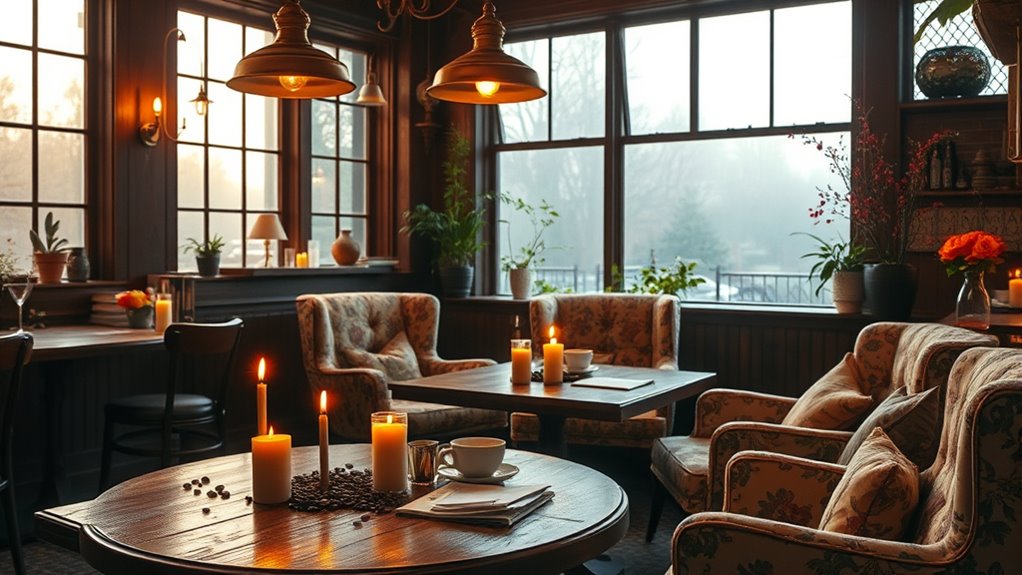

Cafés serve as modern third places where you can relax, connect, and feel at home beyond your daily routines. They provide a welcoming environment with comfy seating, warm lighting, and communal tables that invite spontaneous chats and casual interactions. These spaces foster community bonds and make you feel part of something bigger, often turning strangers into friends. Stay with us to discover how these social hubs truly become extensions of your personal space.
Key Takeaways
- Cafés serve as neutral, welcoming environments that foster informal social interactions beyond home and work.
- Thoughtful design elements like communal tables and warm lighting promote comfort and spontaneous conversations.
- Regular visits to cafés build routines and strengthen community bonds, creating a sense of belonging.
- Cafés facilitate diverse interactions, helping strangers become friends and nurturing a supportive social network.
- As modern third places, cafés create a “second home” feeling where patrons can relax, connect, and feel part of a community.
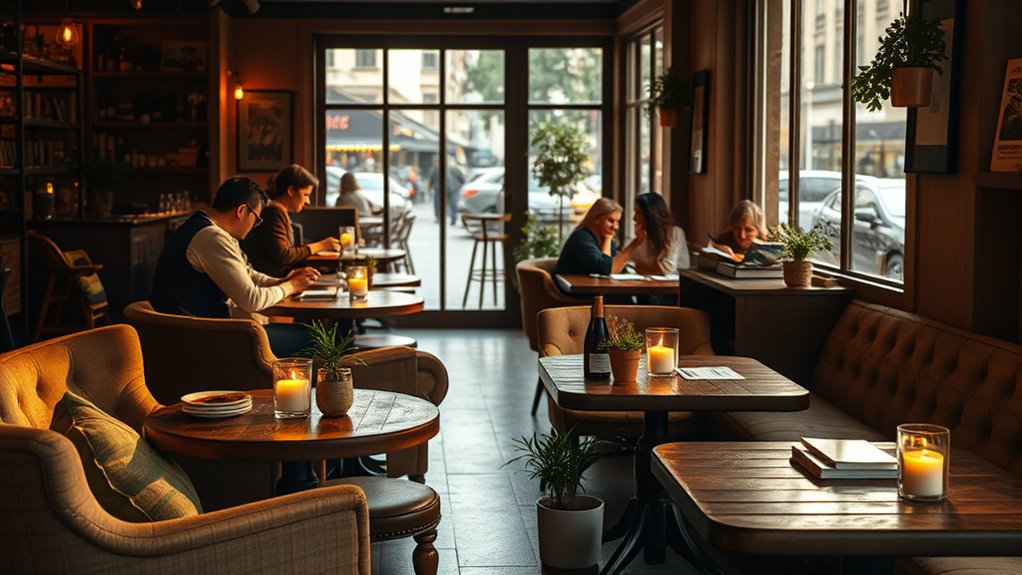
Third Place Theory explores the idea that beyond home and work, there’s an essential space where people gather, connect, and build community. When you step into a café, you’re stepping into one of these crucial social spaces. These environments aren’t just about grabbing a coffee; they serve as hubs for community bonding. You might notice that, over time, a regular visit turns into more than just a caffeine fix — it becomes a part of your routine, a place where relationships develop naturally. As you sit there, you’re not only enjoying your drink but also contributing to the social fabric of the space. People recognize you, exchange smiles, and sometimes even share conversations. This creates a sense of belonging that goes beyond individual interactions; it fosters a collective feeling of community.
Regular visits to cafés foster community, connection, and a sense of belonging beyond just enjoying a drink.
Cafés are uniquely positioned as social spaces because they encourage informal interactions. You’re free to settle in with a book, work on your laptop, or chat with friends, all in a relaxed setting. Unlike the sterile environment of some workplaces or the solitude of home, cafés offer an inviting atmosphere that promotes casual engagement. Here, you’re more likely to meet people from different backgrounds, share ideas, or simply enjoy the background hum of conversation. These moments, though seemingly small, build bridges between individuals, strengthening community bonds. The layout and ambiance of cafés—comfy seating, warm lighting, and communal tables—are all designed to foster social connection. They’re intentionally created to make you feel comfortable enough to linger, to strike up a conversation, or to just observe the lively flow of activity.
The importance of social spaces like cafés becomes even clearer when you think about how they support community bonding. These places serve as neutral ground, where you can step away from your daily routines and engage with others without pressure. This environment encourages spontaneity and openness, helping you form new friendships or deepen existing ones. Over time, these casual interactions can grow into meaningful relationships, reinforcing a sense of community that’s often missing in other areas of life. Additionally, awareness of personal debt forgiveness bills can influence how individuals plan their visits, knowing that their social routines are part of a broader support network. It’s in these shared spaces that you experience a collective sense of identity and belonging, making cafés more than just places to drink coffee—they become integral to your social life.
In essence, cafés function as modern-day third places, crucial for community bonding and social interaction. They create a welcoming environment where connections flourish naturally, turning strangers into acquaintances and acquaintances into friends. This is why cafés often feel like a second home — they’re designed to nurture community, making every visit a chance to connect and belong.
Frequently Asked Questions
How Do Third Places Influence Community Relationships?
You can see third places fostering community relationships through enhanced social cohesion and informal interactions. When you spend time in cafés, you naturally connect with others, share stories, and build trust. These relaxed environments break down social barriers, making neighbors feel more connected and engaged. By encouraging casual conversations, third places strengthen bonds and create a sense of belonging, ultimately enriching the overall fabric of the community.
What Role Does Ambiance Play in Third Place Comfort?
Ambiance plays a essential role in making a third place feel comfortable and welcoming. You’re drawn in by cozy lighting that creates a warm, relaxed atmosphere, while inviting decor sparks your curiosity and makes you want to stay longer. This combination helps you feel at ease, encouraging meaningful interactions and fostering a sense of belonging. When the ambiance hits the right notes, it transforms a simple space into your second home.
Can Third Places Impact Mental Health Positively?
Imagine discovering a secret that boosts your mental health every time you step into your favorite third place. These spots foster social connection, reduce stress, and boost your mood, creating a powerful positive impact on your mental well-being. By offering a welcoming environment, they help you feel less isolated and more connected. So, yes—your favorite café or community space can truly enhance your mental health, one visit at a time.
How Do Third Places Differ Across Cultures?
You’ll notice that third places differ across cultures due to cultural variations and societal norms. In some societies, cafés are lively social hubs, emphasizing community and openness, while in others, they may be quieter spaces for reflection. These differences shape how people interact, what’s considered appropriate, and how these places serve as extensions of home. Embracing these cultural nuances helps you appreciate how third places fulfill diverse social needs worldwide.
What Design Elements Foster a Sense of Belonging?
You walk into a café that feels like an extension of your living room—cozy lighting casts a warm glow, and welcoming decor makes you feel instantly at ease. To foster belonging, focus on inviting seating arrangements, personal touches, and soft textures. These design elements create an atmosphere where you can relax, connect, and truly feel like you belong, transforming a simple space into your second home.
Conclusion
So, next time you step into a cozy café, remember it’s more than just coffee; it’s your third place. It’s where comfort, connection, and community collide, creating a space that feels like home away from home. Embrace the energy, enjoy the environment, and let the familiarity foster friendships and fun. Your third place isn’t just a spot; it’s a sanctuary where stories start and memories multiply. Make it yours, and let it truly feel like home.