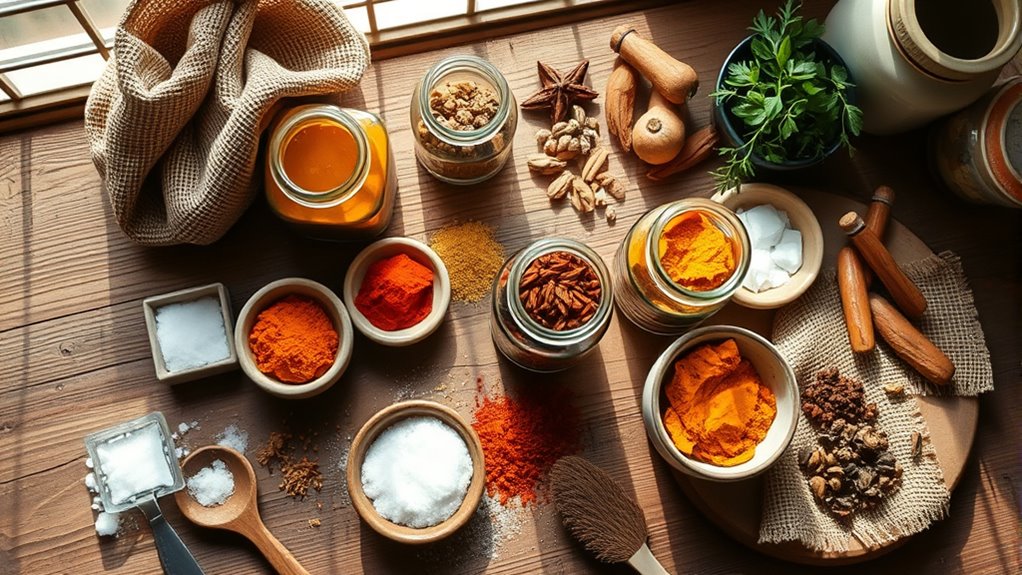

To strengthen your flavor memory, start experimenting with pantry staples by recognizing natural affinities like sweet with salty or tangy with creamy. Focus on familiar pairings such as tomatoes, basil, and garlic that evoke comfort and nostalgia, helping your palate connect flavors to memories. Use mindful combinations to deepen your understanding of ingredient relationships and enhance sensory perception. Keep exploring these techniques, and you’ll discover how to craft memorable dishes that resonate with your taste experiences.
Key Takeaways
- Use pantry staples to create familiar flavor combinations that evoke personal memories and deepen your culinary associations.
- Experiment with pairing natural affinities like sweet and salty or spicy and cooling to reinforce flavor recognition.
- Practice intentional ingredient pairings, such as herbs with proteins, to enhance sensory perception and recall past tastes.
- Focus on sensory awareness during cooking to better understand how flavors influence memory and improve palate training.
- Recognize how classic pantry ingredients, like tomatoes or garlic, trigger emotional responses and strengthen flavor memory.
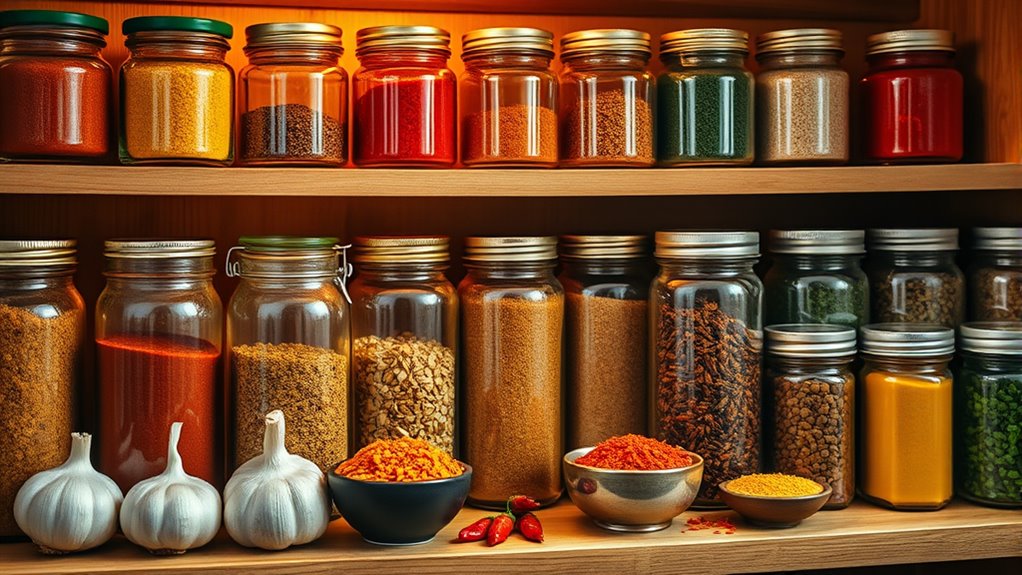
Have you ever wondered why a familiar taste can instantly transport you back to a childhood memory or a special moment? It’s because your palate holds a powerful connection to your past experiences, and with a little practice, you can strengthen that connection through intentional flavor memory training. One of the key tools in this journey is understanding pairing techniques and flavor pairing. These techniques help you discover how different ingredients complement each other, creating new taste combinations and deepening your appreciation for familiar flavors.
When you start experimenting with pantry staples, focus on how ingredients pair together. Think about the natural affinities between flavors—sweet with salty, spicy with cooling, tangy with creamy. For example, if you’re working with ingredients like tomatoes, basil, and garlic, you’re tapping into classic flavor pairings that have stood the test of time. By understanding these pairings, you can craft dishes that evoke comfort or nostalgia while also exploring new flavor dimensions. Over time, you’ll notice how certain combinations trigger memories or feelings, reinforcing your flavor memory and making your cooking more intuitive.
Pairing techniques aren’t just about following recipes—they’re about recognizing the relationships between ingredients. For instance, adding a splash of lemon juice to fish enhances its flavor through acidity, balancing richness and sharpening taste. Or, combining herbs like thyme and rosemary can deepen herbal notes, creating a more complex and memorable flavor profile. As you experiment, pay attention to how these pairings influence your perception of flavors. Do they remind you of a dish from your childhood or a special meal shared with loved ones? This awareness deepens your palate’s capacity to remember and reproduce those flavors. Additionally, understanding sensory perception can help you refine your technique and make more intentional flavor choices.
Frequently Asked Questions
How Long Does It Take to Develop Flavor Memory?
It takes several weeks to develop flavor memory, as your brain needs time for sensory adaptation and memory consolidation. You’ll notice improvements as you repeatedly taste and compare pantry staples, strengthening neural connections. Consistent exposure helps your palate recognize subtle flavors faster. Be patient and intentional with your tasting practice, and soon you’ll find your ability to distinguish and recall flavors becomes more intuitive and refined.
Can Flavor Memory Improve With Age or Experience?
Like fine wine aging in a cellar, your flavor memory improves with age and experience. You strengthen taste associations through repeated exposure, which enhances sensory adaptation and sharpens your palate. Over time, you become more intuitive about flavors, making it easier to distinguish subtle notes. Keep exploring, and your ability to recall and appreciate complex tastes will deepen, turning everyday ingredients into a symphony for your senses.
Are There Specific Foods That Better Enhance Flavor Memory?
You can enhance your flavor memory by focusing on specific foods that strengthen flavor pairing and spice combinations. Foods like aromatic herbs, aged cheeses, and fermented products help deepen your palate’s connections. When you experiment with different spice mixes and pairings, you train your mind to recognize subtle flavors. Over time, these experiences boost your ability to recall and appreciate complex tastes, making your flavor memory sharper and more refined.
How Does Aroma Influence Flavor Memory Retention?
Aroma triggers are like your brain’s sneaky little spies, secretly forging scent associations that boost flavor memory retention. When you smell something familiar, it instantly pulls up past experiences, making tastes stick longer. So, next time you want to remember that elusive flavor, rely on aroma’s power—because scent association isn’t just perfume, it’s your secret weapon for locking in flavor memories.
Can Flavor Memory Help Reduce Food Allergies?
Flavor memory can help reduce food allergies by gradually desensitizing your taste buds through repeated exposure, which promotes sensory adaptation. As your taste buds regenerate, you become more familiar with certain flavors, potentially decreasing allergic reactions over time. This process encourages a safer, more controlled way to reintroduce allergenic foods, but always do so under medical supervision. Building positive associations with familiar flavors supports your journey toward managing food allergies effectively.
Conclusion
By exploring your pantry staples, you’re planting seeds of flavor memory that grow stronger with each taste. Think of your ingredients as musical notes, ready to compose countless delicious melodies. When you learn to recognize and combine these everyday flavors, your palate becomes a well-tuned instrument, turning simple meals into symphonies. Keep experimenting, and watch your culinary confidence blossom—because the more you train your palate, the richer your flavor stories become.

Noah, the Editor-in-Chief at Cappuccino Oracle, plays a pivotal role in shaping the voice and vision of our renowned platform. With an unwavering passion for coffee, coffee alternatives, and tea, Noah leads Cappuccino Oracle towards new horizons in the realm of coffee journalism.
Noah’s upbringing immersed him in the distinct aromas of artisanal coffee roasters, sparking a fascination that continues to fuel his professional journey. He joined Cappuccino Oracle as a senior editor and later assumed the position of Editor-in-Chief. Under his guidance, our platform has flourished into a trusted source for coffee, coffee alternatives, and tea lovers worldwide.