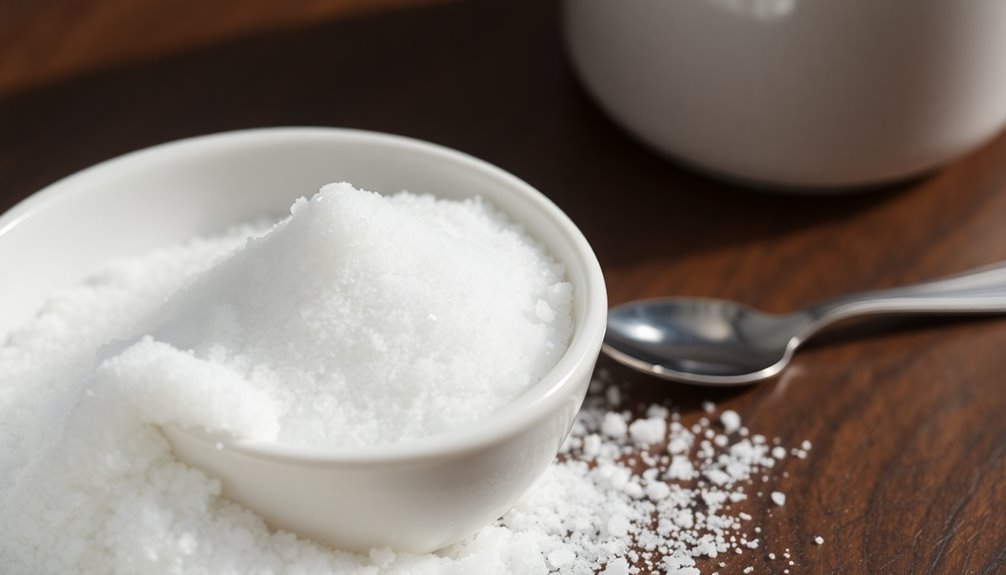
When choosing sweeteners and syrups, keep in mind that natural options like honey and maple syrup tend to cause quick blood sugar spikes and can feed bacteria that lead to cavities. Artificial sweeteners usually have minimal impact on blood sugar and are better for dental health since they don’t promote decay. However, moderation is key with any type. To learn more about how each affects your health and dental wellness, stay with us for all the details.
Key Takeaways
- Natural sweeteners like honey and maple syrup cause blood sugar spikes due to glucose and fructose content.
- Artificial sweeteners have minimal blood sugar impact but may influence insulin response and gut health.
- Both natural and artificial sweeteners can promote cavities; moderation is crucial for dental health.
- Artificial sweeteners reduce cavity risk as they lack fermentable sugars, unlike natural options.
- Choosing between sweeteners depends on health goals, with moderation key for overall well-being.
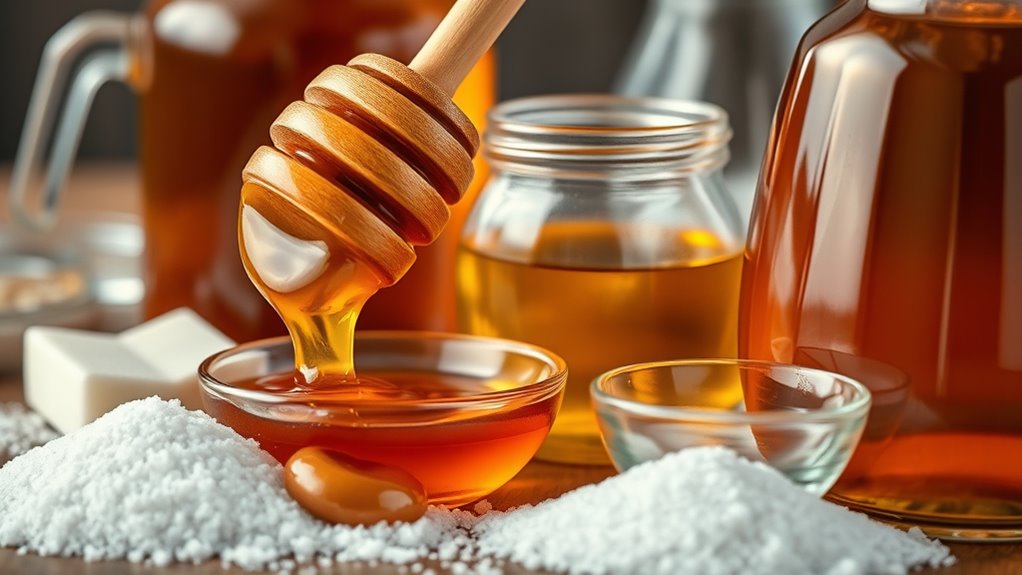
Have you ever wondered what makes your coffee or pancakes taste so sweet? The answer often lies in the sweeteners or syrups you choose. When it comes to sweetening your foods and drinks, you have two main options: natural versus artificial sweeteners. Natural options, like honey, maple syrup, or agave nectar, come from plant sources and contain some nutrients and antioxidants. Artificial sweeteners, such as aspartame, sucralose, or saccharin, are synthetic compounds designed to mimic sugar’s sweetness without the calories. Your choice between these options can dramatically impact your blood sugar levels. Natural sweeteners, although often perceived as healthier, can still raise blood sugar, especially if consumed in large amounts. Honey and maple syrup, for example, are primarily composed of sugars like glucose and fructose, which are quickly absorbed into your bloodstream, causing a spike in blood sugar levels. This effect is especially important for people managing diabetes or insulin sensitivity. Artificial sweeteners, on the other hand, generally don’t cause a rise in blood sugar because they are not metabolized in the same way as sugar. They pass through your system with minimal impact on blood glucose, making them appealing options for those trying to control their blood sugar levels. However, it’s worth noting that some studies suggest that artificial sweeteners might influence insulin response or gut health in ways that aren’t fully understood yet. Additionally, ongoing research into AI’s role in health continues to explore how various sweeteners may impact overall health beyond just blood sugar and dental concerns.
Beyond blood sugar concerns, your choice of sweetener also affects dental health. Natural sweeteners like honey and syrup are still high in sugars that feed bacteria in your mouth, potentially leading to cavities and tooth decay if consumed excessively. Artificial sweeteners, lacking fermentable sugars, don’t promote cavity-causing bacteria growth, making them a better choice for maintaining dental health if you’re concerned about cavities. That said, moderation remains key—overdoing either type can lead to other health issues. Additionally, some people prefer natural sweeteners because they’re less processed and contain trace nutrients, while others opt for artificial options to reduce calorie intake or blood sugar spikes. Ultimately, understanding how each type impacts your blood sugar and dental health helps you make informed choices. If you’re watching your blood sugar closely, artificial sweeteners might be the safer bet. But if you’re seeking minimally processed options with some nutrients, natural sweeteners could suit you better. Just keep in mind that no matter what you pick, moderation and mindful consumption are essential for maintaining overall health and enjoying your favorite sweet treats without guilt.
Frequently Asked Questions
How Do Artificial Sweeteners Affect Gut Bacteria?
Artificial sweeteners can alter your gut microbiota by affecting the balance of bacteria. They may promote artificial fermentation, leading to changes in gut health. Some studies suggest these sweeteners can reduce beneficial bacteria, potentially causing digestive issues or impacting overall immunity. You might notice effects like bloating or discomfort if your gut bacteria are disturbed. It’s important to monitor how artificial sweeteners influence your digestion and consider moderation for better gut health.
Are Natural Sweeteners Safer for Dental Health Than Artificial Ones?
Did you know that about 90% of adults develop dental decay at some point? Natural sweetness generally poses less risk to your dental health than artificial ones because it doesn’t promote acid production that causes cavities. Natural sweeteners, like honey or agave, are less likely to contribute to dental decay, making them a safer choice. So, if you’re concerned about your teeth, opting for natural sweetness can help protect your smile.
Can Syrup Consumption Influence Blood Sugar Levels Long-Term?
Yes, syrup consumption can influence your long-term blood sugar levels, especially if you consume it frequently or in large amounts. Over time, this can impact your metabolic health, increasing risks of insulin resistance and type 2 diabetes. To maintain better long-term blood sugar control, it’s best to limit syrup intake and opt for healthier alternatives, supporting your overall metabolic health and reducing strain on your body’s glucose management.
What Are the Environmental Impacts of Producing Various Sweeteners?
You should consider that producing various sweeteners impacts the environment differently. Sustainable sourcing practices help reduce the overall carbon footprint, especially for plant-based sweeteners like agave or stevia. Some methods involve deforestation or excessive water use, increasing environmental harm. By choosing sweeteners with lower carbon footprints and supporting sustainable producers, you can lessen your ecological impact and promote more eco-friendly agricultural practices.
Do Different Sweeteners Have Varying Effects on Insulin Response?
Imagine a spectrum where some sweeteners shimmer like bright stars, causing a swift insulin response, while others fade into gentle glows with minimal impact. You’ll find that different sweeteners have varying effects on insulin response, with some being more potent than others. The sweetness intensity, or sweetener potency, influences how your body reacts, meaning certain options might spike your insulin levels more quickly than milder, less potent choices.
Conclusion
As you consider your sweet choices, remember that not all sweeteners are created equal, and their effects can surprise you. While some may seem harmless, their impact on your health and teeth might be more complex than you think. Are you truly aware of what’s lurking behind that sugary taste? The next bite could hold more than just sweetness—dare to discover what’s really at stake before it’s too late. Your health depends on what you choose next.

Noah, the Editor-in-Chief at Cappuccino Oracle, plays a pivotal role in shaping the voice and vision of our renowned platform. With an unwavering passion for coffee, coffee alternatives, and tea, Noah leads Cappuccino Oracle towards new horizons in the realm of coffee journalism.
Noah’s upbringing immersed him in the distinct aromas of artisanal coffee roasters, sparking a fascination that continues to fuel his professional journey. He joined Cappuccino Oracle as a senior editor and later assumed the position of Editor-in-Chief. Under his guidance, our platform has flourished into a trusted source for coffee, coffee alternatives, and tea lovers worldwide.