
You can tell you need water instead of more caffeine when you notice signs like dry mouth, dark urine, or feeling lightheaded. These are clear signals your body is dehydrated and needs hydration, not stimulation. Relying on caffeine masks these cues and can worsen dehydration symptoms over time. Staying aware of early hydration signals and taking regular sips of water helps boost your energy naturally. Keep going to discover more tips to stay properly hydrated.

Get coffee and tea gear delivered free with Prime
- Fast, free delivery on millions of items
- Prime Video, Amazon Music and more included
- Member-only deals all year
Key Takeaways
- Notice dry mouth, sticky feeling, or dark urine as signs of dehydration rather than fatigue.
- Recognize dizziness or muscle cramps that improve with water intake.
- Avoid mistaking dehydration cues for tiredness; hydrate before reaching for caffeine.
- Pay attention to environmental factors like heat and activity level that increase hydration needs.
- Take regular water sips throughout the day to prevent dehydration and reduce reliance on caffeine.
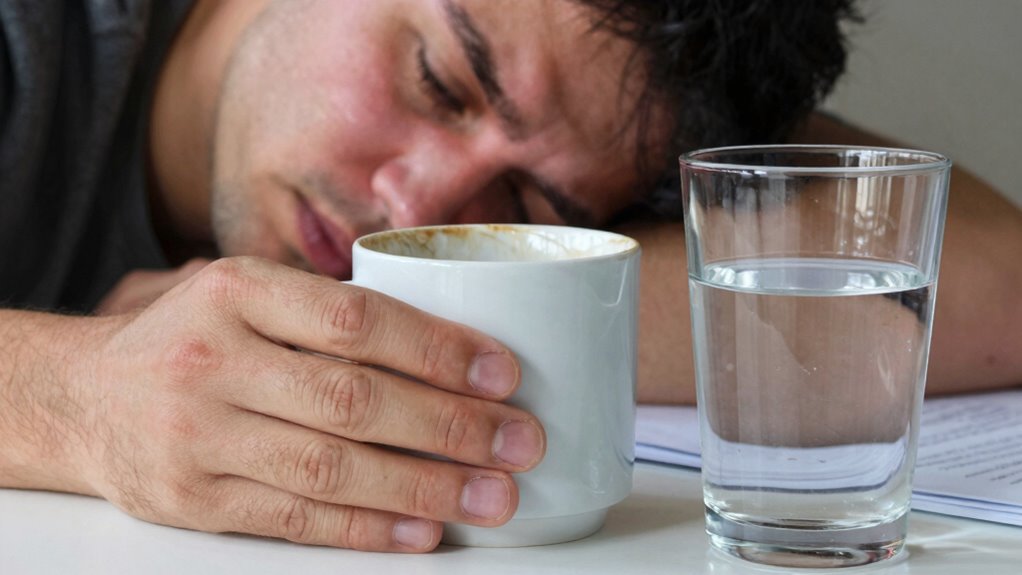
Many people reach for another cup of coffee when they’re feeling tired, but sometimes what your body really needs is water. Recognizing the difference between fatigue caused by dehydration and that fueled by caffeine effects is key to staying energized and healthy. Your body sends hydration cues that can easily be mistaken for signs of tiredness, like dry mouth, dark urine, or a feeling of lightheadedness. When these happen, it’s a clear signal that you need to hydrate, not caffeinate more. Drinking water can quickly restore your energy levels and improve focus, often faster than another dose of caffeine.
Sometimes your body needs water, not coffee, to boost energy and focus. Stay hydrated for true vitality.
Caffeine effects can mask your body’s true signals, making it tempting to keep drinking coffee or energy drinks when you’re actually just dehydrated. While caffeine is a stimulant that temporarily boosts alertness, it doesn’t replace the fundamental need for hydration. Over time, relying on caffeine can lead to dehydration, causing symptoms like headaches, irritability, and fatigue to worsen. If you find yourself reaching for coffee repeatedly, consider whether your body’s telling you it’s thirsty. Hydration cues are subtle but important—they include things like a dry or sticky feeling in your mouth, infrequent or dark-colored urine, or even slight muscle cramps. Recognizing these signs early helps you address the root cause of your tiredness instead of just covering it up with caffeine.
You might notice that drinking water helps clear your mind and lifts your mood, especially if you’ve been neglecting hydration. Sometimes, what feels like an energy slump is simply your body asking for fluids. Keep in mind that caffeine effects can be deceptive; the initial boost might be followed by a crash, leaving you more exhausted than before. If you’re feeling sluggish, pause and evaluate whether you’ve had enough water today. Aim for regular sips throughout the day, especially if you’re active or in a hot environment. Hydrating consistently prevents the dehydration that often sneaks up on you and minimizes the need for caffeine to keep you going. Additionally, understanding how indoor air quality impacts hydration can help you maintain better overall health and energy levels.
Properly managing whole-home water systems can also contribute to better hydration by ensuring you have access to clean, safe water, free from contaminants that may affect your body’s ability to stay properly hydrated. Being aware of microplastics in dust and how indoor air quality affects hydration and overall health can also help you make better choices for maintaining your well-being. In the end, learning to listen to your body’s hydration cues is a smarter, healthier way to sustain energy. Instead of defaulting to coffee at the first sign of fatigue, take a moment to drink water and see if that helps. Your body will thank you for it, and you’ll likely find that your energy levels become more stable, reducing your dependence on caffeine and its effects. Recognizing when you need water versus when you’re craving caffeine can make a significant difference in how you feel throughout the day.
reusable water bottle with measurement marks
As an affiliate, we earn on qualifying purchases.
As an affiliate, we earn on qualifying purchases.
Frequently Asked Questions
Can Dehydration Cause Headaches Similar to Caffeine Withdrawal?
Yes, dehydration can cause headaches that feel similar to caffeine withdrawal. When you’re dehydrated, your electrolyte balance gets thrown off, leading to headaches and fatigue. You might miss hydration cues, like dry mouth or dark urine, which signal you need water. Drinking enough water restores your electrolyte levels and hydration, easing the headache. So, staying properly hydrated helps you avoid mistaking dehydration for caffeine withdrawal and keeps your body functioning well.
How Does Caffeine Affect Hydration Levels in the Body?
Caffeine can cause dehydration by disrupting your hydration balance. When you consume caffeine, your body ramps up caffeine metabolism, leading to increased urination. This diuretic effect causes fluid loss, which can deplete your hydration levels. So, while caffeine might boost your energy, it also pulls water from your system, making it essential to balance your intake with plenty of water to maintain proper hydration and avoid dehydration’s harmful effects.
Are There Specific Signs That Distinguish Thirst From Fatigue?
Thirst signals often include dry mouth, dark urine, or feeling lightheaded, while fatigue indicators typically involve persistent tiredness, lack of focus, or muscle weakness. If you notice dry lips or a sticky mouth, hydrate with water. But if you’re just feeling sluggish without these signs, it might be fatigue, and rest or sleep could help more than caffeine. Paying attention to these cues helps you choose the right remedy.
Can Drinking Water Improve Alertness as Effectively as Caffeine?
Think of your body as a car; hydration fuels it, while caffeine is like a turbo boost. Drinking water can boost alertness by improving blood flow and brain function, often as effectively as caffeine—contrary to hydration myths. When you’re feeling sluggish, reaching for water is a healthy caffeine alternative that keeps you alert without the jitters. So, next time, hydrate first before reaching for that caffeinated drink.
How Much Water Should I Drink Daily to Stay Properly Hydrated?
You should aim for about 8 cups (64 ounces) of water daily, but hydration myths often lead to confusion. Your water intake guidelines depend on factors like age, activity level, and climate. You’ll stay properly hydrated if you listen to your body’s thirst signals and monitor urine color—pale yellow indicates good hydration. Drinking enough water keeps you alert and healthy, often better than relying on caffeine.
Conclusion
So, next time you’re feeling jittery or drained, pause and ask yourself: is it dehydration whispering or caffeine crashing? The answer might just be hiding in plain sight. Ignoring your body’s signals could lead you down a tricky path, but recognizing the true call for water can restore your balance. Will you listen before that next cup? The choice is yours—sometimes, the simplest solution holds the greatest power.
Halloween Picks
halloween
As an affiliate, we earn on qualifying purchases.