
Maintaining proper humidity levels is essential for keeping your tea, coffee, and powders fresh and flavorful. Too much moisture can lead to mold growth and spoilage, while too little causes them to dry out, lose aroma, and become brittle. Balancing humidity prevents clumping and preserves product safety and quality. Using proper storage tools, like airtight containers and desiccants, helps you control moisture effectively. Keep going to discover more about how to optimize your storage conditions.

Get coffee and tea gear delivered free with Prime
- Fast, free delivery on millions of items
- Prime Video, Amazon Music and more included
- Member-only deals all year
Key Takeaways
- Excess humidity promotes mold growth, which can spoil tea, coffee, and powders and pose health risks.
- Low humidity causes powders to become brittle and lose their essential oils and flavors.
- Fluctuating humidity levels can crack packaging, exposing contents to moisture and air.
- Proper humidity control maintains product freshness, aroma, and overall quality over time.
- Using desiccants and airtight containers helps regulate humidity and prevent spoilage.
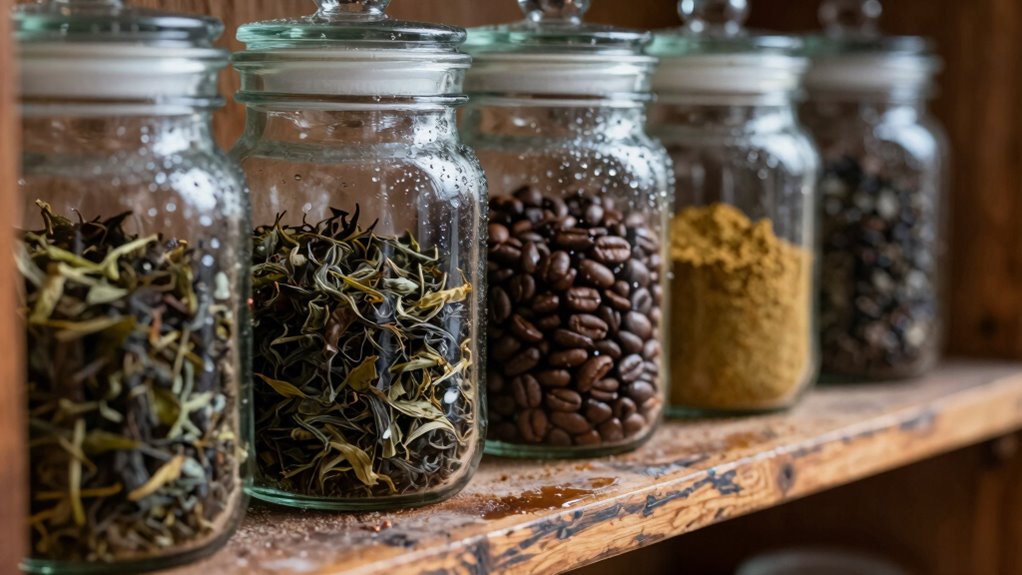
Humidity plays a crucial role in preserving the quality of stored tea, coffee, and powders. When you store these items, controlling humidity levels is essential because moisture can seep into packaging, leading to moisture absorption. If your storage environment is too humid, the powders can clump together, losing their freshness and aroma. Coffee beans and tea leaves are particularly sensitive to moisture, which can compromise their flavor profile and overall quality. Proper humidity levels prevent these issues by maintaining the right balance, guaranteeing your products stay fresh longer.
Maintaining proper humidity preserves the freshness, aroma, and quality of tea, coffee, and powders over time.
However, if humidity gets too high, it can cause serious problems like mold growth. Mold thrives in damp environments, and when powders or dried tea and coffee are exposed to excess moisture, mold spores can settle and multiply rapidly. This not only spoils your products but also makes them unsafe to consume. Mold growth is often visible as fuzzy patches or discoloration, but it can also develop internally, making it hard to detect until it’s too late. By managing humidity, you reduce the risk of mold growth, safeguarding the safety and integrity of your stored items. Additionally, proper storage techniques are crucial in preventing moisture-related issues. Maintaining a stable environment helps prevent mold spores from settling and thriving. Properly sealed containers and consistent temperature control are also key factors in this process.
On the flip side, too low humidity levels can also harm your stored powders. When the environment is too dry, powders tend to become brittle and may lose their essential oils and flavors. Tea leaves and coffee beans can become stale more quickly, diminishing their aroma and taste. Extremely dry conditions can also cause packaging to crack or break, exposing the contents to external contaminants. Maintaining a balanced humidity level helps keep powders and dried goods in prime condition, preventing them from becoming overly dry or fragile. Additionally, fluctuations in humidity can cause packaging materials to expand or contract, further jeopardizing product integrity. Regular monitoring and humidity control devices can help maintain the ideal environment for your stored goods.
To keep humidity in check, you should consider using airtight containers that limit moisture exchange with the environment. Desiccants can also help absorb excess moisture, especially in humid climates. Regularly monitoring your storage area with a hygrometer allows you to catch fluctuations early and adjust accordingly. Proper ventilation is another key factor—ensuring good airflow can help regulate humidity naturally. By paying close attention to these factors, you guarantee your tea, coffee, and powders stay fresh, aromatic, and safe for longer periods. Creating a consistent storage environment is essential for maintaining product quality and preventing deterioration.
Ultimately, managing humidity is about finding that perfect balance. Too much moisture invites mold growth and spoilage, while too little dries out your products and diminishes flavor. Your goal should be to create an environment that prevents both extremes, safeguarding your valuable supplies and ensuring they retain their best qualities over time. Proper humidity management is a fundamental aspect of indoor air quality that often goes overlooked but is vital for preserving your stored goods.
airtight storage containers for coffee and tea
As an affiliate, we earn on qualifying purchases.
As an affiliate, we earn on qualifying purchases.
Frequently Asked Questions
Can Humidity Cause Mold Growth on Dried Powders?
Yes, humidity can cause mold formation on dried powders. When moisture levels rise, powders absorb the excess humidity, leading to powder clumping and creating a perfect environment for mold growth. To prevent this, keep powders in airtight containers in a cool, dry place. Regularly check for signs of mold or clumping, and avoid storing powders in humid areas to maintain their freshness and safety.
How Does Humidity Impact the Shelf Life of Tea Leaves?
High humidity accelerates the deterioration of tea leaves, shortening their shelf life. It promotes moisture absorption, leading to mold growth and loss of flavor. To extend freshness, you need humidity control and proper storage conditions, such as airtight containers kept in a cool, dry place. Avoid humid environments, as they compromise tea quality over time, making it important to monitor and manage storage conditions carefully.
What Is the Ideal Humidity Level for Storing Coffee Beans?
The ideal humidity level for storing coffee beans is between 60-70%, which helps with humidity control and prevents moisture absorption. Maintaining this range keeps beans fresh and prevents mold growth or staling. You should store coffee in an airtight container in a cool, dark place, avoiding excessive humidity. Proper humidity regulation ensures your coffee stays flavorful longer and maintains its quality without becoming damp or stale.
Does Humidity Affect the Flavor Preservation of Powdered Spices?
Humidity definitely impacts the flavor preservation of powdered spices. When humidity is high, it causes moisture absorption, leading to clumping and potential flavor degradation. You’ll notice aroma loss quickly, because moisture dilutes the volatile oils responsible for spice aroma. To keep your spices fresh, store them in airtight containers in a cool, dry place, avoiding excess humidity that accelerates flavor deterioration and aroma loss.
How Quickly Can Humidity Damage Stored Powdered Products?
Humidity can damage stored powdered products within days to weeks. As they absorb moisture, humidity causes powder clumping, making them difficult to use. You might notice a change in texture or appearance quickly if the environment is very humid. To prevent this, keep powders in airtight containers, and store them in a cool, dry place. This slows humidity absorption, preserving their quality and flavor longer.
Conclusion
In the battle against spoilage, controlling humidity is your ultimate weapon. A tiny shift in moisture levels can turn your prized tea, coffee, and powders into worthless dust faster than you can blink. By maintaining ideal humidity, you protect your precious stash from the relentless assault of mold and clumping. Remember, it’s not just about storage—it’s about safeguarding your sensory treasures from a fate worse than oblivion. Keep humidity in check, and let your flavors flourish forever.
Fall Picks
fall essentials
As an affiliate, we earn on qualifying purchases.