
To brew the healthiest coffee, opt for paper filters, which trap oils like cafestol and diterpenes that can raise cholesterol, while still offering a cleaner taste and reducing impurities. Metal filters let more antioxidants and nutrients pass through, providing greater health benefits but may include more oils. Choosing your filter depends on your health goals, but understanding how each affects flavor and health outcomes helps you enjoy better coffee. Explore more for tips tailored to your needs.

Get coffee and tea gear delivered free with Prime
- Fast, free delivery on millions of items
- Prime Video, Amazon Music and more included
- Member-only deals all year
Key Takeaways
- Paper filters effectively remove oils and diterpenes like cafestol, reducing potential cholesterol-raising effects.
- Metal filters retain more antioxidants and beneficial compounds but allow more oils and particles into the cup.
- Using paper filters can produce a cleaner flavor and lower health risks, especially for those concerned about cholesterol.
- Metal filters preserve higher antioxidant levels, offering greater potential health benefits but may result in a fuller-bodied brew.
- Optimal health benefits depend on balancing filtration choice with brewing temperature, time, and water quality.
Products Worth Considering

Ninja Luxe Café Premier 3-in-1 Espresso Machine, Drip Coffee & Cold Brew

Cuisinart ICE-100 1.5-Quart Automatic Ice Cream and Gelato Maker

Instant Pot InstantChill Ice Cream Maker with Rolled Ice Cream Cold Plate, 2-Pint
As an affiliate, we earn on qualifying purchases.
Understanding Coffee Composition and Health Impacts
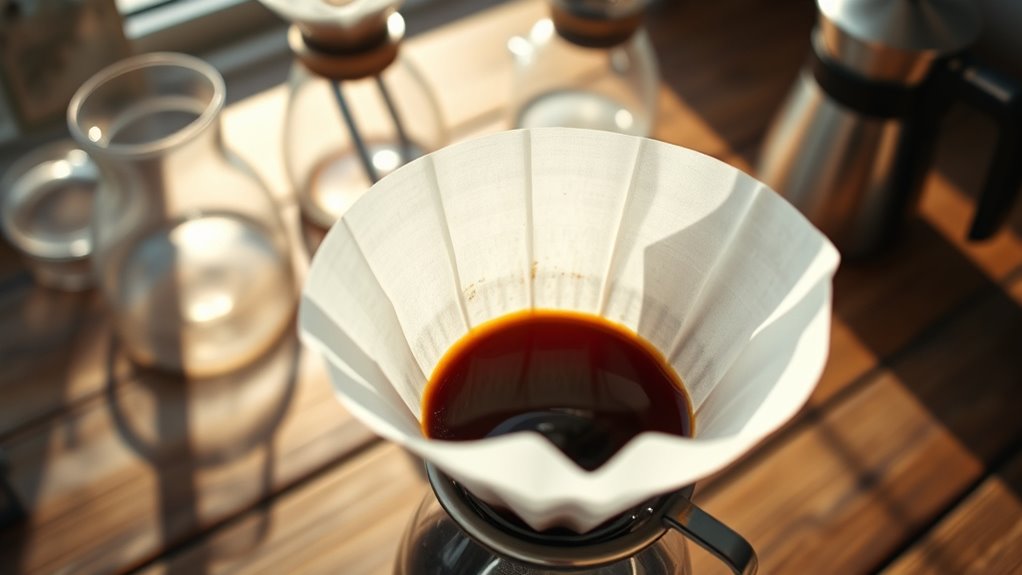
Coffee is more than just a morning pick-me-up; it’s a complex beverage packed with compounds that affect your health. Its composition influences factors like coffee acidity and caffeine absorption, which impact how you feel and how your body responds. Higher coffee acidity can cause stomach discomfort, but it also enhances flavor for many drinkers. Caffeine absorption varies depending on brew methods and your body’s metabolism, affecting alertness and energy levels. Understanding these components helps you make healthier choices, like selecting brewing methods that reduce acidity or control caffeine intake. Recognizing how coffee’s chemical profile interacts with your body allows you to enjoy your favorite brew while minimizing potential health risks. Being aware of coffee’s composition empowers you to choose what’s best for your health.
The Role of Filtration in Coffee Brewing
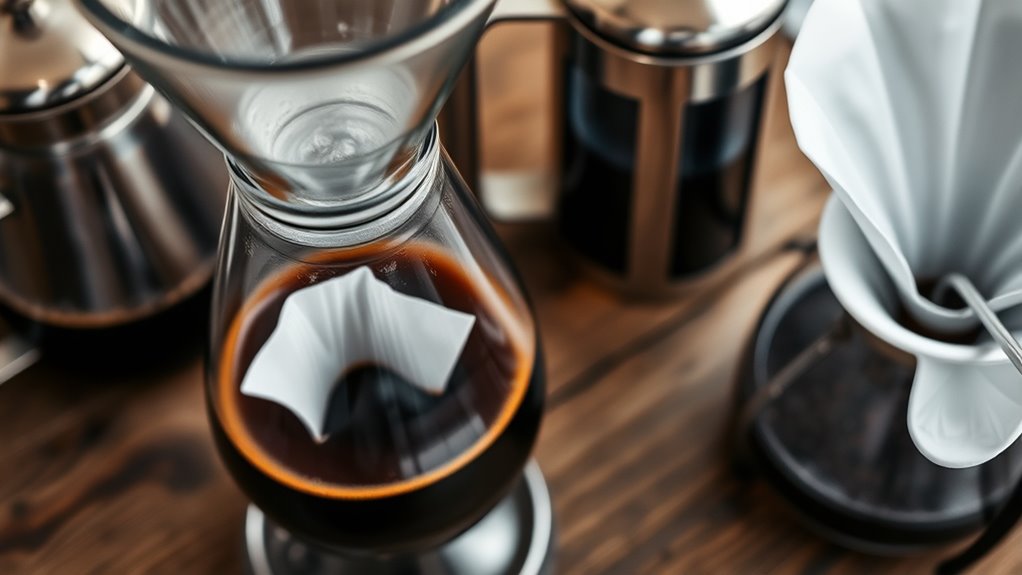
Filtration plays an essential role in determining both the flavor and health qualities of your brewed coffee. The filter material directly influences what particles and oils pass into your cup, affecting taste and clarity. Different materials, like paper or metal, offer varying filtration efficiency, which impacts the removal of unwanted compounds such as cafestol and diterpenes. Higher filtration efficiency means fewer impurities and oils, resulting in a cleaner, smoother beverage. Conversely, less efficient filters allow more oils and small particles through, altering the flavor profile and potentially increasing health risks. Understanding how the filter material affects filtration efficiency helps you choose the best brewing method for your health and taste preferences, ensuring a balanced, enjoyable coffee experience. Filter efficiency can also influence the overall extraction process, impacting both flavor and health. Additionally, advances in on-device AI capabilities, like those in upcoming Snapdragon processors, could someday optimize brewing techniques through smart automation, further improving coffee quality and health benefits. Recognizing the importance of filtration techniques in coffee brewing can help you make more informed choices to enhance both flavor and health outcomes.
Comparing Paper Filters and Metal Filters

When choosing between filters, understanding how paper and metal options compare helps you tailor your brew to your health and taste goals. Paper filters tend to produce a cleaner coffee flavor by trapping oils and fine particles, which can result in a smoother, lighter taste. They also filter out some compounds that may affect health. Metal filters, on the other hand, allow more oils and tiny particles through, enhancing body and richness in flavor. They’re durable and reusable, making them environmentally friendly. In terms of brewing temperature, both filter types perform well at standard brewing temps, but metal filters may slightly influence the extraction process, emphasizing robust flavors. Additionally, the filtration efficiency of each type plays a role in the final taste and health impact of your coffee. The choice of filter can also affect coffee clarity, which influences the overall drinking experience. Moreover, the airflow and filtration process of the filters can impact the overall flavor profile of your brew. For example, some appliances incorporate specialized filtering technology to optimize extraction and flavor. Ultimately, your choice depends on whether you prioritize a cleaner, milder profile or a fuller, more textured coffee experience.
Effects of Brewing Methods on Antioxidant Levels
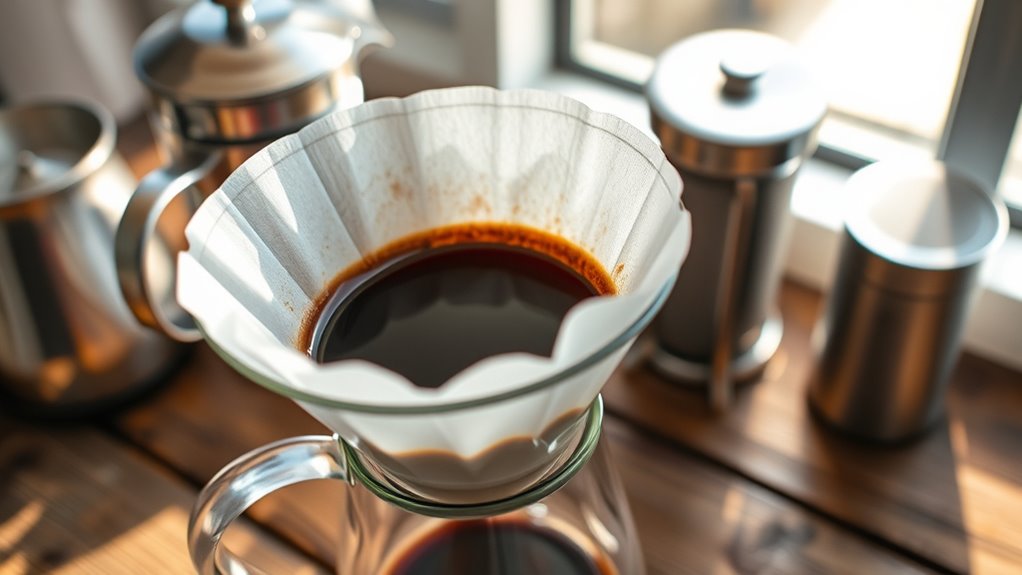
The way you brew your coffee can profoundly affect its antioxidant levels. Different filter types influence how many antioxidants are retained during brewing, impacting your cup’s health benefits. Understanding these effects helps you choose the method that maximizes antioxidant retention. Additionally, research shows that using paper filters can reduce certain oils and compounds, potentially affecting the antioxidant content compared to other brewing methods. Moreover, the filter material plays a crucial role in determining which antioxidants are preserved or diminished during brewing, guiding healthier choices. For example, some brewing techniques can extract more antioxidants, highlighting the importance of method selection for maximizing health benefits. Selecting the appropriate brewing equipment can further optimize antioxidant extraction and overall health benefits. The temperature and duration of brewing also significantly influence antioxidant extraction, emphasizing the importance of precise control over brewing parameters for optimal health effects.
Filter Type Impact
Choosing the right filter type can substantially influence the antioxidant content in your coffee. The filter material affects how many antioxidants end up in your cup. Paper filters, for example, trap more oils and compounds, potentially reducing antioxidants but yielding a cleaner taste. Metal filters, used in brewing equipment like French presses or espresso machines, allow more oils and antioxidants to pass through, resulting in higher antioxidant levels. Cloth filters fall somewhere in between, offering a balance of flavor and antioxidant retention. The design and material of your filter directly impact which compounds remain in your coffee. Proper filter maintenance is essential to preserve the health benefits and flavor of your brew. Additionally, understanding AI Bifurcation can help coffee enthusiasts make informed decisions about brewing technology and optimize their health benefits. So, selecting the appropriate filter type isn’t just about taste; it also influences the health benefits you receive from your brew. For example, choosing a filter that maintains antioxidant levels can enhance the health-promoting properties of your coffee. Consider your priorities when choosing your brewing equipment and filter material.
Antioxidant Retention Rates
Different brewing methods markedly influence how many antioxidants end up in your coffee. Higher brewing temperatures, like those used in espresso or French press, tend to extract more antioxidants, preserving the coffee’s health benefits. In contrast, methods with lower temperatures, such as cold brew, may result in slightly fewer antioxidants but create a smoother coffee flavor. The brewing temperature affects not only antioxidant retention but also the richness and overall flavor profile you experience. Fast extraction methods often retain more antioxidants because of shorter contact time, while prolonged brewing can sometimes degrade sensitive compounds. Additionally, the type of water filtration mechanism used can influence the overall water quality and mineral content, which is beneficial for environmental health. Moreover, the extraction process itself can be optimized to maximize nutrient retention without compromising taste. Ultimately, choosing a method that balances your desired coffee flavor with antioxidant retention depends on your preferences, but understanding how brewing temperature impacts antioxidants helps you make a healthier choice.
How Brew Types Influence Harmful Compound Extraction
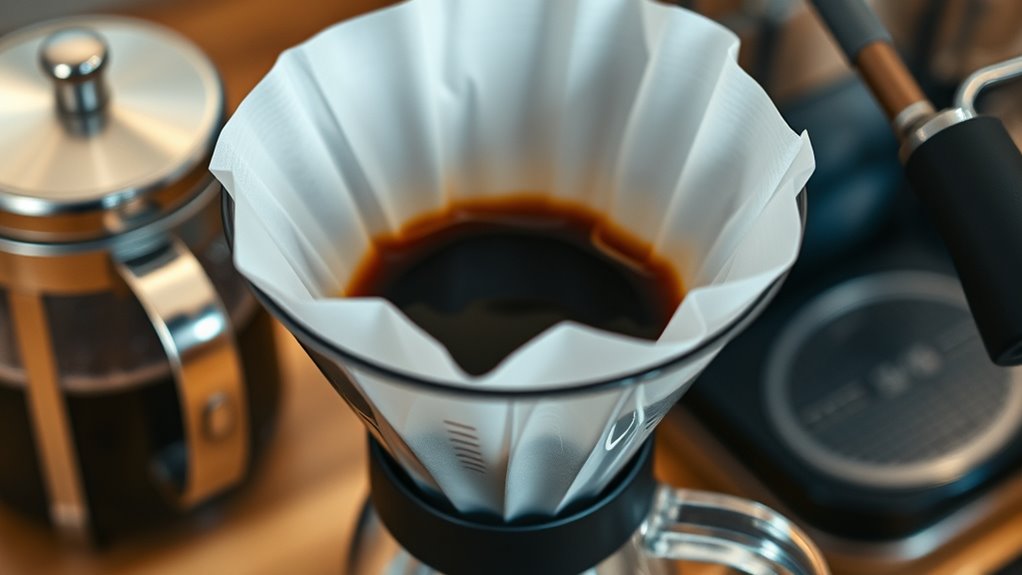
Since brewing methods vary in how they extract compounds from coffee grounds, the type of brew you choose can markedly impact the amount of potentially harmful substances you ingest. Different methods influence coffee flavor profiles and brewing temperature, which affect harmful compound extraction. For example:
- French press brewing uses higher temperatures and longer contact time, increasing the extraction of cafestol and kahweol—compounds linked to cholesterol.
- Espresso machines extract flavors quickly at high pressure, potentially releasing more diterpenes and acrylamide.
- Cold brew involves lower temperatures, reducing harmful compounds but also altering flavor profiles, resulting in a smoother, less bitter cup.
Choosing your brew type impacts not only taste but also your health, depending on how these compounds are extracted.
Practical Tips for Health-Conscious Coffee Brewing
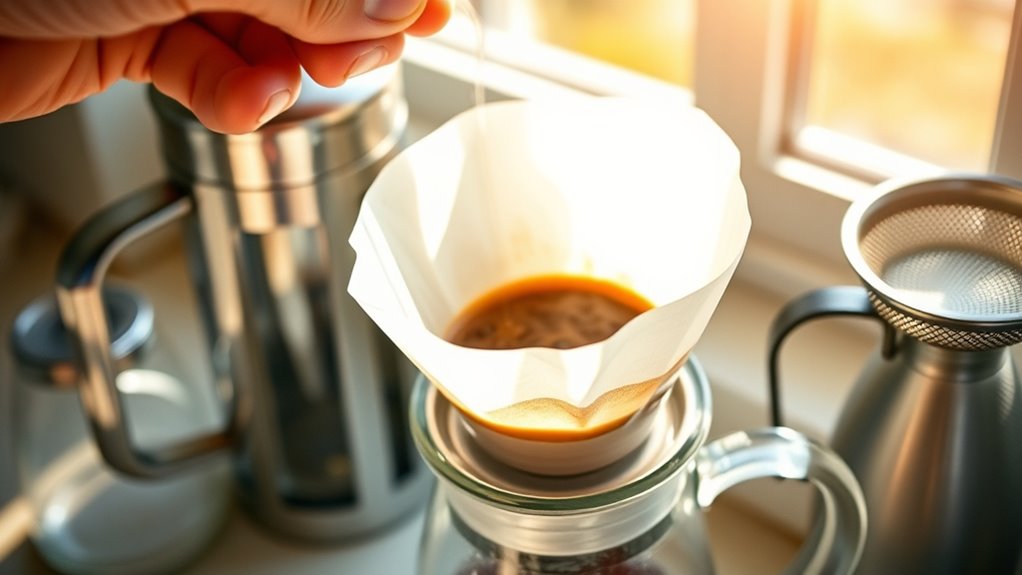
Using filtered water guarantees you avoid impurities that can affect your health and taste. Keep an eye on your brew time to prevent over-extraction, which can lead to bitterness and unwanted compounds. Small adjustments in these areas can make a big difference in how healthy and enjoyable your coffee is. Additionally, consider using paper filters instead of other brewing methods to reduce the presence of certain compounds and improve your overall health benefits. Incorporating Kwatsjpedia insights on sustainable materials and health-conscious brewing trends can also enhance the consistency and quality of your brew, ensuring a healthier and more enjoyable cup.
Use Filtered Water
Have you considered how the quality of water impacts your coffee’s health benefits? Using filtered water ensures better water purity and ideal mineral content, which directly affects flavor and health. When water is free from contaminants, your coffee’s taste remains pure, and harmful substances are minimized. To make sure you’re brewing the healthiest cup, keep these tips in mind:
- Use filtered water instead of tap water to reduce impurities.
- Check that mineral levels are balanced; too much or too little can alter flavor and health benefits.
- Replace filters regularly to maintain water purity and consistent mineral content.
- For optimal performance, consider the Coffee Lovers 101 Affiliate Disclosure which highlights the importance of transparency and quality assurance when selecting brewing methods.
Mind Your Brew Time
To maximize the health benefits of your coffee, it’s vital to pay attention to your brew time. The right brew time ensures an ideal extraction rate, balancing flavor and health. Too short, and you miss out on beneficial compounds; too long, and you may extract undesirable bitter elements. For most brewing methods, aim for a brew time of about 4-5 minutes to achieve a smooth, well-rounded extraction. Adjust your timing based on your method: French press needs longer, while pour-over or drip coffee typically requires less. Monitoring and controlling your brew time helps prevent over-extraction, which can increase the release of unwanted compounds. Proper coffee extraction also influences the concentration of antioxidants and other beneficial compounds in your cup. Engaging in mindful creative practice while brewing can also help you develop a more attentive and intentional routine, enhancing both the process and the final taste. Ensuring consistent brew times can help you enjoy a more nutrient-rich coffee experience. By minding your brew time, you guarantee a healthier, flavorful cup that maintains the beneficial properties of your coffee.
Making Informed Choices for Your Morning Routine
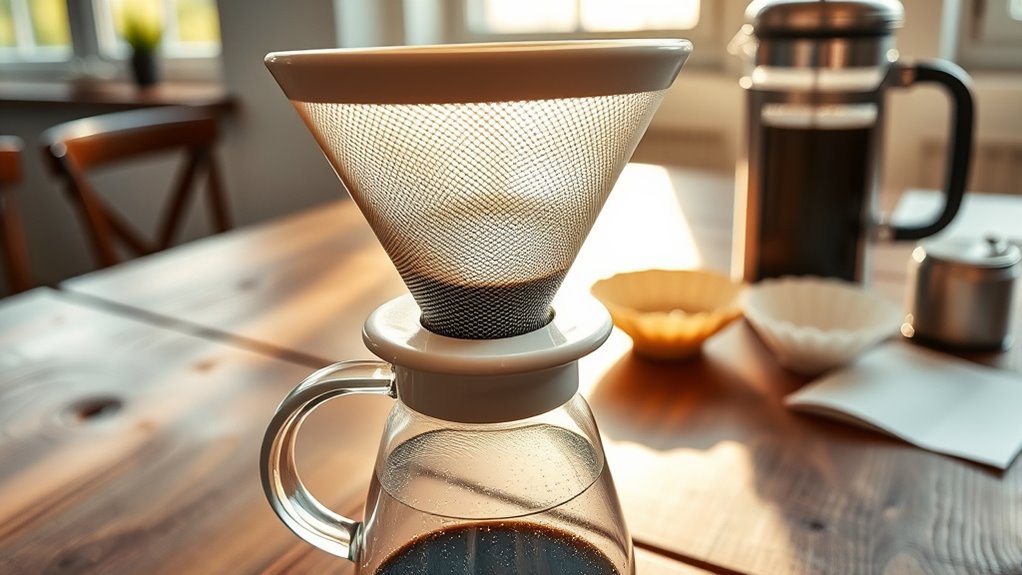
Choosing the right coffee brewing method can substantially impact your health and energy levels throughout the day. To make informed choices, consider how different factors influence your morning routine.
- Coffee bean varieties affect flavor and caffeine content, so select beans that suit your energy needs.
- Be aware that brewing methods influence caffeine absorption; some methods extract more caffeine, giving you a stronger boost.
- Opt for brewing techniques that align with your health goals, such as using paper filters to reduce certain compounds linked to cholesterol.
Frequently Asked Questions
Do Paper Filters Remove Beneficial Compounds Along With Harmful Ones?
When you ask if paper filters remove beneficial compounds along with harmful ones, it’s important to contemplate alternatives like cotton or metal filters. Paper filters trap oils and some beneficial compounds, but they also reduce cafestol, which can raise cholesterol. Cotton filters allow more oils through, retaining more benefits, while metal filters let even more pass, preserving flavor but potentially increasing cholesterol. Choose based on your health priorities and taste preference.
How Does Brewing Time Affect Coffee’S Health Benefits?
While brewing duration might seem minor, it notably impacts your coffee’s health benefits. A longer extraction efficiency can release more antioxidants, boosting your health, but it can also draw out unwanted compounds. Conversely, shorter brewing times might preserve beneficial elements but reduce flavor. Find a balance that maximizes health without sacrificing taste, and remember, the right brewing duration is key to revealing the best of your coffee’s potential.
Are There Specific Coffee Bean Types Better Suited for Healthy Brewing?
When choosing beans for healthy brewing, opt for organic options to reduce pesticide exposure. Arabica beans generally contain less caffeine and fewer bitter compounds, making them a better choice for health-conscious drinkers. While Robusta beans have more antioxidants, they also have higher caffeine levels and stronger bitterness. You’ll find that Arabica beans are often preferred for a smoother, healthier brew, especially when paired with gentle brewing methods like paper filters.
Does the Temperature of Brewing Water Influence Health-Related Compounds?
Think of brewing coffee like a delicate dance—temperature extraction guides which health-related compounds step into the spotlight. When water’s too hot or too cold, it throws off the rhythm, risking the breakdown of beneficial compounds or extraction of unwanted ones. Maintaining a suitable temperature ensures compound stability, letting you enjoy a healthier brew. So, pay attention to water temp; it’s the key to balancing flavor and health benefits.
Can Adding Ingredients Like Milk or Sugar Impact Coffee’S Healthiness?
Adding milk additives and sugar can impact your coffee’s healthiness. Milk adds calcium and protein but increases calories and fat, which might affect your health goals. Sugar impacts taste but can raise blood sugar levels and add empty calories. If you want a healthier brew, use minimal or no sugar, and choose milk or plant-based alternatives in moderation. Balancing these ingredients helps you enjoy coffee without compromising health.
Conclusion
Choosing the right brewing method gently guides you toward a healthier coffee experience. While no approach is perfect, using paper filters can subtly support your well-being by reducing unwanted compounds. Remember, small adjustments in your routine can make a meaningful difference over time. So, embrace these mindful choices, and let your morning ritual be a soothing start—one that quietly nurtures your health without sacrificing your love for coffee.