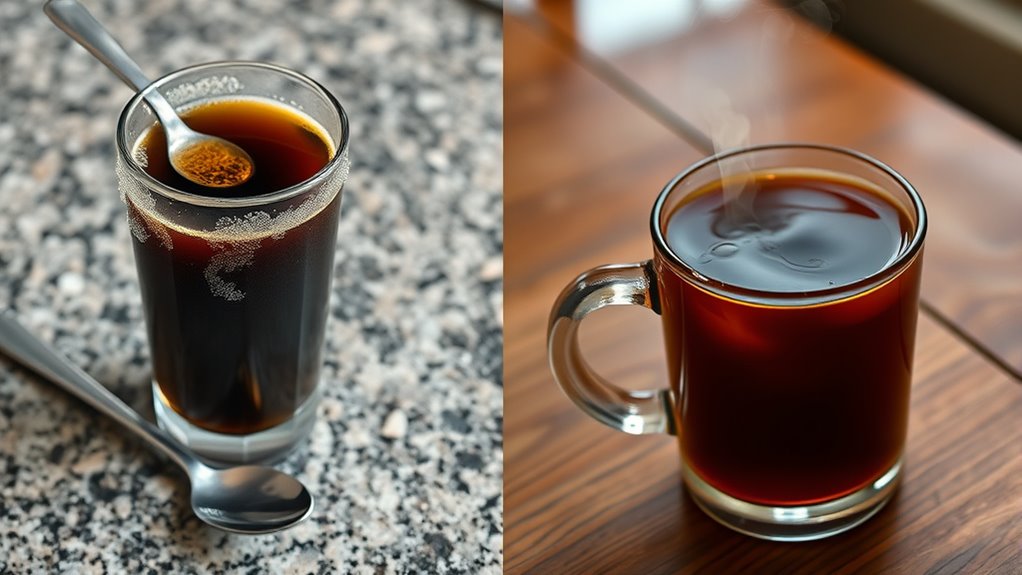

Cold brew typically has less acidity than hot brew, making it gentler on your stomach and teeth. Its long steeping process reduces the harshness and can help prevent discomfort or acid reflux. Hot brew tends to be more vibrant and complex but may cause irritation if you’re sensitive to acidity. If you want a smoother, more comfortable coffee experience, cold brew is often the better choice. Keep exploring for more details on how brewing methods impact your enjoyment.
Key Takeaways
- Cold brew has lower acidity due to prolonged cold steeping, making it gentler on the stomach and teeth.
- Hot brew’s rapid extraction results in higher acidity, which may cause discomfort or acid reflux for sensitive individuals.
- Cold brew’s smooth, mellow profile offers a soothing drinking experience, especially on hot days.
- Hot brew provides a vibrant, lively flavor with warmth that can enhance comfort and alertness.
- Overall, cold brew is often preferred for those seeking a less harsh, more comfortable caffeine intake.
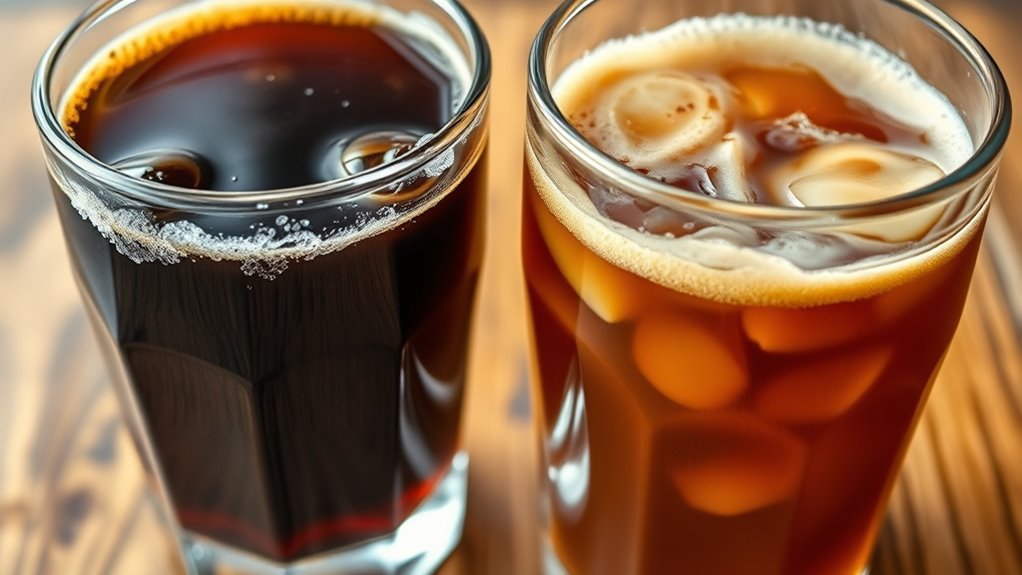
Have you ever wondered whether cold brew or hot brew coffee suits your taste better? The answer often comes down to how each method affects the coffee’s flavor profile and the overall drinking experience. Cold brew typically has a smooth, mellow flavor, while hot brew offers a brighter, more vibrant taste. The difference in flavor profile is primarily influenced by brewing time. Cold brew takes much longer—usually 12 to 24 hours—allowing the coffee grounds to steep slowly in cold water. This extended brewing time results in a coffee that’s less acidic and has a naturally sweeter, chocolatey, or nutty flavor. On the other hand, hot brew coffee is prepared quickly, often within minutes, by pouring hot water over grounds. The rapid extraction intensifies the acidity and highlights the more delicate, fruity, or floral notes of the beans.
Cold brew offers a smooth, mellow flavor through long steeping, while hot brew delivers a bright, vibrant taste with quick extraction.
If you’re sensitive to acidity and prefer a smoother, less harsh coffee, cold brew might be more your style. Because it’s brewed with cold water over a long period, it extracts fewer acidic compounds, making it gentler on your stomach and teeth. Conversely, hot brew coffee tends to be more acidic due to the quick extraction process, which brings out the brighter, sharper flavors. Some people find this invigorating and energizing, but others might find it slightly harsh or cause stomach discomfort.
The brewing time is key to understanding these differences. Cold brew’s lengthy steeping process results in a coffee that’s concentrated and rich, often served over ice or diluted with milk or water. Its extended brewing not only affects flavor but also creates a smoother, less bitter cup. Hot brew, with its short extraction time, produces a more complex and vibrant cup, with the acidity giving it a lively kick. This quick process captures a different spectrum of flavors and aromas, often preferred for its freshness and complexity. Additionally, brewing method can influence the overall quality and consistency of your coffee experience.
In terms of comfort, cold brew offers a more mellow experience, especially on hot days when you want something cool and soothing. It’s less likely to cause acid reflux or stomach discomfort, making it an excellent choice if you’re prone to those issues. Hot brew, while more intense and sometimes more acidic, provides a comforting warmth and a quick caffeine boost. Depending on your taste preferences and sensitivities, you might find one method more comfortable than the other. Ultimately, understanding how flavor profile and brewing time influence your coffee experience will help you choose the perfect brew for your palate and needs.

CASABREWS CM5418 Espresso Machine 20 Bar, Compact Espresso Maker with Steam Milk Frother, Stainless Steel Coffee Machine with 34oz Removable Water Tank for Cappuccino, Small Latte Machine, Silver
Make Your Favorite Espresso Coffee At Home: The CASABREWS coffee machine with milk frother allows you to prepare...
As an affiliate, we earn on qualifying purchases.
Frequently Asked Questions
How Does Brewing Temperature Affect Caffeine Content?
Brewing temperature markedly impacts caffeine content because temperature influence affects caffeine extraction. Higher temperatures increase caffeine extraction, so hot brews generally contain more caffeine than cold brews. When you brew at lower temperatures, the extraction process slows, leading to slightly less caffeine in your coffee. So, if you want a stronger caffeine kick, opting for hot brewing methods can maximize caffeine extraction, while cold brewing yields a milder, less caffeinated drink.
Can Cold Brew Cause Fewer Stomach Issues Than Hot Brew?
Yes, cold brew can cause fewer stomach issues than hot brew. Its lower acidity often means less digestive discomfort and stomach irritation for you. Since cold brew is brewed with cold water over a longer period, it tends to be gentler on your stomach. If you’re sensitive to acidity, choosing cold brew may provide greater digestive comfort while still giving you a satisfying coffee experience.
What Are the Environmental Impacts of Cold vs. Hot Brew?
You might find cold brew has a lower environmental impact due to energy consumption comparison, as it typically uses less heat during brewing. Plus, when you recycle coffee grounds, you’re helping reduce waste regardless of brew type. Cold brew often requires longer steeping, but it can be more energy-efficient overall. By choosing cold brew and recycling your grounds, you contribute to a more sustainable coffee routine.
Does Brewing Method Influence the Flavor Profile More Than Acidity?
Brewing method influences flavor profile more than acidity because it highlights brewing nuances that shape the coffee’s taste. Cold brew tends to produce smoother, mellow, and less acidic flavors, emphasizing richness and body. Hot brew, however, often reveals more complex and vibrant flavor notes through temperature-driven extraction. Your choice impacts the overall flavor complexity, with brewing nuances playing a key role in how intricate and nuanced your coffee tastes.
Are There Health Benefits Linked to Lower Acidity in Cold Brew?
Lower acidity in cold brew can benefit your health by reducing acid reflux and irritation, making it gentler on your digestive system. Acidity reduction may also help prevent stomach discomfort and promote better digestive health overall. If you’re sensitive to acidity, choosing cold brew could support your well-being and comfort, especially if you enjoy coffee regularly. So, opting for cold brew might be a smart move for your digestive health.

Gevi Commercial Espresso and Coffee Makers, Professional 20 Bar Espresso Maker with Milk Frother, Stainless Steel Expresso Coffee Machines for Home, Compact Cappuccino Machine, Great Gift
𝐎𝐩𝐭𝐢𝐦𝐚𝐥 𝐅𝐥𝐚𝐯𝐨𝐫 𝐄𝐱𝐭𝐫𝐚𝐜𝐭𝐢𝐨𝐧 - Equipped with a 20-bar pump, NTC temperature control, pre-infusion feature, and a pressure gauge,...
As an affiliate, we earn on qualifying purchases.
Conclusion
Whether you prefer cold brew’s smoothness or hot brew’s comforting warmth, understanding their acidity levels helps you choose what suits your stomach best. Think of it as finding the perfect key to release your coffee comfort zone. Remember, your favorite brew isn’t just about taste—it’s about how it makes you feel. So, experiment and discover which brew harmonizes with your body, turning each cup into a cozy, well-tuned melody.

atatix Espresso Machine with Milk Frother, 20 Bar Pressure Espresso Maker, with 44OZ Removable Tank, Compact Stainless Steel Coffee Machine for Home, Office, Latte, Cappuccino, Macchiato, Silver
【Make Favorite Espresso Coffee by Yourself】The espresso machine with milk frother allows you to prepare all your favorite...
As an affiliate, we earn on qualifying purchases.
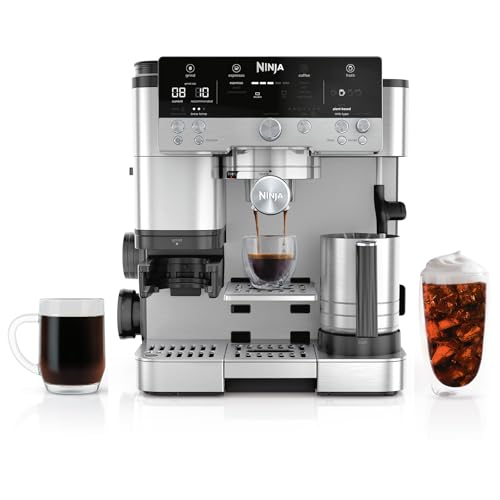
Ninja Luxe Café Premier 3-in-1 Espresso Machine, Drip Coffee, & Rapid Cold Brew | Built-in Coffee Grinder, Hands-Free Milk Frother, Assisted Tamper for Cappuccinos & Lattes | Stainless Steel | ES601
3 MACHINES IN 1: Brew without limits with no guesswork espresso, well-balanced drip coffee, and rapid cold brew....
As an affiliate, we earn on qualifying purchases.