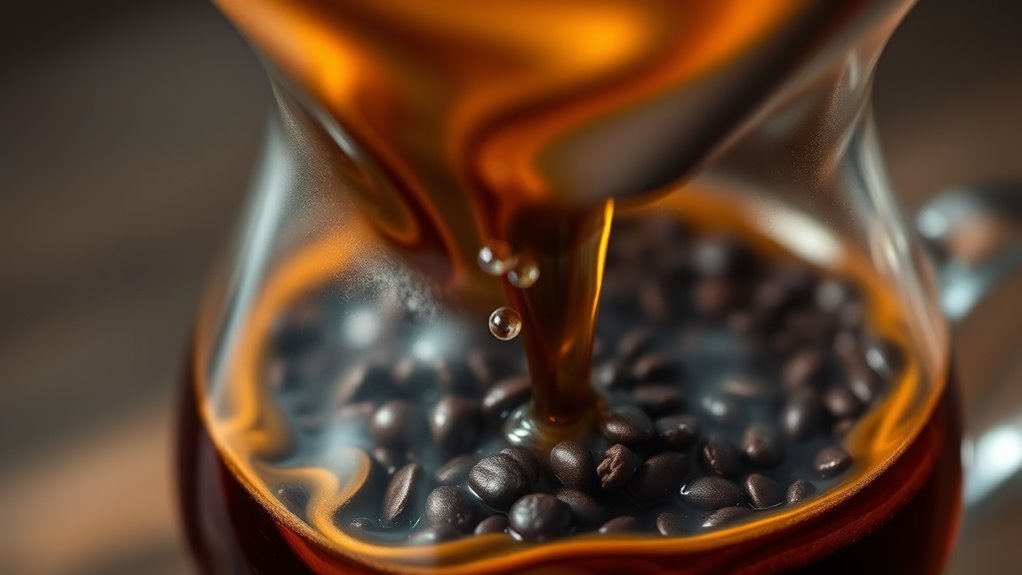

If you’re concerned about reflux, you should know that coffee contains acids like chlorogenic, citric, and malic acids which can trigger discomfort. To reduce acidity, consider brewing methods like cold brew or using darker roasts, which naturally have fewer acids. Lowering brewing temperature and shortening steeping time can also help. For more tips on minimizing acid effects while enjoying coffee, keep exploring how different techniques can make a difference.
Key Takeaways
- Cold brew coffee has lower acidity, making it a preferable choice for those with reflux issues.
- Darker roasts contain fewer acids, potentially reducing stomach discomfort during coffee consumption.
- Brewing methods like pour-over with paper filters can trap acids, resulting in a milder, less reflux-inducing brew.
- Choosing beans from low-acid regions (e.g., Brazil, Sumatra) can help minimize acid-related reflux symptoms.
- Adding milk or cream can neutralize some acids, easing digestion and decreasing reflux discomfort.
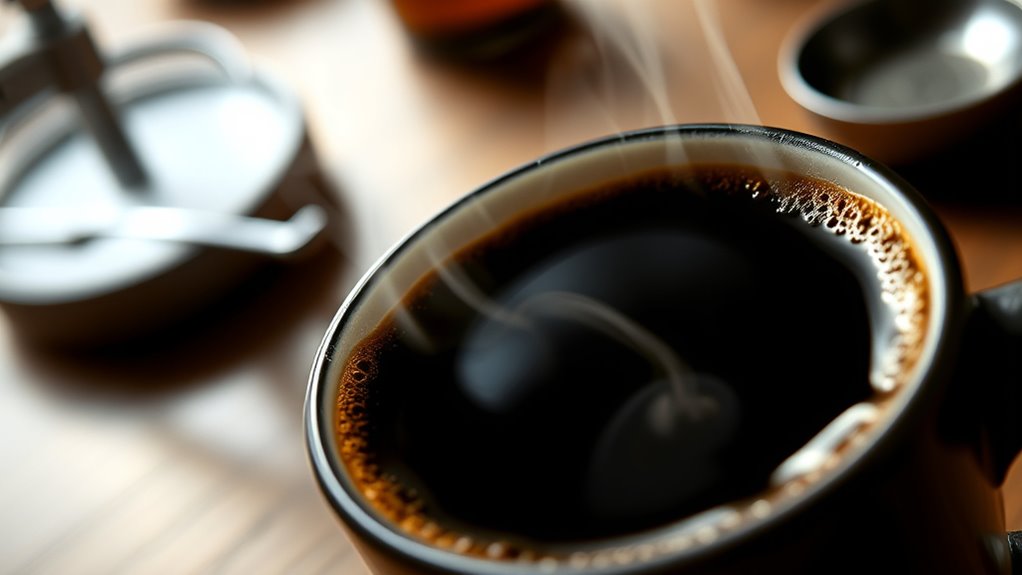
Coffee naturally contains acids that contribute to its bright flavor and aroma. These acids, such as chlorogenic, citric, and malic acids, give coffee its lively taste profile, but they also influence the beverage’s pH levels. Coffee pH levels typically range from 4.5 to 6, depending on factors like bean origin, roast level, and brewing method. A lower pH indicates higher acidity, which can be enjoyable for many but problematic for those with acid reflux or sensitive stomachs. If you find that your coffee causes discomfort, you might consider acid reduction techniques to make it gentler on your digestive system. These techniques include choosing beans with naturally lower acidity, such as beans from regions like Brazil or Sumatra, or opting for darker roasts, which tend to have reduced acidity due to longer roasting times that break down acidic compounds.
Brewing methods also play a significant role in influencing the acidity of your coffee. For example, cold brew tends to have a lower acid content because the brewing process extracts fewer acids from the beans. Similarly, using a paper filter with pour-over or drip brewing can trap some acids, resulting in a smoother cup. Conversely, espresso and French press methods often produce more acidic coffee because of their extraction techniques, which draw out more soluble compounds, including acids. If acid reflux is a concern, experimenting with different brewing methods can help you find a balance that suits your stomach. Additionally, some brewing techniques are specifically designed to reduce acidity and can be beneficial for sensitive individuals. Adjusting your brewing parameters can further reduce acidity. Using slightly cooler water—around 195-200°F—can limit the extraction of acids, creating a milder taste. Similarly, allowing the coffee to steep for a shorter period prevents over-extraction, which can heighten acidity. Pre-wetting your coffee grounds before brewing or rinsing them with hot water can also help reduce acid levels in the final brew. Additionally, adding a pinch of salt or a dash of milk or cream can neutralize some of the acids, making the coffee gentler on your stomach.
Top picks for "acid coffee reflux"
Open Amazon search results for this keyword.
As an affiliate, we earn on qualifying purchases.
Frequently Asked Questions
Do Decaffeinated Coffees Have Fewer Acids?
Decaffeinated coffees generally have fewer acids than regular coffees, but it depends on the decaffeination process and coffee bean varieties. Some methods, like the Swiss Water process, retain more acidity, while others reduce it more effectively. If you’re sensitive to acids, choosing decaf beans from low-acid varieties or using specific brewing techniques can help. Always check the decaffeination method to find the best option for your reflux concerns.
Can Cold Brew Coffee Reduce Acid Reflux Symptoms?
Yes, cold brew coffee can help reduce acid reflux symptoms because of its lower acidity. Its cold brewing process results in less acid, which can make reflux more manageable. If you’re sensitive to acidity, switching to cold brew may improve your reflux management. Just remember, everyone’s different, so monitor your symptoms and consult a healthcare professional if needed. Enjoying cold brew might be a simple step toward feeling better.
Are Certain Coffee Varieties Less Acidic Than Others?
You might think all coffee is equally harsh on your stomach, but some bean varietals and roasting styles are gentler. Lightly roasted beans and certain varietals like Sumatra or Brazilian tend to be less acidic. Ironically, darker roasts often have lower acidity because roasting reduces acid levels. So, if reflux bothers you, explore beans with specific varietals and lighter roasts — your stomach might thank you.
How Does Aging Coffee Beans Affect Their Acidity?
Aging coffee beans tends to reduce their acidity over time, especially with proper storage. As you store roasted beans, the natural acids break down, resulting in a milder flavor and lower storage acidity. Roasting also impacts acidity; darker roasts generally have less sharpness. To minimize acidity effects from aging, keep your beans in an airtight container away from light and heat, ensuring they stay fresh and less acidic longer.
Can Acid-Neutralizing Additives Improve Coffee for Reflux Sufferers?
You might find that acid-neutralizing additives can make coffee more reflux-friendly, but they’re not a miracle cure. These additives can reduce acidity, helping your stomach tolerate coffee better. Just keep in mind, reflux-friendly brewing methods also matter—using cold brew or low-acid beans can make a big difference. Combining additives with gentle brewing techniques gives you a smoother, more enjoyable coffee experience without triggering reflux.
Conclusion
You might find it surprising how the acids in coffee, often blamed for reflux, can also enhance your brew’s flavor, revealing a hidden balance you never expected. Sometimes, it’s those small details—like choosing the right brewing method—that make all the difference. So, next time you enjoy your cup, remember that the very acids that challenge your stomach also craft that perfect taste. It’s a coincidence worth savoring, blending science and pleasure in every sip.