To manage alertness during shifts, use caffeine strategically by spreading intake and limiting it near sleep times. It can boost focus and energy temporarily, but avoid over-reliance to prevent sleep disruption and dependency. Prioritize good sleep habits and healthy routines alongside caffeine use. Striking this balance helps you stay alert without risking fatigue or dependence. Want to learn more ways to optimize your alertness and stay healthy on irregular schedules?
Key Takeaways
- Use caffeine strategically by spreading consumption evenly during shifts to maintain alertness without disrupting sleep.
- Limit caffeine intake before bedtime to prevent sleep disturbances and improve sleep quality.
- Combine moderate caffeine use with consistent sleep schedules and good sleep hygiene practices.
- Be aware of tolerance buildup; avoid excessive caffeine to prevent dependency and diminishing alertness effects.
- Prioritize healthy routines and proper sleep habits alongside caffeine use to support overall alertness and well-being.
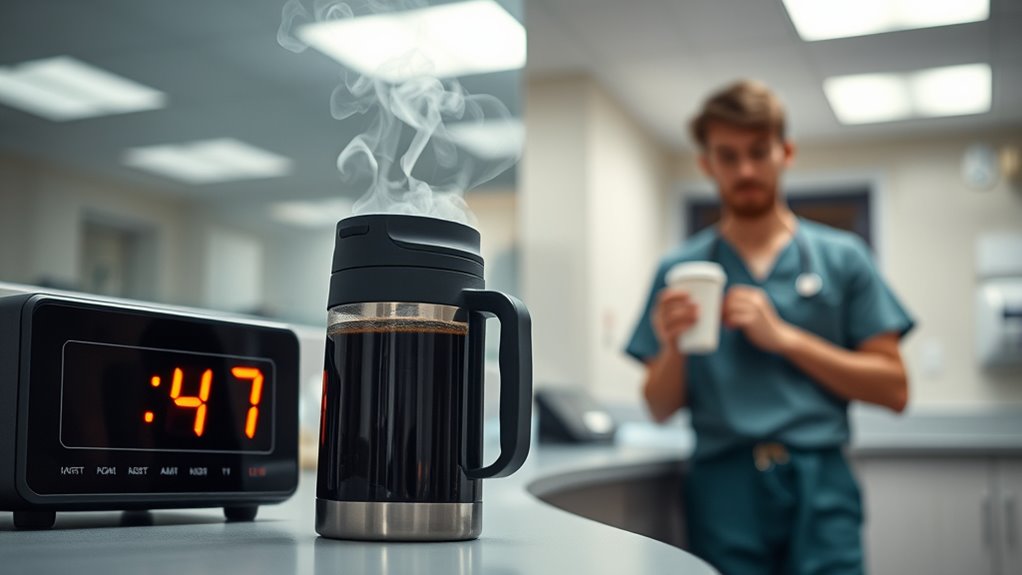
For shift workers, staying alert during irregular hours can be a challenge, and caffeine often becomes a go-to solution. When you’re working late into the night or early morning, caffeine can help you fight off fatigue and maintain focus. However, relying heavily on caffeine for alertness can lead to sleep disruption, making it even harder to recover and stay energized during your next shift. Consuming caffeine too late in your shift or close to bedtime can interfere with your ability to fall asleep, reducing your overall sleep quality. Over time, this pattern may cause a cycle of poor sleep and increased caffeine dependence, which perpetuates fatigue rather than alleviates it.
As you develop a routine around caffeine, you might notice that your body begins to depend on it to stay awake. While moderate intake can be effective, excessive consumption raises dependency risks. You might find yourself needing more caffeine to achieve the same alertness effect, which can lead to increased tolerance. This creates a tricky balance—using enough caffeine to stay alert without tipping into dependency. The more you rely on caffeine, the more you risk disrupting your natural sleep-wake cycle, making it harder to rest properly during the hours your body desires sleep. The cycle becomes self-perpetuating: poor sleep leads to increased caffeine intake, which then hampers your ability to sleep well later.
You might also experience withdrawal symptoms if you suddenly cut back on caffeine, including headaches, irritability, and fatigue. These symptoms can make it even more difficult to manage your alertness naturally. That’s why it’s essential to be mindful of your caffeine habits and to use it strategically. Instead of consuming large amounts all at once, try to spread your intake evenly throughout your shift. Limiting caffeine intake in the hours leading up to your sleep period can help minimize sleep disruption, so you wake up feeling more rested. Establishing a consistent sleep schedule, even with irregular work hours, can help mitigate some of the adverse effects of caffeine dependency and sleep disruption. Additionally, understanding the impact of caffeine on sleep can guide better consumption habits.
In the end, caffeine can be a useful tool when used wisely, but it’s not a substitute for good sleep hygiene and healthy routines. Recognize your limits and pay attention to how caffeine affects your sleep and energy levels. By managing your intake carefully and prioritizing rest when possible, you can stay alert without falling into the dependency risks that come with overuse. Balance is key—use caffeine to boost your alertness, but don’t let it control your sleep and overall well-being.
Frequently Asked Questions
How Does Caffeine Affect Sleep Quality in Shift Workers?
Caffeine can negatively impact your sleep quality by causing sleep disruption, making it harder to fall asleep or stay asleep. It also increases cortisol levels, which can interfere with your body’s natural sleep-wake cycle. If you consume caffeine later in your shift, it may delay sleep onset and reduce restfulness, leaving you more fatigued. To improve sleep, limit caffeine intake, especially close to your usual bedtime.
Are There Long-Term Health Risks of Caffeine Dependence?
Caffeine dependence can pose serious health risks if you rely on it excessively. You might experience heightened anxiety, heart issues, or disrupted sleep, which can feel overwhelming—like a caffeine-induced storm in your body. Long-term dependence concerns include increased tolerance, making you need more to stay alert, and potential withdrawal symptoms. it is crucial to consume caffeine responsibly to avoid these risks and maintain your overall health and well-being.
What Are Alternative Methods to Boost Alertness Besides Caffeine?
You can boost alertness by improving sleep hygiene, ensuring you stick to a consistent sleep schedule and create a restful environment. Light therapy is also effective; exposure to bright light, especially in the morning, helps regulate your circadian rhythm and increases alertness. Incorporate short breaks, stay hydrated, and engage in physical activity to stay awake and focused during your shift without relying solely on caffeine.
How Does Caffeine Intake Vary for Different Shift Schedules?
You find caffeine to be your trusty lighthouse, guiding you through different shift schedules. Your caffeine timing shifts with your work hours—early mornings might call for a swift morning brew, while night shifts demand careful, shift-specific consumption to maintain alertness without crashing. You adjust your intake like tuning an instrument, ensuring your caffeine use aligns with your schedule, helping you stay sharp and steady, no matter what time the clock strikes.
Can Caffeine Consumption Improve Cognitive Performance During Night Shifts?
Yes, caffeine can boost your cognitive performance during night shifts by enhancing alertness and focus. It acts as an effective alertness strategy, helping you stay sharp when your natural sleep cycle is disrupted. To maximize benefits, time your caffeine intake strategically, avoiding excessive doses that might cause jitters or crashes. Remember, combining caffeine with other alertness strategies like proper lighting and breaks can further improve your cognitive function during demanding night shifts.
Conclusion
So, next time you’re battling those sleepless shifts, remember caffeine is your secret weapon—your mighty warrior in the war against exhaustion! It can turn the tide, turbocharge your alertness, and keep you unstoppable through the night. With caffeine by your side, you’ll conquer fatigue like a superhero, defying sleep and staying sharp as a razor. Just don’t overdo it, or you might release a jittery, jittery beast—so sip smart and stay victorious!

Noah, the Editor-in-Chief at Cappuccino Oracle, plays a pivotal role in shaping the voice and vision of our renowned platform. With an unwavering passion for coffee, coffee alternatives, and tea, Noah leads Cappuccino Oracle towards new horizons in the realm of coffee journalism.
Noah’s upbringing immersed him in the distinct aromas of artisanal coffee roasters, sparking a fascination that continues to fuel his professional journey. He joined Cappuccino Oracle as a senior editor and later assumed the position of Editor-in-Chief. Under his guidance, our platform has flourished into a trusted source for coffee, coffee alternatives, and tea lovers worldwide.