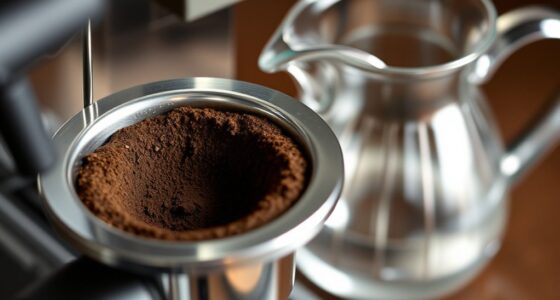
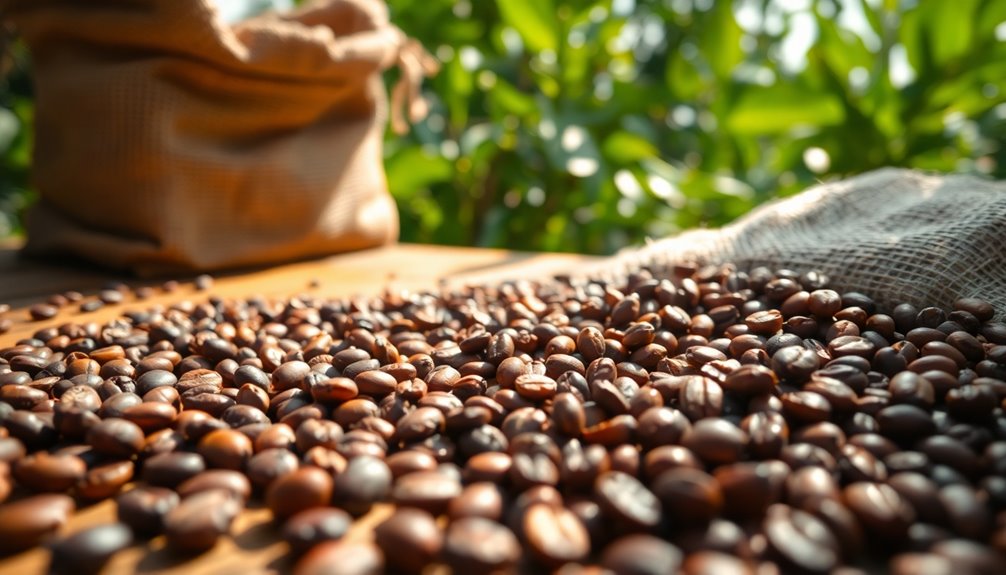
Choosing whole beans over pre-ground coffee generally offers better flavor because you retain essential oils and aromatics until brewing, resulting in a fresher, more vibrant cup. Pre-ground coffee loses these oils faster, leading to flatter taste and less complexity. While convenience favors pre-ground, grinding your own beans boosts freshness and aroma. For a truly flavorful experience, you’ll want to explore how storage, grinding methods, and brewing styles influence your coffee’s taste.
Key Takeaways
- Whole beans retain essential oils and aromas longer, resulting in richer, more vibrant flavor when freshly ground before brewing.
- Pre-ground coffee loses freshness quickly due to exposure to air, leading to flatter and duller taste over time.
- Grinding beans just before brewing maximizes aromatic release and flavor complexity compared to using pre-ground coffee.
- Whole beans generally have a longer shelf life, reducing waste and maintaining flavor quality over time.
- Choosing whole beans from sustainable sources can enhance both flavor and environmental impact.
The Flavor Difference Between Whole Beans and Pre-Ground Coffee

When it comes to flavor, freshly ground whole beans often deliver a richer, more vibrant taste than pre-ground coffee. Your choice of brewing method plays a big role here; methods like French press or pour-over extract more oils and aromatics from whole beans, enhancing flavor complexity. Pre-ground coffee, however, loses some of these essential oils during packaging, resulting in a flatter taste. Additionally, the grind size influences caffeine content; a finer grind increases extraction, which can boost caffeine levels, but may also lead to over-extraction and bitterness if not managed properly. Whole beans retain their freshness longer, ensuring a more robust flavor profile when brewed. Proper storage methods also help preserve freshness, contributing to better flavor. Using airtight containers is recommended to maintain the beans’ aromatic oils and prevent staleness. Moreover, grinding just before brewing maximizes aromatic release, providing a more flavorful cup. To further enhance flavor preservation, some enthusiasts recommend vacuum-sealing their beans for extended freshness. Additionally, advancements in packaging technology have helped preserve aromatic oils more effectively, ensuring a richer taste over time. So, for a truly vibrant and customizable coffee experience, grinding fresh beans just before brewing makes all the difference.
Freshness and Shelf Life: How They Impact Coffee Taste

Freshness is key to releasing the best flavor in your coffee, as it directly affects aroma, taste, and overall quality. When beans sit too long, they lose volatile oils and aroma compounds, diminishing flavor. Whole beans stay fresh longer if stored properly, while pre-ground coffee quickly loses potency. Shelf life impacts how your brew temperature and water quality influence flavor; stale coffee can result in flat, dull taste regardless of brewing method. To maximize freshness, grind just before brewing and store beans in an airtight container away from light.
| Coffee Type | Shelf Life (approx.) | Best Storage Tips |
|---|---|---|
| Whole Beans | 2-4 weeks | Airtight, cool, dark |
| Pre-Ground | 1-2 weeks | Airtight, cool, dark |
| Brew Temperature | 195-205°F (90-96°C) | Consistent temperature |
| Water Quality | Clean, filtered water | Enhances flavor stability |
The Convenience Factor: Pre-Ground Coffee’s Ease Versus Whole Beans’ Quality

Pre-ground coffee offers unmatched convenience, allowing you to brew a cup quickly without any prep work. With pre-ground beans, you can skip the grinding step and simply use your preferred coffee brewing method—whether it’s drip, French press, or espresso. This saves time and effort, making it ideal for busy mornings. Additionally, pre-ground coffee provides a consistent grind size, helping you achieve predictable flavor and caffeine content. While whole beans require grinding beforehand, they do demand more preparation but often yield fresher, more vibrant flavors. Freshness preservation is a key benefit of whole beans, as grinding exposes more surface area to air, leading to faster flavor degradation. However, if convenience is your priority, pre-ground coffee’s ease of use and quick brewing process make it a practical choice, especially when you’re in a hurry or want minimal cleanup.
Grinding Your Own Coffee: Benefits and Considerations

Grinding your own coffee allows you to control the grind size, which directly impacts the extraction and flavor of your brew. Different coffee brewing methods—like French press, espresso, or drip—require specific grind sizes to optimize flavor profiles. When you grind just before brewing, you preserve essential oils and volatile compounds, resulting in a fresher, more vibrant taste. This freshness enhances your ability to tailor the coffee’s flavor to your preferences, whether you enjoy a bold, full-bodied cup or a delicate, nuanced one. However, consider the effort involved; grinding takes time and a good grinder. It’s a worthwhile trade-off if you’re serious about extracting the best flavors from your beans and mastering your preferred brewing method.
Storage Tips for Maintaining Coffee Freshness

To keep your coffee tasting its best, storing it properly is essential. Freshness impacts not only flavor but also the caffeine content, affecting your coffee brewing experience. To maximize freshness, keep your coffee in an airtight container, away from light, heat, and moisture. Avoid storing it in the fridge or freezer, as temperature fluctuations can cause condensation and stale the beans or grounds. Instead, choose a cool, dark pantry for storage. Proper storage helps preserve the oils that contribute to flavor and aroma, ensuring each cup remains vibrant. Remember, once coffee is exposed to air, it starts to lose its freshness, so always reseal tightly after use. This way, your coffee stays flavorful and potent, ready for your next brew. Additionally, understanding the importance of storing coffee correctly can help you maintain its optimal quality over time. Consistent storage conditions are key to preserving coffee quality and ensuring a satisfying cup every time.
Cost Analysis: Which Option Offers Better Value?

When comparing whole bean and pre-ground coffee, cost is a key factor influencing your choice. Whole beans often have higher upfront prices due to their freshness and quality, but they last longer and can be more economical over time. Pre-ground coffee typically has lower initial costs, benefiting from mass production and competitive pricing strategies. However, it tends to lose freshness faster, which may lead you to buy more frequently. Brand influence also plays a role; premium brands may charge more regardless of format, while lesser-known brands might offer better deals. Ultimately, if you’re willing to invest in a good grinder and prioritize freshness, whole beans provide better value. Conversely, pre-ground coffee offers convenience at a lower initial cost, which could be more budget-friendly for casual coffee drinkers. Additionally, freshness preservation is crucial because it affects the flavor profile and overall quality of your brew.
Environmental Impact of Whole Bean Versus Pre-Ground Coffee

You might notice that whole bean coffee often comes with less packaging waste compared to pre-ground options, which typically require more containers. The carbon footprint of each can also vary, depending on processing and transportation methods. Additionally, the longer shelf life of whole beans can reduce waste, making it a more eco-friendly choice overall. Using sustainable coffee practices can further minimize environmental impact by supporting eco-friendly farms and fair trade standards. Moreover, purchasing direct trade coffee can help ensure environmentally responsible sourcing and better quality control. Choosing beans with eco-friendly certifications can also contribute to reducing the environmental footprint of your coffee consumption. Opting for biodegradable packaging when available further decreases waste and environmental impact. Being aware of carbon emissions from transportation can help consumers make more environmentally conscious choices when purchasing coffee.
Packaging Waste Differences
The packaging waste generated by whole bean coffee often proves to be less environmentally damaging than that of pre-ground coffee. Whole beans typically come in minimal or more sustainable packaging, reducing overall waste. You can further lessen your impact by paying attention to recycling practices and choosing brands that use eco-friendly packaging materials. Pre-ground coffee often involves single-use, bulky bags lined with foil or plastic, which are harder to recycle. Additionally, these packaging materials tend to generate more waste because they’re designed for convenience rather than sustainability. By opting for whole beans, you also have the chance to select packaging that’s easier to reuse or recycle, helping cut down on landfill waste. Green packaging options are increasingly available for whole bean coffee, allowing consumers to make more environmentally conscious choices. Overall, your choice can considerably influence your coffee’s environmental footprint.
Carbon Footprint Variations
Choosing whole bean coffee over pre-ground options can considerably reduce your coffee’s overall carbon footprint. Whole beans require less energy during processing and packaging because they’re less processed than pre-ground coffee. When it comes to coffee brewing, grinding beans just before brewing minimizes the need for additional packaging and reduces waste. Proper bean storage is also essential; keeping beans airtight extends freshness and prevents spoilage, reducing waste and the need for frequent replacements. Freshness preservation is crucial for both flavor and environmental sustainability, as it minimizes waste due to spoilage. Pre-ground coffee often involves more packaging and transportation, which increases emissions. Additionally, the shorter shelf life of pre-ground coffee means more frequent purchases, leading to higher environmental impact. By opting for whole beans and grinding them at home, you help lower your personal carbon footprint while supporting more sustainable coffee consumption. Investment strategies in coffee and other commodities can also influence the sustainability of your purchases, emphasizing the importance of mindful sourcing. To maximize environmental benefits, consider choosing beans from sustainable farms that prioritize eco-friendly practices. Furthermore, selecting beans grown using climate-friendly methods can further reduce environmental impact and support resilient agricultural systems.
Shelf Life and Waste
Because pre-ground coffee has a shorter shelf life than whole beans, it’s more prone to spoilage and staleness, which often leads to increased waste. When you buy pre-ground coffee, you might find yourself discarding it sooner, especially if it’s not stored properly. This waste impacts the environment and can be costly over time. To reduce waste, consider using brewing techniques that preserve freshness, like storing beans in airtight containers. Look for coffee certifications that emphasize sustainability, ensuring your coffee is ethically produced and minimizes environmental impact. Whole beans tend to last longer, helping you cut down on unnecessary waste and environmental footprint. Being mindful of these factors helps you enjoy better flavor while also supporting eco-friendly practices. Additionally, understanding the shelf life of coffee can help you make better purchasing and storage decisions to further reduce waste. Proper storage methods, such as airtight containers, are essential for maintaining freshness and reducing spoilage.
Making the Choice: Factors to Consider for Your Coffee Preferences

Deciding between whole bean and pre-ground coffee hinges on several key factors that influence your overall coffee experience. First, consider your preferred brewing methods—some methods, like French press or pour-over, benefit from fresh, whole beans to maximize flavor. If you value convenience, pre-ground coffee offers quick preparation, but may compromise freshness. Also, look for coffee certifications such as organic or fair trade, which ensure ethical sourcing regardless of the form. Your taste preferences matter too; whole beans retain more aroma and flavor, ideal for connoisseurs, while pre-ground can suit casual drinkers. Ultimately, your choice depends on balancing freshness, convenience, brewing style, and your commitment to coffee certifications, guiding you toward a satisfying coffee experience tailored to your lifestyle.
Frequently Asked Questions
How Does Grind Size Affect the Flavor Extraction Process?
The grind size directly impacts the flavor extraction process by influencing the particle size and extraction rate. Finer grinds have a larger surface area, increasing extraction speed and potentially over-extracting bitter flavors. Coarser grinds slow down extraction, preventing over-brewing and highlighting smoother, nuanced flavors. You should adjust grind size based on your brewing method to optimize flavor, ensuring the right balance of extraction and avoiding undesirable bitterness or weak taste.
Can Pre-Ground Coffee Be as Fresh as Whole Beans?
Pre-ground coffee can’t match the coffee freshness and flavor preservation of whole beans. Once ground, coffee’s exposed to air, causing rapid flavor loss. If you want the freshest taste, grind your beans just before brewing. With pre-ground coffee, you risk losing aromatic compounds and subtle flavors over time. So, for peak flavor, whole beans are the better choice, ensuring you enjoy the freshest, most flavorful cup possible.
Does Choosing Whole Beans Impact Brewing Equipment Longevity?
Ironically, choosing whole beans might actually extend your brewing equipment’s life. When you grind fresh, you maintain better grinding consistency, reducing strain on your grinder and machine. Plus, you’re less likely to clog or damage components with uneven grounds. Regular equipment maintenance becomes easier because you’re preventing buildup from stale, pre-ground coffee. So, by opting for whole beans, you’re protecting your gear and enjoying fresher, more flavorful brews.
Are There Health Differences Between Whole Bean and Pre-Ground Coffee?
You might wonder if whole beans or pre-ground coffee differ health-wise. While both contain antioxidants, whole beans typically retain higher antioxidant levels because they’re less exposed to air and light, which degrade these compounds. Consuming freshly ground beans can maximize health benefits. However, pre-ground coffee is convenient, and the health implications are minimal if stored properly. Ultimately, freshness and proper storage matter most for health.
How Does Storage Environment Influence Coffee Quality Over Time?
You should pay attention to storage conditions because they directly impact your coffee’s freshness preservation. Keep your coffee in an airtight container, away from light, heat, and moisture, to prevent flavor loss over time. Proper storage slows down oxidation and keeps your coffee tasting its best longer. By maintaining ideal storage conditions, you ensure each cup remains flavorful and aromatic, no matter how long you’ve had it.
Conclusion
Choosing between whole beans and pre-ground coffee is like picking a paintbrush or a roller—you control the detail and freshness. If you want vibrant, full flavor, grind your beans just before brewing. But if convenience is your priority, pre-ground is your trusty brush. Think of your coffee journey as an art project—your choice shapes the masterpiece. Whichever you pick, savor each sip as a reflection of your personal style.