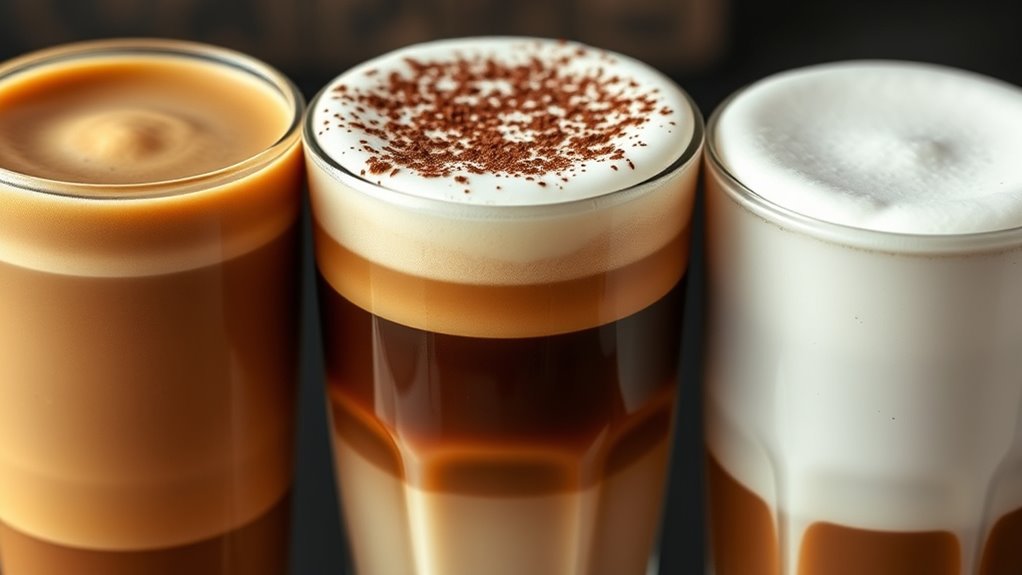

A latte combines espresso with steamed milk and a thin foam layer, resulting in a smooth, creamy drink with subtle coffee flavor. A cappuccino features equal parts espresso, thick foam, and steamed milk, offering a bold, frothy experience. A flat white uses a double shot of espresso with velvety microfoam for a stronger coffee taste and silky mouthfeel. Each drink’s unique milk texture and preparation method shape its distinct flavor; explore further to see how they compare.
Key Takeaways
- A latte features espresso with steamed milk and a thin foam layer, resulting in a smooth, creamy texture.
- A cappuccino combines equal parts espresso, steamed milk, and thick foam, offering a frothy, bold flavor.
- A flat white is made with espresso and microfoam, emphasizing a velvety texture and a stronger coffee flavor.
- Lattes are milder with subtle coffee notes, while cappuccinos are more robust and flat whites highlight espresso richness.
- Milk texture and ratios are key, with lattes being creamy, cappuccinos frothy, and flat whites silky with microfoam.
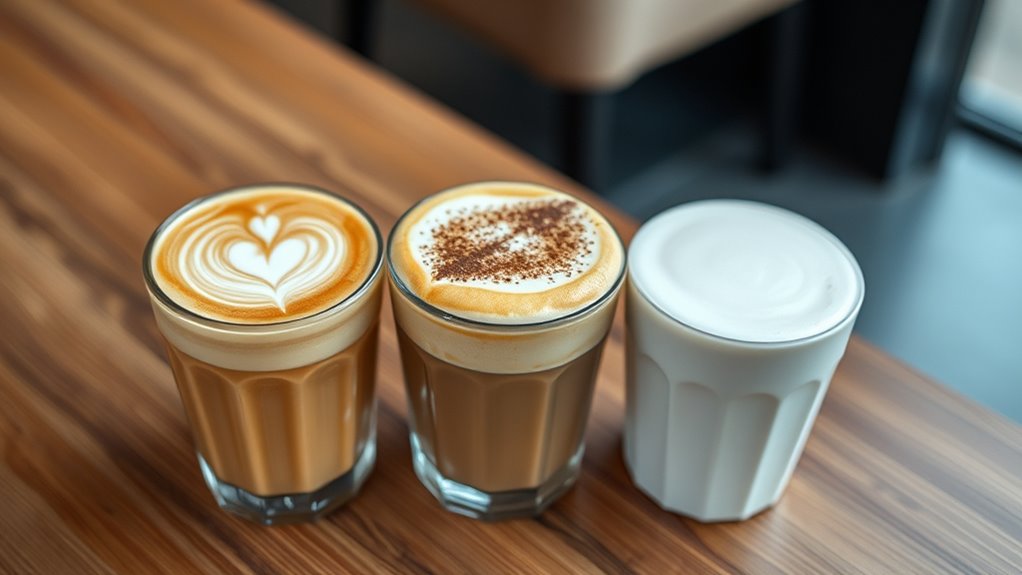
Are you wondering what sets a latte apart from a cappuccino or a flat white? It all comes down to their unique preparation methods, milk textures, and the way the espresso is combined with other ingredients. When exploring these popular coffee drinks, it’s helpful to understand what makes each one distinctive. Let’s start with the basics: a latte is typically made with a shot or two of espresso, combined with a generous amount of steamed milk, and topped with a thin layer of foam. This results in a smooth, creamy beverage that’s milder in flavor, allowing the coffee bean varieties used to shine through more subtly. If you prefer a sweeter taste, you might add artificial sweeteners to your latte, which can enhance the flavor without adding extra calories or sugar.
A cappuccino, on the other hand, is characterized by a balanced ratio of espresso, steamed milk, and foam—usually in equal parts. The foam on top is thick and velvety, giving the drink a frothy, airy texture that contrasts with the rich, intense espresso beneath. Because of this structure, a cappuccino delivers a more robust coffee flavor compared to a latte. The choice of coffee bean varieties plays a big role here, as darker roasts tend to complement the boldness of a cappuccino’s intense flavor profile. You might also find that some cafes use artificial sweeteners to modify the sweetness level of their cappuccinos, catering to those who want a less sugary experience or are watching their intake.
A flat white is somewhat similar to a latte but is distinguished by its finer, microfoam—a velvety, thin layer of steamed milk with tiny bubbles—poured over a shot of espresso. This results in a stronger coffee flavor than a latte but with a creamier mouthfeel than a cappuccino. The emphasis is on the espresso’s richness, which pairs beautifully with the smooth, silky milk. When selecting coffee bean varieties for a flat white, baristas often prefer beans that have a balanced acidity and nuanced flavor, highlighting the coffee’s natural notes. You might also notice that the milk texture plays a key role in defining this drink’s unique mouthfeel. Some people even choose artificial sweeteners to enhance or mellow the taste, especially if they’re sensitive to the natural bitterness of certain beans.
Frequently Asked Questions
Which Coffee Drink Has the Most Caffeine Content?
You’ll find that the caffeine content comparison varies, but generally, a latte has the most caffeine. This is because lattes usually contain more espresso shots, leading to higher caffeine level variations. Cappuccinos and flat whites tend to have similar caffeine amounts, but the exact content depends on the number of shots used. So, if caffeine is your priority, opt for a larger latte with extra shots for the most caffeine.
Can These Drinks Be Made With Alternative Milks?
Making these drinks with alternative milks is like painting with a different palette—you can customize easily. You can certainly use plant-based milk or dairy options for lattes, cappuccinos, and flat whites. Many cafes now offer almond, soy, oat, or coconut milk, allowing you to enjoy your favorite coffee with your preferred dairy or non-dairy milk. Just ask your barista to guarantee the right frothing and flavor balance.
What’s the Best Way to Order These at a Café?
To order these drinks at a café, be clear and polite. Specify if you want extra milk foam artistry or a specific milk type, especially if you prefer alternative milks. Use coffee shop etiquette by making eye contact and saying “please” and “thank you.” For a latte, ask for extra steamed milk; for a cappuccino, request a thick foam topping; and for a flat white, emphasize a smooth, velvety texture.
Are There Regional Differences in How These Drinks Are Prepared?
Think of each coffee as a cultural tapestry—regional variations shape how you experience your drink. In Italy, a cappuccino’s froth symbolizes tradition, while Australia’s flat white emphasizes a smooth, balanced sip reflecting local tastes. Cultural influences influence milk texture, espresso strength, and presentation style. By understanding these regional differences, you can enjoy each coffee’s unique story and flavor, making every sip a journey through its cultural roots.
How Do the Flavor Profiles Differ Beyond the Milk Texture?
You’ll notice that the flavor profiles differ mainly in intensity and bitterness levels. Lattes tend to be milder with a smooth, creamy taste, while cappuccinos have a more robust coffee flavor due to less milk and more foam. Flat whites strike a balance with a slightly stronger flavor than a latte but softer than a cappuccino, offering a richer coffee experience without overwhelming bitterness.
Conclusion
Now that you know the differences between a latte, cappuccino, and flat white, you’re ready to conquer any coffee order thrown your way. Whether you prefer a silky smooth latte, a frothy cappuccino, or a velvety flat white, you’re equipped to impress even the most coffee connoisseurs. Remember, once you master these drinks, you’ll be unstoppable—like a superhero of the coffee world. So go ahead, indulge and enjoy your perfect cup!

Noah, the Editor-in-Chief at Cappuccino Oracle, plays a pivotal role in shaping the voice and vision of our renowned platform. With an unwavering passion for coffee, coffee alternatives, and tea, Noah leads Cappuccino Oracle towards new horizons in the realm of coffee journalism.
Noah’s upbringing immersed him in the distinct aromas of artisanal coffee roasters, sparking a fascination that continues to fuel his professional journey. He joined Cappuccino Oracle as a senior editor and later assumed the position of Editor-in-Chief. Under his guidance, our platform has flourished into a trusted source for coffee, coffee alternatives, and tea lovers worldwide.