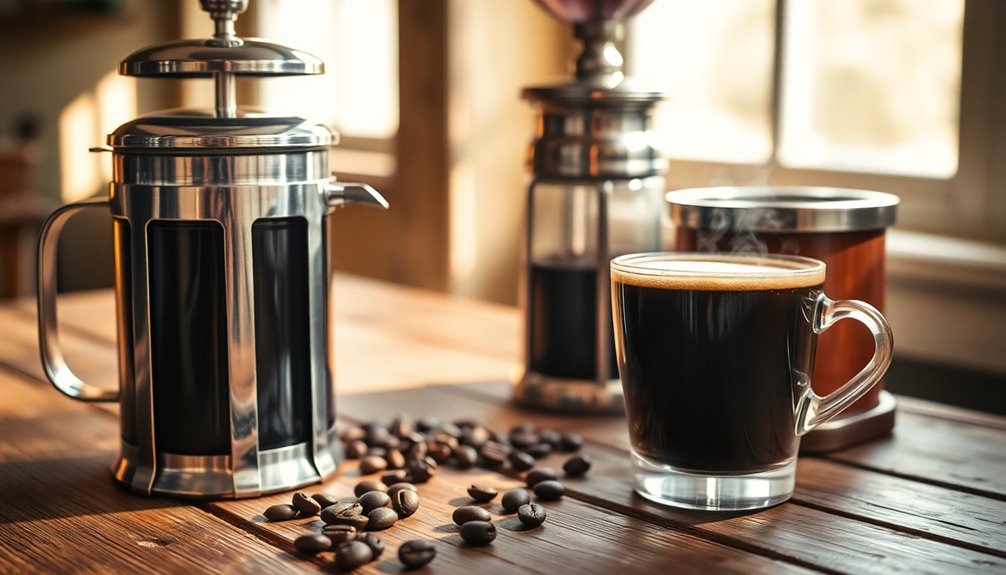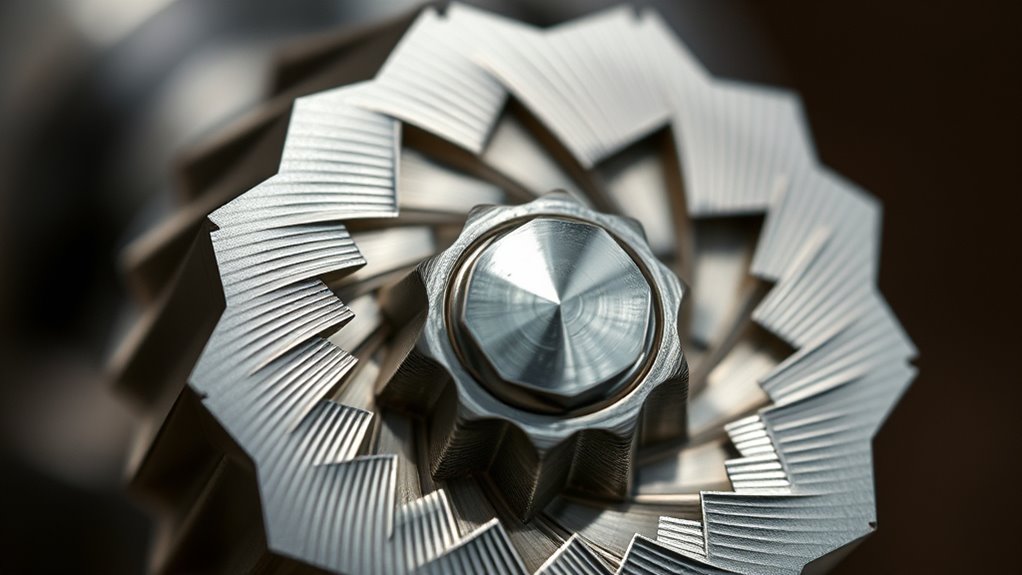

Your burr geometry shapes how evenly your beans are ground, influencing particle size and form. Sharp, well-designed burrs produce uniform, rounded particles that water moves through smoothly, resulting in better extraction. Dull or poorly shaped burrs create irregular, elongated particles, causing channeling and uneven flavor. By understanding how burr design impacts particle shape, you’ll optimize your brew. Keep exploring to uncover more ways to refine your coffee for a perfect cup.
Key Takeaways
- Burr geometry determines how beans are sheared, influencing particle size and shape, which affects extraction efficiency.
- Conical burrs produce more uniform, rounded particles, promoting even water flow and consistent flavor extraction.
- Flat burrs can generate a broader particle shape spectrum; dull or misaligned burrs lead to irregular particles and channeling.
- Sharp, well-maintained burrs create consistent grind profiles, reducing variability in extraction and enhancing flavor clarity.
- Burr design impacts how precisely beans are cut, affecting particle uniformity, flow dynamics, and ultimately, the quality of extraction.

Have you ever wondered how the size of coffee grounds influences the flavor of your brew? It all comes down to the physics behind grind size, especially the burrs that shape your coffee’s texture. When you adjust your grinder, you’re not just changing size—you’re affecting burr sharpness and particle shape, two critical factors that determine extraction quality. Burr sharpness, which refers to how finely the burr edges are honed, directly impacts the consistency of your grind. Dull burrs tend to crush beans unevenly, producing irregular particle shapes that can cause uneven extraction. Sharp burrs, on the other hand, slice through beans cleanly, creating more uniform particles that extract more evenly. That uniformity is key to *unlock* better flavor; inconsistent particle shapes lead to over-extraction of some grounds and under-extraction of others, resulting in a muddled taste.
Dull burrs produce uneven particles, causing inconsistent extraction and muddled coffee flavor.
The shape of your coffee particles also plays a significant role in extraction. When burrs are sharp and well-maintained, they produce particles that are close to uniform in size and shape—typically more spherical or slightly irregular but consistent. These uniform particles allow hot water to flow through the coffee bed evenly, extracting flavors more efficiently and predictably. Conversely, dull burrs tend to produce a wider variety of particle shapes, including elongated or irregular fragments. These uneven shapes cause channels or bypassing, where water skips over some grounds or flows unevenly, leading to inconsistent extraction. You might notice this as a sour or bitter profile in your brew because some particles release their flavors too quickly while others hold back.
Another aspect to *consider* is how burr geometry influences particle shape. Conical burrs tend to produce more uniform, rounded particles because of their tapered shape, which shears beans more cleanly. Flat burrs, depending on their design, can sometimes generate a broader spectrum of particle shapes, especially if they’re dull or misaligned. This variation affects how water interacts with the grounds, impacting the speed and evenness of extraction. Additionally, burr maintenance plays a vital role in preserving the integrity of particle shape and ensuring consistent performance. Sharpness and geometry work hand-in-hand—sharp, well-designed burrs produce consistently shaped particles, optimizing extraction and flavor clarity. Dull burrs and poorly designed geometries create a messier particle profile, making it harder to dial in your brew and get consistent results.
In the end, paying attention to burr sharpness and particle shape isn’t just about maintenance; it’s about controlling the physics that determine how your coffee develops in the cup. When you keep your burrs sharp and understand how their geometry shapes the grounds, you gain a better handle on extraction and flavor. This knowledge allows you to fine-tune your grind size with confidence, ensuring every cup delivers the rich, balanced flavor you’re after.
Frequently Asked Questions
How Does Grind Size Influence Brew Time?
Your grind size directly influences brew time because particle size affects the extraction rate. When you use a finer grind, the smaller particles increase surface area, leading to faster extraction and shorter brew times. Conversely, coarser grounds slow down the extraction rate, requiring more time to fully extract flavors. Adjusting grind size lets you control brew time, ensuring you get the perfect flavor and strength in your coffee.
Can Burr Material Affect Extraction?
Yes, burr material can affect extraction efficiency. When you choose a burr material like ceramic or steel, it influences how evenly the coffee grounds are ground, which impacts extraction. Ceramic burrs tend to stay sharper longer, providing more consistent grind size and better extraction, while steel burrs might wear faster but are durable. Your choice of burr material directly affects how efficiently flavors are extracted during brewing.
What Is the Optimal Burr Shape for Espresso?
Think of the burr shape as the sculptor shaping your coffee’s destiny; the ideal geometry is conical or flat burrs. These shapes guarantee consistent grind size, which is essential for even extraction. Conical burrs provide a gentle crush, preserving flavor nuances, while flat burrs offer uniformity for precise control. Choose the shape that matches your brewing style, and you’ll reveal the full potential of your espresso.
How Do Environmental Factors Impact Grind Consistency?
Environmental factors critically impact your grind consistency by introducing variability that affects grind stability. Changes in humidity, temperature, and airflow can cause your beans to absorb moisture or dry out, leading to inconsistent particle size. To maintain ideal consistency, you should control your environment as much as possible, store beans properly, and adjust your grinder settings when you notice shifts caused by environmental variability. This helps guarantee steady extraction and better coffee quality.
Does Grind Size Affect Flavor Profile Differently Across Brewing Methods?
Did you know that grind size can change your coffee’s flavor profile by up to 40%? It definitely affects flavor extraction, and this varies with brew method compatibility. For example, a finer grind enhances flavor in espresso but can cause over-extraction in a pour-over. So, adjusting grind size based on your brewing method is key to releasing the best flavor and aroma from your beans.
Conclusion
Think of your grinder as a sculptor, shaping the coffee’s essence with each turn of the burrs. Just like a master artist carefully refines their sculpture, adjusting burr geometry fine-tunes the grind size, revealing richer flavors and better extraction. When you understand this dance of physics, you hold the key to brewing perfection. So, embrace the craft, tweak your burrs, and let your coffee’s true character shine like a masterpiece uncovered.