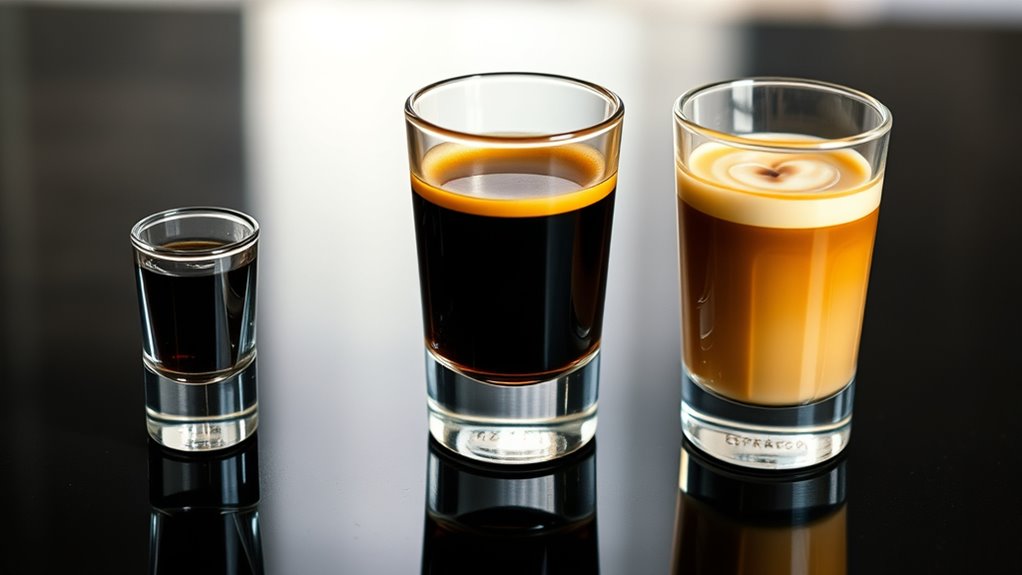

Espresso ratios vary from ristretto to lungo based on water volume used during extraction. Ristretto uses about 0.75 ounces of water for a concentrated, bold shot, while a standard espresso uses 1 to 1.5 ounces for balanced flavor. Lungo, with 2 ounces or more, results in a lighter, more diluted brew. Adjusting these ratios influences flavor and strength, and exploring the differences helps you tailor your perfect shot—more details are just a step away.
Key Takeaways
- Ristretto uses about 0.75 oz of water for a concentrated, full-bodied shot, highlighting delicate oils and aromatics.
- Standard espresso involves 1 to 1.5 oz of water, balancing flavor, clarity, and body.
- Lungo extends to 2 oz or more, resulting in a milder, more diluted brew with brighter, acidic notes.
- Water ratio directly impacts flavor; less water emphasizes richness, more water emphasizes acidity and lightness.
- Mastering these ratios allows for tailored extraction, optimizing flavor and brewing precision.
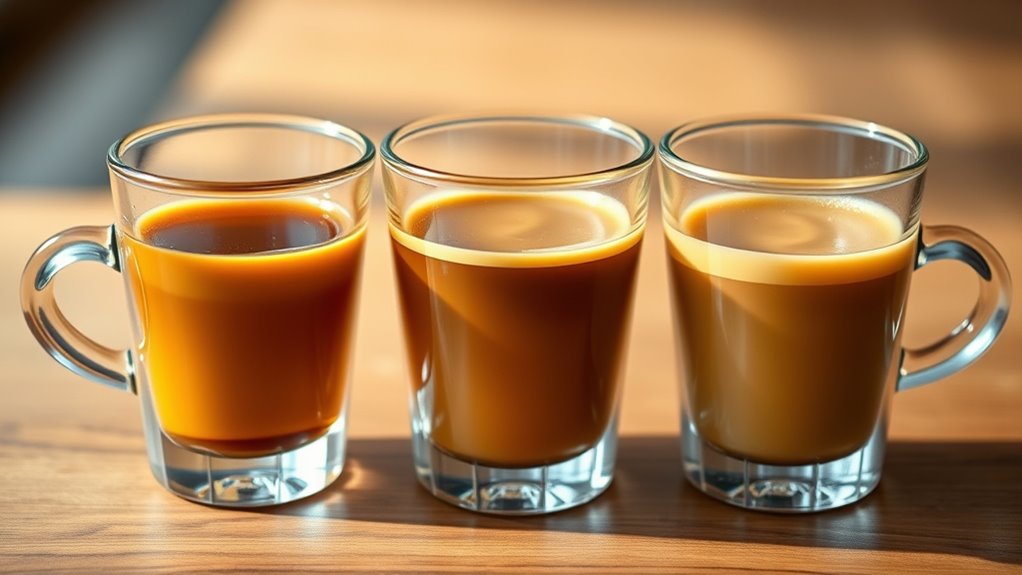
Ever wondered how baristas achieve that perfect shot of espresso? It all comes down to understanding the nuances of espresso ratios, which directly influence the brew methods and flavor profiles. When you step into a coffee shop or try making espresso at home, you’re faced with the choice of how much water to extract from your coffee grounds. This decision shapes the final taste and strength of your espresso, whether you’re aiming for a rich, concentrated shot or a longer, more diluted brew.
Starting with a ristretto, which means “restricted” in Italian, you’re using a smaller amount of water—typically around 0.75 ounces—compared to a standard espresso shot. This brew method results in a highly concentrated drink with a bold, intense flavor profile. Because less water passes through the coffee grounds, a ristretto captures the most delicate and complex oils, sugars, and aromatics, producing a shot that’s thick, syrupy, and full of nuanced notes. It’s ideal if you prefer a robust, full-bodied experience with minimal dilution, and it often highlights the sweeter, fruitier elements of the coffee beans.
Moving towards a traditional espresso shot, which usually involves about 1 to 1.5 ounces of water, you get a balanced flavor profile with better clarity and body. This is the classic brew method for espresso, offering a harmonious blend of bitterness, acidity, and sweetness. It’s versatile and serves as the foundation for many coffee drinks, from lattes to cappuccinos. The ratio here allows the grounds to provide a full spectrum of flavors without becoming overly intense or diluted, making it the go-to choice for many baristas and coffee enthusiasts.
Then, there’s the lungo, which translates to “long” in Italian. This involves using more water—around 2 ounces or more—resulting in a longer extraction. The brew method for a lungo produces a lighter, more diluted shot that emphasizes different flavor profiles. Since more water flows through the same amount of coffee grounds, some of the delicate oils and flavors can become over-extracted, leading to a slightly bitter or woody taste if not carefully managed. However, it can also bring out brighter, more acidic notes, making it a preferred choice for those who enjoy a milder, less intense espresso experience. Understanding extraction techniques can help optimize flavor and prevent over-extraction.
Understanding these ratios helps you tailor your brew method to match your flavor preferences. Whether you want the rich, concentrated notes of a ristretto, the balanced profile of a standard espresso, or the lighter, more extended flavors of a lungo, adjusting the amount of water is key. Mastering these ratios allows you to experiment and discover the perfect shot that aligns with your personal taste, giving you greater control over your brewing process and the final flavor profile of your espresso.

Qipecedm Espresso Cups Set of 2, 4 OZ Double Spouts Cups, Shot Glasses, Milk Cup with Handle, Clear Glass, Espresso Accessories for Machine, Small
【ESPRESSO MACHINE ACCESSORIES】The capacity of 4 oz allows you to fill 2 servings of espresso at one time….
As an affiliate, we earn on qualifying purchases.
As an affiliate, we earn on qualifying purchases.
Frequently Asked Questions
How Do Different Roast Levels Affect Espresso Ratios?
Different roast levels directly impact your espresso ratios by influencing coffee extraction and flavor balance. Dark roasts tend to extract more quickly, so you might use a slightly shorter ratio to prevent over-extraction and bitterness. Light roasts require a longer extraction time, often needing a more balanced or slightly higher ratio to maximize flavor complexity. Adjusting ratios based on roast level helps you achieve a harmonious espresso with perfect flavor.
Can Adjusting Ratios Change Espresso Flavor Profiles Significantly?
Adjusting your espresso ratios is like tuning a musical instrument—small tweaks can dramatically change the flavor profile. By increasing or decreasing the water-to-coffee ratio, you influence flavor intensity and brewing consistency, making your brew brighter or more subdued. These subtle shifts allow you to craft a more personalized experience, letting you highlight certain notes or smooth out others, transforming each shot into a unique symphony of taste.
What Equipment Best Supports Precise Espresso Ratio Measurements?
You should choose a high-precision espresso scale with a built-in timer for the best ratio accuracy. Pair it with a consistent grinder that offers adjustable grind size, so you can fine-tune extraction time easily. This setup guarantees you measure coffee and water precisely, helping you control extraction time and grind size, ultimately leading to consistent shot quality and flavor profiles tailored to your preferred espresso ratio.
Are There Health Benefits to Specific Espresso Ratios?
Think of your espresso as a tiny health potion—certain ratios reveal hidden benefits. A ristretto, for example, offers a concentrated burst of antioxidants, helping your body fight free radicals, while a lungo’s longer extraction may enhance caffeine absorption, boosting alertness. Choosing the right ratio can turn your daily brew into a mindful act, nourishing your body and mind with each rich, flavorful sip.
How Do Cultural Preferences Influence Espresso Ratio Standards Worldwide?
Cultural brewing traditions and regional flavor preferences heavily influence espresso ratio standards worldwide. You’ll notice that in Italy, a traditional ristretto emphasizes bold, intense flavors, while in Turkey, strong coffee blends reflect local customs. These preferences shape how baristas craft espresso, tailoring ratios to suit local tastes. As you explore different regions, you’ll find that these cultural nuances create a diverse global landscape of espresso practices, enriching your coffee experience.

Maestri House Mini Coffee Scale with Timer, USB-C Rechargeable Espresso Scale, 2kg/0.1g Accurate Scale for Espresso and Pour-Over Coffee, Portable Digital Kitchen Scale with Auto Timer (Black&Silver)
【Ultra Small, Yet Professional】The Espresso Scale is small enough to fit in your palm. It measures 4.13*4.13*0.78 inches…
As an affiliate, we earn on qualifying purchases.
As an affiliate, we earn on qualifying purchases.
Conclusion
Now that you know the ins and outs of espresso ratios, you’re ready to find your perfect brew. Whether you prefer a bold ristretto or a milder lungo, remember that experimenting is key—sometimes you’ve got to kiss a lot of frogs to find your prince. Trust your taste buds and don’t be afraid to tweak the ratios until it’s just right. After all, a good cup of coffee is worth its weight in gold.

EHOMEA2Z Stainless Steel Bell Creamer Espresso Shot Frothing Pitcher Cup Latte Art (2, 3 Oz)
Compact 3 oz size (2" x 2") – ideal for cream, milk, or similar uses; note that this…
As an affiliate, we earn on qualifying purchases.
As an affiliate, we earn on qualifying purchases.

Zolunu Espresso Coffee Stirrer 5 Needles 0.4mm Espresso Distribution Tools, Natural Wood Handle and Stand (Walnut)
Even Espresso Extraction – This coffee stirrer uses 5 fine 0.4mm needles which help to distribute the coffee…
As an affiliate, we earn on qualifying purchases.
As an affiliate, we earn on qualifying purchases.