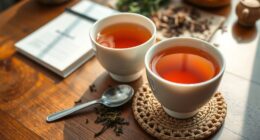
To get the best flavor from your decaf brew, start with high-quality, freshly roasted beans from a reputable roaster, ensuring you know the decaffeination process. Use water heated precisely between 195°F and 205°F to optimize extraction without bitterness. Match your grind size to your brewing method—medium for drip, coarser for French press—and pay attention to freshness and storage. Keep these tips in mind, and you’ll unleash more flavorful decaf in every cup.
Key Takeaways
- Choose high-quality decaf beans processed via Swiss Water or CO2 methods for better flavor retention.
- Use freshly roasted decaf beans and store them properly to preserve aroma and taste.
- Maintain water temperature between 195°F and 205°F for optimal extraction without bitterness.
- Adjust grind size to match your brewing method—medium for drip, coarse for French press—for balanced flavor.
- Fine-tune brewing parameters like water temperature and grind to maximize flavor extraction and overall coffee quality.
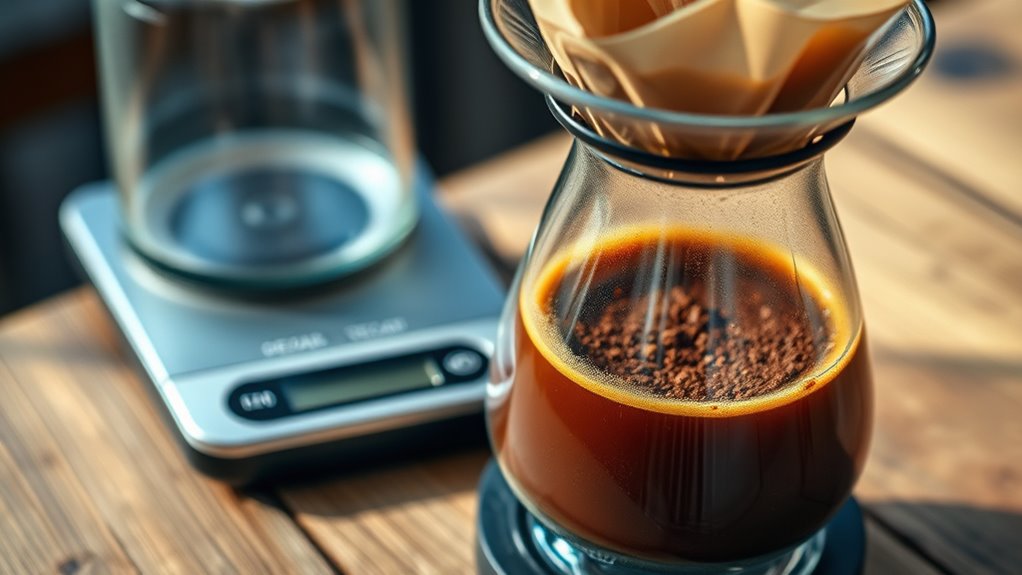
Brewing decaf coffee can be just as flavorful and satisfying as regular coffee when you use the right strategies. The first step is paying close attention to your decaf bean selection. Not all decaf beans are created equal — some are processed using chemical methods, while others go through Swiss Water or CO2 processes, which tend to preserve more of the beans’ natural flavor. Opt for high-quality decaf beans from reputable roasters who specify their decaffeination process. These beans often retain more of the intricate flavor notes, resulting in a richer, more vibrant cup. Choosing freshly roasted decaf beans is also essential; fresher beans tend to deliver a brighter, more complex flavor profile that can rival regular coffee.
Select high-quality, freshly roasted decaf beans processed with Swiss Water or CO2 for richer flavor.
Once you’ve picked the right beans, focus on water temperature refinement. Decaf beans can be more sensitive to brewing variables because their processing methods sometimes strip away certain oils and compounds responsible for flavor. To extract the best taste, you should aim for a water temperature between 195°F and 205°F. Too hot, and you risk over-extraction, which can make the coffee bitter; too cool, and you may under-extract, resulting in a weak or flat taste. Using a reliable thermometer or a brewing device with temperature control helps you maintain this ideal range consistently. When you hit the perfect temperature, you allow the hot water to dissolve the flavor compounds effectively, bringing out the full spectrum of what your decaf beans have to offer.
Additionally, understanding how flavor extraction works can help you fine-tune your brewing process for optimal results. In addition to bean selection and temperature control, consider your grind size and brew method, as these also influence how well flavors develop. For most drip brewers, a medium grind works best, ensuring the water flows through the coffee evenly. If you’re using a French press, a coarser grind helps prevent over-extraction and bitterness. Adjusting your grind size according to your brewing method ensures best extraction, especially important with decaf beans, which can be more delicate.
Ultimately, the key to a delicious decaf cup lies in paying attention to these details. When you select high-quality decaf beans and refine your water temperature, you set the stage for a flavorful, aromatic brew. Small adjustments can make a big difference, so don’t hesitate to experiment with different beans and temperatures until you find what works best for your taste. With careful attention, you’ll discover that decaf coffee can be just as rich and satisfying as its caffeinated counterpart.
Frequently Asked Questions
How Does Water Temperature Affect Decaf Coffee Extraction?
You’ll find that water temperature markedly impacts decaf coffee extraction, affecting flavor and aroma. Maintaining temperature stability ensures consistent extraction, preventing under- or over-extraction. If water’s too hot, it can strip delicate flavors, especially since decaf often has a different chemical profile. Water chemistry, including mineral content, also interacts with temperature, influencing extraction. To achieve peak flavor, use precise temperature control and stable brewing conditions to optimize your decaf coffee’s taste.
What Are the Best Grind Sizes for Decaf Brewing?
You’d think decaf brewing is easy, but it’s actually all about perfect grind size adjustments. For decaf bean selection, start with a medium grind for drip brewers, ensuring optimal extraction. If you use a French press, go coarser; for espresso, finer. Ironically, choosing the right grind size makes all the difference—so don’t overlook it. Adjust accordingly, and access the best flavor from your decaf beans every time.
Can Different Brewing Methods Impact Decaf Flavor Profiles?
Yes, different brewing methods can considerably impact decaf flavor profiles and flavor consistency. For example, using the right brewing equipment choices, like a French press or AeroPress, enhances decaf flavor by extracting more nuanced notes. Each method influences how the decaf beans release their flavors, so experimenting with various techniques helps you find the best approach for maintaining consistent, rich flavor in your cup.
How Long Should I Brew Decaf Coffee for Optimal Flavor?
Decaf brewing duration greatly influences decaf flavor consistency. Aim for a brew time of about 4 to 5 minutes to extract ideal flavor without overdoing it. Too short, and you miss out on rich, robust notes; too long, and you risk bitterness or under-extraction. This balance ensures effective decaf caffeine removal while preserving the coffee’s nuanced flavors. Experiment within this window to find your perfect decaf brew balance.
Are There Specific Decaf Beans Better Suited for Certain Brewing Techniques?
Yes, certain decaf bean varieties and roast levels suit specific brewing techniques. For a smooth, balanced cup, opt for medium roast decaf beans like Colombian or Central American varieties, which work well with pour-over or drip methods. If you prefer a bolder flavor, dark roast decaf beans, such as French or Italian decaf, enhance espresso brewing. Experiment to find the perfect match for your taste and brewing style.
Conclusion
Now that you know these decaf brewing strategies, you’re ready to uncover your coffee’s full potential. Think of each cup as a delicate dance, where timing and technique lead to peak flavor. With patience and attention, your decaf can taste as vibrant and satisfying as its caffeinated counterpart. So, experiment confidently, and enjoy every sip—because great coffee, like a well-tuned orchestra, depends on harmony and care. Cheers to your perfect brew!