To compare two coffees like a pro, start by smelling each to catch their aroma clues, then take small sips, letting the flavors sit on your palate. Pay attention to taste notes, brightness, and finish, noticing differences in body and aftertaste. Use varied brewing methods to see how they influence flavor. By systematically evaluating these aspects side by side, you’ll develop a sharper palate and a deeper understanding of each coffee’s unique qualities. Keep exploring to master the process.

Get coffee and tea gear delivered free with Prime
- Fast, free delivery on millions of items
- Prime Video, Amazon Music and more included
- Member-only deals all year
Key Takeaways
- Use identical brewing methods for both coffees to ensure a fair comparison of flavor, aroma, and body.
- Sip small amounts sequentially, allowing each to sit on the palate to detect subtle differences.
- Note aroma cues before tasting to anticipate flavor profiles and enhance sensory understanding.
- Evaluate each coffee’s body and aftertaste systematically to gauge overall mouthfeel and lingering flavors.
- Take detailed, organized notes on taste, aroma, body, and aftertaste for accurate side-by-side analysis.
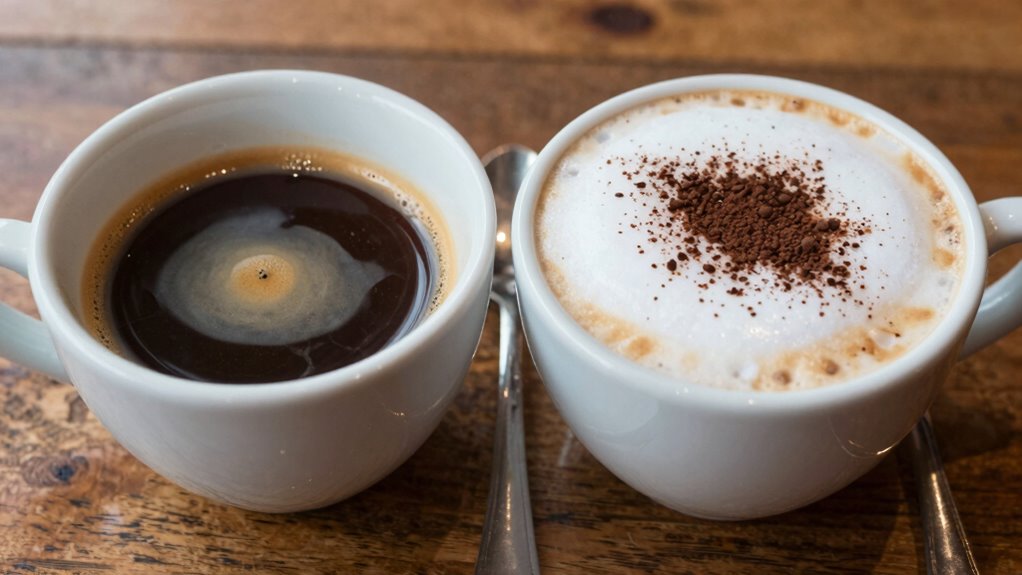
Comparing two coffees side by side allows you to identify their unique flavors, aromas, and qualities more effectively. When you approach this process with intention, you gain a deeper understanding of what makes each coffee special. Start by paying attention to their flavor profiles. Take small sips of each coffee, letting them sit on your palate for a moment. Notice the different taste notes—are they fruity, nutty, spicy, or floral? Some coffees might have a bright acidity, while others offer a smooth, mellow finish. Recognizing these subtleties helps you appreciate the complexity of each brew, and it’s especially useful when you’re trying to decide which one suits your preferences best.
Next, consider how brewing methods influence these flavor profiles. The way a coffee is brewed considerably affects its taste and aroma. For example, a pour-over typically highlights clarity and brightness, bringing out delicate floral or fruity notes. On the other hand, a French press tends to produce a richer, fuller-bodied cup with more pronounced earthy or chocolatey qualities. When comparing two coffees, note how their flavors change depending on the brewing process. Sometimes, a brew’s character is amplified or subdued by the method used. If you’re testing two beans, you might brew one with a pour-over and the other with a French press to see which method best showcases their individual qualities.
As you compare, also pay attention to aroma. Smell each coffee before tasting, as aroma provides clues about flavor complexity. A coffee with a strong, inviting fragrance often correlates with a vibrant taste experience. When you smell the coffees side by side, you might detect differences in intensity or note distinct scents like citrus, caramel, or spice. These sensory cues help deepen your understanding of each coffee’s profile.
Furthermore, take note of the body and aftertaste. The body refers to the weight or thickness of the coffee on your palate—whether it feels light, medium, or full. The aftertaste reveals how long the flavors linger after swallowing. Comparing these aspects gives you a full picture of each coffee’s character. By systematically examining flavor profiles, aromas, body, and aftertaste, and considering how brewing methods influence these qualities, you develop a more refined palate. Over time, this practice enables you to distinguish subtle differences and make more informed choices, turning coffee tasting from a casual activity into a true sensory experience.
Products Worth Considering

KitchenAid 28 oz Cold Brew Coffee Maker, KCM4212

Cuisinart Stainless Steel Bread Maker, 12 Programs, 2 lb Capacity

Breville Smart Grinder Pro Conical Burr Coffee Grinder, Brushed Stainless Steel
As an affiliate, we earn on qualifying purchases.
Frequently Asked Questions
What Equipment Is Best for Tasting Coffees Side by Side?
You’ll want a tasting setup that includes a cupping spoon, small tasting cups, and a neutral palate cleanser like water. Use a coffee aroma wheel to identify scents and compare the coffees’ aromas. Brew with consistent methods like pour-over or French press to guarantee fair tasting. This equipment helps you focus on subtle differences, allowing you to accurately assess flavor profiles, aroma, and body of each coffee side by side.
How Do I Ensure Fair Comparisons Between Different Coffee Brews?
To guarantee fair comparisons, you focus on consistency in brewing methods, measurements, and serving temps. Take time to evaluate flavor nuances and aroma profiles for each brew without rushing. Use the same glassware and taste at similar temperatures to avoid bias. By controlling these factors, you get a true sense of each coffee’s unique characteristics, making your side-by-side tasting more accurate and insightful.
Can Temperature Affect My Coffee Tasting Comparison?
Yes, temperature affects your coffee tasting comparison. If the coffees aren’t at the same temperature, flavor consistency can be thrown off, making it harder to evaluate nuances accurately. To get reliable results, use temperature control by serving both coffees at the same ideal tasting temperature—usually between 140-160°F. This guarantees you compare their true flavors without temperature skewing your perception, leading to a fair and accurate tasting experience.
How Should I Record My Impressions for Accurate Comparison?
Think of your tasting notes as your personal symphony. To record impressions accurately, note the flavor consistency and aroma enhancement for each coffee. Use a dedicated notebook or app, jotting down specific flavors, textures, and scents immediately after tasting. Describe each aspect vividly, so you can revisit your impressions later. This method guarantees your comparisons are detailed and precise, helping you identify your favorite brew with confidence.
What Are Common Mistakes to Avoid During Side-By-Side Tasting?
Avoid common mistakes by not rushing the tasting process; give each coffee time to cool slightly for better flavor clarity. Be mindful of flavor consistency; tasting the coffees too quickly or in a noisy environment can skew your impressions. Watch out for tasting biases—don’t let visual cues or preconceived notions influence your judgment. Take notes objectively, focus on specific flavors, and compare side by side to guarantee an accurate, unbiased assessment.
Conclusion
Now that you know how to compare two coffees side by side, you’re ready to become a true connoisseur. Think of your taste buds as a pair of finely tuned instruments, playing a symphony of flavors with each sip. By paying attention to aroma, flavor, and body, you’ll uncover the nuances that make each coffee unique. With practice, you’ll navigate the coffee world like a seasoned explorer, discovering new favorites as easily as a sailor charts new horizons.