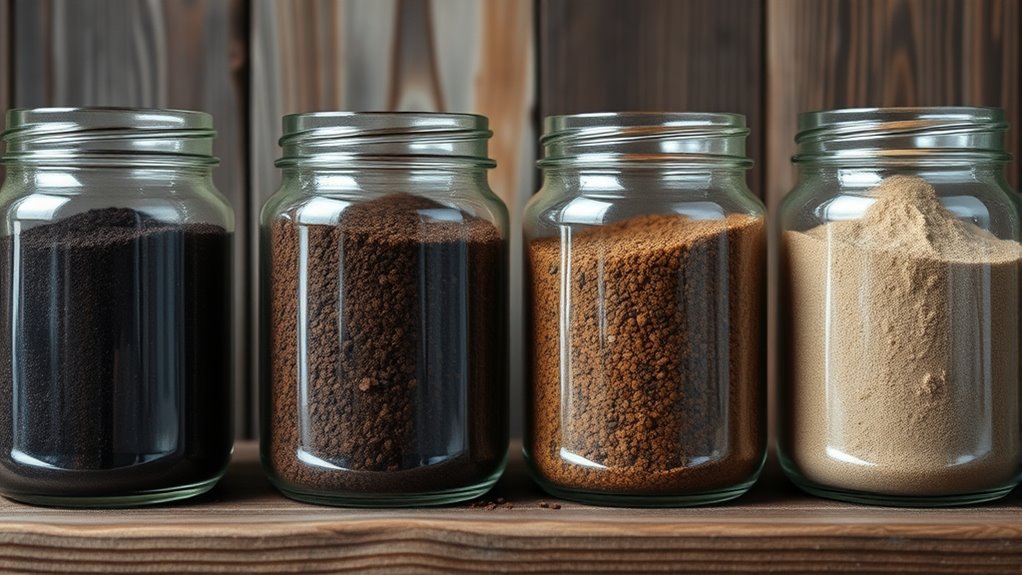

Choosing the right coffee grind size is key to getting the best flavor from your brew. Coarse grinds work well for French press and cold brew, while medium-coarse fits Chemex and percolators. Medium grinds suit drip makers and flat-bottom pour-overs, and medium-fines are great for Aeropress and cone-shaped filters. Fine and extra-fine grinds are ideal for espresso and Turkish coffee. Understanding these differences helps you brew perfect coffee every time—keep exploring to perfect your grind and taste.
Key Takeaways
- Different brew methods require specific grind sizes to optimize extraction and flavor.
- Coarser grinds suit French press and cold brew, while finer grinds are ideal for espresso and Turkish coffee.
- Proper calibration and consistent grind size are essential for balanced, high-quality coffee.
- Adjusting grind size based on brewing time helps prevent over- or under-extraction.
- Regular cleaning and maintenance of grinders ensure uniform grind size and enhance coffee flavor.
Coarse Grind: Perfect for French Press and Cold Brew
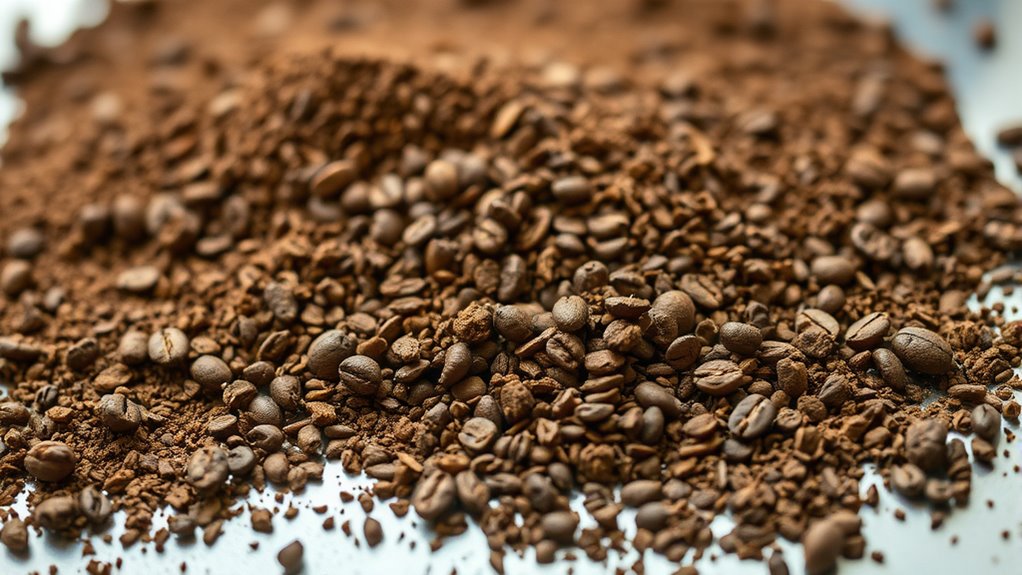
Have you ever wondered why a coarse grind works so well for French press and cold brew? It all comes down to brew strength and grind consistency. A coarse grind produces a slower extraction, which helps prevent over-extraction and results in a smooth, balanced flavor. Because of its larger particles, the water flows through the grounds more slowly, giving you control over the brew’s strength. Consistency is key here; uniform-sized particles ensure even extraction, avoiding bitter or weak spots. In addition, a coarse grind helps minimize the amount of sediment in your cup, especially important for French press brewing. This grind size allows for a longer steeping time without over-extracting, making it ideal for cold brew, where a gentle, rich flavor is desired. Additionally, using a natural material like wood or linen in your brewing process can enhance the authenticity of your craft coffee. Understanding grind size can also help you tailor your brewing process to achieve the perfect cup every time. Furthermore, advancements in robotics technology are continually improving precision in coffee grinding equipment, ensuring consistency for every brew.
Medium-Coarse Grind: Ideal for Chemex and Percolators
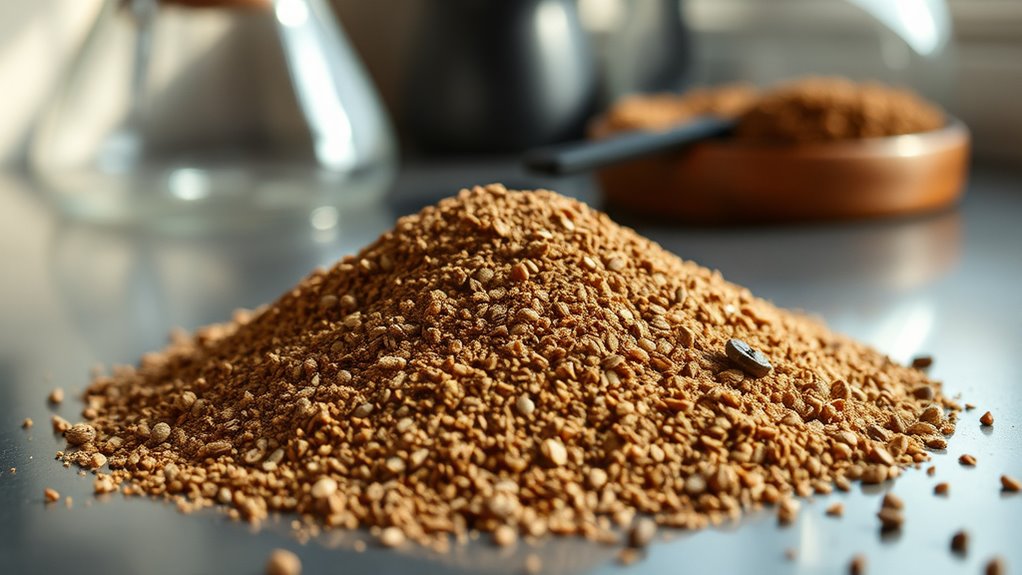
A medium-coarse grind strikes the right balance for brewing with Chemex and percolators, offering ideal extraction without overdoing it. This grind size allows you to achieve a consistent brew time, avoiding under-extraction or over-extraction. When your grind is uniform, water flows evenly through the grounds, ensuring a smooth, balanced flavor. For Chemex, a medium-coarse grind prevents over-extraction during the longer brew time, delivering clarity and brightness. Similarly, percolators benefit from this grind size because it maintains steady water flow, reducing the risk of over-extraction and bitterness. Keep your grind uniform to optimize extraction, control brew time, and enjoy a rich, flavorful cup every time. This size strikes the perfect balance between coarse and medium, making it ideal for these brewing methods. Additionally, consistent filtration efficiency ensures that your coffee remains free of unwanted sediments and grounds, enhancing overall quality. Proper grind size also helps in maintaining the consistency of your brew, leading to a more predictable and satisfying coffee experience. Choosing the right coffee grind sizes can also influence the extraction rate, ensuring that flavor compounds are optimally dissolved for a well-rounded taste. Using the appropriate grind size can also help in reducing channeling during brewing, resulting in a more uniform extraction.
Medium Grind: Best for Drip Coffee Makers and Flat-Bottomed Pour-Overs
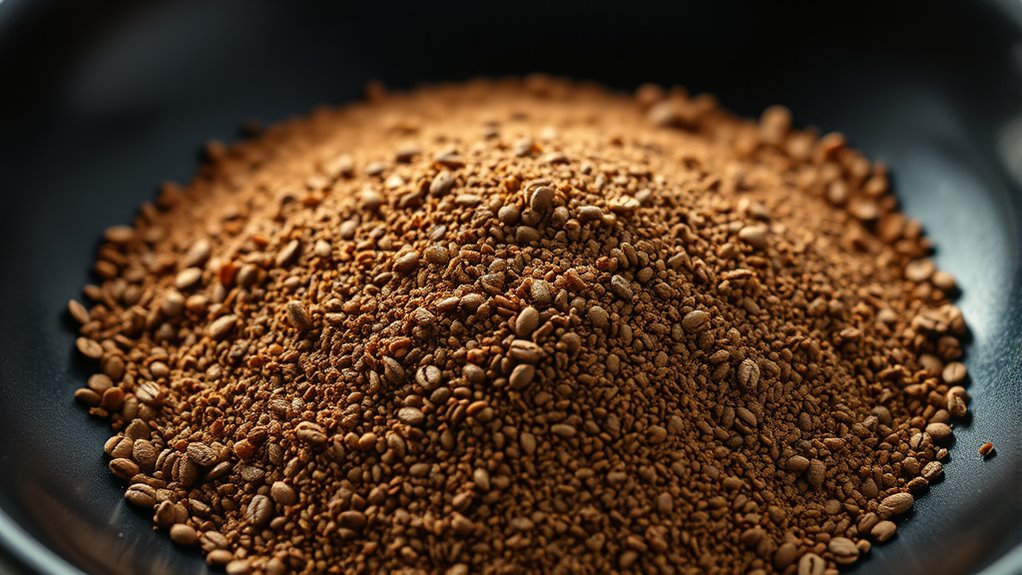
Using a medium grind for drip coffee makers and flat-bottomed pour-overs helps you achieve a consistent extraction rate, ensuring your coffee isn’t over- or under-extracted. This grind size also promotes an ideal brew time, so your coffee steeps just long enough to develop rich flavors. As a result, you’ll enjoy a balanced flavor profile with every cup.
Consistent Extraction Rate
Since medium grind sizes strike a balance between too fine and too coarse, they promote a consistent extraction rate that highlights the coffee’s flavors without over- or under-extracting. This stability depends on factors like brew temperature and proper coffee storage, which help maintain uniform grind performance. A steady extraction ensures you get the most balanced taste, emphasizing the coffee’s natural sweetness and aroma. To optimize this, consider:
- Maintaining a consistent brew temperature, ideally between 195°F and 205°F, to avoid sudden extraction changes.
- Storing coffee in airtight containers, preventing moisture and air from affecting grind consistency.
- Using a calibrated grinder that delivers uniform particle size, ensuring each brew achieves an even extraction rate.
These practices help you enjoy a flavorful, well-extracted cup every time.
Optimal Brew Time
Ideal brew time plays a vital role in extracting the full range of flavors from your coffee when using medium grind sizes. For drip coffee makers and flat-bottomed pour-overs, aim for a brew time between 4 to 5 minutes. This window allows water to interact with the coffee grounds long enough to optimize flavor extraction without over-extracting bitter compounds. If your brew time is too short, you’ll miss out on capturing the full complexity of the beans, resulting in a weak or underdeveloped taste. Conversely, a brew time that’s too long can lead to over-extraction, making your coffee bitter or harsh. Paying attention to your brew time helps guarantee you achieve a balanced, flavorful cup every time. Additionally, monitoring the brewing process can help you fine-tune your method for consistent results, especially as small adjustments can significantly impact the flavor profile.
Balanced Flavor Profile
A medium grind strikes the perfect balance for extracting a well-rounded flavor profile in drip coffee makers and flat-bottomed pour-overs. This grind size allows hot water to evenly extract flavors without over- or under-extracting. Your coffee bean origin influences the flavor nuances, which the right grind helps reveal. Maintaining an ideal brewing temperature, around 195–205°F, ensures proper extraction and flavor clarity. To deepen your understanding:
- Consider how coffee bean origin affects flavor complexity, requiring precise grind adjustments.
- Use consistent brewing temperature to avoid sourness or bitterness.
- Recognize that medium grind helps balance acidity and body, delivering a smooth, balanced cup.
This approach ensures your coffee’s flavor profile remains harmonious, highlighting the bean’s unique characteristics.
Medium-Fine Grind: Suitable for Aeropress and Cone-Shaped Pour-Over
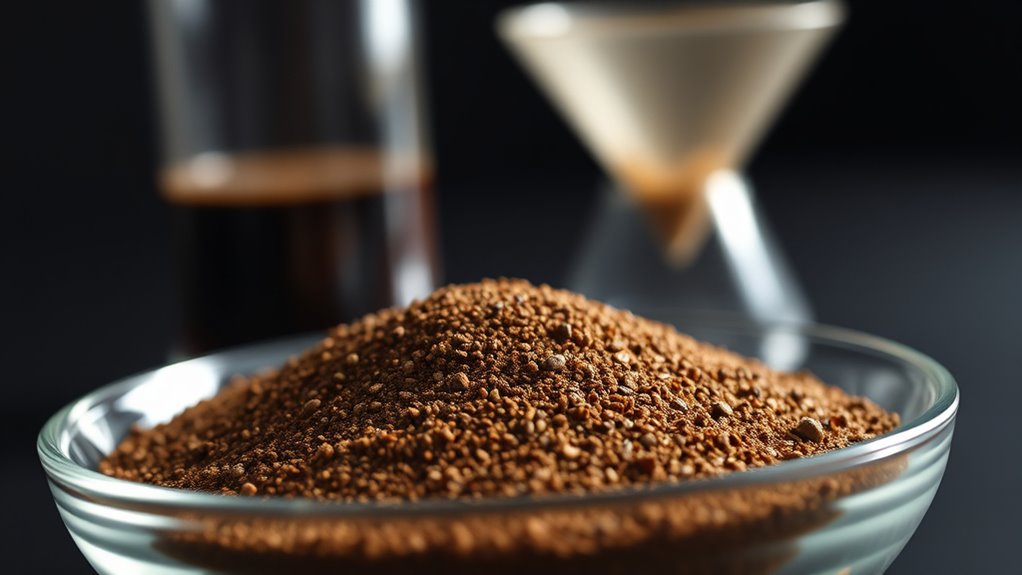
If you’re using an Aeropress or a cone-shaped pour-over, a medium-fine grind strikes the perfect balance between extraction and flow rate. This grind size allows water to pass through the coffee evenly, helping you achieve consistent flavor in every cup. It’s ideal for brewing methods that require a slightly slower pour, giving your coffee enough contact time for rich, complex flavors. When you use a medium-fine grind, you can produce espresso shots with better flavor consistency, as the uniform grind helps prevent over- or under-extraction. This ensures your brew retains nuances and avoids bitterness. Plus, it offers better control over brewing time, making it easier to fine-tune your technique for ideal taste with each pour-over or Aeropress session.
Fine Grind: Designed for Espresso Machines and Moka Pots
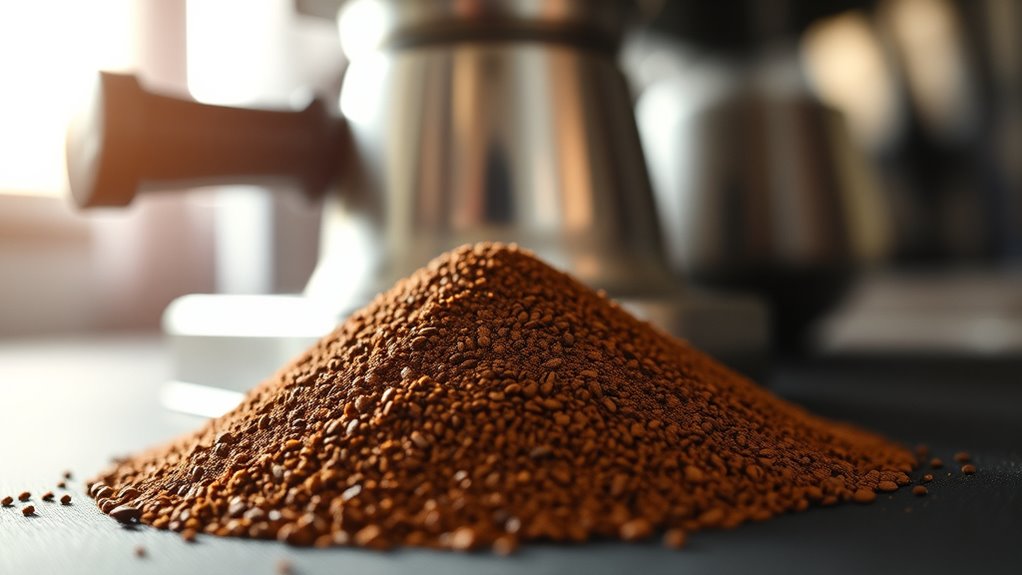
Since espresso machines and Moka pots require a quick, intense extraction, a fine grind is essential to achieve the rich, concentrated flavors you want. The finer the grind, the more surface area is exposed, which helps extract maximum flavor during short brew times. To get the best results, consider these factors:
- Coffee bean freshness – fresher beans produce more aromatic oils, enhancing flavor with a fine grind.
- Brew temperature – maintaining prime brew temperature ensures proper extraction without over-extracting, especially with a fine grind.
- Grind consistency – uniform fine particles prevent channeling, guaranteeing even extraction and a balanced shot.
Using a fine grind requires precision, but it unlocks the full potential of your espresso or Moka brew.
Extra Fine Grind: Used for Turkish Coffee and Very Fine Brewing Methods
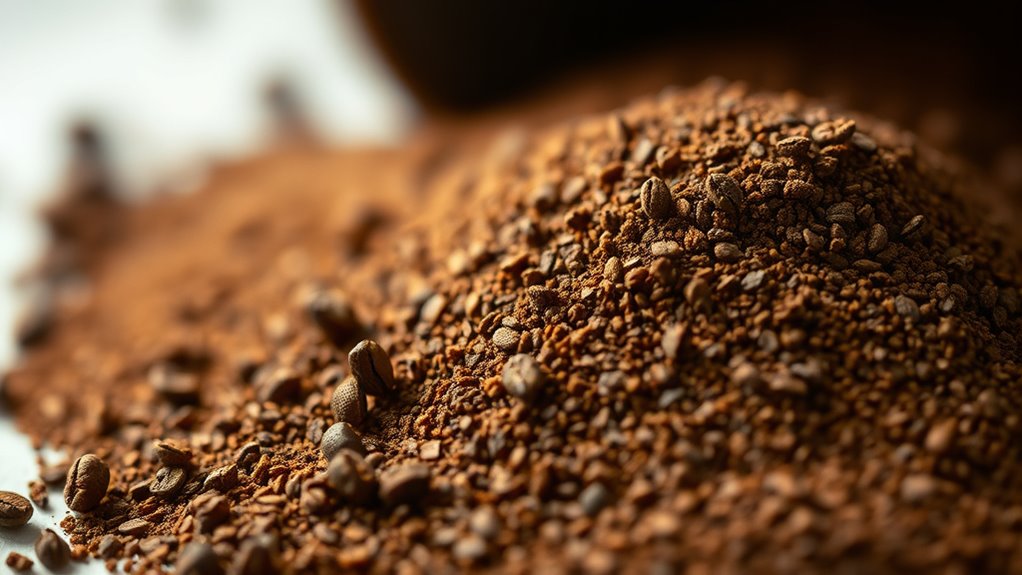
Because Turkish coffee and other very fine brewing methods require rapid extraction, an extra fine grind is vital to achieve the desired rich and velvety texture. This grind resembles powdered sugar and guarantees the water interacts closely with the coffee grounds. In Turkish coffee, the extra fine grind allows for a slow, even brew that produces a thick, aromatic brew with a distinctive foam layer. For very fine brewing methods, such as Turkish coffee, the consistency of the grind is essential for proper extraction without over-extraction or clogging. Using an extra fine grind also helps control the brew time and prevents the coffee from becoming bitter. Keep in mind, achieving this grind requires a high-quality grinder, as standard grinders often can’t produce such a fine consistency consistently. Additionally, the grind size plays a crucial role in ensuring the overall quality and flavor profile of the brewed coffee. A precise grind consistency can significantly improve your brewing results and coffee enjoyment.
How to Adjust Your Grinder for Different Brew Styles

Adjusting your grinder properly allows you to switch seamlessly between different brewing methods, ensuring each method extracts the perfect flavor profile. To do this effectively, focus on grinder calibration and burr maintenance. First, regularly calibrate your grinder by adjusting the grind setting until you reach the desired consistency for each brew. Second, keep your burrs clean and sharp—dull burrs can lead to inconsistent grind sizes. Third, test adjustments by brewing small batches and fine-tuning as needed. Remember, consistent calibration and proper burr maintenance are key to achieving the right grind size for pour-over, French press, or espresso. These steps help optimize extraction and flavor, giving you better control over your coffee’s profile. Additionally, paying attention to burr maintenance can prevent uneven grinds and ensure consistent results. Proper Kia Tuning techniques can also be applied to optimize your vehicle’s performance for better handling and efficiency. Regularly inspecting and maintaining your grinder components helps sustain precise grind size and overall machine longevity.
The Impact of Grind Size on Extraction and Flavor

Grind size plays a crucial role in how coffee extracts during brewing, directly affecting its flavor and strength. In brewing chemistry, the grind determines how water interacts with coffee particles, influencing extraction rate and efficiency. A grind that’s too fine can cause over-extraction, leading to bitter, astringent flavors, while too coarse a grind results in under-extraction, making the coffee weak and sour. Achieving proper extraction is key to flavor balance, ensuring each brew has the right harmony of acidity, sweetness, and body. Adjusting grind size helps you control extraction, allowing you to fine-tune your brew to match your taste preferences. Understanding this relationship ensures you get the most flavor and complexity from every cup.
Troubleshooting Common Grind-Related Coffee Issues

If your coffee tastes bitter or sour than usual, your grind might need adjusting. Over-extraction can cause bitterness, while under-extraction leads to sourness; recognizing these signs helps you troubleshoot. Adjust your grind size accordingly to improve flavor and get the most out of your brew. Additionally, ensure you are using a properly registered grinder to avoid inconsistent grind sizes that can negatively impact extraction. Regular maintenance and proper filtering and pump protection help maintain consistent grind quality and prevent clogs that could affect your brewing process. Incorporating grind size consistency practices can further enhance your coffee’s flavor profile and overall brewing experience. Staying informed about AI detection methods can help you better understand how technology ensures authenticity in digital content, which is essential in today’s rapidly evolving digital landscape.
Over-Extraction Causes
Over-extraction happens when the coffee grounds are too finely ground or brewed too long, causing undesirable bitterness and a harsh taste. Several factors contribute to this:
- Water temperature – if it’s too hot, it extracts more compounds quickly, leading to over-extraction.
- Brew pressure – excessive pressure can force water through grounds too aggressively, pulling out bitter flavors.
- Brewing time – prolonged contact between water and grounds causes over-extraction, especially with fine grinds.
Adjusting these variables helps prevent over-extraction. Use slightly lower water temperatures when possible, control brew pressure to match the method, and keep brewing times within recommended ranges. Fine-tuning these elements ensures a balanced, flavorful cup without harshness.
Under-Extraction Signs
When your coffee tastes weak, watery, or lacks depth, it’s often a sign that the extraction process didn’t go far enough. This under-extraction results in a brew that’s lighter in flavor and lower in caffeine extraction. You might notice a flat or sour taste, indicating the grind is too coarse, preventing proper flavor release. To troubleshoot, check these signs:
| Symptom | Cause | Solution |
|---|---|---|
| Weak flavor | Coarse grind, short brew | Use finer grind |
| Low caffeine | Poor extraction | Increase brew time |
| Sour taste | Under-extracted acids | Adjust grind finer |
| Watery texture | Insufficient extraction | Increase extraction time |
| Flat taste | Incomplete brew | Optimize grind & brew time |
Proper brew method and consistent grind size play a crucial role in achieving optimal extraction. Additionally, understanding how AI security influences the development and safety of coffee brewing technology can help ensure precision and safety in automated systems. Implementing precise control over grind size and brew duration can significantly improve brew strength and caffeine extraction, leading to a better overall coffee experience.
Grind Adjustment Tips
Adjusting your coffee grind is a straightforward way to troubleshoot common brewing issues. If your coffee tastes off—either too bitter or weak—consider how your grind size fits your brew method differences. Here are some grinder calibration tips to help you fine-tune your grind:
- Start with the manufacturer’s recommended settings for your brew method, then adjust in small increments.
- Test different grind sizes to find the balance between extraction and flow rate.
- Regularly clean and calibrate your grinder to maintain consistent grind size and prevent clumping.
- Paying attention to antioxidant levels in your coffee can also influence flavor and health benefits.
Tips for Maintaining Consistent Grind Size at Home

Maintaining a consistent grind size at home is essential for brewing great coffee every time. To achieve this, focus on grind size consistency by regularly calibrating your grinder. Most grinders have adjustable settings; take the time to fine-tune them so your grind remains uniform. After every few uses, check for any changes in grind size, especially if your grinder has been used heavily. Clean your grinder regularly to prevent residue buildup that can affect performance. Keep detailed notes on your preferred settings for different brew methods, so you can quickly reset if needed. Consistent calibration and routine cleaning ensure your grind stays uniform, which directly improves extraction and flavor. With these tips, you’ll brew better coffee with less hassle and more confidence.
Frequently Asked Questions
How Does Grind Size Affect Brewing Time and Temperature?
When you adjust the grind size, it directly impacts your brew time and brewing temperature. A finer grind speeds up extraction, reducing brew time, but may require a slightly higher temperature to fully extract flavors. Conversely, a coarser grind lengthens brew time and might need a lower temperature to avoid over-extraction. You should experiment to find the perfect balance, ensuring ideal flavor without sacrificing your desired brew time or temperature.
Can I Use the Same Grinder for Multiple Brew Methods?
Think of your grinder as a versatile artist’s palette; yes, you can use it for multiple brew methods, but it requires careful maintenance. To keep your coffee tasting its best, regularly clean it and adjust the grind size for each method. This guarantees grind size consistency, which is vital for peak flavor extraction. Switching between grind settings without proper care can dull your grinder’s edge and compromise your brew’s quality.
What’s the Best Way to Store Coffee Beans for Optimal Grind Consistency?
To keep your coffee beans fresh and maintain grind consistency, store them in an airtight container in a cool, dark place. Avoid exposure to air, light, and heat, which can degrade flavor and cause uneven grinding. Using an airtight container prevents moisture and oxygen from affecting your beans, ensuring they stay fresh longer. Keep them away from sunlight and heat sources for ideal freshness and consistent grinding results.
How Often Should I Calibrate My Grinder for Precise Results?
Perfectly precise pours depend on proper grinder maintenance and regular calibration frequency. You should calibrate your grinder whenever you notice shifts in flavor or inconsistency in grind size, typically every few weeks or after significant usage. Consistent calibration keeps your coffee craving-worthy, preventing pesky particles from ruining your brew. Make it a habit to check and calibrate regularly, ensuring every cup is as consistent and satisfying as the last.
Does Altitude Influence Optimal Grind Size and Brewing Parameters?
Altitude effects can influence your brewing, so you’ll likely need to adjust your grind size accordingly. Higher altitudes often mean lower boiling points and different air pressure, which can impact extraction. You should experiment with grind adjustment to find the perfect balance, ensuring your coffee tastes ideal. Keep in mind that brewing parameters may also need tweaking, as altitude impacts extraction time and flavor.
Conclusion
Think of your grinder as a key to unfastening your perfect brew; each grind size is a different turn of the lock. Mastering these adjustments opens a door to richer flavors and better extraction. When you fine-tune your grind, you’re not just making coffee—you’re shaping an experience. Embrace the journey of discovery, knowing that with each adjustment, you’re sculpting a brew that reflects your taste and passion.