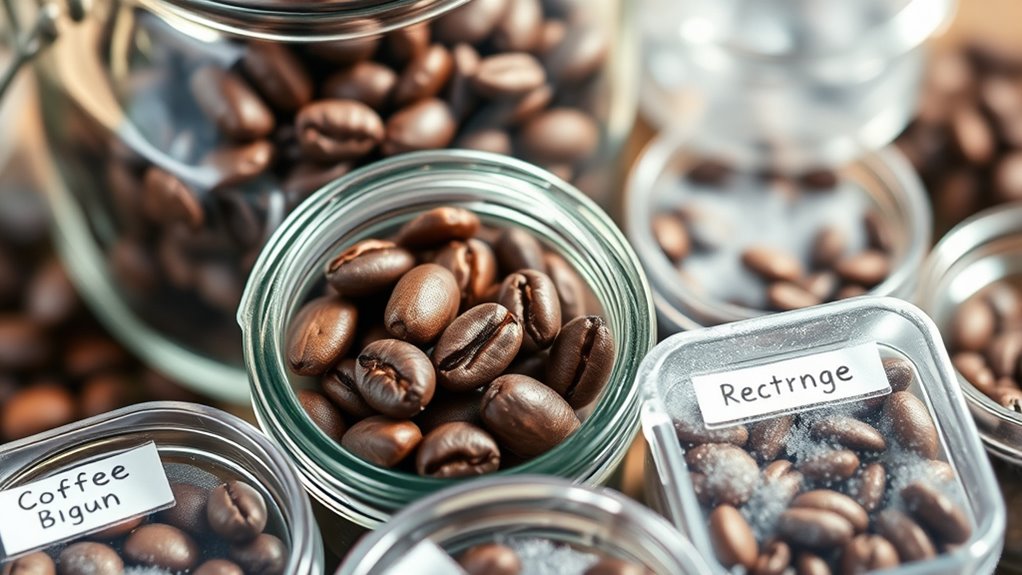

To keep your coffee fresh, store it in airtight, opaque containers in a cool, dark place to slow aging and preserve its aroma. Avoid exposure to oxygen, heat, and light, as they cause flavor degradation. If you buy in bulk, freezing smaller portions can prolong freshness—just make sure to vacuum-seal and avoid repeated thawing. Proper storage and handling help maintain flavors, and you’ll discover more tips on maintaining ideal freshness as you explore further.
Key Takeaways
- Store coffee in airtight, opaque containers in a cool, dark place to slow oxidation and preserve freshness.
- Degassing coffee involves releasing built-up gases after roasting; avoid resealing immediately to prevent aroma loss.
- Freeze coffee only in small, airtight portions to maintain flavor and prevent moisture exposure; avoid repeated freezing.
- Let frozen coffee reach room temperature before grinding to prevent condensation and preserve aroma.
- Consume coffee soon after roasting or opening to enjoy optimal flavor and aroma; proper storage extends freshness.
Have you ever wondered why your coffee tastes flat or dull after a few days? The answer often lies in how you store it and how quickly its freshness diminishes. Coffee bean aging is a key factor here. Once beans are roasted, they start to lose their vibrant flavors and aromatic qualities, a process accelerated by exposure to air, heat, and light. To keep that fresh, lively aroma, you need to focus on aroma preservation. Proper storage methods can slow down coffee bean aging and help retain the complex flavors that drew you to that particular brew in the first place.
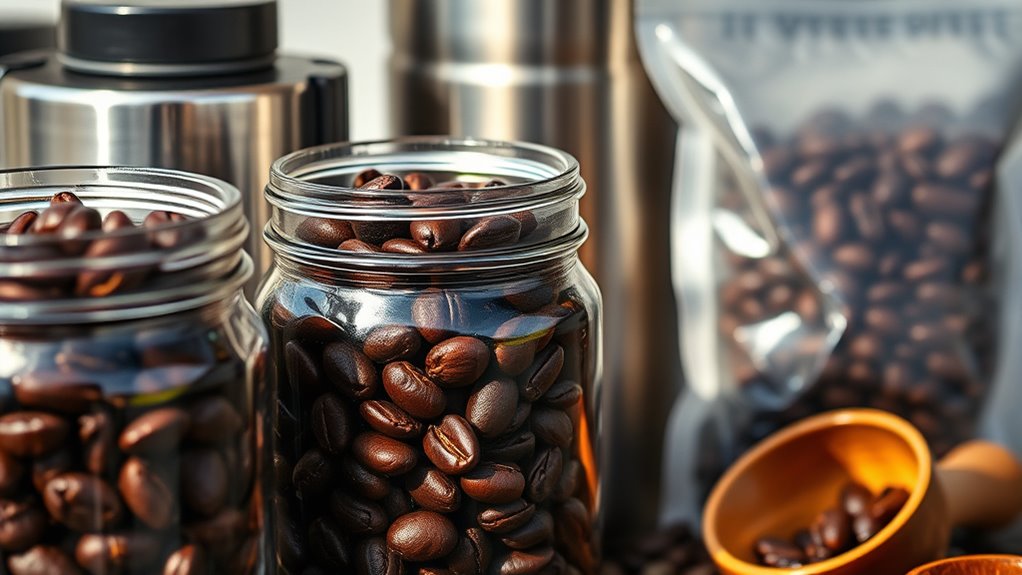
The first thing to understand is that coffee beans are highly sensitive to their environment. Exposure to oxygen causes oxidation, which diminishes their freshness and aroma. That’s why airtight containers are your best friends. Using a sealed, opaque container prevents oxygen from reaching the beans, preserving their aromatic oils and flavors longer. It’s best to store your beans in a cool, dark place, and always make sure the container is tightly sealed after every use. Additionally, choosing appropriate storage containers designed specifically for coffee can further enhance freshness.
Many coffee enthusiasts debate whether freezing coffee is a good idea. If you buy in bulk, freezing can be a practical solution to prolong freshness, but only if you do it correctly. When you freeze coffee, it’s essential to prevent moisture and temperature fluctuations from damaging the beans. Divide your coffee into smaller portions and store each in airtight, vacuum-sealed bags. When you want to use some, take out only what you need, and avoid repeatedly thawing and refreezing. This minimizes exposure to moisture and keeps the aroma locked in longer. Just make sure to let the beans reach room temperature before grinding and brewing to avoid condensation that can impact flavor.
Ultimately, the goal is to slow down the natural process of coffee bean aging and preserve as much aroma as possible. Freshly roasted beans contain an abundance of aromatic oils that give coffee its full flavor profile. Once exposed to air, these oils evaporate or degrade, leading to duller taste. By storing your coffee properly—preferably in airtight, opaque containers, and considering freezing for bulk storage—you help maintain those precious aromas and enjoy a richer, more vibrant cup every time. Remember, coffee is at its best when consumed soon after roasting, but with the right techniques, you can extend that window and keep that fresh, inviting aroma alive in every brew.

Veken Coffee Canister with Window,Airtight Stainless Steel Pantry Container,Home Kitchen Food Storage Organizers for Ground,Beans,Espresso,Rice,Tea,Sugar,Cereal, Decor,Bar Accessories,Gifts,22OZ,Black
Gifts for Coffee Lovers This Christmas: This elegantly designed jar is a stylish and functional gift for coffee…
As an affiliate, we earn on qualifying purchases.
As an affiliate, we earn on qualifying purchases.
Frequently Asked Questions
How Does Oxygen Impact Coffee Freshness Over Time?
Oxygen accelerates coffee degradation through the oxidation process, causing your coffee to lose freshness faster. When exposed to oxygen, compounds in coffee react, resulting in stale flavors and diminished aroma. To maintain freshness, you should limit oxygen exposure by storing coffee in airtight containers and avoiding frequent opening. This helps slow down oxidation, preserving the vibrant flavors and aroma you enjoy with every brew.
Can Vacuum-Sealing Extend Coffee Shelf Life Effectively?
Think of vacuum-sealing as locking away your coffee’s soul in a sealed container, preserving its essence. Yes, it can effectively extend shelf life by removing oxygen that causes staleness. By vacuum preservation, you shield your beans from air and moisture, keeping them fresher longer. Just guarantee your sealed containers are airtight, and you’ll enjoy vibrant, flavorful coffee days after purchase, as if time itself pauses for your brew.
What Are the Best Containers for Long-Term Coffee Storage?
You should use airtight containers or ceramic canisters for long-term coffee storage. These containers prevent exposure to oxygen, which can degrade freshness and flavor over time. Airtight containers are especially effective if they have a tight seal, while ceramic canisters keep out light and maintain a stable environment. Avoid transparent or porous materials, as they can let in air and moisture, compromising your coffee’s freshness.
How Does Light Exposure Affect Coffee Quality?
Imagine light as a thief stealing your coffee’s soul—its rich aroma and robust flavor. When exposed to light, your coffee undergoes flavor degradation, losing its vibrant essence over time. Light exposure accelerates chemical reactions that diminish quality, turning fresh beans dull. To preserve that lively taste, keep your coffee in dark, opaque containers away from direct sunlight. Protect your brew, and it will reward you with every flavorful sip.
Is It Better to Store Coffee in the Fridge or Freezer?
Storing coffee in the freezer is better for maintaining its aroma, especially if you buy in bulk. Use airtight storage containers to prevent moisture and freezer burn. When you’re ready to use some, only take out what you need and avoid frequent thawing. The fridge isn’t ideal because it exposes coffee to moisture and odors that can spoil its flavor. Keep your coffee fresh by choosing the right storage method.

DMpcakDM Coffee Bags with Valve(16 oz,1 lb,50pcs) Black High Barrier Aluminumed Foil Flat Bottom Heat Sealed Coffee Beans Packaging Bags Side Zipper Resealable Bags for Home or Business
[Specifications]: 50 pcs flat bottom empty coffee packaging bag.The capacity is 16oz 、1 lb、500g roasted coffee
As an affiliate, we earn on qualifying purchases.
As an affiliate, we earn on qualifying purchases.
Conclusion
Keeping your coffee fresh is easier than you think. Store it properly, avoid exposure to air, and consider freezing if you buy in bulk. Did you know that once roasted, coffee begins losing its freshness within just two weeks? That’s why consuming it sooner maximizes flavor. By following these tips, you’ll enjoy richer, more aromatic brews every morning. Fresh coffee isn’t just a treat—it’s the key to a better, more satisfying cup.
Veken Coffee Canister with Window,Airtight Stainless Steel Pantry Container,Home Kitchen Food Storage Organizers for Ground,Beans,Espresso,Rice,Tea,Sugar,Cereal, Decor,Bar Accessories,Gifts,22OZ,Black
Gifts for Coffee Lovers This Christmas: This elegantly designed jar is a stylish and functional gift for coffee…
As an affiliate, we earn on qualifying purchases.
As an affiliate, we earn on qualifying purchases.
Veken Coffee Canister with Window,Airtight Stainless Steel Pantry Container,Home Kitchen Food Storage Organizers for Ground,Beans,Espresso,Rice,Tea,Sugar,Cereal, Decor,Bar Accessories,Gifts,22OZ,Black
Gifts for Coffee Lovers This Christmas: This elegantly designed jar is a stylish and functional gift for coffee…
As an affiliate, we earn on qualifying purchases.
As an affiliate, we earn on qualifying purchases.