
To guarantee café safety, always handle heat sources like stoves and grills carefully, maintaining proper maintenance and avoiding blockages. Check electrical wiring and cords regularly to prevent fires, and never overload outlets. Practice good food handling by washing hands, sanitizing surfaces, and storing ingredients correctly to prevent contamination. Keeping these basics in mind helps protect everyone—continue exploring more tips to keep your café safe and compliant.
Key Takeaways
- Regularly inspect electrical wiring and appliances to prevent faults and fire hazards.
- Store flammable materials properly and keep pathways clear of clutter for quick evacuation.
- Use heat sources cautiously, ensuring proper maintenance and safe handling to prevent accidental fires.
- Follow hygiene protocols like handwashing and surface sanitization to minimize cross-contamination risks.
- Train staff on fire safety, emergency procedures, and food handling regulations for a safe café environment.

Have you ever wondered how secure your favorite café really is? When you step inside, you probably focus on the aroma of freshly brewed coffee or the cozy ambiance, but safety measures are just as important. Ensuring a safe environment starts with understanding fire prevention and maintaining high hygiene standards. Fire prevention is critical in any food service setting, especially where heat sources like stoves, ovens, and grills are constantly in use. You should look out for clear pathways free of clutter, since blocked exits or cords can turn into hazards during an emergency. Regularly inspecting electrical wiring, appliances, and equipment helps prevent electrical fires caused by faulty connections or overheating. Proper storage of flammable materials, such as cooking oils and cleaning supplies, further reduces fire risks. Staff should be trained to respond swiftly if a fire breaks out, knowing how to use fire extinguishers and when to evacuate. These proactive measures form the backbone of fire prevention, but they’re only effective if consistently practiced.
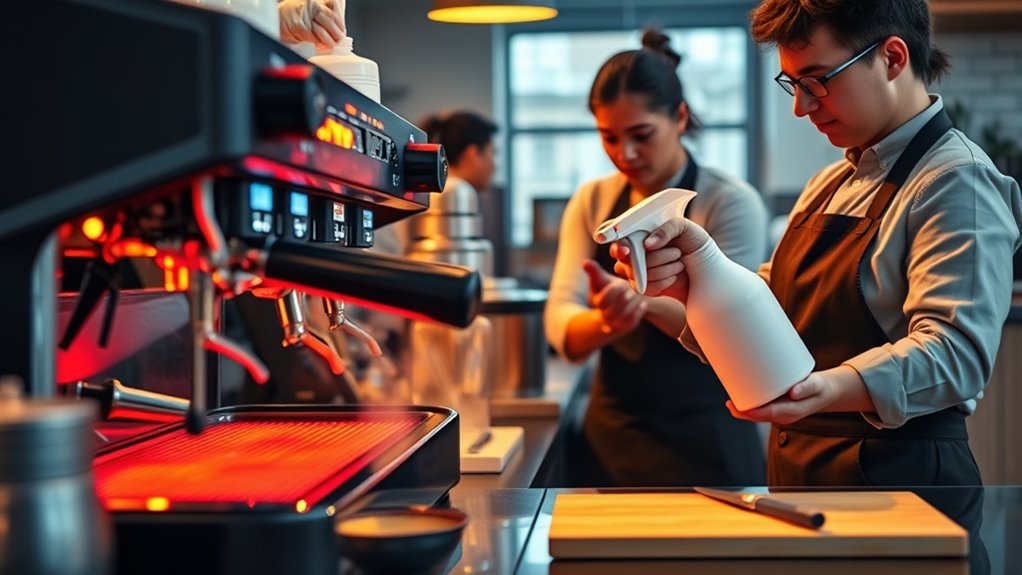
Hygiene standards are equally essential, especially because cafés handle food and beverages that customers consume daily. You can help guarantee the café maintains high hygiene standards by observing how staff handle food. Proper handwashing, wearing gloves when necessary, and using clean utensils prevent cross-contamination. Surfaces, counters, and equipment should be sanitized regularly, especially after preparing raw ingredients like meat or dairy. A clean environment not only protects customer health but also reduces the risk of foodborne illnesses. Another aspect to consider is proper food storage—keeping raw and cooked foods separate, maintaining appropriate temperatures, and avoiding overcrowded refrigerators all help prevent bacterial growth. When hygiene standards are neglected, it becomes easier for bacteria and mold to develop, which can lead to serious health issues for patrons.
Combining fire prevention with strict hygiene practices creates a safe environment for everyone. Regular staff training ensures everyone understands their role in maintaining safety, from safe handling of hot items to proper sanitation routines. It’s also essential to stay updated on local health regulations and safety codes, which often specify requirements for fire safety equipment and hygiene procedures. As a customer, you might not see all these behind-the-scenes efforts, but they’re essential in keeping your visits worry-free. When safety measures are prioritized, your café experience remains enjoyable and secure. So next time you visit, take a moment to appreciate the effort that goes into keeping that cozy spot safe, from preventing fires to upholding hygiene standards—because it’s all about your safety and well-being.

CASABREWS CM5418 Espresso Machine 20 Bar, Compact Espresso Maker with Steam Milk Frother, Stainless Steel Coffee Machine with 34oz Removable Water Tank for Cappuccino, Small Latte Machine, Silver
Make Your Favorite Espresso Coffee At Home: The CASABREWS coffee machine with milk frother allows you to prepare...
As an affiliate, we earn on qualifying purchases.
Frequently Asked Questions
How Often Should Safety Training Be Updated for Café Staff?
You should update staff refresher training at least once a year to maintain safety awareness. Regular training frequency ensures your team stays current on heat, electricity, and food handling safety protocols. Keep in mind that anytime there are changes in procedures, equipment, or regulations, it’s vital to conduct additional staff refresher sessions. Consistent training helps prevent accidents, promotes safe practices, and maintains a safe environment for everyone in your café.
What Are the Best Fire Prevention Measures for Small Cafés?
A stitch in time saves nine, so make certain you’re proactive about fire prevention. You should place fire extinguishers strategically where fires are likely, like near cooking areas, and regularly check smoke alarms to ensure they work properly. Keep flammable materials away from heat sources, and train staff on emergency procedures. Consistent maintenance and clear safety protocols can make all the difference in protecting your café and its patrons.
How to Handle Allergic Reactions in a Café Setting?
When someone shows signs of an allergic reaction, act quickly by identifying the allergen and calling emergency response immediately. Keep antihistamines and epinephrine auto-injectors accessible, and calmly assist the person in using them if needed. Make certain all staff are trained to recognize symptoms and follow protocols. Clear communication and prompt action can prevent severe outcomes, so stay alert, stay prepared, and prioritize the person’s safety.
What Are the Legal Requirements for Food Safety Certifications?
You need to comply with local food safety regulations, which typically require certification requirements for food handlers. These certifications prove you understand proper food handling, storage, and hygiene practices. Make sure you acquire the necessary food safety certifications before operating your café, as failure to meet legal requirements can result in fines or closure. Regularly update your training to stay current with evolving regulations and ensure your staff maintains proper food safety standards.
How Can I Prevent Electrical Hazards in a Busy Café?
Think of your café’s electrical system as the heart of your operation—keep it beating securely. You can prevent hazards by performing regular electrical maintenance and inspecting equipment for damage. Install clear safety signage to warn staff about potential dangers. Always turn off equipment when not in use and avoid overloading circuits. Staying proactive ensures your café runs smoothly and safely, protecting everyone who steps through your doors.

Chefman CraftBrew Espresso Machine, 15-Bar Pump Digital Espresso Maker w/Steam Wand for Latte & Cappuccino, Compact Espresso Coffee Machine w/ 1.5L Removable Water Reservoir - Stainless Steel
ENJOY CAFÉ-QUALITY ESPRESSO: Experience the bold, rich flavor of homemade espresso and skip long café lines with the...
As an affiliate, we earn on qualifying purchases.
Conclusion
Remember, creating a safe café environment is like tending a delicate garden—you care for each detail to prevent unwanted surprises. By staying attentive to heat, electricity, and food handling, you keep your space inviting and enjoyable for everyone. A small slip-up can be like a tiny weed, growing into bigger trouble if ignored. Stay vigilant, follow safety practices, and nurture your café’s well-being—because a little care goes a long way in keeping your place thriving.

SHARDOR Espresso Machine 20 Bar, Professional Espresso Machine with Milk Frother and Touchscreen, Expresso Coffee Machines with Adjustable Temperature,for Cappuccino, Latte
Professional 20 Bar Pressure System: This semi-automatic espresso maker has a 20-bar pump and a powerful 1350W motor,...
As an affiliate, we earn on qualifying purchases.

Gevi Commercial Espresso and Coffee Makers, Professional 20 Bar Espresso Maker with Milk Frother, Stainless Steel Expresso Coffee Machines for Home, Compact Cappuccino Machine, Great Gift
𝐎𝐩𝐭𝐢𝐦𝐚𝐥 𝐅𝐥𝐚𝐯𝐨𝐫 𝐄𝐱𝐭𝐫𝐚𝐜𝐭𝐢𝐨𝐧 - Equipped with a 20-bar pump, NTC temperature control, pre-infusion feature, and a pressure gauge,...
As an affiliate, we earn on qualifying purchases.