To build a personal coffee vocabulary that makes sense, actively taste different coffees and pay attention to aromas, flavors, and textures. Take notes on what you notice and compare your experiences across various brewing methods. Use descriptive words to explain your impressions, and keep refining your language as you recognize flavor patterns. Practice regularly and reflect on your notes to improve your sensory awareness. Keep exploring—there’s always more to discover about coffee’s rich nuances.

Get coffee and tea gear delivered free with Prime
- Fast, free delivery on millions of items
- Prime Video, Amazon Music and more included
- Member-only deals all year
Key Takeaways
- Regularly taste a variety of coffees, noting specific flavors, aromas, and textures to expand descriptive vocabulary.
- Use consistent tasting notes and compare different brewing methods to recognize flavor nuances and build familiarity.
- Read and analyze others’ tasting notes to learn new descriptive words and deepen your flavor understanding.
- Practice describing flavors aloud or in writing to reinforce your personal terminology and communication skills.
- Experiment with brewing techniques to see how process influences flavor, enhancing your ability to articulate nuanced taste profiles.
Another essential aspect is understanding brewing techniques. How you prepare your coffee influences what flavors emerge. For example, a pour-over might highlight the delicate floral notes and bright acidity, while a French press could emphasize a richer, fuller body. When you experiment with different brewing methods, you begin to notice how technique impacts flavor profiles. This awareness of brewing techniques helps you connect the dots between the process and the taste, giving your descriptions more depth and precision. As you explore, keep notes on how each technique affects the flavor—this builds a mental map that makes your vocabulary more nuanced. Additionally, paying attention to flavor development during brewing can deepen your understanding of how different variables influence taste. Regular practice and observation can also improve your sensory perception, allowing you to pick up on subtler nuances in each cup. Developing an awareness of chemical interactions during brewing can further enhance your ability to describe complex flavors more accurately. To truly develop your personal coffee language, immerse yourself in tasting. Take small sips and pause to identify what stands out. Don’t rush—try to detect even subtle notes and compare them across different coffees and brewing methods. Over time, you’ll notice patterns and develop your own lexicon for describing those flavors. Reading tasting notes from other enthusiasts or professionals can also expand your vocabulary, exposing you to words you might not have considered. The key is consistency—regular tasting and reflection help ingrain these descriptions into your perception. In the end, building a personal coffee vocabulary isn’t about memorizing a set of terms; it’s about actively engaging with each cup, paying close attention, and refining your language as your palate develops. By exploring coffee flavor profiles and experimenting with various brewing techniques, you create a foundation that makes your descriptions more accurate and expressive. This process transforms drinking coffee from a routine into a sensory journey, allowing you to communicate your experience with clarity and confidence.
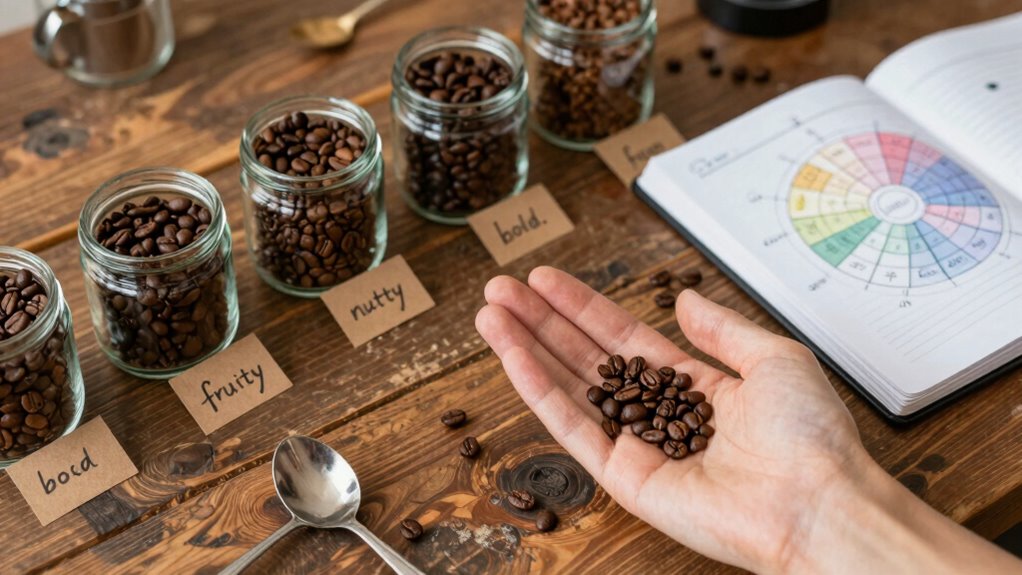
coffee tasting set with aroma jars
As an affiliate, we earn on qualifying purchases.
As an affiliate, we earn on qualifying purchases.
Frequently Asked Questions
How Can I Remember All the Coffee Terminology I Learn?
You can remember coffee terminology by actively engaging with what you learn. Take notes on coffee flavor profiles and bean origin terminology, and revisit them regularly. Practice describing different coffees to others, which reinforces your memory. Tasting sessions help connect terms to actual flavors. Creating flashcards or a coffee journal also makes it easier to recall key concepts, ensuring your understanding of the nuances in coffee becomes second nature.
What Are Common Mistakes When Developing a Coffee Vocabulary?
Don’t let your coffee vocabulary fall into a trap—mistakes happen! Avoid relying solely on coffee slang, which can be confusing, and overlook tasting notes that truly describe flavor. You might also forget to personalize your terms or ignore context, making your descriptions vague. Stay curious, practice regularly, and always connect tasting notes to your experience. This way, your coffee language becomes clear and authentic, like a well-brewed cup.
How Often Should I Update My Coffee Vocabulary?
You should update your coffee vocabulary regularly, especially after engaging in coffee tasting sessions or exploring new bean origins. As you taste different brews, you’ll naturally pick up new descriptors and nuances. Make it a habit to revisit and expand your vocabulary every few months, or whenever you try a fresh coffee from a different region. This keeps your language fresh and enhances your appreciation for diverse coffee profiles.
Are There Resources to Practice Coffee-Related Descriptions?
You can find great resources to practice coffee-related descriptions through online tasting event tips and specialty coffee websites that highlight flavor profiles. Attend local cupping sessions or virtual tastings, which offer hands-on experience. Additionally, use apps or forums focused on coffee tasting to refine your vocabulary. Think of it as sharpening your skills—don’t be afraid to experiment with different descriptions and ask for feedback to grow confident in your coffee language.
How Do I Tailor My Coffee Vocabulary for Different Brewing Methods?
To tailor your coffee vocabulary for different brewing methods, focus on learning specific brewing technique terminology and understanding how they influence coffee flavor profiles. For example, when discussing French press, emphasize terms like full-bodied or rich, while for pour-over, use words like bright or clean. Practice describing your brews using these terms, and experiment with different methods to deepen your familiarity with how each affects flavor, enhancing your overall coffee vocabulary.
Conclusion
Building your personal coffee vocabulary might take time, but it’s worth the effort. As you learn and describe different flavors and aromas, you’ll gain confidence in sharing your coffee experiences. Remember, practice makes perfect—don’t be afraid to experiment and use new words. Over time, you’ll speak about coffee like a seasoned pro. Keep at it, because once you’re fluent, you’ll truly appreciate every sip and never be at a loss for words.
Fall Picks
fall essentials
As an affiliate, we earn on qualifying purchases.