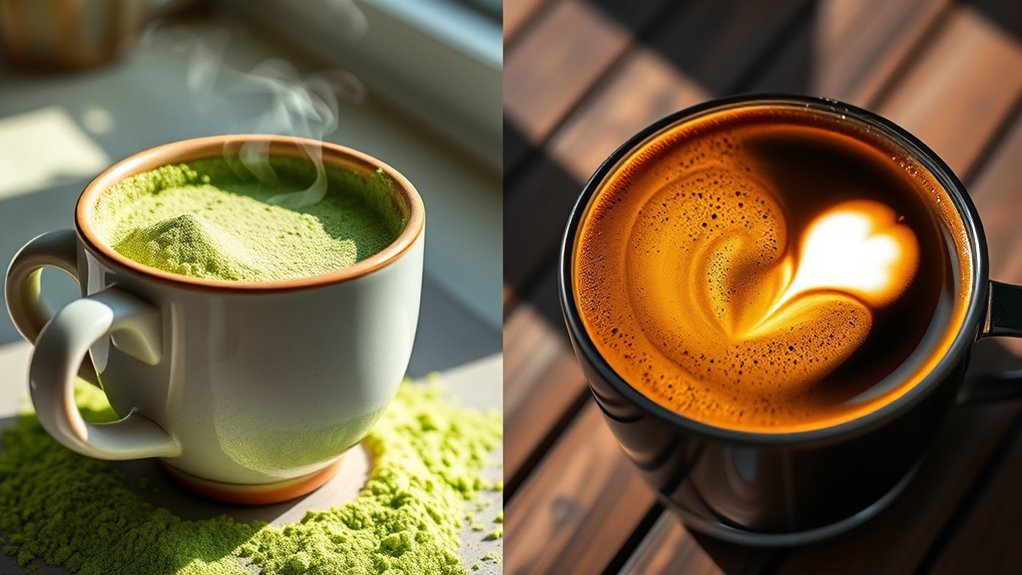
If you want a steady, long-lasting energy boost, matcha is your best bet. It provides sustained alertness without jitters, thanks to the combined effect of caffeine and calming L-theanine. Coffee offers a quick burst of energy but often leads to crashes and jitters. Depending on your focus needs and tolerance, each has pros and cons. Keep exploring to discover how to optimize your caffeine choice for your goals.
Key Takeaways
- Matcha provides a steady, long-lasting energy boost due to slower caffeine absorption, reducing crashes.
- Coffee delivers a quick, intense caffeine jolt for immediate alertness but may cause energy dips later.
- Matcha’s combination of caffeine and L-theanine promotes sustained focus and calmness without jitters.
- Coffee enhances mental clarity rapidly but can lead to jitters or anxiety in sensitive individuals.
- Overall, matcha offers a more balanced, prolonged boost, while coffee supplies a sharper, shorter-term energy spike.
Caffeine Content and Energy Levels
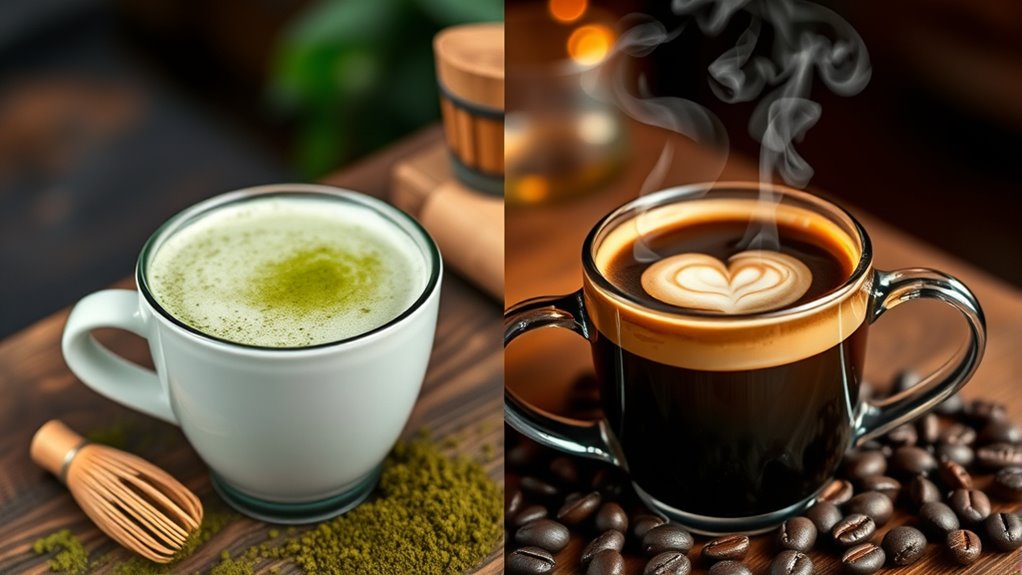
When comparing matcha and coffee, the caffeine content plays a significant role in determining how energetic you’ll feel. Matcha provides a steadier, longer-lasting energy boost because its caffeine absorption is slower, thanks to the presence of L-theanine, which moderates spikes. Coffee, on the other hand, delivers a quick jolt of caffeine that peaks rapidly. Your metabolic rate also influences how you process caffeine; if it’s high, you’ll metabolize caffeine faster, leading to quicker energy fluctuations. Matcha’s moderate caffeine levels support sustained alertness without the crash, while coffee’s higher caffeine content can produce a sharper, more immediate surge. Understanding how your body absorbs caffeine and your metabolic rate helps you choose the beverage that aligns with your energy needs.
Effects on Focus and Mental Clarity
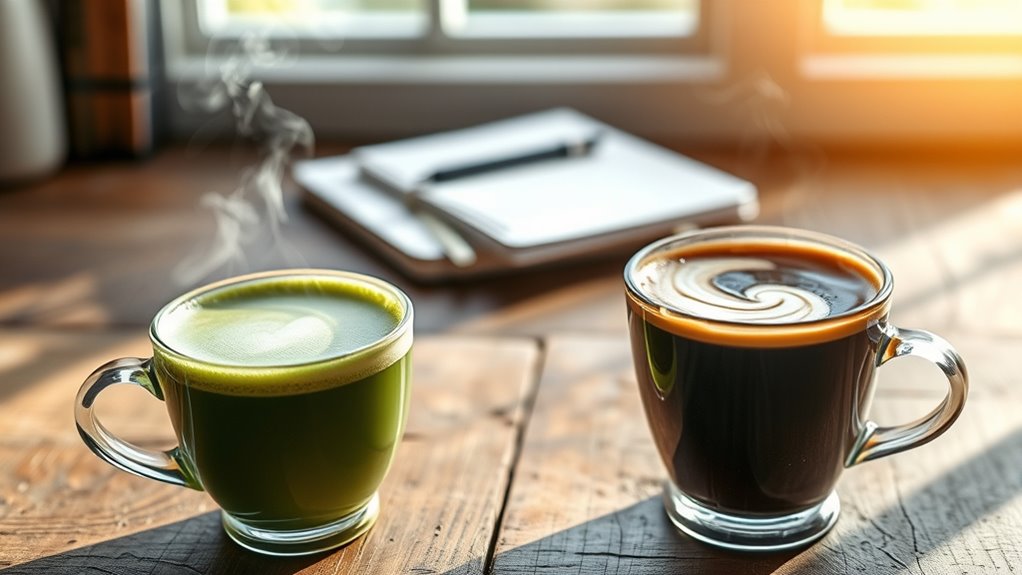
Both matcha and coffee can enhance focus and mental clarity, but they do so through different mechanisms. Matcha promotes mindfulness focus by providing a steady release of caffeine combined with L-theanine, which soothes the mind and reduces jitters. This combination helps you stay alert while maintaining mental calmness, leading to improved mental sharpness without the crash. Coffee, on the other hand, delivers a quick caffeine hit that boosts alertness rapidly, sharpening your focus but sometimes causing jitters or anxiety. If you’re looking for sustained mental clarity and a balanced sense of focus, matcha might be your better choice. For an immediate, intense boost, coffee can deliver quick mental sharpness, but it may come with some trade-offs. Additionally, using apps or journals to track your focus levels can help you determine which beverage works best for your individual needs. Recognizing the effects of caffeine on your body can also guide your choice for optimal mental performance. Understanding how caffeine delivery methods influence your focus can further optimize your mental clarity and productivity.
Duration and Sustainability of the Boost

Matcha’s steady release of caffeine and L-theanine creates a more prolonged mental boost, helping you stay focused over several hours without the sharp peaks and crashes often associated with coffee. This slow caffeine absorption guarantees sustained energy, so you avoid sudden dips that leave you tired. With matcha, you experience:
- Consistent alertness that keeps you productive all day
- Fewer energy dips, reducing the need for extra caffeine fixes
- A calmer, more balanced sense of wakefulness
- Long-lasting focus without jitters or crashes
Additionally, matcha’s unique combination of nutrients can support hormonal balance, contributing to overall sustained energy levels.
Unlike coffee’s quick spike and rapid decline, matcha provides a smoother, more sustainable energy flow. This makes it ideal when you need stamina and clarity over an extended period, helping you stay on top of your game.
Potential Side Effects and Jitters

While matcha is often praised for its smooth energy boost, it can still cause side effects if you consume too much or have sensitivity. Excessive intake may lead to health risks like stomach upset, headaches, or elevated heart rate. Some people may also experience jitters or anxiety from high caffeine levels. Coffee, with its stronger caffeine punch, tends to increase these symptoms more readily. Additionally, dependency concerns are valid; regular, high caffeine consumption can lead to reliance, making it hard to function without your usual dose. If you’re sensitive to caffeine, both beverages could trigger unwanted side effects. To minimize risks, moderation is key. Pay attention to your body’s response and adjust your intake accordingly to avoid jitteriness or other health issues. Understanding caffeine’s effects can help you make better choices about your intake and avoid adverse health consequences.
Additional Health Benefits and Considerations
Beyond the potential side effects, both matcha and coffee offer notable health benefits when consumed responsibly. They boost your well-being in ways that go beyond energy. For example:
- You get powerful antioxidant properties, helping your body fight free radicals.
- Matcha can support weight management by increasing metabolism.
- Coffee may enhance mental clarity and focus throughout your day.
- Both drinks can contribute to improved mood and alertness.
- Implementing cookie management practices can help you tailor your caffeine experience for better health outcomes.
These benefits make them valuable additions to your routine. Just remember, moderation is key to maximizing these advantages without overdoing caffeine intake. Whether you prefer the calm focus from matcha or the quick jolt from coffee, understanding their health perks helps you make better choices. Ultimately, they can be part of a healthy lifestyle when enjoyed responsibly.
Frequently Asked Questions
How Do Taste Preferences Influence Choosing Between Matcha and Coffee?
Your taste preferences play a big role in choosing between matcha and coffee. If you prefer a grassy, earthy flavor, you might lean toward matcha, especially if you enjoy gentle preparation methods like whisking. On the other hand, if you favor bold, roasted flavors, coffee’s rich aroma might appeal more. Your enjoyment depends on these flavor preferences and how you prefer to prepare your drink, making each choice uniquely satisfying.
Are There Any Environmental Impacts Associated With Producing Matcha Versus Coffee?
Thinking about the environmental footprints of your favorite beverages, you might find that matcha often has a lighter touch on the planet. Its production favors sustainable farming practices and generally results in a smaller ecological footprint compared to coffee. Coffee cultivation can sometimes lead to deforestation and high water use. By choosing matcha, you’re supporting eco-friendly methods that help preserve the environment, making your daily ritual a little more sustainable.
Can Matcha and Coffee Be Combined for an Optimal Energy Boost?
You can definitely combine matcha and coffee for an energy synergy that boosts alertness and focus. This flavor fusion creates a unique taste experience, blending the earthy notes of matcha with the boldness of coffee. Mixing them provides a balanced caffeine kick, enhancing your energy levels without the jitters. Just experiment with proportions to find your perfect blend, and enjoy the benefits of this dynamic duo for sustained resilience throughout your day.
How Do Individual Genetics Affect Response to Caffeine From Matcha or Coffee?
Genetic metabolism and caffeine sensitivity shape how you respond to caffeine from matcha or coffee. Your genetics determine whether you process caffeine quickly or slowly, influencing effects like alertness and jitters. If you have a sensitive metabolism, you might experience stronger energy boosts or side effects. Conversely, a slower metabolism can lead to prolonged effects. Understanding your genetic makeup helps you choose the right source and amount of caffeine for best energy without unwanted jitters.
What Are the Cultural Differences in Consumption of Matcha and Coffee Worldwide?
You’ll notice that cultural differences shape how people enjoy matcha and coffee worldwide. In Japan, tea ceremonies highlight the artistry and mindfulness of matcha, emphasizing tradition. Conversely, coffee culture in countries like Italy and the US centers around socializing and quick energy boosts, often through cafes. These practices reflect local values, making each beverage more than just a drink—they’re a essential part of cultural identity.
Conclusion
If you’re looking for a sustained energy boost, matcha might be your best bet—studies show it provides longer-lasting alertness without the jitters many experience with coffee. With about 70% of people reporting improved focus after consuming matcha, it’s a great choice for mental clarity. Whether you prefer the quick hit of coffee or the steady lift of matcha, knowing their effects helps you choose what works best for your day.