Ginger tea holds a special place in many cultural traditions worldwide. In Asia, especially China and India, it’s valued as a medicinal remedy and ceremonial drink, offering warmth and healing. In the Caribbean and Africa, farmers cultivate ginger organically to boost flavor and health benefits. Throughout history, cultures across continents have used it to balance energy, soothe ailments, and connect with healing practices. Keep exploring to discover how these rich traditions continue to influence ginger tea today.
Key Takeaways
- Ginger tea has a long-standing cultural role in Asia, especially in China and Japan, for healing and energy balancing.
- African and Caribbean regions emphasize organic and traditional cultivation methods, shaping unique ginger flavors for tea.
- Middle Eastern and Indian traditions incorporate ginger tea as a remedy for digestion and immunity, often flavored with spices.
- Western countries have embraced ginger tea for its health benefits, integrating it into modern wellness and herbal practices.
- Across continents, ginger tea’s preparation and ceremonial use reflect regional cultural values and medicinal beliefs.
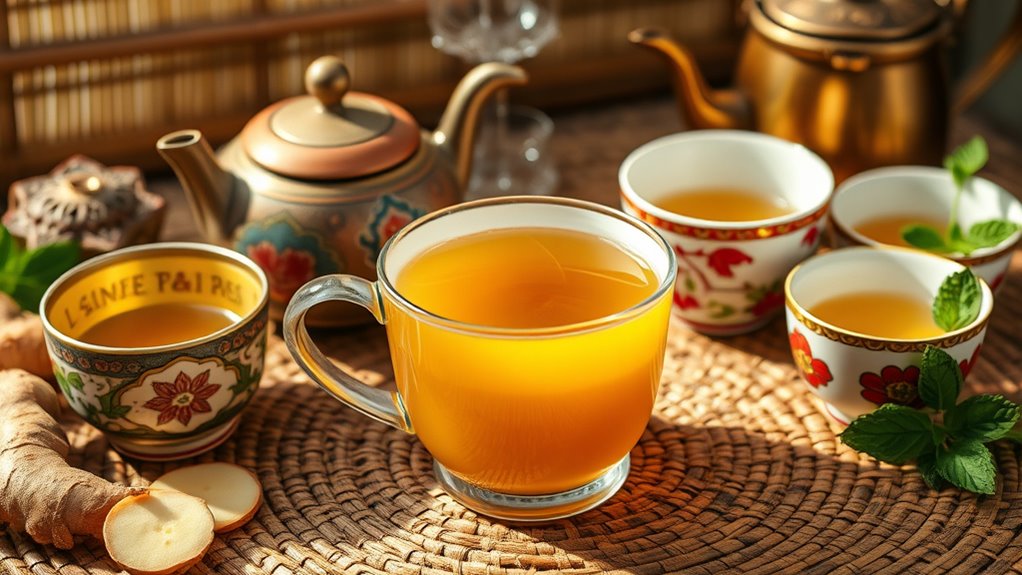
Ginger tea has long been cherished across cultures for its soothing properties and invigorating flavor. When you sip this warm beverage, you’re tapping into a tradition that spans continents and centuries. One of the key reasons ginger tea remains so popular is due to its impressive ginger health benefits. Ginger is renowned for its anti-inflammatory and antioxidant effects, which can help boost your immune system, reduce nausea, and alleviate muscle pain. These health benefits are part of why many cultures have turned to ginger tea as a healing remedy for generations. But to truly appreciate ginger tea, it’s helpful to understand how ginger is cultivated. The best ginger cultivation methods involve growing the plant in warm, humid climates where it can thrive underground as a rhizome. Farmers typically plant ginger rhizomes in well-drained soil, ensuring they receive plenty of sunlight and water. Over several months, the rhizomes develop, and once mature, they are harvested carefully to preserve their flavor and potency. Knowing this process enhances your appreciation for the quality of ginger used in traditional tea recipes. When you prepare ginger tea, you’re fundamentally using a product of centuries of careful cultivation that ensures maximum flavor and health benefits. Across Asia, especially in China and India, ginger cultivation methods have been refined over generations. These regions emphasize sustainable farming practices that promote healthy soil and robust ginger roots. In Africa and the Caribbean, farmers often grow ginger in small plots, incorporating organic methods to boost flavor and medicinal qualities. As you explore different ginger tea traditions, you’ll notice that the quality and source of ginger vary depending on local cultivation techniques, which influence both the taste and potency of the tea. In Japan, ginger is sometimes pickled or used fresh, but the practice of brewing ginger tea is deeply rooted in medicinal traditions aimed at balancing energy and improving circulation. Meanwhile, in Western countries, ginger tea has gained popularity as a natural remedy, often made from dried ginger slices or fresh roots that you can easily find at markets. No matter where you are, understanding the origins and cultivation methods behind ginger enhances your appreciation of this timeless beverage. When choosing ginger for your tea, look for firm, plump roots free of mold or shriveling, which indicates good cultivation practices. Additionally, proper ginger cultivation ensures you’re getting the maximum ginger health benefits from each cup. By doing so, you ensure you’re getting the maximum ginger health benefits from each cup. Ultimately, whether you’re sipping ginger tea for its soothing qualities or its medicinal properties, recognizing the careful cultivation and rich cultural history behind it connects you more deeply to this cherished tradition.
Frequently Asked Questions
How Did Ginger Tea Originate Historically?
You might find that ginger tea originated centuries ago in Asia, where ginger cultivation was widespread. People discovered that boiling fresh ginger roots with water created a soothing drink, using traditional tea brewing techniques. As trade expanded, this warming beverage spread across continents, adapting to local tastes. Its origins highlight how the simple act of boiling ginger became a cherished tradition, blending natural health benefits with cultural practices worldwide.
Are There Specific Rituals Associated With Ginger Tea?
Ever wonder if ginger tea holds a secret ritual? Yes, many cultures have ginger tea ceremonies, where ritualistic brewing methods emphasize mindfulness and respect. You might observe specific steps, like adding fresh ginger slices in a particular order or serving it with symbolic accompaniments. These rituals deepen the experience, transforming simple tea into a meaningful tradition that celebrates health, harmony, and cultural heritage.
What Are the Health Benefits of Ginger Tea?
You’ll find ginger tea offers numerous health benefits, thanks to its ginger medicinal properties. It can help soothe digestion, reduce inflammation, and boost your immune system. As a popular herbal infusion, ginger tea also alleviates nausea and relieves sore throats. Drinking it regularly can improve circulation and increase energy levels. Its natural antioxidants support overall well-being, making it a valuable addition to your daily health routine.
Which Cultures Have Unique Ginger Tea Recipes?
You’ll find that cultures like India, China, and Jamaica have their own spicy brews, turning ginger infusion into a cultural masterpiece. Indians craft a zesty ginger chai, while Chinese recipes often mix ginger with jasmine or green tea for a soothing twist. Jamaica’s fiery ginger tea, packed with local spice, proves that even a simple ginger infusion can become a vibrant tradition—proof that spicy brews truly know no borders.
How Is Ginger Tea Prepared Traditionally in Rural Areas?
In rural areas, you prepare ginger tea by harvesting fresh ginger through ginger cultivation, then peeling and slicing it. You boil water using traditional tea brewing methods, often over an open flame or fire pit. You add the ginger slices to the boiling water, letting it steep to extract the flavor. Sometimes, you add local herbs or honey for added taste, making the tea both soothing and culturally significant.
Conclusion
From Asia to Europe, ginger tea weaves a tapestry of warmth and tradition that spans the globe. By savoring this ancient beverage, you connect with centuries of cultural wisdom and healing power—it’s like tasting history in every sip. So next time you brew a cup, remember you’re partaking in a ritual that’s as timeless as the stars themselves. Embrace ginger tea’s magic and let it transform your moments into something truly extraordinary.