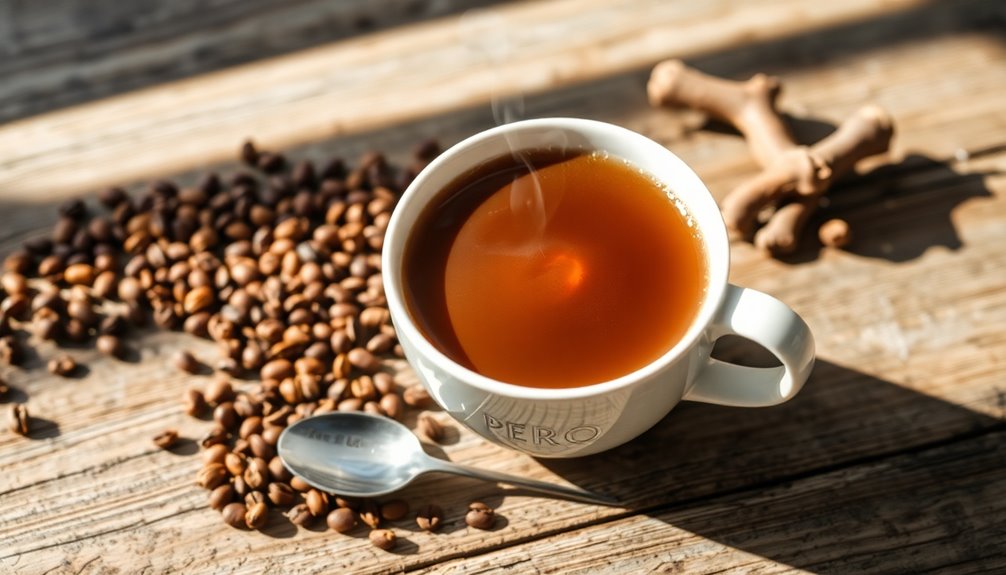
Barley drinks like mugicha, caffè d’orzo, and others are popular worldwide for their invigorating taste and health benefits. Mugicha, enjoyed hot or cold, is brewed by steeping roasted barley, while caffè d’orzo is made from ground roasted barley using a moka pot or French press, offering a coffee-like flavor with no caffeine. These beverages support wellness through antioxidants and fiber. Exploring different brewing styles can reveal new flavors and health perks—keep going to discover more.
Key Takeaways
- Barley drinks like Mugicha and Caffè D’Orzo are popular worldwide for their health benefits and versatile flavors.
- Mugicha, a roasted barley tea from Japan, is enjoyed hot or cold, especially in summer.
- Caffè D’Orzo is an Italian caffeine-free coffee alternative brewed from roasted barley grains.
- Different brewing methods influence the flavor, aroma, and nutritional value of barley beverages globally.
- Barley drinks are embraced as nutritious, hydrating options that blend tradition with modern health trends worldwide.

Barley drinks have become increasingly popular worldwide as a healthy and versatile beverage option. You might notice them gaining popularity in cafes, grocery stores, and even health food shops. These drinks are celebrated not only for their refreshing taste but also for their health benefits, which have fueled their rise in global markets. When it comes to brewing techniques, each type of barley drink offers a unique process that influences flavor, aroma, and nutritional profile. Understanding these methods can help you appreciate the richness of barley beverages and even craft your own at home.
Barley drinks are healthy, versatile, and gaining popularity worldwide for their unique flavors and benefits.
Take Mugicha, a traditional Japanese barley tea, as an example. Its brewing process involves roasting barley kernels until they develop a rich, nutty aroma. Once roasted, you typically steep the barley in hot water, then strain the mixture to produce a clear, amber-colored drink. This simple process preserves the health benefits of barley, such as antioxidants, fiber, and vitamins, while delivering a satisfying, slightly bitter flavor. The roasting step enhances not only the taste but also the drink’s aroma, making Mugicha a popular choice for cooling down in summer or enjoying as a comforting hot beverage in colder months. You’ll find that Mugicha is caffeine-free, making it suitable for all ages and a great alternative to tea or coffee.
Similarly, Caffè D’Orzo, an Italian-style roasted barley coffee, uses a different brewing technique. The roasted barley grains are ground into a fine powder, similar to coffee grounds. You then brew it using a moka pot or French press, which extracts the deep, roasted flavors. The result is a rich, robust drink with a coffee-like appearance and aroma, but without the caffeine. This brewing method intensifies the flavor profile and brings out the natural nuttiness of the barley, providing a satisfying beverage that can be enjoyed any time of day. Its health benefits include lower caffeine content and the presence of antioxidants, which support overall well-being.
Whether you prefer Mugicha’s light, nutty taste or the bold, roasted flavor of Caffè D’Orzo, understanding the brewing techniques helps you tailor your barley drinks to your preference. These techniques also help preserve the health benefits associated with barley, such as aiding digestion, reducing cholesterol, and providing a rich source of antioxidants. Additionally, the hydration benefits of barley drinks make them an excellent choice for maintaining fluid balance. As you explore different barley drinks, you’ll discover that each brewing method unblocks a new dimension of flavor and health advantages. With a little experimentation, you can enjoy these nutritious beverages at home, blending tradition with innovation, and enhancing your overall wellness through simple, natural ingredients.
Frequently Asked Questions
Are Barley Drinks Suitable for People With Gluten Allergies?
Barley drinks generally contain gluten, so if you have a gluten allergy or sensitivity, you should avoid them. The gluten content can trigger allergic reactions or symptoms, even if the drink is brewed or processed differently. Always check labels carefully and consult with a healthcare professional before trying barley-based beverages. For allergy considerations, it’s safer to choose gluten-free drinks to prevent any adverse reactions.
How Do Barley Drinks Compare to Other Herbal Beverages Nutritionally?
Barley drinks often have nutritional benefits like being rich in fiber and minerals, but they usually lack significant antioxidant properties compared to herbal beverages. Herbal drinks, such as chamomile or hibiscus, often provide higher antioxidant benefits, which support your immune system. When comparing, you find that barley drinks offer more sustained energy from complex carbs, while herbal drinks excel in antioxidants. Choose based on whether you want energy or immune support.
Can Barley Drinks Be Incorporated Into a Ketogenic Diet?
Coincidentally, you might find that barley drinks aren’t typically ketogenic compatible due to their carbohydrate content. While they serve as tasty low carb alternatives, they usually contain enough carbs to disrupt ketosis. If you’re aiming for a ketogenic diet, it’s best to explore other beverages that are truly low in carbs. Stick with unsweetened herbal teas or water to keep your carb intake in check and stay on track.
What Are Traditional Brewing Methods for Barley-Based Drinks Worldwide?
Traditional brewing methods for barley-based drinks often involve fermentation techniques like malting and roasting, which develop unique flavors. You might soak barley, allow it to germinate, then dry and grind it before brewing. In many cultures, such as Japan, Mugicha is made by roasting barley kernels and steeping them in hot water. These traditional brewing techniques create rich, aromatic drinks that highlight barley’s natural qualities.
Are There Any Health Risks Associated With Consuming Barley Drinks Regularly?
You might wonder if drinking barley regularly poses health risks. While it’s generally safe, if you’re gluten-sensitive, it could trigger symptoms, so watch your intake. On the flip side, moderate consumption may benefit liver health by supporting detoxification. However, overdoing it might cause digestive issues or affect blood sugar levels. Always listen to your body and consult a healthcare professional if you have concerns about your barley drink habits.
Conclusion
As you explore the world of barley drinks, you’ll find each sip a gentle wave, calming and warm. From mugicha’s earthy embrace to caffè d’orzo’s roasted charm, these beverages weave a tapestry of tradition and comfort. Let your taste buds dance across borders, savoring the timeless harmony of barley’s humble magic. Embrace each drink as a soothing melody, turning every moment into a cozy retreat—where simplicity and warmth forever intertwine.