
To get closer to espresso in an alternative brew, you need to focus on selecting the right beans, like Arabica or Robusta, and adjusting your brewing temperature to around 195-205°F. Using a fine grind and applying high pressure helps extract rich flavors and create that signature crema. Balancing these elements enhances boldness and depth, making your brew taste more like real espresso. Keep exploring how fine-tuning each factor can elevate your coffee experience.

Get coffee and tea gear delivered free with Prime
- Fast, free delivery on millions of items
- Prime Video, Amazon Music and more included
- Member-only deals all year
Key Takeaways
- Using high-quality, darker coffee beans or specific espresso varietals enhances flavor richness.
- Maintaining brewing temperatures between 195-205°F ensures proper extraction of bold flavors.
- Fine grind size and high-pressure brewing mimic traditional espresso’s crema and texture.
- Precise control over extraction time prevents under or over-extraction, preserving depth and intensity.
- Balancing blend components and adjusting variables allows customization to replicate espresso’s complex profile.
If you’re seeking an alternative to traditional espresso that still delivers a rich, bold flavor, understanding what influences its taste can make all the difference. Two key factors that shape the flavor profile are coffee bean varietals and brewing temperature. The varietals, or specific types of coffee beans, play a crucial role because each has unique characteristics. For example, Arabica beans often provide a smoother, more nuanced flavor, while Robusta beans tend to offer a stronger, more bitter punch with higher caffeine content. When choosing an alternative, selecting the right varietal can help mimic the depth and intensity of espresso. Some blends even combine different beans to balance acidity, body, and flavor, making them more suitable for brewing methods that aim to replicate espresso’s richness.
Brewing temperature is equally important because it directly affects extraction. Espresso is traditionally brewed at a high temperature, around 195-205°F (90-96°C), which quickly extracts oils, sugars, and flavors from the coffee grounds, resulting in that thick, crema-topped shot. When making an alternative, maintaining a similar brewing temperature is essential if you want to mimic the boldness and intensity. Too low a temperature can lead to under-extraction, producing a weak, sour taste, while too high can cause over-extraction, resulting in bitterness. Adjusting your brewing temperature within the optimal range ensures you extract the right balance of flavors, giving your alternative a closer resemblance to real espresso.
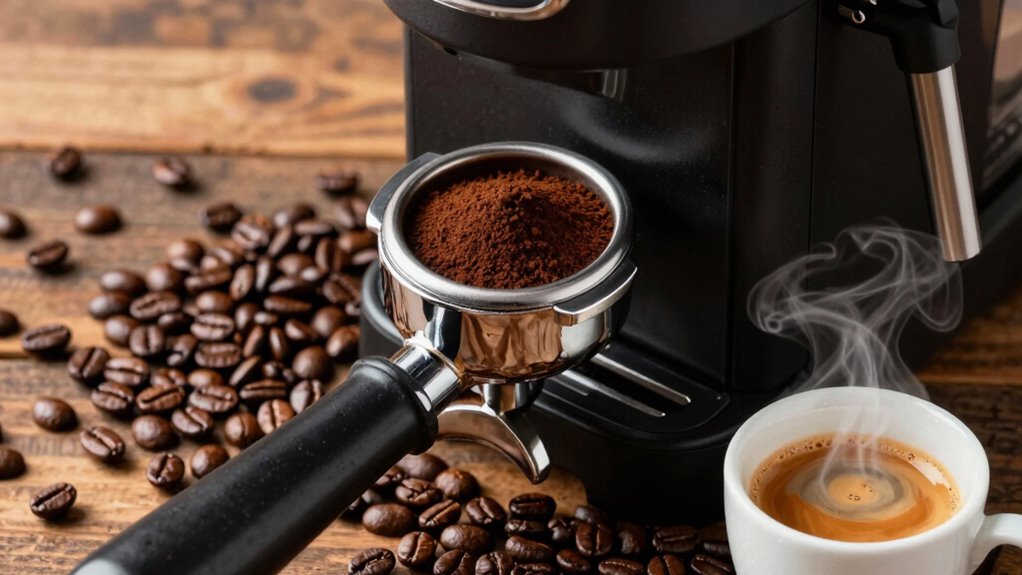
Apart from varietals and temperature, grind size and pressure also matter. Finely ground coffee increases surface area for extraction, much like traditional espresso grounds. Using a high-pressure brewing method, such as a stovetop espresso maker or an espresso machine, helps create the required resistance and pressure to produce that signature crema. If you’re experimenting with different coffee bean varietals, it’s wise to adjust grind size and pressure accordingly to optimize flavor extraction.
Ultimately, getting closer to real espresso with an alternative involves understanding how these elements interplay. By selecting the right coffee bean varietals, controlling brewing temperature, and applying appropriate pressure and grind size, you can craft a beverage that captures the bold, intense qualities you love. It’s about fine-tuning each step to mimic the complex flavor and texture of traditional espresso, turning your brewing process into a personalized art.
espresso coffee beans Arabica Robusta
As an affiliate, we earn on qualifying purchases.
As an affiliate, we earn on qualifying purchases.
Frequently Asked Questions
Can Non-Coffee Ingredients Mimic Espresso’s Crema?
Yes, certain non-coffee ingredients can mimic espresso’s crema using specific brewing techniques and flavor additives. Techniques like pressure brewing with a AeroPress or stovetop espresso maker help create a foamy, crema-like layer. Adding flavor additives such as soy lecithin or plant-based emulsifiers can enhance foam stability and texture. These methods and additives work together to produce a rich, crema-like appearance, making non-coffee options taste closer to real espresso.
How Does Roasting Affect Alternative Coffee Flavors?
Roasting transforms alternative coffee flavors like an artist strokes a canvas, revealing vibrant hues. It influences flavor profiles and roast levels, which determine the depth, acidity, and richness of your brew. Light roasts preserve bright, fruity notes, while dark roasts develop bold, smoky tones. By adjusting roast levels, you can enhance or mellow flavors, making your alternative coffee closer to espresso’s complex, layered taste.
Do Brewing Methods Impact the Taste Similarity to Espresso?
Yes, brewing methods considerably impact how closely an alternative coffee tastes to espresso. You need to pay attention to flavor profiles and brewing temperature. Using high pressure and a short extraction time, like in espresso machines, emphasizes rich, bold flavors. Maintaining a hot brewing temperature ensures proper extraction, helping your alternative coffee develop a concentrated, espresso-like taste. Adjusting these factors can bring your brew closer to that classic espresso experience.
What Role Does Grind Size Play in Flavor Replication?
Grind size plays a vital role in flavor replication because it affects extraction, which influences taste. You want consistent grind size to guarantee even extraction, preventing over- or under-extraction that can alter flavor. Fine particle size mimics espresso’s smooth, bold profile, while inconsistent grind size can lead to uneven flavors. By maintaining grind consistency with uniform particle size, you get a closer taste to espresso, capturing its rich, intense qualities.
Are There Specific Beans Better for Espresso Substitutes?
You should choose beans labeled for dark roasts or espresso blends, as they offer better flavor consistency and mimic espresso’s boldness. Beans with specific aging processes, like freshly roasted or properly stored beans, enhance flavor complexity. Look for beans with rich, intense aromas, and avoid stale beans. These factors help replicate the deep, robust taste of espresso, making your alternative brew more authentic and satisfying.
Conclusion
So, next time you sip on a coffee alternative, remember it’s all about the balance—bitterness, body, and aroma—like a symphony playing in harmony. When these elements align, your drink transforms into a nearly perfect echo of espresso. It’s as if the flavor whispers a secret, inviting you to enjoy the rich, bold experience without the caffeine kick. With a little knowledge, you hold the key to revealing espresso’s soul in every sip.
Halloween Picks
halloween
As an affiliate, we earn on qualifying purchases.