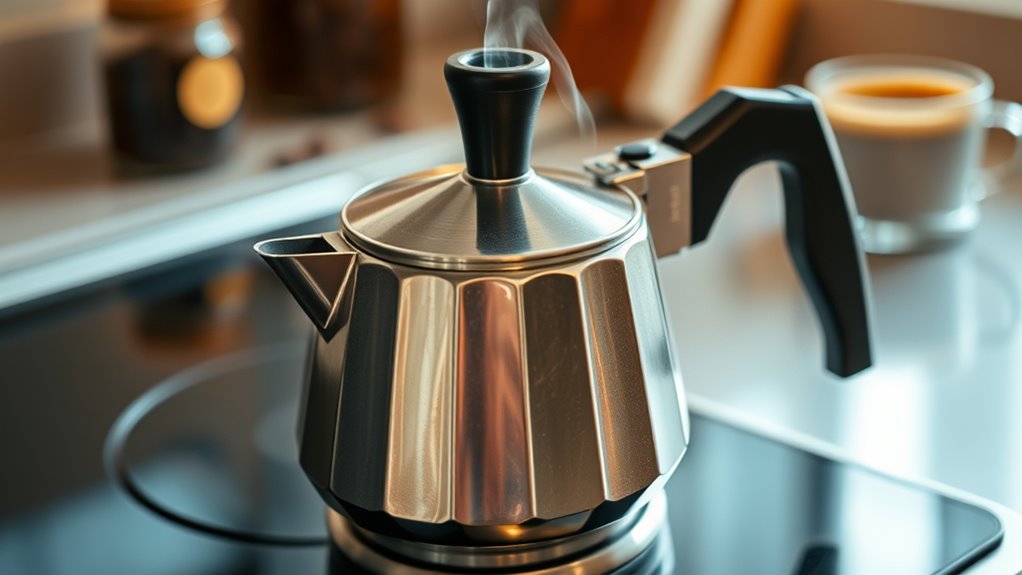

Making moka pot coffee is simple: fill the bottom chamber with water, add medium-fine ground coffee to the filter, and assemble the pot tightly. Place it on medium heat; pressure builds inside, pushing hot water through the coffee into the top chamber. Listen for gurgling sounds when it’s done. For perfect results, control grind size and brewing time. Keep exploring for more tips to master your stovetop espresso game.
Key Takeaways
- Use medium-fine coffee grounds, similar to sand, for optimal extraction and flavor.
- Fill the bottom chamber with water up to the safety valve, then assemble the moka pot tightly.
- Place on medium heat and listen for gurgling, indicating brewing completion in about 4-5 minutes.
- Remove from heat once coffee reaches the top chamber to prevent over-extraction and bitterness.
- Regularly clean and check parts to maintain performance and ensure the best-tasting stovetop espresso.
How a Moka Pot Works
A Moka pot works by using pressure to force hot water through coffee grounds, producing a rich, espresso-like brew on your stovetop. The key to its operation lies in pressure dynamics and boiler design. As you heat the water in the lower chamber, it creates steam, increasing pressure within the sealed boiler. This pressure pushes the hot water upward through a funnel filled with coffee grounds. The boiler’s design ensures that pressure builds steadily, allowing water to pass through the coffee evenly. Once the water reaches the top chamber, it’s brewed into a concentrated espresso. The pressure levels are controlled by the sealed system and the size of the safety valve, making the process efficient and safe. Proper refrigeration cycle understanding can enhance your brewing techniques and maintenance practices for optimal performance. Additionally, understanding pressure dynamics helps in troubleshooting and optimizing the brewing process for better results. Regular inspection of the safety valve and gasket is essential to maintain stovetop safety and prevent accidents. Furthermore, familiarity with tuning techniques can help you customize and improve the brewing process for your preferred flavor profile.
Selecting the Right Coffee and Grind Size
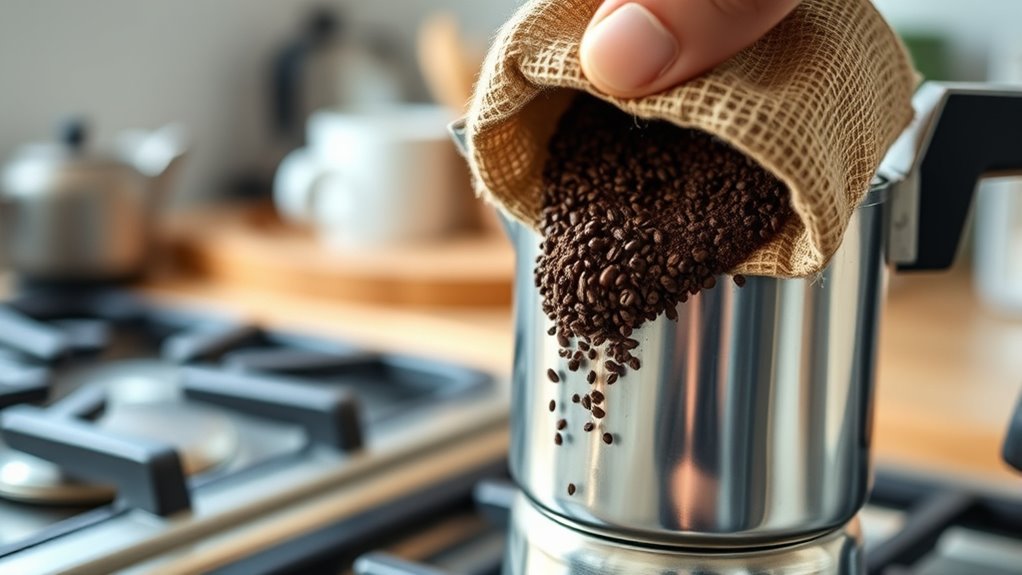
Choosing the right coffee and grind size is essential for brewing a flavorful stovetop espresso. The coffee flavor depends on selecting beans that suit your taste, whether bold, fruity, or nutty. Grind consistency is equally important; a uniform grind ensures even extraction. Use a medium-fine grind, similar to sand, for excellent results. Here’s a quick comparison:
| Coffee Type | Ideal Grind Size | Flavor Profile |
|---|---|---|
| Dark Roast | Fine | Bold, smoky |
| Medium Roast | Medium-fine | Balanced, smooth |
| Light Roast | Coarse | Bright, acidic |
Matching the grind size to your coffee type makes a noticeable difference in flavor and brew quality. For optimal performance, understanding the pinball machine weight can also be helpful if you’re considering equipment setup or maintenance. Additionally, paying attention to proper storage of your coffee beans helps preserve their freshness and flavor over time.
Step-by-Step Brewing Process
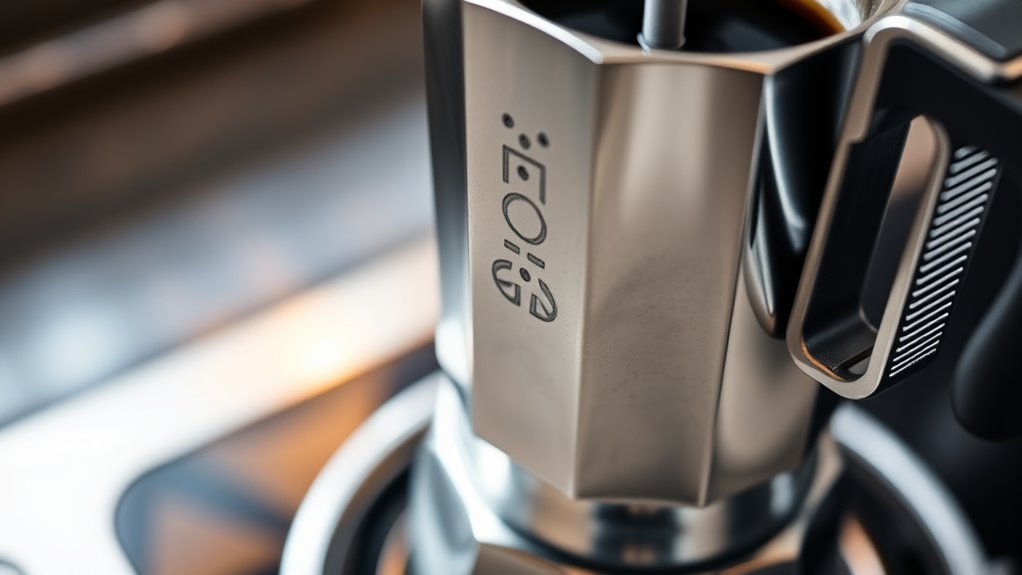
Once you’ve selected the right coffee and grind size, you’re ready to start brewing. Fill the bottom chamber of your Moka pot with water up to the safety valve. Place the filter basket inside and add your ground coffee, leveling it without pressing down. Assemble the top and bottom chambers tightly. Place the pot on medium heat. As the water heats, steam pressure pushes water upward through the coffee, extracting rich flavors. You’ll hear a gurgling sound when brewing is nearly complete. The entire process usually takes about 4 to 5 minutes, depending on your stove. Once the coffee starts to flow into the top chamber, remove the pot from heat. This brewing duration influences the coffee’s flavor—shorter yields a milder taste, while longer extraction results in a stronger, more intense brew. Ensuring proper security measures during the process can prevent any safety issues or accidents. Additionally, understanding the halal standards applicable to coffee preparation ensures your beverage remains compliant with your dietary preferences.
Tips for Achieving the Perfect Brew
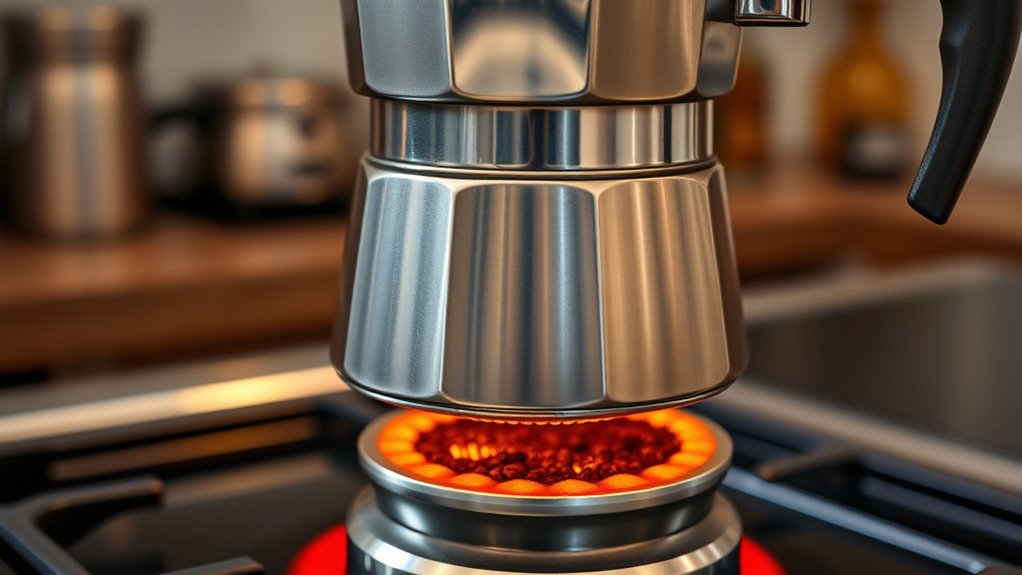
To achieve the perfect stovetop espresso, pay close attention to your grind size and tamping. Use a medium-fine grind; too coarse, and water will pass through too quickly, resulting in weak coffee. Too fine, and it can clog your brewing equipment, causing over-extraction and bitterness. Tamp the coffee evenly and firmly to guarantee consistent extraction and optimal flavor. Proper tamping helps maintain uniform water flow, enhancing the coffee’s richness and depth. Be mindful of your brewing equipment’s quality; a well-maintained moka pot ensures even heat distribution and prevents leaks. Additionally, selecting authentic materials like durable metal components can improve the longevity and performance of your coffee maker. Using a contrast ratio with your moka pot setup can also help you monitor and improve the visual quality of your brew, ensuring a better sensory experience. Regular cleaning and replacement of parts like filters can prevent buildup that affects flavor and consistency. Paying attention to filter types and replacement schedules can also contribute to a cleaner, more flavorful brew. By fine-tuning these elements, you’ll open the full potential of your coffee flavor, achieving a balanced, robust brew every time.
Customizing Your Stovetop Espresso
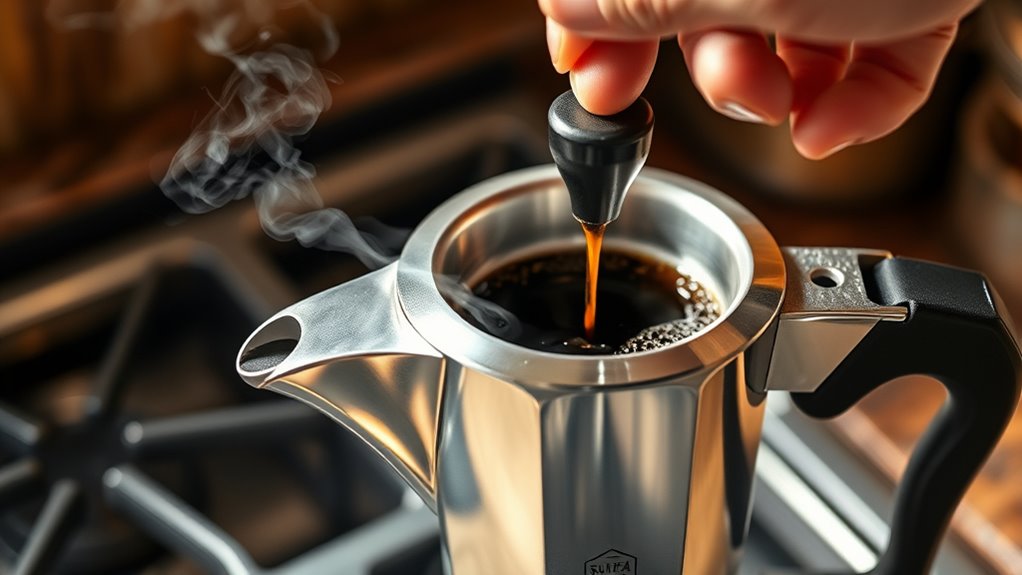
Customizing your stovetop espresso allows you to tailor each brew to your taste preferences. You can experiment with different techniques to enhance flavor and explore alternative brewing methods. For example, adjusting the grind size and tamping pressure can improve flavor enhancements, making your coffee richer and more balanced. You might also try different heat levels to control extraction, resulting in varied strength and aroma. Additionally, adding spices like cinnamon or cocoa before brewing can introduce unique flavors. Consider using a reusable filter or experimenting with different water-to-coffee ratios to customize your experience further. Being aware of proper emotional support can help manage any frustration or disappointment that may arise during your experimentation process. Paying attention to brew time can also help you fine-tune your results and achieve consistency in your cups. Remember, small tweaks can elevate your coffee, making each cup uniquely suited to your palate and opening up new ways to enjoy stovetop espresso. Using the right headphones can also enhance your brewing experience by allowing you to listen to your favorite music or podcasts while you prepare. Incorporating regional flavor profiles can further personalize your brew, connecting it to specific cultural tastes and ingredients. For example, exploring grind size adjustments can significantly influence extraction and flavor, offering more control over your final cup.
Frequently Asked Questions
How Long Does a Typical Moka Pot Take to Brew?
A typical moka pot takes about 5 to 10 minutes for the brew time, depending on its size and heat level. During the brewing process, you’ll notice the coffee start to flow into the upper chamber once the water heats up and pressure builds. You should remove the pot from the heat as soon as you hear a hissing or gurgling sound to prevent over-extraction and guarantee a rich, flavorful brew.
Can I Use Flavored or Instant Coffee in a Moka Pot?
Imagine your moka pot as a tiny coffee factory, brewing magic. You can use flavored additives, but they might clog the filter or alter the taste, so use sparingly. Instant coffee is compatible, but it dissolves quickly and may not develop the same rich flavor, making your brew less robust. For the best experience, stick with freshly ground beans, but feel free to experiment with small amounts of flavored or instant options.
Is It Safe to Leave a Hot Moka Pot Unattended?
Leaving your hot moka pot unattended isn’t safe, as it can cause safety hazards like overflows or burns. To guarantee safety precautions, always stay nearby during brewing and never leave it unattended on the stove. Unattended brewing increases the risk of accidents, so it’s best to monitor the process closely. By doing so, you protect yourself and prevent potential damage or injuries caused by overlooked boiling or pressure buildup.
How Do I Clean and Maintain My Moka Pot Properly?
To keep your moka pot in top shape, follow simple cleaning routines and maintenance tips. After each use, disassemble the parts and wash them with warm water—avoid soap, which can affect flavor. Regularly check for mineral buildup and descaling if necessary. Keep the rubber gasket and filter basket in good condition, replacing them when worn. Proper cleaning and maintenance guarantee your moka pot brews great coffee every time.
Can I Make Decaffeinated Espresso With a Moka Pot?
Sometimes, life surprises you with decaffeinated options, and you wonder if your moka pot can keep up. Yes, you can make decaf espresso by using decaffeinated coffee grounds. Just make certain you don’t overfill the filter and consider minor moka pot modifications, like adjusting grind size or brewing time, to optimize flavor. It’s a simple switch that lets you enjoy your favorite brew without the caffeine buzz.
Conclusion
Now that you know how a moka pot works and the secrets to brewing your perfect cup, you’re all set to master stovetop espresso. Remember, practice makes perfect, and every brew is a learning experience. Don’t be afraid to experiment with different coffee types and techniques—you might find your new favorite. With patience and a keen eye, you’ll turn your kitchen into a true coffee haven, proving that good things come to those who wait.