If your De’Longhi espresso machine is leaking water, it can disrupt your coffee routine and may indicate a maintenance issue or a faulty component. Addressing this promptly can save you time and prevent more costly repairs.

Get coffee and tea gear delivered free — and shop member deals
- Fast, free delivery on millions of items
- Access to Prime Big Deal Days deals on October 6–7
- Prime Video, Amazon Music and more included
In this guide, you’ll find clear, practical steps to diagnose and fix common causes of water leaks, ensuring your machine functions perfectly again.
Key Takeaways
| Identify the source of the leak | Locating where the water is leaking from helps target the fix. |
| Check for loose or damaged parts | Connections, seals, and filters should be secure and intact. |
| Regular descaling prevents leaks | Limescale buildup can cause blockages and leaks. |
| Use quality replacement parts | Replacing faulty components restores proper function. |
Step 1: Turn Off and Unplug the Machine
- Ensure the espresso machine is turned off and unplugged to avoid electrical hazards.
- Allow it to cool completely if recently used.
Step 2: Inspect External and Internal Components
- Check the water tank for cracks or loose fitting. Ensure it’s securely seated.
- Open the service panel to examine internal hoses and connections for leaks or damage.
Step 3: Tighten or Replace Faulty Seals and Connections
- Identify any worn or loose seals around the water tank, brew group, or internal hoses.
- Use appropriate tools to tighten fittings. Replace damaged seals with genuine parts.
Step 4: Descale the Machine
Mineral deposits can cause blockages leading to leaks. Use a descaling solution like De’Longhi EcoDecalk to clean internal components, following the manufacturer’s instructions.
Step 5: Test the Repair
- Reassemble the machine and fill the water tank.
- Plug in and turn on the machine, running a water cycle without coffee to check for leaks.
The Products in This Guide
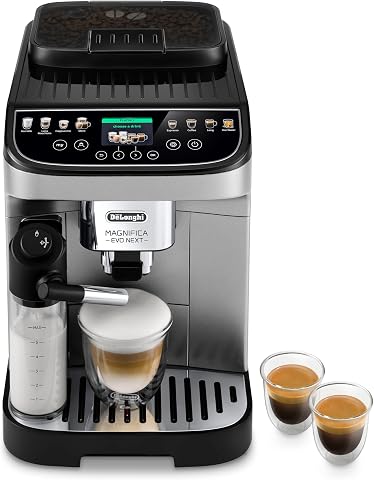
De’Longhi Magnifica Evo Next Fully Automatic Espresso Ma
- ✔ Dimensions: 12 x 16 x 15 inches
- ✔ Weight: 22 lbs
- ✔ Warranty: 1 year

De’Longhi Replacement Water Filter
- ✔ Material: Activated carbon
- ✔ Filter Life: Up to 2 months
- ✔ Compatibility: Select De’Longhi models
De’Longhi Magnifica Evo Next Fully Automatic Espresso Ma
The De’Longhi Magnifica Evo Next Fully Automatic Espresso Machine offers excellent features for coffee lovers, with programmable drinks, a built-in grinder, and milk frother. Its quality construction makes it a durable choice, though occasional maintenance is necessary.
Pros:
- Versatile drink options
- Built-in grinder with multiple settings
- Automatic milk frother
- Programmable controls
Cons:
- Can be complex to clean
- Requires regular descaling
- Size may be bulky for small kitchens
Best for: Home baristas seeking convenience and quality
Not ideal for: Users wanting a compact, minimalist machine
Bottom line: A versatile, feature-packed espresso maker ideal for home use.
De’Longhi Replacement Water Filter
Using the De’Longhi Replacement Water Filter helps maintain optimal water quality, reducing limescale buildup and improving coffee taste. Easy to install and highly recommended for regular use.
Pros:
- Enhances water quality
- Prevents limescale
- Easy to install
- Extends machine lifespan
Cons:
- Requires replacement every 2 months
- Additional cost
- Must remember to replace
Best for: Maintaining peak performance of your espresso machine
Not ideal for: If your water source is already filtered or soft
Bottom line: A simple upgrade that keeps your machine running smoothly.
Frequently Asked Questions
Why is my De’Longhi espresso machine leaking water?
Leaks can occur due to loose fittings, damaged seals, mineral buildup, or internal blockages. Inspect the components and perform maintenance as needed.
How often should I descale my espresso machine?
Descaling depends on usage and water hardness, but generally every 2-3 months is recommended. Use a descaling solution like De’Longhi EcoDecalk for best results.
Can I fix the leak myself?
Yes, many leaks are caused by simple issues like loose fittings or mineral buildup, which you can fix by inspecting and replacing seals, or descaling. For serious internal damage, professional repair might be necessary.
What should I do if the leak persists after cleaning?
If cleaning and tightening fittings don’t resolve the leak, consider replacing worn seals or internal hoses. If problems continue, contact a professional technician or De’Longhi customer service.
Keep Your Espresso Machine Leak-Free and Happy
Regular maintenance, including descaling and inspecting seals, can prevent leaks and extend the life of your De’Longhi espresso machine. By following these steps, you can troubleshoot and fix most common issues yourself, saving time and money while enjoying your favorite coffee drinks.
Affiliate disclosure: As an Amazon Associate we earn from qualifying purchases. Prices and availability are accurate as of the time of publishing.
Fall Picks
fall essentials
As an affiliate, we earn on qualifying purchases.