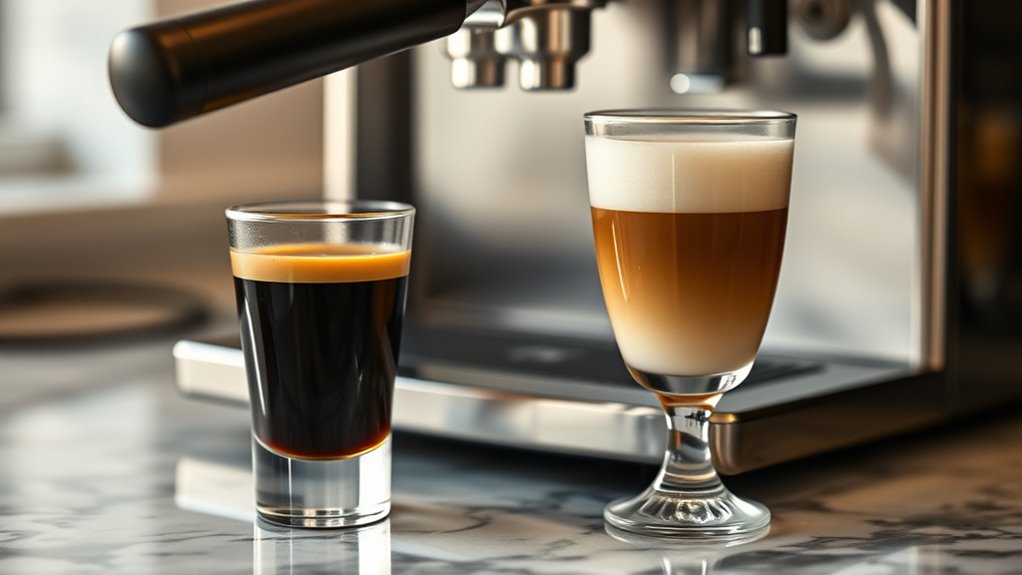

Many believe espresso and lungo are just different names for the same drink, but they actually have distinct brewing processes. Espresso is a concentrated shot made quickly with fine grounds, while lungo uses more water, resulting in a milder, larger cup. Caffeine levels can vary depending on extraction, not volume alone. Understanding these differences helps you choose the right brew for your taste and caffeine needs—there’s more to uncover if you keep exploring.
Key Takeaways
- Espresso is a concentrated shot brewed with 30ml of water, while lungo uses 60-90ml, resulting in milder flavor for lungo.
- Both brews use similar techniques; the main difference is water volume and extraction time, affecting flavor and crema.
- Espresso offers a higher caffeine concentration per shot, but lungo’s larger volume can contain more overall caffeine.
- Roast and grind size influence flavor profiles; dark roasts and fine grinds suit espresso, coarser grinds enhance lungo’s nuances.
- Choice between espresso and lungo depends on desired strength, flavor intensity, caffeine needs, and personal or regional preferences.
Top picks for "myth fact espresso"
Open Amazon search results for this keyword.
As an affiliate, we earn on qualifying purchases.
What Defines an Espresso?

An espresso is a concentrated coffee beverage brewed by forcing hot water through finely ground coffee under high pressure. The quality of your coffee bean plays a vital role in achieving that rich flavor and crema. To make a true espresso, you need to control the brewing temperature carefully, typically around 190-196°F (88-91°C), to extract the best flavors without bitterness. This precise temperature ensures the oils and compounds in the coffee bean are released properly. The result is a small, intense shot with a velvety texture and a robust aroma. The combination of high-pressure extraction, finely ground coffee, and ideal brewing temperature distinguishes espresso from other brewing methods, making it a unique, strong coffee experience.
The Origin of Lungo and Its Meaning

Lungo, which means “long” in Italian, originated as a variation of espresso designed to extend the brewing process and produce a larger, milder coffee. This creation reflects Italy’s rich coffee traditions, where beverage terminology often describes specific brewing styles. By extracting more water through the same amount of coffee grounds, lungo offers a different flavor profile compared to traditional espresso. Its development allowed coffee enthusiasts to enjoy a more prolonged drinking experience without sacrificing intensity. The term itself highlights the purpose: a longer extraction that results in a unique, smoother taste. Understanding the origin of lungo gives you insight into how coffee culture evolves, blending tradition with innovation to meet diverse preferences. Additionally, the process of making lungo is closely related to extraction techniques, which influence the final flavor and strength of the brew.
The Brewing Process: How Espresso and Lungo Differ

While both espresso and lungo are brewed using similar techniques, their primary difference lies in the amount of water used during extraction. Espresso uses a small volume, resulting in a concentrated shot, while lungo employs more water, producing a milder flavor. During brewing, your machine forces hot water through finely ground coffee, influencing crema development and milk frothing potential. Lungo’s extended extraction can lead to a thinner crema, affecting texture and appearance. Here’s a quick overview:
| Aspect | Espresso | Lungo | Common Features |
|---|---|---|---|
| Water Volume | About 30ml | 60-90ml | Both require precise timing |
| Extraction Time | 25-30 seconds | 30-45 seconds | Brewed under pressure |
| Flavor Profile | Rich, intense | Milder, more bitter | Ideal for milk-based drinks |
Understanding these differences helps you optimize brewing for better milk frothing and crema. Additionally, mastering extraction time can significantly impact the final taste and texture of your coffee.
Volume and Strength: Comparing the Two Drinks

When comparing espresso and lungo, the key difference lies in their volume and resulting strength. Espresso is a concentrated shot with a bold, intense coffee flavor and rich aroma profiles. Lungo, on the other hand, uses more water, producing a larger, milder drink with subtler flavor nuances. The increased volume dilutes the strength, making lungo less intense but more nuanced.
Consider these points:
- Espresso delivers a robust, full-bodied taste with pronounced aroma profiles.
- Lungo offers a lighter, more delicate coffee flavor due to dilution.
- The strength of espresso is stronger, often with a thicker crema.
- Lungo’s aroma profiles are softer, emphasizing complexity over intensity.
Roast and Grind: How They Influence Flavor Profiles

Roast and grind considerably influence the flavor profiles of both espresso and lungo, shaping their aroma, body, and taste nuances. The type of coffee bean and its roast level determine the underlying flavor characteristics, from bright and acidic to rich and chocolaty. A darker roast typically yields a bolder, more robust flavor, while a lighter roast preserves brighter, more complex notes. Grind size impacts flavor extraction during brewing; a finer grind increases surface area, extracting more intense flavors quickly, ideal for espresso. Conversely, a coarser grind slows flavor extraction, suited for lungo. Adjusting roast and grind allows you to control the balance of acidity, body, and aromatic intensity, ultimately tailoring each drink’s flavor profile to your preference. Additionally, selecting the appropriate dog names can reflect the personality traits you want to highlight in your pet.
Caffeine Content: Is Lungo More Caffeinated Than Espresso?

The caffeine content in your coffee depends not just on the beans but also on how the beverage is brewed. Lungo and espresso use the same coffee bean varieties, but brewing equipment differences markedly impact caffeine levels. A lungo, brewed with a longer extraction, generally contains more water, which can dilute the caffeine per ounce but results in a larger overall volume. However, espresso, made with high pressure and shorter extraction, delivers a concentrated dose in a smaller shot. Factors influencing caffeine include grind size, brew time, and machine type. Additionally, brew method plays a significant role in determining the final caffeine content.
Common Misconceptions About Espresso and Lungo

Many believe espresso and lungo differ mainly in strength, but that’s not always true. Brew time and bean choices also influence their flavor and intensity. Understanding these differences helps you appreciate what truly sets them apart. Additionally, the tuning process of coffee machines can impact extraction and ultimately affect the taste profile of each espresso or lungo.
Coffee Strength Differences
A common misconception is that espresso and lungo differ markedly in strength, but in reality, their caffeine content and intensity depend more on extraction time and coffee-to-water ratio rather than size alone. A longer extraction in a lungo might seem stronger, but it often results in a milder flavor due to dilution. Your coffee storage habits and milk frothing techniques can influence perceived strength, too. For example, fresher beans yield a richer taste, while over-frothed milk can mask subtle espresso nuances. Remember, the caffeine content isn’t solely determined by shot size but by how efficiently the coffee grounds are extracted. To truly gauge strength, focus on extraction methods and coffee freshness rather than assumptions based on size alone. Additionally, smart appliances like precision espresso machines can help optimize extraction consistency for the perfect brew.
Brew Time Variations
Brew time plays a significant role in shaping the flavor and strength of both espresso and lungo, yet misconceptions persist about how it influences these drinks. Longer extraction doesn’t always mean a stronger flavor; it can lead to over-extraction and bitterness. Conversely, a shorter brew preserves clarity but may lack depth. Proper brew time is essential for creating latte art, as over-extraction can make the crema too bitter to pour well. Additionally, coffee storage affects how the brew time impacts taste—fresh beans extract differently than stored ones. Here’s a quick comparison:
| Brew Time | Flavor Impact | Storage Effect |
|---|---|---|
| Short | Bright, clean, less bitter | Preserves freshness |
| Ideal | Balanced, rich, smooth | Maintains flavor profile |
| Long | Bitter, over-extracted | Can intensify undesirable flavors |
Furthermore, understanding the influence of brew time on extraction helps baristas optimize flavor while avoiding common pitfalls like over-extraction.
Bean Roast Preferences
Choosing the right roast level is often misunderstood when it comes to crafting espresso and lungo. The roast impacts flavor complexity and highlights different bean origins. Dark roasts are typically associated with bold, smoky notes, but they can overshadow subtle bean origin nuances. Light roasts preserve more of the bean’s natural flavor, emphasizing complexity and brightness, ideal for a nuanced lungo. Medium roasts strike a balance, offering both body and flavor depth. Remember, your preference depends on your taste and the bean’s origin. Regional flavors and traditions influence the roasting style and final flavor profile.
When and Why to Choose Each Brew

Understanding when and why to opt for an espresso or a lungo depends on your taste preferences and caffeine needs. If you prefer a stronger, more concentrated flavor, an espresso is your best choice, especially if your cultural preferences lean toward traditional Italian coffee. An espresso’s quick extraction makes it ideal for a quick caffeine boost or a rich morning ritual. On the other hand, a lungo offers a milder, more aromatic experience with a larger volume, perfect if you enjoy a longer drink or want a smoother taste. Your brewing equipment also influences the decision; machines designed for espresso can easily produce either brew, but a lungo may require specific settings. Choose based on your flavor intensity, caffeine desire, and the equipment you have at hand. Coffee brewing methods also play a role in achieving the perfect cup.
Tips for Making the Perfect Espresso and Lungo at Home

To make great espresso and lungo at home, start by using the right coffee grind size—finer for espresso and slightly coarser for lungo. Make certain your brew ratios are accurate to achieve the desired strength, and keep an eye on extraction time to avoid under- or over-extraction. Mastering these points will help you craft consistently perfect cups every time.
Precise Coffee Grind Size
Getting the grind size just right is essential for brewing a perfect espresso or lungo at home. The right grind influences extraction, affecting coffee acidity and aroma profiles. Too fine, and you’ll over-extract, leading to bitter flavors; too coarse, and under-extraction results in weak, sour tastes. For espresso, aim for a fine grind that creates resistance during brewing, while a slightly coarser grind suits lungo. Adjusting grind size helps you control the extraction time, ensuring you highlight desirable acidity and aroma nuances. Keep these tips in mind:
- Use a burr grinder for consistency
- Fine-tune based on your machine’s pressure
- Monitor extraction time closely
- Experiment with small adjustments for ideal flavor
- Remember that brewing time is closely linked to grind size and impacts overall flavor extraction.
Correct Brew Ratios
Achieving the perfect brew starts with the right coffee-to-water ratio. For espresso and lungo, this ratio influences flavor, strength, and crema quality. Typically, a standard espresso uses about 18-20 grams of coffee for a 30-gram shot, while a lungo may use 18-20 grams for a 60-gram shot. Adjustments depend on your taste and the coffee bean origin, as some beans extract better with different ratios. If you’re making milk-based drinks like lattes or cappuccinos, make sure the espresso shot is balanced to prevent overpowering the milk. Experimenting with brew ratios helps you find the ideal strength and flavor profile. Remember, consistency in your measurements is key to dialing in the perfect espresso or lungo at home.
Optimal Extraction Time
Ideal extraction time is crucial for brewing flavorful espresso and lungo, as it determines how well the coffee’s oils and soluble compounds are dissolved. If you under-extract, your coffee may taste sour and lack aroma; over-extracting can result in bitterness. To hit the sweet spot, aim for a precise extraction time while maintaining ideal extraction temperature. Here are tips to refine your process:
- Monitor brewing duration closely, typically 25-30 seconds for espresso.
- Adjust grind size to control extraction speed.
- Maintain consistent extraction temperature to preserve coffee aroma.
- Use fresh, high-quality coffee beans for better flavor clarity.
- Understanding methodologies used in coffee extraction can help optimize your brewing process.
Balancing these factors ensures your coffee develops a rich aroma and balanced flavor profile, whether you’re making an espresso or lungo at home.
Frequently Asked Questions
Can You Make an Espresso or Lungo With Any Coffee Beans?
Yes, you can make both espresso and lungo with any coffee beans, but your results depend on coffee bean types and grinding consistency. For espresso, choose beans with a rich, bold flavor and grind them finely. For lungo, use similar beans but grind slightly coarser. Adjusting the grind size guarantees proper extraction, so the quality of your coffee depends on selecting the right beans and maintaining consistent grinding to get the best flavor.
Do Different Roasts Affect the Taste of Espresso and Lungo?
Yes, different roast profiles and coffee bean varieties markedly influence the taste of both espresso and lungo. Lighter roasts preserve the unique flavors of the beans, offering brighter and more acidic notes, while darker roasts create bolder, richer flavors with less acidity. By choosing specific coffee bean varieties and roast profiles, you can customize your espresso or lungo to match your preferred flavor profile, making each shot uniquely yours.
Is Lungo Always a Stronger Caffeine Hit Than Espresso?
Think a lungo always packs a bigger caffeine punch? Not necessarily. While lungo has a larger volume, its caffeine concentration per ounce is often lower than espresso, making it not always stronger in caffeine. Your experience depends on bean compatibility and shot size. If you want a true caffeine boost, focus on the beans and brewing method rather than volume alone. Sometimes, the smaller shot hits harder than a longer one.
Are There Health Benefits Linked to Choosing One Over the Other?
You might think choosing between espresso and lungo impacts your health benefits, but it mostly depends on caffeine content and your personal tolerance. Both drinks contain antioxidants that can boost health, but lungo usually has more caffeine due to a larger volume, which could cause jitters if you’re sensitive. If you’re looking for health benefits, consider moderation and how your body reacts to caffeine rather than just choosing one over the other.
How Does Water Temperature Impact the Flavor of Both Drinks?
Water temperature directly impacts flavor extraction in both espresso and lungo. If the water’s too hot, it can over-extract, making your drink bitter and harsh. Conversely, if it’s too cool, you’ll under-extract, resulting in a weak, sour taste. To get the best flavor, maintain water temperature around 195-205°F, ensuring a balanced extraction that highlights the rich aromas and smooth textures you enjoy in both espresso and lungo.
Conclusion
Now that you know the differences between espresso and lungo, you can choose your perfect brew with confidence. Did you know that a lungo typically contains about 30% more water than a standard espresso? This means it’s often milder but still offers a good caffeine boost. So, whether you prefer a bold shot or a longer, smoother sip, you’re now equipped to enjoy your coffee just how you like it. Cheers to brewing smarter!