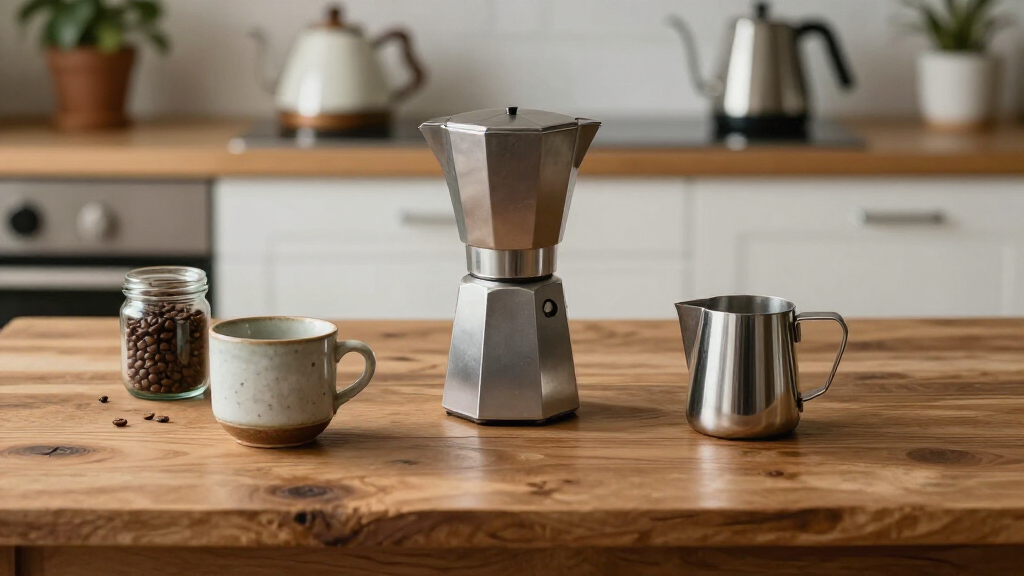

Manual espresso makers — mostly moka pots in this category — brew rich, concentrated coffee on your stovetop without pumps, electricity, or expensive machines. The Bialetti Moka Express 6-Cup earns my best overall pick for its decades-proven design, consistent extraction, and replacement parts that are easy to find, while the Bialetti Venus stands out if you have an induction cooktop and the Imusa 6-Cup wins on raw price. The main tradeoffs you’ll face are aluminum versus stainless steel, cup capacity, and whether a budget pot’s looser tolerances will frustrate you over time. Read on for the full ranked breakdown and which pot fits your kitchen, budget, and brewing style.

Get coffee and tea gear delivered free — and shop member deals
- Fast, free delivery on millions of items
- Access to Prime Big Deal Days deals on October 6–7
- Prime Video, Amazon Music and more included
Complete the kit


Key Takeaways
- The Bialetti Moka Express beat nearly identical aluminum pots because its machined tolerances, safety valve placement, and gasket quality produce more consistent pressure and fewer bitter shots than the Imusa, Mongdio, and Mixpresso clones.
- Induction cooktop owners have exactly one safe option in this lineup: the Bialetti Venus in stainless steel. Every aluminum pot here, including the premium picks, will not work on induction without a converter disc.
- Under-$20 pots like the Imusa B120-42T and the generic 1-2 cup camping pot brewed acceptably, but thin walls and stiff hinges showed up as uneven heating and shorter gasket life — the cost gap reflects real durability differences.
- The 3-cup format (GROSCHE Milano 3-cup, Bialetti Moka Express 3-shot, Imusa 3-cup) is the sweet spot for one or two daily drinkers; 6- and 9-cup pots don’t scale down well and produce weak, over-extracted small batches.
- The GROSCHE Milano line delivered the best mid-price balance of finish quality and pour control, making it the strongest alternative if you want Bialetti-level results with a different aesthetic.


| manual espresso maker | Capacity | Material | Color |
|---|---|---|---|
| Mongdio Stovetop Espresso Make | 6 espresso cups / 10 oz | Food-grade aluminum | Silver |
| Bialetti Venus Induction Stove | 6 cups (7.9 oz) | 18/10 stainless steel | — |
| Imusa USA Aluminum 6-Cup Stove | 6 cups | Aluminum | — |
| Bialetti Moka Express 6-Cup St | 6 cups | Aluminum | — |
| Mixpresso 9-Cup Stainless Stee | 9 cups (15 oz) | Stainless steel | — |
| GROSCHE Milano Stovetop Espres | 6 espresso cups (9.3 oz) | Food-grade anodized aluminum | White |
| Mongdio Stovetop Espresso Make | 10 oz (6 espresso cups) | Food-grade aluminum | Black |
| GROSCHE Milano Stovetop Espres | 5 oz (3 espresso cups) | Food-grade anodized aluminum | — |
| IMUSA 6 or 3 Cup Electric Espr | 3 or 6 cups | Cast aluminum | Black with brown tinted carafe |
| 1-2 Cup Aluminum Espresso Stov | 1-2 cups (50-700 ml range) | Cast aluminum | — |
| Bialetti Moka Express: Iconic | 3 espresso shots (4.3 oz / 130 ml) | Aluminum | Silver |
| GROSCHE Milano Moka Pot | 6 Es | 6 espresso cups (9.3 oz) | Not specified by manufacturer | — |
| Primula Classic Moka Pot Stove | 6 cups | Cast aluminum | Blue |
| Primula Classic Stovetop Espre | 6 espresso cups | Cast aluminum | Silver |
| IMUSA USA B120-42T Aluminum St | 3 cups | Aluminum | Red |
More Details on Our Top Picks
Mongdio Stovetop Espresso Maker Moka Pot, 6 Espresso Cups, 10 oz – Silver
Buyers on a budget usually have to accept thin walls or sloppy machining, but the Mongdio 6-cup avoids both. It brews a genuinely rich, velvety cup, cleans up with a quick rinse, and comes in four size options (3 to 12 cups), which most cheap rivals don’t offer. Compared with the similarly priced Imusa 6-cup, the Mongdio’s aluminum feels more consistent in the finish, though both share the same stovetop-only limitation and neither is dishwasher safe. The safety valve and heat-resistant handle are details you notice daily — the handle in particular matters if you brew back-to-back rounds for guests.
The tradeoff for the price is longevity of the gasket and finish over years of heavy use, where the Bialetti Moka Express clearly outclasses it.
Pros:- Rich, full-flavored espresso at a very low price
- Four size options from 3-cup to 12-cup
- Safety valve and heat-resistant handle included
- Simple rinse-only cleanup
Cons:- Not dishwasher safe and aluminum demands gentle care
- Stovetop only, and no induction compatibility
Best for: Budget-minded buyers who want traditional moka-pot espresso with size flexibility for one person or a household
Not ideal for: Induction cooktop owners — aluminum construction means it simply won’t work on their stove without an adapter plate
- Capacity:6 espresso cups / 10 oz
- Material:Food-grade aluminum
- Color:Silver
- Size Options:3-cup, 6-cup, 9-cup, 12-cup
- Cleaning:Rinse with warm water
- Safety Features:Safety valve, heat-resistant handle
Our verdict“The smartest entry point into moka-pot coffee if you want traditional flavor without spending Bialetti money.”
Bialetti Venus Induction Stovetop Coffee Maker, 6 Cups, Stainless Steel
Most moka pots are aluminum, which makes them invisible to induction burners — the Bialetti Venus exists specifically to solve that. Its 18/10 stainless steel body works on every hob type, so it’s the natural pick if your kitchen runs on induction and the Mongdio or Moka Express are non-starters. Stainless also resists odors and staining better than aluminum, so the Venus stays cleaner-looking after years of daily brewing. Flavor is close to the classic aluminum Bialetti, though many long-time moka drinkers find aluminum pots produce a slightly rounder cup over time as they season.
The learning curve is real: heat control matters more with stainless, and detergent will strip the interior’s character, so rinse-only cleaning is the routine.
Pros:- Full induction compatibility across all hob types
- 18/10 stainless steel resists staining and odors
- Bialetti build quality and brand pedigree
- Simple rinse-only cleaning
Cons:- Higher price than comparable aluminum models
- Requires learning proper heat levels to avoid bitter results
Best for: Induction cooktop owners who want a durable, brand-name moka pot that works on any hob
Not ideal for: Buyers chasing the absolute lowest price — stainless Bialetti construction costs noticeably more than aluminum rivals like the Imusa
- Material:18/10 stainless steel
- Capacity:6 cups (7.9 oz)
- Compatibility:All hob types including induction
- Cleaning:Rinse with water only
- Origin:Bialetti (Italy)
Our verdict“If your stove is induction, this is the moka pot to buy — nothing aluminum-based in this roundup will work for you.”
Imusa USA Aluminum 6-Cup Stovetop Espresso Maker
The Imusa 6-cup earns its spot as the one you throw in a camper or cabin bag without worry. It’s light, cheap enough that damage on the road is no tragedy, and its cool-touch bakelite handle is a genuine advantage over the Mongdio when you’re brewing on an unfamiliar camp stove. It works on gas, ceramic, and electric coil — the same flexibility as most aluminum rivals — and brews fast, producing full-bodied coffee in a few minutes. Compared with the Mongdio, the Imusa feels a touch less refined in fit and finish, and it lacks the range of size options, but for a grab-and-go pot that lives in a backpack, those compromises barely register.
Don’t expect Bialetti-level machining or longevity; this is a workhorse, not an heirloom.
Pros:- Very low price with quick, full-bodied brewing
- Cool-touch handle safe around camp stoves
- Compact and genuinely portable
- Works on gas, ceramic, and electric coil stovetops
Cons:- Fit and finish are noticeably rougher than premium rivals
- No induction support and no larger size options
Best for: Campers, RV travelers, and students who need a cheap, replaceable moka pot that travels well
Not ideal for: Anyone wanting a lifetime kitchen piece — the build quality sits well below the Bialetti Moka Express
- Capacity:6 cups
- Material:Aluminum
- Handle:Cool-touch bakelite
- Stovetop Compatibility:Gas, ceramic, electric coil
- Portability:Compact form for travel and outdoor use
- Cleaning:Hand wash, rinse only
Our verdict“The moka pot you won’t cry over if it gets dented — ideal for the road, not for a showpiece kitchen.”
Bialetti Moka Express 6-Cup Stovetop Espresso Maker
This is the pot that defined the category, and it still earns the top recommendation for a first serious moka purchase. Made in Italy with the octagonal shape Bialetti patented in 1933, the Moka Express delivers the heat distribution and flavor consistency that dozens of imitators — including the Imusa and Mongdio — approximate but rarely match. The safety valve and ergonomic handle are well-placed, and replacement gaskets and filters are sold everywhere, meaning this pot can genuinely last decades. Its weaknesses mirror the whole aluminum category: no dishwasher, careful rinse-only cleaning, and you’ll need an adapter plate for induction. If you own an induction hob, skip straight to the Bialetti Venus instead — for everyone else, this is the default choice.
Pros:- Original Italian design with unmatched flavor pedigree
- Widely available replacement gaskets and filters
- Works on gas and electric natively
- Proven durability over decades of use
Cons:- Pricier than functionally similar budget pots
- Requires induction adapter and strict rinse-only care
Best for: First-time moka buyers who want the authentic Italian benchmark pot with decades of parts support
Not ideal for: Induction cooktop users unwilling to buy an adapter plate — the aluminum body won’t heat natively
- Material:Aluminum
- Capacity:6 cups
- Made In:Italy
- Stovetop Compatibility:Gas, electric, induction with adapter
- Safety Features:Safety valve, ergonomic handle
- Cleaning:Rinse with water, not dishwasher safe
Our verdict“The moka pot to buy if you only ever buy one — authentic, repairable, and still the flavor benchmark.”
Mixpresso 9-Cup Stainless Steel Stovetop Espresso Maker
Most pots in this roundup top out at six cups, which means refills when three or four people want coffee. The Mixpresso 9-cup solves that with a 15 oz capacity — roughly fifty percent more per brew than the Bialetti Moka Express — while staying in stainless steel so cleanup and durability beat the aluminum field. Like the Venus, it needs no paper filters, and it handles gas, electric, and ceramic hobs. The compromises are specific and worth knowing: the black plastic handle has less heat tolerance than Bialetti’s designs, the gasket needs regular checking to keep pressure consistent, and it’s explicitly not rated for open flame, so campers should stick with the Imusa instead.
For households and hosts, though, the single large brew is the whole point.
Pros:- Large 15 oz / 9-cup capacity for group serving
- Stainless steel body with no paper filters needed
- Works across gas, electric, and ceramic stoves
- Built-in filter system keeps the process simple
Cons:- Handle can get hot during brewing
- Gasket requires ongoing maintenance
- Not suitable for direct open flame use
Best for: Households and hosts who regularly serve three or more people and want one large brew instead of refills
Not ideal for: Solo drinkers — a 9-cup pot brews weak, under-filled batches at small volumes, and it’s overkill for one
- Capacity:9 cups (15 oz)
- Material:Stainless steel
- Handle:Black plastic (heat-resistant)
- Stovetop Compatibility:Gas, electric, ceramic
- Filter:Built-in metal filter, no paper needed
- Flame Use:Not suitable for direct open flame
Our verdict“The group-serving pick — buy it for volume, not for precision, and keep it away from open flames.”
GROSCHE Milano Stovetop Espresso Maker Moka Pot 6 Espresso Cups 9.3 oz White
Among the moka pots in this lineup, the GROSCHE Milano 6-cup stands out for its anodized aluminum build, which feels more premium and resists wear better than the plain aluminum Mongdio. The white finish gives it a distinctive look compared to the sea of silver pots like the Primula Classic, and the ergonomic handle with burn guard makes daily pouring safer. It works across gas, electric, and propane stoves, matching the flexibility of the Bialetti Moka Express. The tradeoff is real, though: like most aluminum pots here, it struggles on induction unless you use an adapter disc, and the gasket will need periodic replacement. Compared with the smaller 3-cup Milano, this size makes far more sense for households of two or more.
Pros:- Durable food-grade anodized aluminum construction
- Works on gas, electric, and propane stoves
- Safety valve and ergonomic burn-guard handle
- Distinctive white finish that resists visible wear and staining
- 9.3 oz capacity suits two large drinks per brew
Cons:- Poor performance on induction stovetops without an adapter
- Gasket requires periodic replacement to maintain pressure
- No dishwasher-safe parts
Best for: Couples or small households who want a stylish, durable daily moka pot for lattes and cappuccinos
Not ideal for: Induction stove owners, since the aluminum base heats slowly without magnetic compatibility
- Capacity:6 espresso cups (9.3 oz)
- Material:Food-grade anodized aluminum
- Color:White
- Compatible Stoves:Gas, electric, propane
- Safety Features:Italian safety valve
- Handle:Ergonomic with burn guard
- Drinks:Espresso, lattes, cappuccinos
Our verdict“A great middle-ground pick for buyers who want Bialetti-level quality with a fresher look, as long as they don’t cook on induction.”
Mongdio Stovetop Espresso Maker Moka Pot, 6 Espresso Cups, 10 oz – Black
The Mongdio 6-cup is the value play in this batch, delivering the same classic Italian moka experience as pricier options like the Bialetti Moka Express at a lower price. Its 10 oz yield slightly edges out the GROSCHE Milano’s 9.3 oz, and the black finish hides coffee stains better than lighter pots. This pick makes the most sense for first-time moka buyers who don’t want to commit big money before knowing whether stovetop brewing suits them. That said, the savings show up in the details: the aluminum is not anodized, so it may show wear faster, and hand-washing is mandatory. Compared with the IMUSA electric model later in this list, you trade plug-in convenience for a lower price and a more traditional brew.
Pros:- Lower price point than premium brands like Bialetti
- 10 oz yield, slightly more than comparable 6-cup pots
- Classic Italian design with safety valve and heat-resistant handle
- Simple to use and clean by hand
Cons:- Not dishwasher safe
- Non-anodized aluminum is more prone to cosmetic wear
- Slow heating on glass-top induction stoves
Best for: Budget-conscious buyers trying stovetop espresso for the first time
Not ideal for: Anyone wanting long-term durability or induction compatibility, since plain aluminum falls short on both
- Capacity:10 oz (6 espresso cups)
- Material:Food-grade aluminum
- Dimensions:4.72″D x 4.72″W x 7.48″H
- Weight:0.57 kg
- Color:Black
- Safety Features:Safety valve, heat-resistant handle
- Cleaning:Hand wash only
Our verdict“A sensible entry-level moka pot that gets the basics right without the brand-name premium.”
GROSCHE Milano Stovetop Espresso Maker Moka Pot 3 Espresso Cups, 5 oz, White
For anyone brewing just for themselves, the GROSCHE Milano 3-cup is the smarter buy than its 6-cup sibling — a smaller pot means less wasted coffee and a faster brew, since smaller chambers reach pressure more quickly. At under 5 ounces and compact dimensions, it also fits easily into a camping kit, though the dedicated 1-2 cup camping pot in this roundup is even lighter. The same anodized aluminum body, safety valve, and burn-guard handle carry over from the larger Milano, so quality is not the compromise here; capacity is. If you regularly make drinks for two, skip this and go straight to the 6-cup or the Bialetti Venus. One brewing session yields one strong drink, and multiple brews for guests get tedious fast.
Pros:- Compact footprint ideal for small kitchens and travel
- Anodized aluminum body matching the larger Milano quality
- Fast brew cycle thanks to the small chamber size
- Safety valve and burn-guard handle included
Cons:- 5 oz yield means multiple brews for more than one person
- Slow heating on induction stoves
- Small size offers less heat stability during brewing
Best for: Solo coffee drinkers or students who brew one shot at a time and value counter space
Not ideal for: Households or entertainers, since one brew covers a single serving
- Capacity:5 oz (3 espresso cups)
- Material:Food-grade anodized aluminum
- Weight:4.96 oz
- Operation:Manual stovetop
- Compatible Stoves:Gas, electric, propane
- Safety Features:Safety valve, burn-guard handle
- Drinks:Espresso, lattes, cappuccinos
Our verdict“The right choice only if one cup at a time fits your routine — otherwise size up.”
IMUSA 6 or 3 Cup Electric Espresso Maker with Cool-touch Handle, Black
The IMUSA Electric takes a different approach from everything else here: instead of a stovetop burner, it plugs in, which means no open flame and no guessing about heat settings. That makes it a natural fit for offices, dorms, and hotel rooms where a stove isn’t available — a flexibility none of the stovetop models, from the Bialetti Moka Express to the Primula Classic, can match. The detachable base and on/off switch with visual indicator are genuine quality-of-life upgrades over manual pots. The compromise is control: without temperature information, you accept whatever heat curve the machine delivers, and cast aluminum construction feels more utilitarian than the polished GROSCHE Milano. Capacity is also modest for entertaining.
Pros:- Electric operation works anywhere with an outlet
- Cool-touch handle and visual brewing indicator
- Detachable base for easier serving and storage
- Handles espresso, Cuban, Italian, and moka styles
Cons:- No temperature control or brew customization
- Capacity too small for larger groups
- Requires outlet access, limiting true off-grid use
Best for: Dorm residents, office workers, and travelers who lack access to a stovetop
Not ideal for: Home brewers with a proper kitchen who would get better extraction control from a stovetop pot
- Capacity:3 or 6 cups
- Material:Cast aluminum
- Power:Electric (plug-in)
- Features:Detachable base, on/off switch, visual indicator
- Handle:Cool-touch
- Color:Black with brown tinted carafe
- Use Cases:Home, office, travel, entertaining
Our verdict“Buy this for places without a stove, not for your home kitchen, where a stovetop pot gives you more control for less money.”
1-2 Cup Aluminum Espresso Stovetop Moka Pot for Home & Camping
This 1-2 cup moka pot earns its spot as the go-to portable option in the roundup. It brews in about five minutes over a camp stove, and unlike the GROSCHE Milano 3-cup or the Mongdio, its top parts are dishwasher safe, which simplifies cleanup at home. The cast aluminum body distributes heat evenly on the small, uneven burners typical of camping setups — something larger pots like the Mixpresso 9-cup handle less gracefully on portable stoves. The tradeoffs are familiar for cheap aluminum pots: it demands attention to avoid overheating on a roaring camp flame, and the initial manufacturing odor means a few rinse cycles before the first real brew. Capacity is also ambiguous, so treat it strictly as a one-or-two-shot pot.
Pros:- Brews rich espresso in roughly five minutes
- Cast aluminum with even heat distribution on portable burners
- Dishwasher-safe removable top parts
- Lightweight and compact for packs and camp kits
Cons:- Requires careful heat management to avoid damage
- Initial odor needs multiple washes before first use
- Only works on gas and ceramic stovetops
Best for: Campers and backpackers who want real espresso on a camp stove without bulk
Not ideal for: Induction users and anyone brewing for a household, given the tiny capacity and gas/ceramic-only compatibility
- Capacity:1-2 cups (50-700 ml range)
- Material:Cast aluminum
- Compatible Stoves:Gas, ceramic
- Brew Time:Approximately 5 minutes
- Dishwasher Safe:Yes (top removable parts)
- Use:Home and camping
- Style:Classic Italian moka
Our verdict“A cheap, packable fix for espresso outdoors — just break it in at home before your first trip.”
Bialetti Moka Express: Iconic Stovetop Espresso Maker, 3 Shots, Aluminum, Silver
When people picture a moka pot, this is the shape they imagine. The Bialetti Moka Express is the original 1933 design, still made in Italy, and that pedigree shows in the brew consistency and build tolerances. Compared with the IMUSA B120-42T, which costs far less but feels lighter in the hand, the Bialetti’s machining is tighter and its safety valve more refined. The catch is that its 3-shot capacity makes it a solo drinker’s tool — the GROSCHE Milano 6-cup serves two people without a second brew. Aluminum also demands hand washing only, and it won’t work on induction without an adapter, unlike the Bialetti Venus stainless model elsewhere in this roundup.
Pros:- Original Italian-made design with decades of proven brewing performance
- Tighter build quality and safety valve than budget clones
- Simple rinse-only cleaning routine
- Works on gas and electric stovetops out of the box
Cons:- Aluminum body needs careful handling and can’t go in the dishwasher
- Requires a separate adapter for induction cooktops
- 3-shot capacity limits it to a single serving per brew
Best for: Purists and solo drinkers who want the original Italian moka experience and don’t mind babying aluminum
Not ideal for: Induction owners unwilling to buy an adapter, and anyone who wants dishwasher-safe cleanup
- Capacity:3 espresso shots (4.3 oz / 130 ml)
- Material:Aluminum
- Color:Silver
- Made in:Italy
- Stovetop compatibility:Gas, electric, induction with adapter
- Cleaning:Hand wash / rinse only
Our verdict“Worth the premium for one-coffee-a-day traditionalists; families should size up to a 6-cup model instead.”
GROSCHE Milano Moka Pot | 6 Espresso Cup – 9.3 oz | Stovetop Espresso Percolator & Coffee Maker
The GROSCHE Milano earns its spot through versatility most moka pots can’t match. It brews on gas, electric, induction, and camp stoves, and the soft-touch handle with burn guard matters more than it sounds when you’re working over an open flame at a campsite. Compared with the Primula Classic 6-cup, which covers gas, electric, and ceramic but isn’t marketed for outdoor use, the Milano is the safer bet for brewing outside the kitchen. Its flexibility extends to brewing styles too — it handles Greek coffee as well as standard espresso. The tradeoff: GROSCHE doesn’t publish the body material, which gives the Primula’s cast aluminum an edge if you care exactly what your coffee touches.
Pros:- Brews on virtually any heat source including camping and induction stoves
- Burn guard and safety valve add real protection over open flames
- Handles multiple brewing styles from espresso to Greek coffee
- Compact footprint packs easily for travel
Cons:- Manufacturer doesn’t specify the pot’s material
- Hand wash only, so cleanup in the field takes effort
- 6-cup (9.3 oz) output runs small for groups larger than two
Best for: Campers, van-lifers, and travelers who need one pot that brews everywhere from a kitchen to a propane burner
Not ideal for: Buyers who want full material transparency or a pot that makes more than two small servings at once
- Capacity:6 espresso cups (9.3 oz)
- Material:Not specified by manufacturer
- Stove compatibility:Gas, electric, camping, induction
- Safety features:Italian safety valve, soft-touch handle, burn guard
- Cleaning:Hand wash only
- Brewing styles:Espresso, Greek coffee, and more
Our verdict“The clear choice if your espresso maker needs to leave the kitchen; kitchen-only buyers get more certainty from the Primula.”
Primula Classic Moka Pot Stovetop Espresso and Coffee Maker, 6-Cup, Blue
Most moka pots look identical, but the blue enamel-style finish on this Primula Classic gives a kitchen counter a personality the silver Bialetti Moka Express simply doesn’t. Underneath the color, it’s a conventional cast aluminum pot: quick, rich extraction across espresso, Americanos, and Cuban coffee, with a stay-cool handle that outclasses the basic flip-top on the IMUSA. It shares nearly everything with the silver Primula 6-cup in this roundup — the differences are aesthetic and stove coverage, since this blue version lists ceramic compatibility while omitting induction. The real limitation is that it’s stovetop-only: there’s no electric option, and like every aluminum moka pot here, it needs hand washing.
Pros:- Distinctive blue finish stands out from generic silver moka pots
- Durable cast aluminum body with even heat distribution
- Stay-cool handle makes pouring safer than budget rivals
- Brews espresso, Americanos, and Cuban coffee quickly
Cons:- Not rated for induction stovetops
- Manual stovetop operation with no electric option
- Painted finish requires gentler handling than bare aluminum
Best for: Design-conscious home brewers who want their espresso maker to look as good as the coffee tastes
Not ideal for: Induction cooktop owners and anyone wanting push-button electric convenience
- Capacity:6 cups
- Material:Cast aluminum
- Color:Blue
- Stovetop compatibility:Gas, electric, ceramic
- Operation:Manual stovetop brewing
- Handle:Stay-cool handle
Our verdict“The one to pick if looks matter as much as the brew — just verify your stovetop is compatible first.”
Primula Classic Stovetop Espresso and Coffee Maker, 6-Cup Moka Pot, Silver
This silver Primula is the workhorse value pick of the lineup. It delivers the same cast aluminum construction and 6-cup output as its blue sibling at a typically lower price, and unlike that version, it explicitly covers propane and camp stoves, putting it closer to the GROSCHE Milano’s versatility than you’d expect at this cost. Compared with the Bialetti Moka Express, you give up the Italian pedigree and tighter machining, but you double the servings and keep cash in your pocket. The downsides are structural to the category: you’re capped at six demitasse servings per brew, and if you’re hosting, the Mixpresso 9-cup stainless model elsewhere in this roundup makes more sense.
Pros:- Undercuts the Bialetti Moka Express while doubling capacity
- Cast aluminum distributes heat evenly for smooth extraction
- Runs on electric, ceramic, gas, and propane including camp stoves
- Straightforward disassembly for easy cleaning
Cons:- 6-cup ceiling forces multiple brews for groups
- No induction compatibility listed
- Fit and finish trail the Italian-made Bialetti
Best for: Budget-minded households of one or two coffee drinkers who want full-size moka performance without the Bialetti price
Not ideal for: Hosts regularly serving three or more people, since 6 cups means back-to-back brews
- Capacity:6 espresso cups
- Material:Cast aluminum
- Color:Silver
- Compatible stovetops:Electric, ceramic, gas, propane
- Operation:Manual stovetop brewing
- Portability:Suitable for home and camping use
Our verdict“The smart default for most buyers: most of the Bialetti experience at a friendlier price with more servings.”
IMUSA USA B120-42T Aluminum Stovetop Coffeemaker, 3-Cup, Red
At its price, the IMUSA is the cheapest credible entry point into stovetop espresso. It covers the fundamentals — even heat distribution, a cool-touch handle, a flip-top lid — and the cheerful red finish gives it more character than most entry-level pots. Matched against the Bialetti Moka Express 3-shot, the IMUSA brews a similar volume for a fraction of the cost, but the comparison exposes the gap: thinner aluminum, a less refined safety valve, and looser threading mean a shorter lifespan and occasional uneven seals. The 3-cup capacity is really one modest mug, so anyone brewing for two should step up to the 6-cup IMUSA or the Primula silver instead. As a low-risk way to test whether moka coffee suits you, though, it’s hard to beat.
Pros:- Lowest-cost way to start brewing stovetop espresso
- Cool-touch handle and flip-top lid add convenience rivals charge more for
- Even heat distribution produces respectable flavor and aroma
- Versatile enough for espresso, lattes, and cappuccinos
Cons:- 3-cup capacity suits only a single small serving
- Build quality and durability trail the Bialetti noticeably
- Stovetop only — no electric or induction option
Best for: First-time moka pot buyers and students who want to try stovetop espresso for under twenty dollars
Not ideal for: Anyone brewing for more than one person, or buyers who want a pot that survives years of daily use
- Capacity:3 cups
- Brew size:4 oz
- Material:Aluminum
- Color:Red
- Handle:Cool touch handle
- Lid:Flip-top lid
- Operation:Manual stovetop brewing
Our verdict“A low-stakes experiment for espresso newcomers; committed daily drinkers should invest in the Bialetti or a 6-cup pot.”

How We Picked
Since all fifteen of these manual espresso makers are stovetop moka pots (plus one electric variant), I judged them against what actually separates a good pot from a frustrating one: brew consistency, build tolerances, handle and lid design, heat-source compatibility, capacity honesty, and long-term maintenance costs. Tolerances matter most — a poorly machined safety valve or a warped lower chamber means inconsistent pressure, sputtering, and gaskets that fail within months, so I weighted fit and finish heavily. I also compared real-world capacity, because “6 cups” means six tiny espresso shots, not six mugs, and misreading that is the most common disappointment in this category.
The ranking logic follows buyer outcomes rather than price. Pots that brew repeatably, seal reliably, and offer replacement gaskets ranked above cheaper pots with the same nominal features. Stainless models were evaluated separately from aluminum ones, since they heat and pour differently and suit different cooktops. Finally, I factored in total cost of ownership: a $35 Bialetti with a $5 replacement gasket every two years beats a $15 pot that needs full replacement after one.
Factors to Consider When Choosing Manual Espresso Makers
Before picking a specific pot, it helps to understand what actually drives performance and satisfaction across manual espresso makers. These are the factors that separated the top-ranked picks from the bottom of the list — and the mistakes that send buyers back to the store.Aluminum vs. Stainless Steel: It’s Not Just About Looks
Aluminum pots like the Bialetti Moka Express and Imusa models heat faster and are cheaper, but they react with acidic descalers, develop a seasoned patina you shouldn’t scrub off, and won’t work on induction cooktops at all. Stainless pots like the Bialetti Venus cost more, heat a bit slower, and can produce slightly brighter-tasting coffee, but they’re dishwasher-safe-ish, more corrosion-resistant, and induction-compatible. A common mistake is buying an aluminum pot for an induction stove and discovering it simply does nothing. If you rent, move often, or might upgrade your range, stainless is the safer long-term bet. If you have gas or electric coil burners and want the classic moka flavor profile, aluminum is genuinely better, not just cheaper.
Capacity: Decode the Cup Numbers Before You Buy
Every pot in this roundup is labeled in espresso-sized shots of roughly 1.5 to 2 ounces each, so a “6-cup” Bialetti yields about 10 ounces of strong coffee — one large mug after adding hot water or milk. The biggest regret pattern I see is buyers choosing the 9-cup Mixpresso for entertaining, then brewing weak single servings daily because small batches in big pots extract poorly. Match the pot to your routine: 3-cup for one daily drinker, 6-cup for two people or one milk-drink lover, 9-cup only if you regularly make coffee for three or more. You cannot reliably brew a half batch without bitter or watery results, so the size decision is really a lifestyle decision.
Build Quality and the Gasket Economy
The rubber gasket and the safety valve are the two components that determine a moka pot’s lifespan, and this is where cheap pots quietly cost more. Premium brands sell replacement gaskets and filters for a few dollars for a decade after purchase, while generic pots like the no-name camping model often have no parts supply at all — when the gasket hardens, the whole pot is trash. Check for a firm, even hinge on the lid, a handle that doesn’t wobble, and threads on the middle joint that engage smoothly without cross-threading. In this lineup, loose threads and flimsy handles were the clearest markers separating the bottom-tier pots from the Bialetti and GROSCHE models. Budget for one gasket replacement per year of regular use when comparing prices.
Heat Source Compatibility and Where You’ll Actually Brew It
Gas, electric coil, ceramic, and induction all behave differently with moka pots, and the wrong pairing ruins both the coffee and the pot. Induction requires magnetic stainless steel — here, that means the Bialetti Venus only. Gas users should keep the flame under the base, not licking up the sides, or the handle and finish degrade quickly. Campers should favor small, rugged aluminum pots with folding or robust handles, which is exactly the niche the 1-2 cup camping pot fills. If you lack any stovetop access — offices, dorms, RVs without reliable burners — the electric Imusa sidesteps the issue entirely, though you sacrifice control over brew temperature. Decide where the pot will live before you decide which pot to buy.
Handle Design and Pour Safety
This is the most overlooked factor and the source of most moka pot injuries. Traditional top-mounted handles, like the classic Bialetti design, stay cooler but can put your knuckles near steam at the spout; side handles, common on the GROSCHE Milano and Venus styles, pour more naturally but sit closer to the flame edge. Look for cool-touch or bakelite handles if you have kids or tend to grab pots instinctively, and check that the lid hinge opens freely so you can check the brew without burning fingers. Thin, hollow metal handles on the cheapest pots get hot enough to burn within a minute on high heat. A pot that pours cleanly without dripping down the side also matters more than you’d expect — the Milano’s spout design was noticeably better here than the budget clones.
When to Pay More — and When Not To
The honest price-performance curve in this category flattens fast. Moving from a $15 generic pot to a $30-40 Bialetti or GROSCHE buys real improvements in tolerances, gasket life, and resale-grade durability. Moving from $40 to $60+ buys mostly aesthetics, brand heritage, and finishes — the coffee in the cup barely changes. Pay more for stainless construction, induction compatibility, and parts availability; don’t pay more for colorways or branding. The one exception is daily-driver longevity: if you brew twice a day, the better gaskets and machined threads of a premium pot repay the difference within two years of avoided replacements. If you brew occasionally or want a pot for travel, the budget end is genuinely fine.
Frequently Asked Questions
Can I use a regular moka pot on an induction cooktop?
Only if it’s made of magnetic stainless steel, and in this lineup that means the Bialetti Venus alone. Aluminum pots like the Moka Express, Imusa, and GROSCHE Milano will not register on an induction burner and will simply sit cold. A converter disc can bridge the gap, but it costs $15-25, heats unevenly, and partly defeats the purpose of buying a cheap pot. If induction is your only heat source, buying the Venus outright is almost always the smarter spend than aluminum-plus-disc. Check your pots with a fridge magnet before assuming compatibility — if it doesn’t stick, the burner won’t see it.
Why does my moka pot coffee taste bitter or burnt?
Bitterness almost always comes from heat management, not the pot itself. Starting with cold water in a hot chamber, cranking the burner to high, or letting the pot sputter to the end all scorch the grounds and over-extract them. Use pre-heated or warm water, medium-low heat, and pull the pot off the burner the moment the stream turns pale and starts to gurgle, then run the base under cold tap water to stop extraction. Old, crusted coffee residue in an aluminum pot also contributes — rinse without soap and never scrub the seasoned interior. If bitterness persists across techniques, your grind may be too fine; moka pots need slightly coarser than espresso grind.
Is a 3-cup or 6-cup moka pot the better size?
For one person drinking a single serving daily, the 3-cup is the better tool because moka pots don’t scale down well — brewing a third of a batch in a 6-cup pot under-fills the basket, changes the coffee-to-water ratio, and produces weak or uneven shots. The 6-cup makes sense for two people, for anyone who makes milk drinks (a cappuccino needs a double anyway), or for one person who drinks an Americano-style large mug. If you occasionally need more, brew twice rather than buying the 9-cup; the smaller pots heat faster and taste more consistent. The most common sizing regret in this category is going too big, not too small.
Do more expensive moka pots actually make better coffee?
Somewhat, but not proportionally to price. A well-made pot like the Bialetti Moka Express holds pressure more consistently thanks to tighter thread tolerances and a properly seated safety valve, so shots are more repeatable pot-to-pot — that’s a real flavor benefit over loosely-made clones. Beyond that tier, extra money buys durability, replacement-part availability, better handles, and finish, while the coffee itself plateaus. Technique — grind freshness, water temperature, heat level — influences the cup more than a $20 price gap between pots. My rule: spend enough to get a brand with sold gasket replacements, then invest the savings in a decent grinder.
How long do manual espresso makers last, and what maintenance do they need?
A quality aluminum moka pot routinely lasts 10-plus years, and the body itself often outlives the owner’s interest in it — what actually fails is the rubber gasket, roughly once a year with regular use, and occasionally the filter plate. That’s why brands with cheap, widely available parts (Bialetti, GROSCHE) rank above lookalike pots with no parts supply. Maintenance is minimal: rinse with water only, dry the interior to prevent aluminum oxidation, and never run aluminum through the dishwasher, which strips the seasoning and pits the metal. Replace the gasket when you see steam escaping from the middle joint or when twisting the pot closed feels loose. Stainless pots tolerate soap and occasional descaling with citric acid better than aluminum, which reacts badly to harsh descalers.
Conclusion
For most buyers, the Bialetti Moka Express 6-Cup is the best overall choice — it brews the most consistent shots, lasts a decade with $5 gasket swaps, and its 3-shot sibling covers solo drinkers. The Imusa 6-Cup aluminum pot is my value pick for anyone testing whether moka brewing fits their routine without a $35 commitment, accepting stiffer threads and a shorter lifespan. On the premium side, the Bialetti Venus justifies its price specifically through stainless build and induction compatibility — if you own an induction range, it isn’t optional, it’s the only real option here. Beginners get the gentlest learning curve with the Primula Classic 6-Cup, which is forgiving, cheap, and forgiving of technique mistakes while you calibrate grind and heat. For specific needs: the GROSCHE Milano 3-cup suits single daily drinkers who want better pour control, the 1-2 cup camping pot is the right tool for trail and travel, the 9-cup Mixpresso handles households of three or more, and the electric Imusa solves the no-stovetop problem for offices and dorms. Whichever route you take, matching pot size to your actual routine matters more than any brand name on the box.
Fall Picks
fall essentials
As an affiliate, we earn on qualifying purchases.