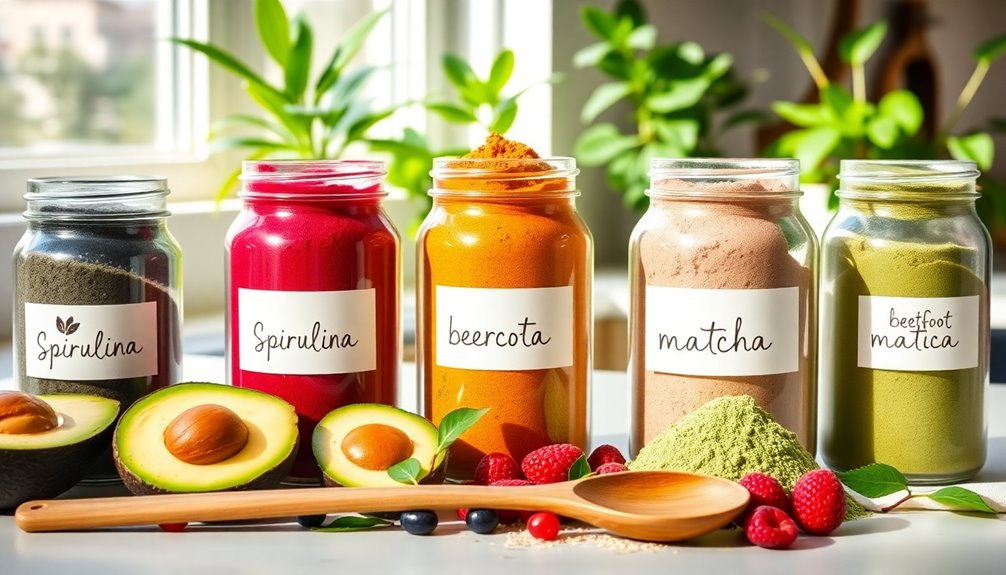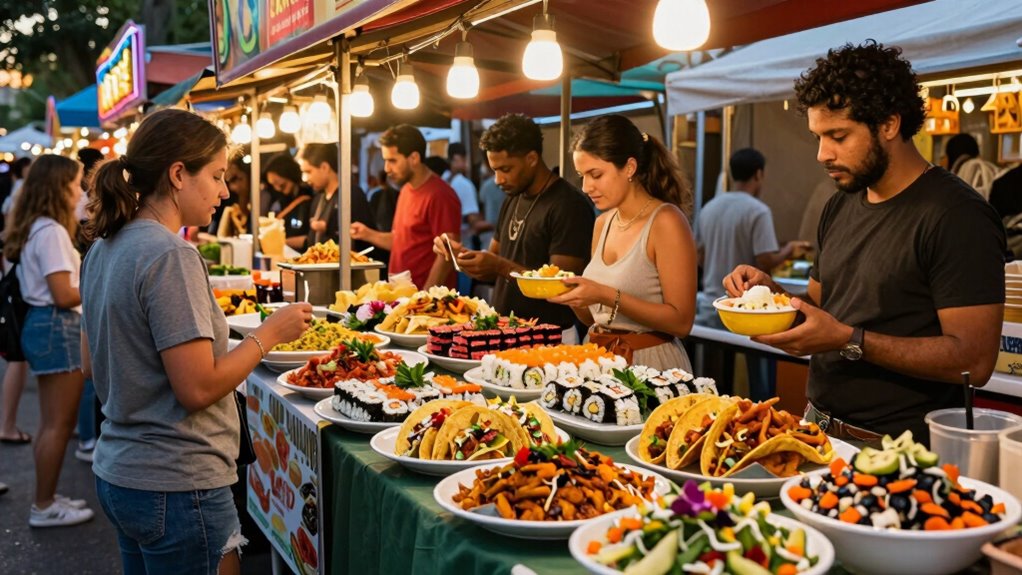

Thanks to globalization, digital media, and travel, your taste preferences are blending faster than ever. You can now easily explore and enjoy diverse culinary traditions from around the world, leading to exciting flavor combinations and fusion dishes. Chefs and home cooks experiment boldly, reflecting a cultural shift toward openness and innovation. As the global culinary exchange accelerates, your everyday dining experiences become more adventurous and inclusive. Keep exploring, and you’ll discover how these trends are transforming your food choices in fascinating ways.
Key Takeaways
- Globalization and digital media facilitate rapid sharing and adoption of diverse culinary ideas worldwide.
- Cross-cultural experimentation leads to innovative fusion dishes that quickly gain popularity.
- Travel and social platforms expose individuals to varied tastes, broadening personal palates swiftly.
- Digital connectivity accelerates the dissemination of new flavor combinations across borders.
- Cultural openness and shared creativity drive the continuous evolution of global taste preferences.
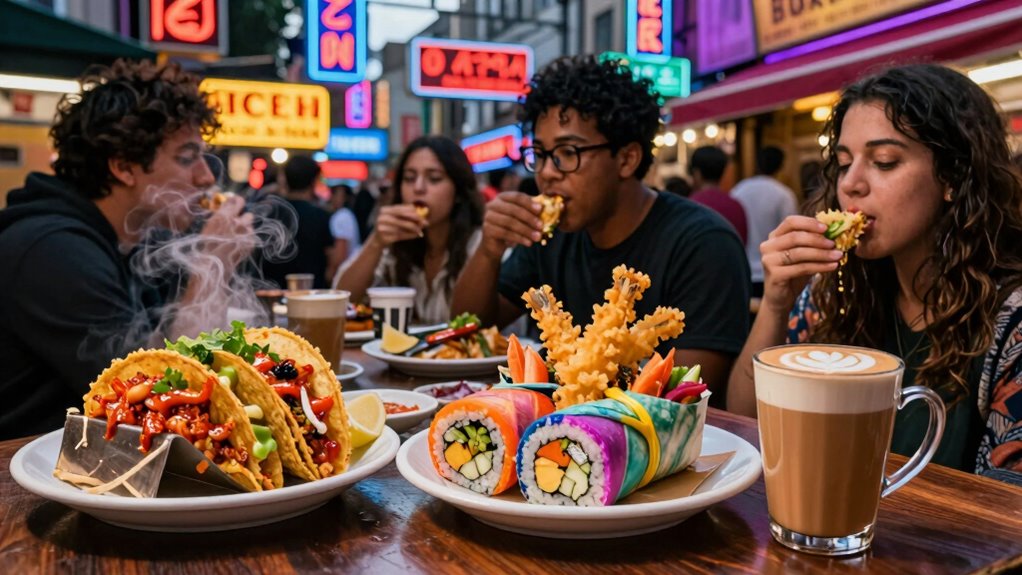
As the world becomes more interconnected, taste preferences across different cultures are blending at an unprecedented pace. This rapid convergence is driven by the ease of travel, globalized media, and the widespread use of social platforms, which expose you to a diverse array of culinary traditions. You might find yourself savoring spicy Thai dishes one day and enjoying Italian pasta the next, with each experience influenced by cultural influences that shape your palate. This blending isn’t just about trying new foods; it’s about how different culinary traditions interact, creating exciting new flavor combinations that weren’t possible before. You’re witnessing a culinary revolution where borders no longer define taste—ingredients, techniques, and ideas cross borders effortlessly, fueling culinary innovation.
Thanks to these cultural influences, chefs and home cooks alike are experimenting more boldly, mixing flavors from different parts of the world to craft dishes that reflect a globalized palate. For instance, you might see sushi topped with avocado and cream cheese, or tacos filled with Korean-inspired kimchi and spicy sauces. These innovations are a direct result of cultural influences meeting and merging, breaking down the barriers that once kept cuisines separate. The blending of flavors not only appeals to your adventurous side but also encourages a deeper appreciation for the diversity of cooking styles across the globe. It’s this openness to blending traditions that propels culinary innovation, making each dish a reflection of shared creativity and cultural exchange.
Culinary innovation thrives as chefs blend global flavors, creating dishes that celebrate cultural exchange and shared creativity.
You’re also part of this trend, as your food choices are more eclectic than ever. Whether you’re ordering fusion cuisine at a restaurant or experimenting in your own kitchen, you’re contributing to a dynamic culinary landscape where borders blur. This rapid blending accelerates the evolution of tastes and helps you discover new favorites that combine elements from different cultures. Additionally, the globalization of food has played a significant role in expanding the reach and accessibility of diverse ingredients and techniques, further fueling this culinary evolution. The spread of culinary ideas is facilitated by digital platforms, allowing innovative dishes to gain popularity quickly and reach a wider audience. A shared culinary experience has become more common as people worldwide embrace diverse flavors and cooking styles, creating a more inclusive food culture. Because of this interconnectedness, the global culinary exchange accelerates, making it easier for innovative dishes to gain popularity quickly.
Ultimately, this blending of taste preferences isn’t just about flavor; it reflects a broader cultural shift toward openness and shared experiences. You’re witnessing how culinary innovation, driven by cultural influences, is reshaping what and how you eat—making everyday dining a continuously evolving adventure.
As an affiliate, we earn on qualifying purchases.
Frequently Asked Questions
How Do Cultural Differences Influence Taste Preferences?
Cultural differences shape your taste preferences through cultural identity, influencing what flavors you favor. You might enjoy spicy foods due to your background or prefer milder tastes based on tradition. As you encounter global cuisine, flavor fusion becomes exciting, blending diverse elements into new experiences. This blending helps break down cultural barriers, making food a universal language that connects people and celebrates shared and unique tastes worldwide.
What Role Does Social Media Play in Flavor Trends?
Social media is a powerhouse in shaping flavor trends, almost like a global flavor tornado. You see viral challenges and flavor influencers spreading new tastes at lightning speed, making them irresistible. They create buzz around unique combinations, turning them into must-try experiences. As a result, social media accelerates the blending of global taste preferences, making it easier than ever for you to discover and enjoy diverse flavors from around the world in just a click.
Are There Health Concerns With Rapidly Blending Tastes?
Yes, there are health concerns with rapidly blending tastes. You might experience flavor fatigue, making you less satisfied with healthy options. Additionally, quick flavor innovations can disrupt nutritional balance if you’re drawn to overly processed or sugary foods. To stay healthy, you should focus on maintaining a balanced diet and be mindful of how diverse flavors influence your cravings and eating habits. Moderation is key to enjoying global tastes without compromising health.
How Do Local Cuisines Adapt to Global Influences?
You see local cuisines adapt through fusion trends and ingredient crossover, blending traditional flavors with global influences. You might notice chefs incorporating spices or techniques from other cultures, creating exciting new dishes that still honor their roots. This adaptation allows communities to stay relevant and innovative, embracing change while preserving identity. As tastes merge, you experience a richer culinary landscape where local and international flavors coexist, making every meal a unique cultural experience.
Which Regions Lead in Global Flavor Innovation?
You see regions like Asia and North America leading flavor innovation, where fusion cuisines blend traditional dishes with global influences. These areas ignite flavor evolution, creating exciting dishes that juxtapose familiar and exotic elements. Asian street foods incorporate Western spices, while North American chefs experiment with Mediterranean ingredients. Their bold innovation pushes global taste boundaries, inspiring others worldwide to embrace new flavors and accelerate the blending of culinary traditions.
Conclusion
You’re witnessing a culinary Renaissance where borders blur faster than a Vespa in Rome. As global taste preferences blend, your palate gets richer, more adventurous, and delightfully unpredictable. Imagine ordering a sushi burger or kimchi pizza and feeling right at home—just like your great-grandma’s Sunday roast, only with a modern twist. Embrace this flavorful chaos, and remember, in today’s world, your taste buds are the true explorers—no time machine needed. Bon appétit!