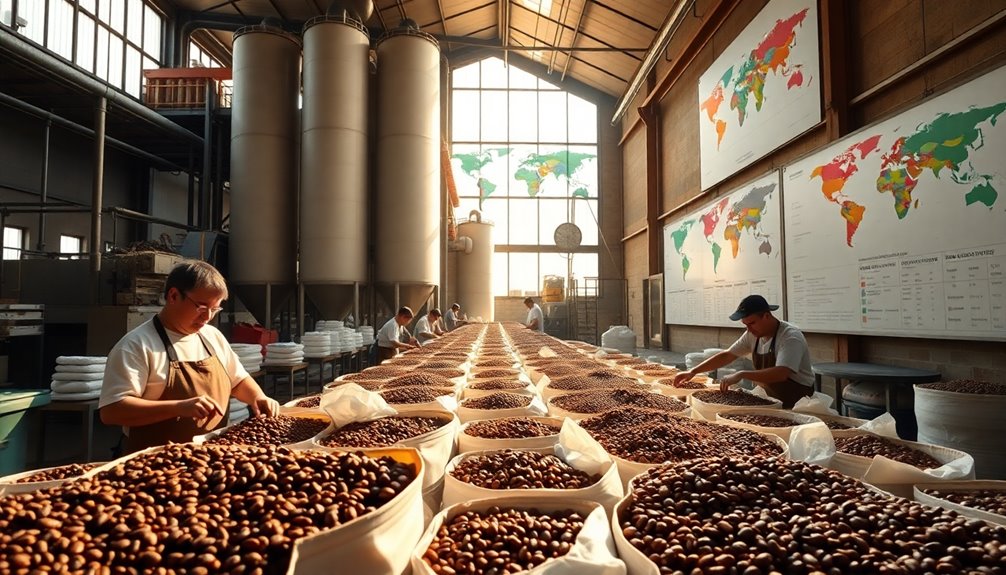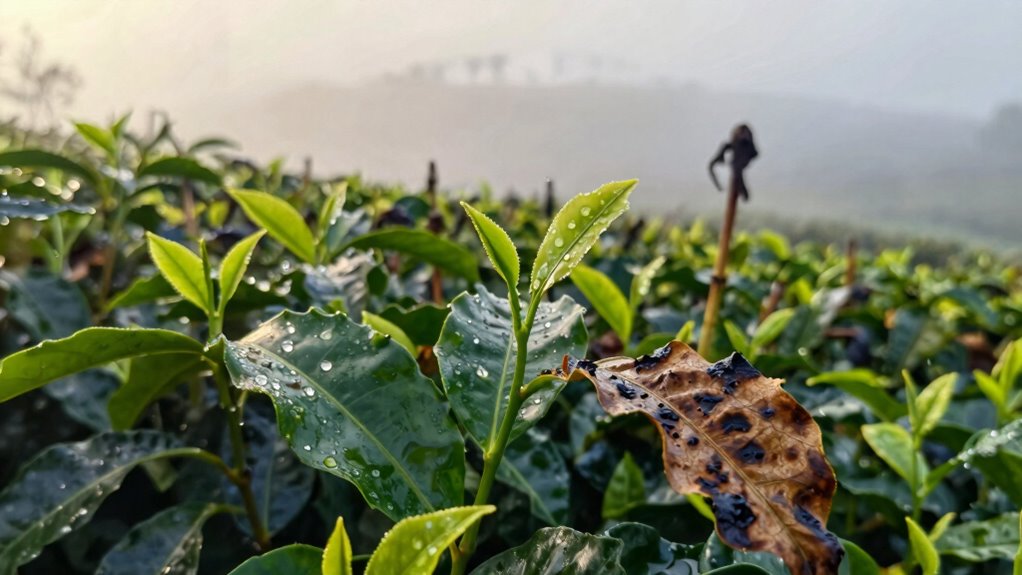

Climate pressure on tea and coffee crops means rising temperatures, unpredictable rainfall, and extreme weather events threaten their growth and survival. You’ll see reduced yields, shorter crop lifespans, and increased vulnerability to disease. Farmers need to adapt with sustainable practices, crop resilience strategies, and climate monitoring to protect their livelihoods. If you want to understand how these challenges can affect your favorite beverages and what solutions are emerging, keep exploring these important issues.
Key Takeaways
- Rising temperatures and unpredictable rainfall disrupt tea and coffee plant growth cycles.
- Extreme weather events cause crop damage, reducing yields and crop lifespan.
- Climate stressors require adaptation strategies to maintain crop quality and productivity.
- Changes in climate patterns increase pest and disease pressures on crops.
- Sustainable farming practices enhance resilience to climate-related shocks and ensure long-term viability.
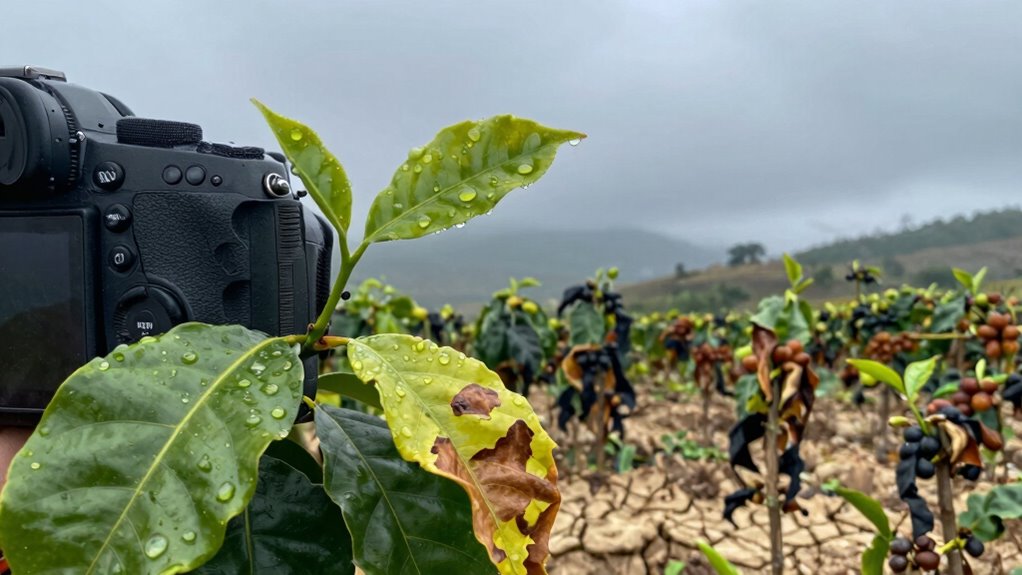
Climate change is increasingly threatening tea and coffee crops worldwide, forcing farmers to adapt quickly to shifting weather patterns. As temperatures rise and rainfall becomes unpredictable, the stability of these crops faces serious challenges. You might notice that traditional farming methods no longer suffice, pushing you to explore sustainable farming practices that can help mitigate these impacts. Implementing sustainable farming techniques isn’t just about environmental responsibility; it’s about guaranteeing your crops can withstand the changing climate and remain productive over time. These methods often involve soil conservation, water management, and reducing chemical inputs, all of which bolster your farm’s resilience to climate stressors. The goal is to create a system that can absorb shocks from extreme weather events and maintain productivity, which is vital for your livelihood.
Crop resilience becomes a key focus as you navigate these new conditions. You need to develop strategies that enhance your plants’ ability to cope with higher temperatures, irregular rainfall, and other climate-related stresses. This might mean choosing more resilient varieties or adjusting planting schedules to align better with weather patterns. Diversification can also play a pivotal role—growing different types of tea or coffee plants can spread risk and help stabilize your income if one crop suffers from drought or pests. Additionally, adopting agroforestry practices—integrating shade trees into your crop fields—can reduce temperature stress and improve microclimates, creating a more stable environment for your crops. Staying informed about climate data and weather forecasts can also help you plan more effectively. Moreover, understanding climate impacts on crop growth can help you anticipate and prepare for future challenges. Incorporating knowledge of climate-resilient varieties can further strengthen your farm’s ability to withstand weather fluctuations.
Adapting to climate pressure requires ongoing observation and flexibility. You’ll need to monitor weather trends and soil health closely, adjusting your practices accordingly. This proactive approach can improve your crop resilience and extend the lifespan of your farm’s productivity. Emphasizing sustainable farming isn’t just about protecting the environment; it’s about securing your future. By reducing reliance on harmful chemicals and conserving natural resources, you not only help the planet but also build a more resilient farm that can better withstand the unpredictable impacts of climate change. Integrating soil conservation techniques can also improve water retention and reduce erosion, which are critical under changing weather patterns. Ultimately, embracing these strategies guarantees that your tea and coffee crops remain viable and profitable, even as climate pressures intensify. It’s about taking control of your farm’s future in a changing world—adapting smartly and sustainably so your crops can thrive despite the challenges ahead.
As an affiliate, we earn on qualifying purchases.
Frequently Asked Questions
How Does Climate Change Affect the Flavor Profiles of Tea and Coffee?
Climate change causes flavor alteration in your tea and coffee by shifting temperature and rainfall patterns. These changes stress crops, impacting their resilience and leading to less predictable flavor profiles. Warmer temperatures can make beans and leaves ripen faster, often dulling complex notes. You might notice a loss of nuanced flavors, and producers will need to adapt crop resilience strategies to maintain desirable taste qualities while facing ongoing climate pressures.
Are There Regions More Resilient to Climate Pressure for These Crops?
You’ll find that some regions, like parts of Ethiopia and Colombia, show more resilience to climate pressure due to effective climate adaptation practices. Think of these areas as sturdy trees rooted deeply, resisting storms better. Regional resilience depends on local efforts to adapt and diversify crops, which helps safeguard tea and coffee crops against changing weather patterns. Embracing climate adaptation strategies can turn vulnerable fields into resilient landscapes.
What Technological Innovations Are Helping Mitigate Climate Impacts on Crops?
You can benefit from technological innovations like genetic engineering and precision agriculture to combat climate impacts on crops. Genetic engineering allows for developing resilient plant varieties that tolerate drought, pests, and temperature changes. Precision agriculture uses data and technology to optimize water, fertilizer, and pesticide use, reducing stress on crops. These tools help you adapt to climate pressures, ensuring healthier crops and more sustainable yields even as environmental conditions shift.
How Do Farmers Adapt Their Practices to Changing Climate Conditions?
You adapt your practices by implementing sustainable irrigation techniques to conserve water and improve crop resilience. You also diversify your crops to reduce risks from climate fluctuations, planting varieties better suited to new conditions. These strategies help you maintain productivity despite changing climate patterns, ensuring your crops remain viable. By staying flexible and adopting innovative methods, you protect your livelihood and contribute to a more sustainable farming future.
What Are the Long-Term Economic Impacts on Tea and Coffee Industries?
You’ll face long-term economic impacts on the tea and coffee industries, including market instability and disrupted supply chains. As climate pressures reduce crop yields, prices may rise, and consumer demand could decline. These shifts threaten industry profitability and employment. To stay resilient, you need to invest in sustainable practices, diversify production, and build stronger supply chains that can adapt to changing climate conditions and protect your economic future.
Conclusion
You might think that shifting climate patterns won’t affect your daily tea or coffee, but the truth is, they already are. Rising temperatures and unpredictable weather threaten crop yields and quality, challenging the very plants you rely on. It’s not just a theory—scientists have shown that climate change directly impacts these crops. So, understanding and addressing this pressure isn’t just for farmers; it’s essential for your future cup of tea or coffee.