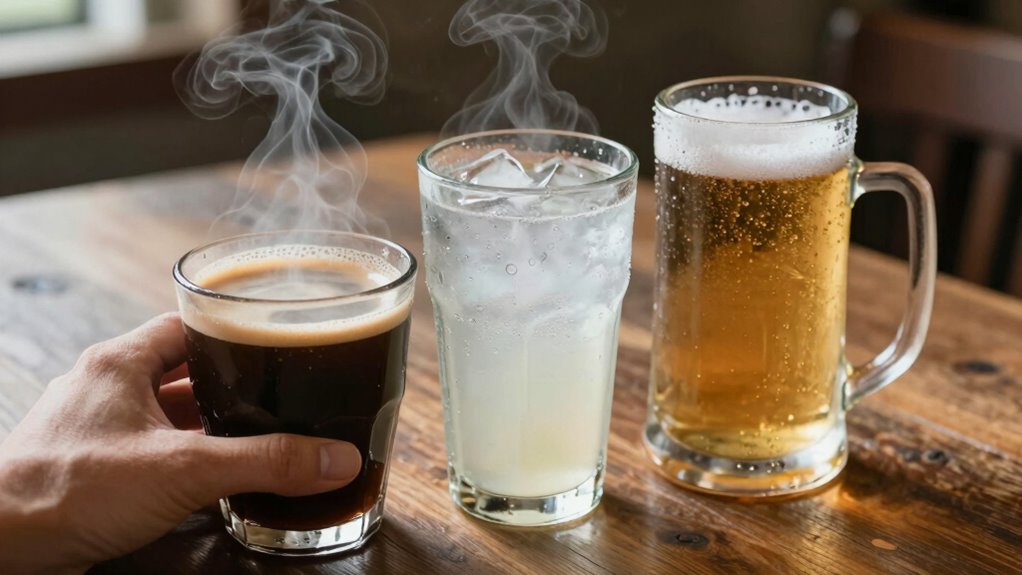

Your comfort and satisfaction from a beverage depend heavily on its temperature. Warm drinks release more aromatic compounds, making them feel more comforting and flavorful, perfect for relaxing moments. Cold beverages provide invigorating relief and crispness, ideal for hot days and energizing situations. The right temperature also enhances textures and influences mood, helping you match your drink to your environment and mood. Keep exploring to discover how adjusting temperatures can boost your overall beverage experience even further.

Get coffee and tea gear delivered free with Prime
- Fast, free delivery on millions of items
- Prime Video, Amazon Music and more included
- Member-only deals all year
Key Takeaways
- Warm beverages enhance aroma and flavor, increasing perceived comfort and satisfaction during relaxing moments.
- Cold drinks provide refreshing, crisp sensations, ideal for energizing and cooling down in hot environments.
- Temperature influences texture perception, making hot drinks feel richer and cold drinks feel lighter and more invigorating.
- Adjusting beverage temperature can match mood and occasion, optimizing sensory pleasure and overall enjoyment.
- Awareness of temperature effects helps tailor choices for improved comfort, satisfaction, and sensory experience.
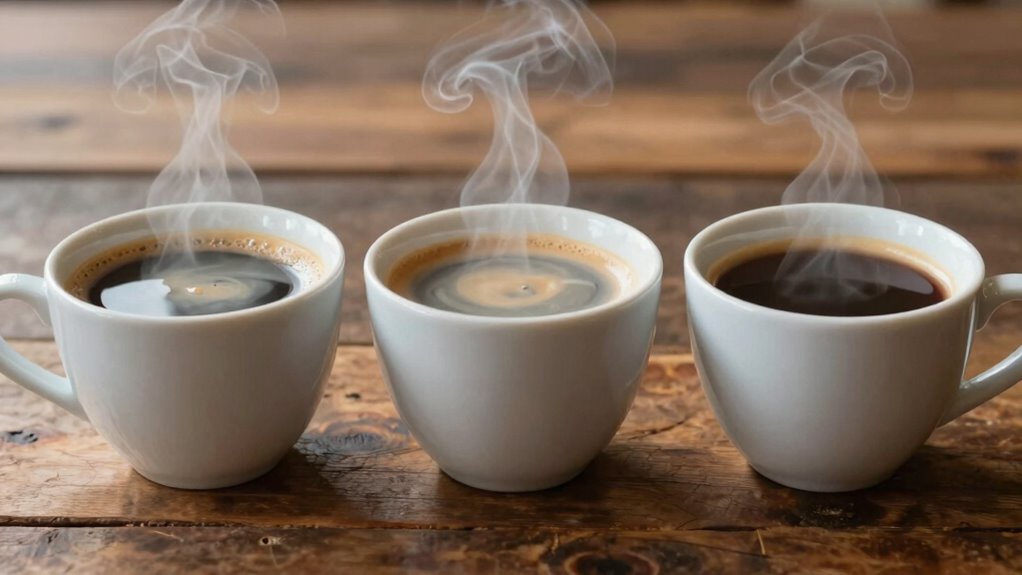
Have you ever wondered how the temperature of your beverage affects your comfort? The way your drink feels in your hands and on your palate plays a significant role in your overall experience. When you take a sip, the temperature influences more than just your immediate sensation—it impacts flavor enhancement and aroma perception, which are key to your satisfaction. A hot beverage, like coffee or tea, releases more aromatic compounds, filling your senses with a rich, inviting aroma. This heightened aroma perception can make the drink seem more flavorful and invigorating. The warmth also enhances the perception of certain flavors, such as the bitterness of coffee or the spiciness of chai, making each sip more intense and satisfying.
On the other hand, cold beverages bring their own benefits. When you enjoy a chilled soda or iced tea, the cooler temperature often suppresses some of the stronger aromas, which can be invigorating and less overwhelming on a hot day. The cold can dull certain flavors slightly, providing a more subtle taste that might appeal if you prefer a lighter experience. Cold drinks can also numb your taste buds temporarily, which might be desirable if you’re seeking relief from spiciness or acidity. Additionally, understanding the effects of temperature on taste can help you optimize your beverage experience for different occasions and improve your overall sensory enjoyment. For example, research on sensory perception indicates that temperature can significantly influence how we interpret flavors and aromas. The reduction in aroma perception means that the flavor profile isn’t as vivid as it would be at a warmer temperature. Still, for many, the crispness and *invigorating* quality of a cold beverage outweigh the loss of aroma intensity, especially when thirst is a priority. Moreover, awareness of sensory interactions can further enhance your ability to choose beverages that match your preferences and circumstances.
Cold drinks suppress aromas and flavors but offer a crisp, invigorating refreshment perfect for hot days or relief from spice.
You might notice that your enjoyment varies depending on the beverage’s temperature. For instance, a warm drink can evoke comfort and relaxation, making it perfect for winding down or cozy mornings. Conversely, a cold drink often energizes and cools you off, ideal for hot days or vigorous activity. Your personal preference is influenced by these sensory perceptions—flavor enhancement and aroma perception—shaping your overall satisfaction. The temperature also affects texture; a hot chocolate feels thick and velvety, while an iced version is often more crisp and light. These tactile differences, combined with aroma and flavor, mold your perception of quality and enjoyment. Additionally, understanding how temperature impacts taste can help you tailor your beverage choices to match your mood and environment, enhancing your overall experience.
Ultimately, understanding how beverage temperature influences your sensory experience helps you make better choices based on your mood, environment, and taste preferences. Whether you savor a steaming cup for its aroma-rich complexity or enjoy a chilled beverage for its *invigorating* simplicity, your comfort hinges on how these elements come together. Adjusting the temperature to match your desired experience can elevate your beverage enjoyment, making each sip more satisfying and tailored to your needs.
As an affiliate, we earn on qualifying purchases.
Frequently Asked Questions
How Does Temperature Influence Beverage Aroma Perception?
You notice that warmer beverages enhance aroma perception because heat accelerates aroma diffusion, making scents more intense and vibrant. As the temperature rises, scent molecules become more active, increasing scent intensity and enriching your sensory experience. Conversely, cooler drinks tend to suppress aroma diffusion, resulting in subtler scents. So, adjusting beverage temperature directly influences how strongly you perceive aroma, affecting your overall enjoyment and satisfaction.
Are Certain Beverage Types More Sensitive to Temperature Changes?
Yes, certain beverage types are more sensitive to temperature changes. Think of delicate teas or fine wines—these require precise beverage storage and temperature regulation to preserve flavor and aroma. When you neglect this, their subtle nuances fade, and satisfaction diminishes. Hot beverages like coffee or chocolate are more forgiving but still benefit from proper temperature control. Your attention to temperature ensures each sip delivers ideal comfort and enjoyment.
How Does Beverage Temperature Impact Oral Health or Tooth Sensitivity?
Hot or cold beverages can increase your oral sensitivity, especially if you have weakened tooth enamel. Cold drinks may cause discomfort or pain if you’re prone to tooth sensitivity, while hot beverages can worsen existing sensitivity or cause discomfort. Temperature extremes can weaken tooth enamel over time, making your teeth more vulnerable. To protect your oral health, opt for moderate temperatures and avoid sudden changes that challenge your tooth enamel.
What Is the Ideal Temperature for Maximum Flavor Extraction?
The ideal temperature for maximum flavor extraction is around 130°F to 160°F. At this range, flavor solubility peaks without burning your mouth, revealing richer, more nuanced tastes. Temperature thresholds beyond this can diminish subtle notes or cause bitterness. By carefully hitting this sweet spot, you access the beverage’s full potential, elevating your tasting experience and satisfying your senses with every sip.
Can Temperature Variations Affect Beverage Shelf Life or Safety?
Temperature variations can greatly impact your beverage’s shelf life and safety. If stored at improper temperatures, shelf stability decreases, and microbial growth accelerates, risking spoilage and potential health hazards. Keep beverages at recommended temperatures to inhibit microbial growth, maintain quality, and guarantee safety. Consistent storage conditions prevent spoilage, extend shelf life, and protect you from consuming unsafe products. Proper temperature control is essential for both safety and maintaining your beverage’s freshness.
Conclusion
As you lift that steaming cup, feel the warm steam kiss your fingertips and the rich aroma envelop your senses. Whether it’s the soothing heat of a hot cocoa or the cooling chill of iced tea, temperature shapes your experience, turning a simple drink into a comforting ritual. When you choose the right temperature, you craft a moment of pure satisfaction, a cozy retreat or a brisk rejuvenation, waiting to awaken your senses with every sip.
Halloween Picks
halloween
As an affiliate, we earn on qualifying purchases.