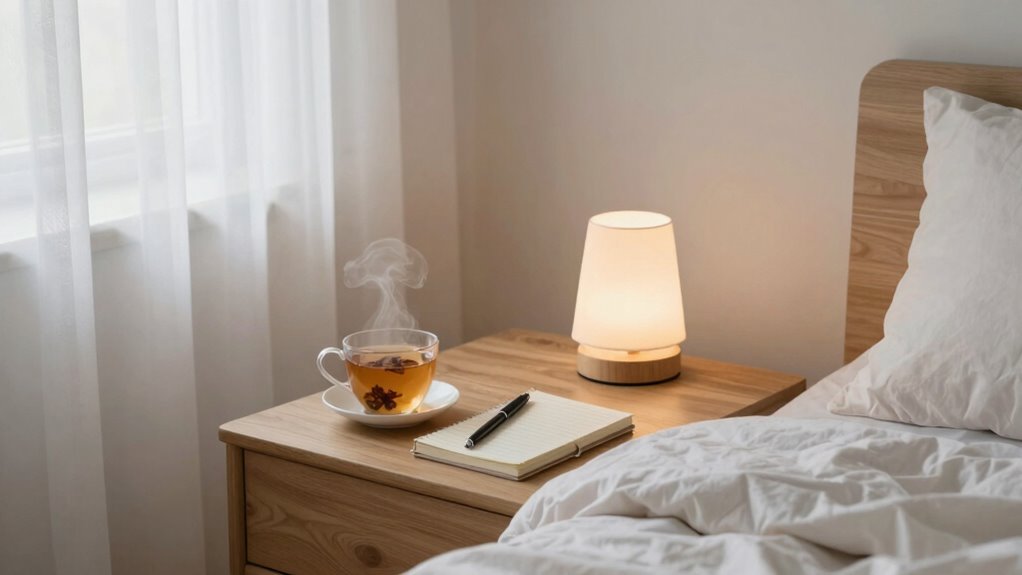
To build a lower-stimulation morning routine, start by creating a calm, quiet environment with gentle lighting and soothing sounds. Incorporate mindfulness practices like focused breathing or quiet observation, and include slow, deliberate stretches to wake your body gently. Avoid loud noises and bright lights to prevent overwhelm. Use calming textures and eco-friendly fabrics in your space to enhance relaxation. Keep your activities simple and intentional—if you want to learn more about designing a peaceful morning, keep exploring below.
Key Takeaways
- Start the day with a calm, low-stimulation routine that promotes focus and reduces overwhelm.
- Incorporate mindfulness practices like deep breathing and gentle observation to set a peaceful tone.
- Use slow, deliberate stretches combined with deep breaths to wake muscles gently.
- Create a soothing environment with soft lighting, calming sounds, and natural textures for sensory comfort.
- Minimize sudden noises and bright lights, and choose eco-friendly fabrics to support relaxation.

Starting your day with a low-stimulation routine can set a calm and focused tone, especially if you’re sensitive to noise or bright lights in the morning. This approach helps you ease into the day without feeling overwhelmed. To create this kind of routine, focus on simple, intentional activities that promote a sense of peace and clarity from the moment you wake up. Incorporating mindfulness practices can be a powerful way to start your day. Spend a few minutes sitting quietly, paying attention to your breath, or observing your surroundings without judgment. This helps you center yourself and develop a gentle awareness of the present moment, reducing anxiety and setting a peaceful tone.
In addition to mindfulness, gentle stretches can play a crucial role in lowering stimulation levels. When you wake up, avoid rushing into intense physical activity. Instead, perform slow, deliberate stretches that target key areas like your neck, shoulders, back, and legs. These gentle movements awaken your muscles without overstimulating your nervous system. Focus on breathing deeply as you stretch, coordinating your inhale and exhale to deepen your relaxation. This combination of mindful breathing and gentle stretching not only softens the transition from sleep to wakefulness but also enhances circulation and flexibility in a calm, controlled manner. Incorporating nature sounds can also help create a soothing environment that promotes tranquility and reduces sensory overload, especially when combined with calming sound masking techniques that block out sudden noises. Additionally, paying attention to the contrast ratio of your environment’s lighting can help you choose gentle lighting options that minimize sensory overload while supporting a peaceful awakening. Introducing sustainable textile technology into your space, such as using fabrics made with eco-friendly dyes or innovative fibers, can further enhance a calming atmosphere by reducing environmental impact and promoting comfort.
As an affiliate, we earn on qualifying purchases.
Frequently Asked Questions
Can a Lower-Stimulation Routine Improve Mental Health?
Yes, a lower-stimulation routine can improve your mental health by reducing sensory overload and promoting mental clarity. When you start your day calmly, you avoid overwhelming your senses, which helps you feel more centered and focused. This gentle approach can decrease stress and anxiety, making it easier to handle daily challenges. Over time, you’ll notice better mood stability and increased resilience, supporting overall mental well-being.
How Long Should a Lower-Stimulation Morning Routine Last?
A gentle dawn unfolds over your morning, so your routine should last about 20 to 30 minutes. During this time, embrace a gentle awakening, like the soft glow of sunrise, and incorporate mindful stretching to awaken your body and mind. This peaceful period acts as a quiet bridge, gently easing you into the day without overwhelming your senses, helping you start with calm and clarity.
Is a Lower-Stimulation Routine Suitable for Everyone?
A lower-stimulation morning routine isn’t suitable for everyone, especially if you thrive on high-energy starts. If you find that morning mindfulness helps you feel grounded and a sensory detox reduces overwhelm, then it could work well. However, if you need more stimulation to wake up, adapt your routine accordingly. Pay attention to how you feel during and after, and adjust to find what truly supports your best start.
What Are Some Common Mistakes to Avoid?
You should avoid rushing into your routine, as it defeats the calming purpose. Skipping meditation techniques or neglecting sensory deprivation can lead to overstimulation, making mornings chaotic. Don’t rely solely on technology; it often disrupts tranquility. Instead, focus on slow, mindful practices, and create a peaceful environment. By steering clear of these mistakes, you’ll foster a truly restful, lower-stimulation morning that prepares you gently for the day ahead.
How Can I Personalize My Routine Effectively?
To personalize your routine effectively, focus on routine customization that fits your preferences and energy levels. Use personalization techniques like choosing calming activities that you genuinely enjoy, whether meditation or gentle stretching. Adjust the timing and sequence to suit your habits, and include elements that bring you comfort. By tailoring your routine to your unique needs, you’ll find it easier to start your mornings peacefully and stay committed.
Conclusion
By simplifying your mornings, you create space for calm and clarity. By choosing low-stimulation activities, you ease into the day without overwhelm. By establishing a gentle routine, you nurture your well-being and set a positive tone. Remember, a lower-stimulation morning isn’t about doing less—it’s about doing what feels right. Embrace these mindful choices, and watch your mornings become a peaceful start, a grounded beginning, and a moment of intentional calm.