
Tea became part of hospitality across many cultures because it symbolizes respect, friendship, and shared moments. Different traditions, like Japanese tea ceremonies or Moroccan mint tea, emphasize care, attentiveness, and generosity, fostering genuine connections. These customs turn simple acts into meaningful rituals that welcome and honor guests. As you explore further, you’ll discover how tea’s universal language builds bonds and transforms social interactions worldwide.

Get coffee and tea gear delivered free — and shop member deals
- Fast, free delivery on millions of items
- Access to Prime Big Deal Days deals on October 6–7
- Prime Video, Amazon Music and more included
Key Takeaways
- Tea’s symbolic meaning of respect and friendship fostered its integration into social hospitality practices worldwide.
- Cultural rituals and ceremonies elevated tea serving into an art form, emphasizing care and attentiveness.
- Regional customs, like pouring techniques and specific preparations, reinforced tea’s role in welcoming guests.
- Sharing tea became a universal gesture of kindness, creating bonds and reinforcing social and cultural identities.
- Adaptations of tea rituals maintained core values of hospitality, making tea a symbol of warmth across diverse societies.
Have you ever wondered why tea holds such a special place in hospitality customs around the world? It’s not just about drinking a warm beverage; it’s about the rich traditions and social norms that surround it. Across many cultures, tea is woven into hospitality rituals, serving as a symbol of respect, friendship, and harmony. These ceremonies and rituals aren’t mere routines—they’re meaningful acts that foster connection and demonstrate care. When you’re welcomed into a home or a space where tea is offered, you’re invited into a tradition that emphasizes attentiveness and shared experience.
Tea traditions around the world symbolize respect, friendship, and shared moments that foster genuine connection.
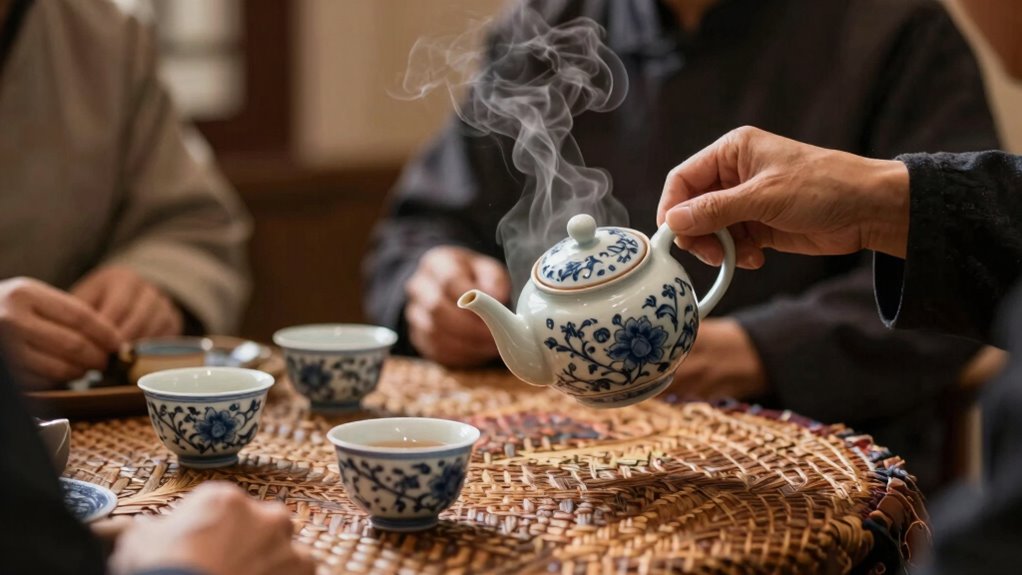
In countries like Japan, tea ceremonies are highly refined and deliberate, embodying centuries of cultural values. You might find yourself participating in a meticulously choreographed ritual where every movement, from preparing to serving, reflects mindfulness and reverence. This act isn’t just about the tea itself but about creating a moment of tranquility and respect. Such ceremonies elevate the act of serving tea into an art form, symbolizing hospitality’s deep regard for guests. Similarly, in China, tea is central to social interactions and formal occasions. The traditional gongfu tea ceremony emphasizes patience and skill, turning the simple act of preparing tea into a display of hospitality and cultural pride.
Across the Middle East and North Africa, serving tea often signifies warmth and generosity. Whether it’s mint tea in Morocco or black tea in Turkey, hospitality customs involve pouring tea with a flourish, often multiple times, to show abundance and attentiveness. These gestures create a welcoming atmosphere, making guests feel valued and relaxed. In Britain, afternoon tea became a social tradition that combines elegance with conviviality. Offering tea in this context signifies an invitation to unwind and engage in friendly conversation, turning an everyday act into a cherished custom.
In all these cultures, tea is more than just a drink; it’s a medium for human connection. The hospitality rituals surrounding tea serve as a universal language of kindness and respect. The significance of traditional ceremonies and the careful preparation involved highlight how integral tea is to expressing hospitality across different societies. Additionally, the meticulous process of preparing tea in many cultures reflects the importance placed on attentiveness and respect. The cultural symbolism of tea further demonstrates its role as a gesture of goodwill and social bonding. Interestingly, the visual and auditory cues involved in these rituals can enhance the experience by engaging multiple senses, making the act of sharing tea even more meaningful. It’s also noteworthy that the variety of teas used in different cultures can symbolize regional identity and history, enriching the ritual further. When you’re part of these rituals, whether as a guest or host, you participate in a centuries-old practice that celebrates community and shared moments. Over time, these customs have adapted but still hold onto their core purpose: creating a space where people feel welcome, appreciated, and at peace. That’s how tea became an essential part of hospitality in so many cultures—by turning simple acts into meaningful traditions that bring people closer together.
As an affiliate, we earn on qualifying purchases.
Frequently Asked Questions
How Did Tea Arrive in Different Cultures Historically?
You can see how tea arrived in different cultures through historical tea trade routes and cultural exchanges. Traders from China first introduced tea to Central Asia and the Middle East, spreading via the Silk Road. Later, European explorers and merchants brought tea to Europe, where it gained popularity. These exchanges fostered cultural adoption, making tea a cherished part of hospitality worldwide, blending traditions and creating lasting global connections.
Are There Specific Etiquette Rules for Serving Tea Worldwide?
Think of serving tea as conducting a delicate dance. In a tea ceremony, you follow specific serving etiquette to honor tradition and create harmony. For example, you often pour with both hands, serve from the right, and wait for the host or guest to begin. These rules vary by culture but always aim to show respect and mindfulness, turning a simple act into a meaningful ritual.
Which Cultures Have Unique Traditional Tea Preparations?
You’ll find unique traditional tea preparations in cultures like Japan, where the tea ceremony emphasizes mindfulness and ritual, and China, with its Gongfu tea method showcasing skill and precision. In Morocco, mint tea holds cultural significance, symbolizing hospitality. Each culture’s tea ceremony reflects deep cultural values, emphasizing respect, tradition, and community. These rituals highlight tea’s role in fostering connection and conveying cultural identity across the world.
How Has Modern Hospitality Influenced Traditional Tea Customs?
Like a gentle breeze reshaping a tranquil pond, modern hospitality influences traditional tea customs through contemporary tea trends. You see, the hospitality industry’s embrace of specialty teas, fusion flavors, and stylish presentation transforms age-old rituals into vibrant, social experiences. This blending of tradition and innovation invites you to savor tea in new ways, fostering connections and making ancient customs feel fresh and relevant amid today’s fast-paced, globalized world.
What Are the Health Benefits Associated With Tea in Hospitality?
You’ll find that tea in hospitality offers impressive health benefits, such as antioxidants that boost your immune system and improve focus. Participating in a traditional tea ceremony enhances relaxation and mental clarity. Serving tea demonstrates care for your guests’ well-being, fostering a calming atmosphere. Overall, incorporating tea into hospitality not only delights your guests but also promotes their health through its natural properties.
Conclusion
As you sip your tea, remember it’s more than just a drink; it’s a gentle bridge connecting hearts and cultures. Like a delicate dance, tea weaves its way through traditions, wrapping each moment in warmth and stories. Embrace this timeless ritual, letting it be your passport to understanding and friendship. In every cup, you find a quiet symphony of history and hospitality, inviting you to savor the world one sip at a time.
Evergreen bestsellers Picks
bestsellers
As an affiliate, we earn on qualifying purchases.