Even if your coffee smells amazing, it can taste hollow if the brewing process isn’t precise or if the beans are stale. Over- or under-extraction from incorrect grind size, temperature, or brew time can lead to flat flavors. Poor storage also causes aromatic compounds to diminish, reducing flavor complexity. When these factors aren’t managed well, your coffee might smell great but lack depth on the palate. Keep exploring to uncover how to preserve full, vibrant flavors every time.

Get coffee and tea gear delivered free — and shop member deals
- Fast, free delivery on millions of items
- Access to Prime Big Deal Days deals on October 6–7
- Prime Video, Amazon Music and more included
Key Takeaways
- Aroma loss during storage or brewing reduces flavor complexity, making coffee taste flat despite a good smell.
- Improper brewing techniques, like incorrect extraction time or grind size, lead to hollow, weak flavors.
- Over-extraction dulls flavors, while under-extraction results in a thin, hollow taste.
- Using suboptimal temperature during brewing can cause uneven extraction, diminishing flavor richness.
- Poor storage conditions cause aromatic compounds to degrade, impacting flavor even if the coffee smells appealing.

Have you ever noticed how your coffee smells incredible but tastes surprisingly flat or hollow? That’s a common experience, and it often boils down to flavor deterioration. Smell is powerful, and it can trick your senses into expecting a rich, complex taste that simply isn’t there. The aroma of fresh coffee beans is full of volatile compounds that release easily, but those same compounds can diminish during brewing or storage, leading to a less vibrant flavor. When you take a sip, you might find it lacking in the depth and brightness you’re craving, despite the enticing smell. This disconnect can be frustrating, but understanding how brewing techniques influence flavor deterioration is key to fixing it. Additionally, exposure to oxygen during storage can accelerate the loss of aromatic compounds, further diminishing flavor quality.
Your choice of brewing method plays a significant role. For instance, if you’re using a brewing technique that isn’t optimized for your beans, you’re likely to extract fewer of the desirable flavors and more of the bitter or flat elements. Over-extraction, caused by brewing too long or using too fine a grind, can lead to flavor deterioration, making your coffee taste dull. Conversely, under-extraction—using too little brew time or a coarse grind—may leave the coffee tasting weak or hollow, even if it smells strong. The consistency and precision of your brewing process are essential. Techniques like pour-over or AeroPress allow for more control over variables, helping you preserve the delicate flavors that contribute to a full-bodied taste. Proper brewing techniques are crucial for maintaining flavor integrity, especially when working with high-quality beans. Using a consistent grind size and paying attention to brewing time can help prevent flavor loss and enhance the overall taste. Moreover, understanding how extraction levels impact flavor can guide you in adjusting your method for better results.
Choosing the right brewing method ensures optimal flavor extraction and preserves your coffee’s vibrant aroma.
Additionally, the temperature at which you brew affects flavor preservation. If your water’s too hot or too cold, it can cause uneven extraction, resulting in flavor deterioration. Too hot, and you risk burning the coffee, which masks the nuanced notes. Too cold, and you won’t extract enough of the compounds that give coffee its complexity. The grind size also matters—too fine, and you might over-extract; too coarse, and you risk under-extraction. Even factors like the freshness of your beans and storage conditions influence how well those aromatic compounds hold up during brewing. Proper storage in an airtight container and away from light can help maintain aromatic compounds and preserve flavor integrity over time. Additionally, understanding the impact of brewing temperature on extraction and flavor can help you fine-tune your process for a more vibrant cup. Understanding how these factors interplay can help you develop a more consistent and flavorful brew.
coffee grinder with adjustable grind size
As an affiliate, we earn on qualifying purchases.
As an affiliate, we earn on qualifying purchases.
Frequently Asked Questions
Can Brewing Methods Affect Coffee’s Taste Quality?
Yes, brewing methods markedly affect your coffee’s taste quality. They influence flavor extraction by determining how evenly and thoroughly the coffee grounds release their flavors. If you’re inconsistent with your brewing technique, it can lead to a hollow or flat taste, even if the aroma is appealing. To improve, focus on maintaining brewing consistency and selecting methods that optimize flavor extraction, like pour-over or AeroPress, for a richer, more balanced cup.
Does Water Quality Impact Coffee Flavor?
Think of water as the silent artist behind your coffee’s flavor. If your water’s mineral content is off, it’s like trying to paint with the wrong palette—your brew suffers. Also, water temperature matters; too hot or cold, and the flavors won’t develop properly. Using clean, mineral-balanced water at the right temperature reveals your coffee’s true potential, ensuring each sip is rich, vibrant, and full of life.
How Does Coffee Storage Influence Taste?
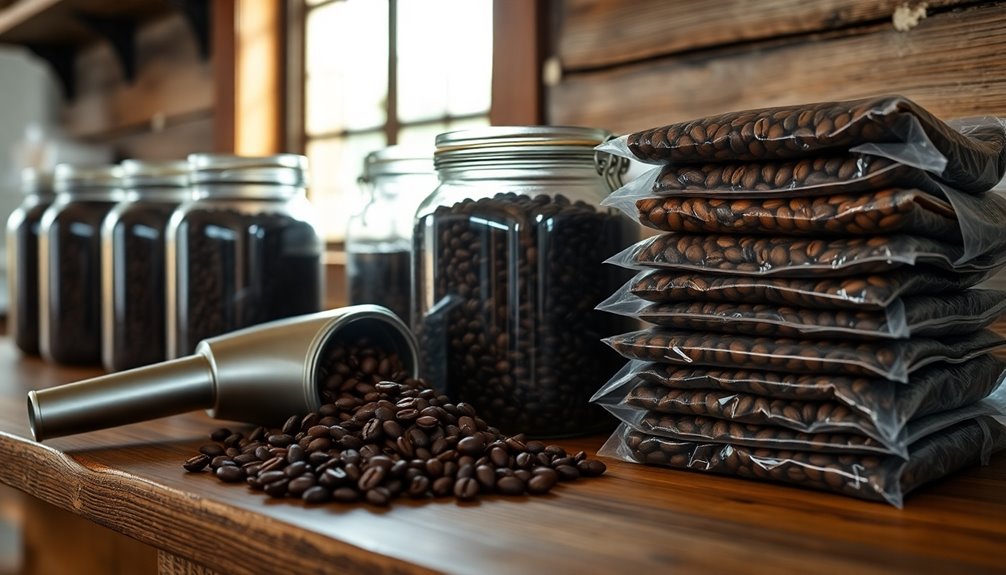
Your coffee’s taste is greatly influenced by how you store it. To preserve aroma and flavor, use airtight storage container options that keep out moisture, light, and air. Proper storage prevents staling and maintains freshness, ensuring each cup tastes as vibrant as it smells. Avoid clear containers and keep your coffee in a cool, dark place. This way, you enjoy rich, aromatic coffee every time.
Do Different Coffee Beans Taste Differently?
Yes, different coffee beans taste distinctly like a symphony of flavors. You’ll notice flavor consistency varies because each bean’s origin—whether from Ethiopia’s vibrant highlands or Colombia’s lush valleys—imparts unique notes. Think of beans as musical instruments, each playing its own tune. When you select beans from different origins, you’re savoring an array of tastes, aromas, and textures, turning every cup into a new adventure for your palate.
Can Roast Level Change the Perceived Flavor?
Yes, roast level can definitely change your perceived flavor. A darker roast tends to mute some of the original bean flavors, making the coffee taste more bitter or smoky, while a lighter roast preserves the bean’s unique characteristics. Consistent roast levels help maintain flavor perception, so if your roast isn’t uniform, your coffee might taste hollow or inconsistent despite smelling great. Roast consistency is key to achieving the flavor profile you enjoy.
Conclusion
So, next time you’re captivated by that irresistible coffee aroma, remember—smelling greatness doesn’t guarantee a flavorful sip. It’s ironic how something can smell like a dream but taste like an empty promise. You chase the scent, only to find your taste buds let you down. Keep in mind, a rich aroma isn’t a guarantee of a satisfying flavor. Sometimes, what’s hidden beneath that tempting smell is a hollow cup of disappointment.
Fall Picks
fall essentials
As an affiliate, we earn on qualifying purchases.