To improve French press clarity, start by gently stirring the grounds after brewing to guarantee even extraction without releasing too many fines. Before pouring, skim off any surface foam or floating particles with a spoon or sieve. Use a fine mesh filter or sieve during pouring to catch remaining fines. These simple steps reduce sediment and enhance clarity, resulting in a cleaner, more refined cup. Keep exploring to discover more tips for a crystal-clear brew.

Get coffee and tea gear delivered free with Prime
- Fast, free delivery on millions of items
- Prime Video, Amazon Music and more included
- Member-only deals all year
Key Takeaways
- Gently stir the coffee after brewing to promote even extraction and reduce fines that cause cloudiness.
- Skim surface foam and floating grounds with a spoon or sieve to prevent sediment from entering the cup.
- Use a fine mesh sieve or coffee filter during pouring to catch remaining fines and improve clarity.
- Maintain brewing temperature within 195°F to 205°F to balance extraction and minimize sediment release.
- Grind coffee coarsely and avoid over-agitation to reduce fine particles that cloud the brew.
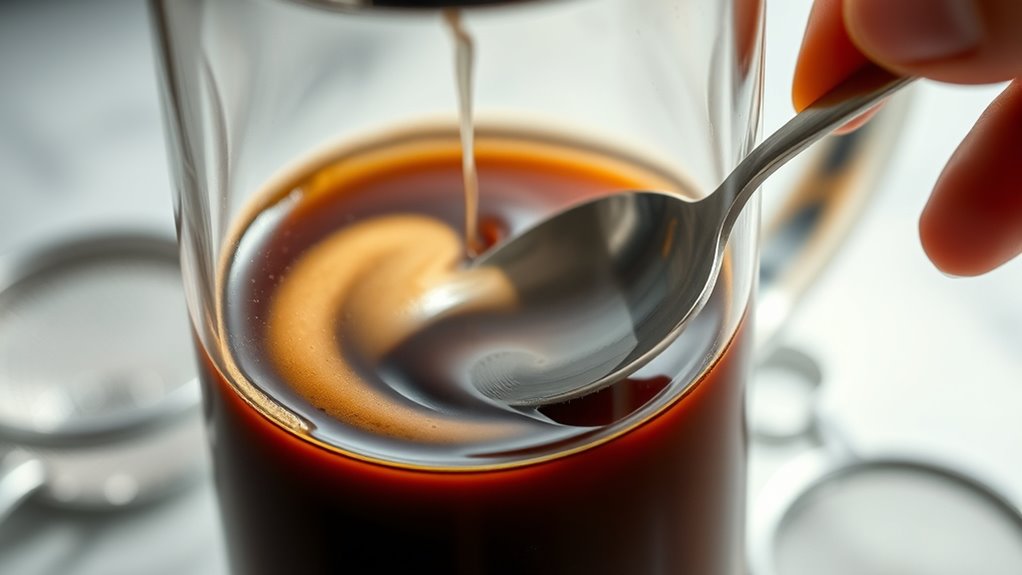
Achieving clarity in French press coffee is all about understanding how the brewing process affects the final cup. One of the main factors influencing clarity is the presence of coffee sediment, which can make your brew look cloudy and gritty. To minimize this, you need to pay close attention to your brewing temperature and how you handle the coffee grounds. Using water that’s too hot can cause excessive extraction, leading to more sediment and a murky appearance. Conversely, too cool water might under-extract, resulting in a weak flavor. Aim for a temperature around 195°F to 205°F (90°C to 96°C) to strike the right balance. This temperature range helps dissolve the coffee oils and flavors without overly releasing fine particles that contribute to sediment.
Optimal French press clarity relies on controlling brewing temperature to minimize sediment and achieve a smooth, clean cup.
The brewing temperature directly impacts how much sediment ends up in your cup. When water is too hot, it can cause the coffee grounds to break down faster, releasing tiny particles that seep through the mesh filter. This creates that unwanted cloudiness and grit. To improve clarity, experiment with slightly lower temperatures within the ideal range, ensuring you still extract enough flavor. Additionally, the grind size plays a role—using a coarse grind helps prevent fine particles from passing through the mesh filter, reducing sediment and resulting in a cleaner cup.
Beyond temperature and grind size, stirring during the brewing process can influence clarity. Gentle stirring helps evenly saturate the grounds, encouraging uniform extraction. However, vigorous stirring can disturb the grounds and cause more fines to loosen, increasing sediment in your brew. After the brewing time, use a spoon or a stirrer to gently mix the mixture, then let it sit for a moment before pressing. This allows fines to settle slightly, making the pouring process cleaner.
Once you’ve brewed your coffee, the next step is skimming off any foam or floating grounds that may have risen to the surface. These can contribute to a cloudy appearance and affect overall clarity. Use a spoon or a small sieve to carefully remove these surface particles before pouring. For an extra step, sieve your coffee through a fine mesh or a coffee filter as you pour into your cup. This extra step helps catch any remaining fines that slipped through, ensuring a clearer, more refined cup.
As an affiliate, we earn on qualifying purchases.
Frequently Asked Questions
How Does Water Temperature Affect Clarity in French Press Coffee?
You’ll notice that water temperature greatly impacts clarity in French press coffee. When you use hotter water, the extraction rate speeds up, releasing more oils and fine particles, which can cloud your brew. Cooler water slows extraction, resulting in a cleaner, brighter cup with better clarity. To get the best balance, aim for water around 195-205°F, ensuring you control the extraction rate for a clearer, more refined French press coffee.
Can Different Coffee Bean Types Influence the Clarity of the Brew?
Yes, different coffee bean varieties and roasting levels can influence your brew’s clarity. Lighter roasts tend to produce a cleaner, brighter cup, enhancing clarity, while darker roasts might result in a muddier appearance. Bean variety also matters; some beans naturally yield clearer brews due to their oil content and structure. Experimenting with different beans and roast levels helps you find the perfect balance for a crisp, transparent French press coffee.
What Is the Ideal Steeping Time for Maximum Clarity?
You might find that the ideal steeping time for maximum clarity is around 4 minutes, but it really depends on your brewing duration and personal taste. Too short, and you miss out on full extraction; too long, and the brew becomes cloudy. Steeping perfection requires a careful balance, so experiment within 3 to 5 minutes to discover what produces the clearest, most flavorful coffee for you.
How Do Grind Size Variations Impact the Filtration Process?
Grind size variations substantially impact your filtration process. If your grind isn’t consistent, smaller particles can slip through the filter mesh, causing cloudiness and sediment. Using a uniform, medium-coarse grind helps guarantee that particles stay suspended during steeping and are effectively caught by the filter mesh, resulting in clearer coffee. Adjusting your grind size for ideal consistency allows for smoother filtration and better overall clarity in your French press brew.
Are There Specific Cleaning Techniques to Improve Clarity Over Time?
Think of your French press as a garden that needs regular tending. To improve clarity over time, you should establish cleaning routines that target residue buildup. Rinse thoroughly after each use, disassemble and scrub the plunger and mesh screen, and occasionally soak parts in vinegar to dissolve stubborn deposits. These steps keep your press pristine, ensuring your brew remains clear and flavorful, like a crystal lake reflecting the morning sun.
Conclusion
Just as Da Vinci meticulously refined his masterpieces, your careful attention to stirring, skimming, and sieving elevates your French press brew to artful clarity. By embracing these simple steps, you open a cup that’s as pure and precise as a well-composed symphony. Remember, patience and finesse turn everyday coffee into an experience worthy of the masters. So, take these small steps with purpose, and savor the elegance of your perfectly clear brew.
Halloween Picks
halloween
As an affiliate, we earn on qualifying purchases.