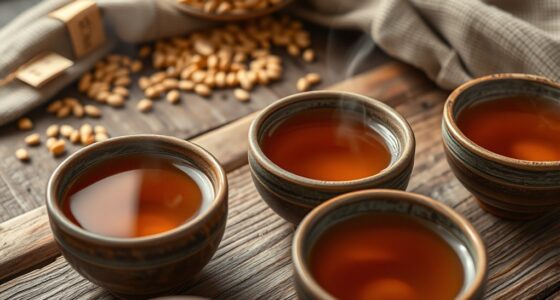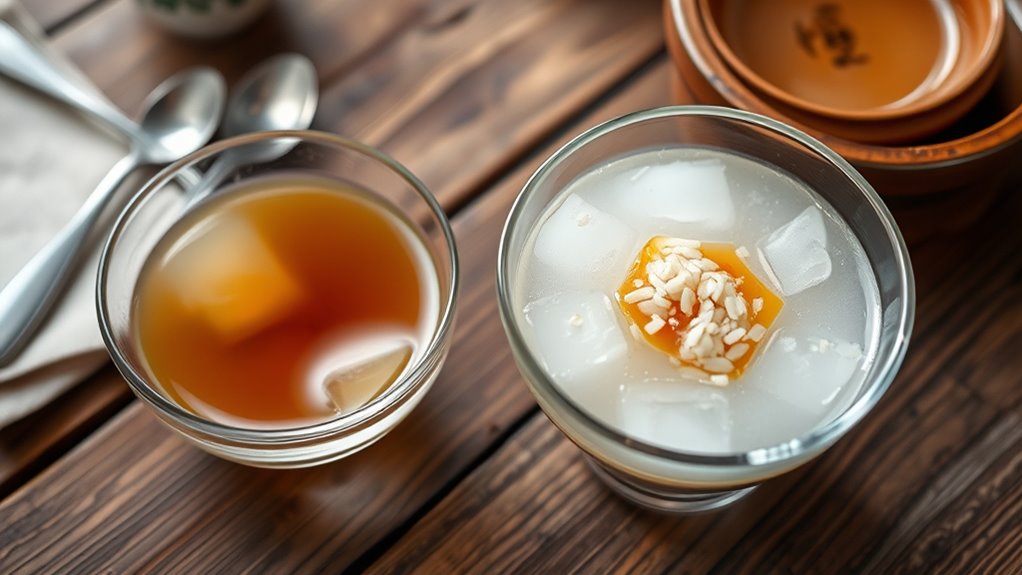

Sikhye and similar sweet rice drinks are deeply rooted in Korean traditions, symbolizing good fortune, health, and hospitality. You’ll find them enjoyed during festivals, family gatherings, and special celebrations, where sharing these drinks fosters community bonds. These beverages represent Korea’s rich cultural history and culinary heritage, crafted through fermentation to enhance flavor and health benefits. Exploring further reveals how these drinks continue to preserve Korea’s cultural identity and social practices across generations.
Key Takeaways
- Sikhye and similar sweet rice drinks are deeply rooted in Korean cultural traditions, symbolizing good fortune and health.
- They are traditionally prepared through fermentation of rice or malted barley, creating flavors and gentle effervescence.
- These beverages are integral to Korean festivals, celebrations, and rituals, fostering social bonds and cultural continuity.
- Rich in probiotics, they promote digestion and are viewed as wholesome, healthful remedies in Korean society.
- Serving and sharing these drinks preserve culinary heritage and reinforce Korea’s cultural identity through generations.
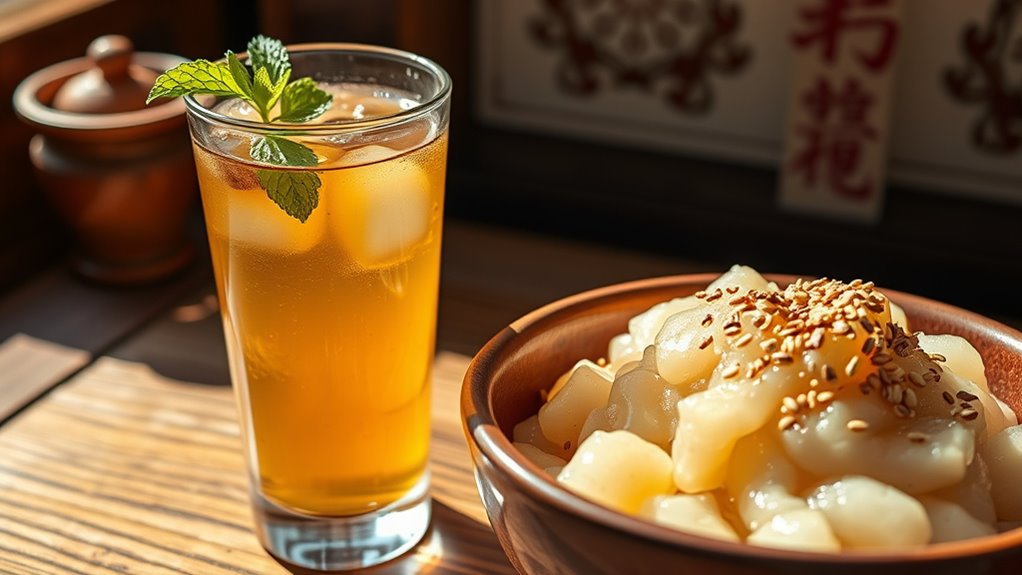
Sikhye and other sweet rice drinks have long been cherished as traditional beverages that combine delicate flavors with cultural significance. These drinks are more than just invigorating treats; they embody centuries of Korean history, customs, and social practices. When you enjoy a sip of sikhye, you’re participating in a tradition that has been passed down through generations, often served during festivals, celebrations, and special gatherings. The unique taste and texture of these drinks are rooted in their intricate preparation, particularly the fermentation process, which transforms simple ingredients into complex, flavorful beverages.
Cherished Korean tradition: sikhye’s delicate flavor reflects centuries of history and cultural celebration.
The fermentation process is central to creating authentic sikhye. It involves fermenting cooked rice or malted barley, allowing natural yeasts and bacteria to break down starches into sugars. This natural fermentation not only develops the drink’s signature sweetness but also gives it a slightly tangy undertone. As the process progresses, the drink gains depth, flavor, and a gentle effervescence that makes each sip lively. This method of fermentation has been refined over centuries, ensuring that sikhye remains a flavorful and nutritious beverage. It’s also why sikhye is considered a probiotic-rich drink, promoting digestion and gut health, which adds to its cultural importance as a wholesome, traditional remedy.
Culturally, sikhye and similar sweet rice drinks hold a special place in Korean society. They are often associated with rituals and celebrations, symbolizing good fortune, health, and hospitality. Serving sikhye during the Lunar New Year or ancestral rites signifies respect and a wish for prosperity. During festivals, families and communities gather around, sharing these drinks as a gesture of unity and tradition. The preparation itself can be a communal activity, with recipes handed down from older generations, preserving cultural identity. Beyond its symbolic significance, sikhye also fosters social bonds, bringing people together to enjoy a shared piece of their heritage.
In essence, when you partake in drinking sikhye or similar sweet rice beverages, you’re not just tasting a sweet, revitalizing drink; you’re engaging with a rich cultural tapestry. The fermentation process that creates its distinctive flavor links you to history and tradition, while its role in Korean celebrations underscores its importance beyond mere refreshment. These drinks serve as a delicious reminder of Korea’s culinary heritage, embodying the harmony of flavor, health, and cultural pride in every glass you enjoy.

Korean Sikhye Sweet Rice Drink, Traditional Korean Rice Punch Beverage, 1.9 qt Large Bottle, Made in Korea, Best Served Chilled, Jjimjilbang Style Dessert Drink
Traditional Korean Sweet Rice Drink: Enjoy Sikhye, a classic Korean rice drink made with rice and malt for…
As an affiliate, we earn on qualifying purchases.
As an affiliate, we earn on qualifying purchases.
Frequently Asked Questions
What Are the Health Benefits of Sikhye and Sweet Rice Drinks?
You’ll find that sikhye and sweet rice drinks boost your digestive health, thanks to their natural enzymes and probiotics. They also contain antioxidant properties that help fight free radicals, supporting overall health. Drinking these beverages can soothe your stomach after a heavy meal and provide a gentle, invigorating way to enhance your wellness. Incorporating them into your diet offers both enjoyment and benefits for your digestive and immune systems.
How Is Sikhye Traditionally Prepared at Home?
Think of it as brewing a family secret. You begin by soaking cooked rice, then add traditional ingredients like malted barley or nuruk for the fermentation process. Let it sit at room temperature for a few hours or overnight, allowing natural enzymes to convert starches into sugars. Strain the mixture, add a touch of sugar and ginger, and chill. Now, you’ve crafted a sweet, bubbly sikhye right in your home.
Are There Regional Variations of Sweet Rice Drinks in Korea?
Yes, there are regional variations of sweet rice drinks across Korea. You might notice different flavor variations and regional ingredients, such as local herbs, fruits, or sweeteners, which influence the taste. In some areas, they add ingredients like ginseng or ginger for a unique twist. These variations reflect local tastes and traditions, making each version distinct and special to its region.
Can Sikhye Be Made Suitable for Vegans or Those With Allergies?
Yes, you can make sikhye suitable for vegans or those with allergies by using vegan substitutions and allergy-friendly ingredients. Replace traditional malted barley malt with rice malt or gluten-free alternatives, and avoid using any animal-derived additives. Opt for plant-based sweeteners like maple syrup or agave nectar, and guarantee all ingredients are free from common allergens. This way, everyone can enjoy this traditional Korean drink safely.
How Do Sikhye and Sweet Rice Drinks Compare to Similar Beverages Worldwide?
You’ll notice that sikhye and sweet rice drinks stand out through fermentation processes and unique flavor profiles. Compared to beverages worldwide, they offer a sweet, mildly tangy taste with a smooth, rice-based texture. While some drinks focus on fruitiness or carbonation, these Korean drinks emphasize natural fermentation, creating a balance of sweetness and subtle sourness. They’re distinct, revitalizing options that highlight traditional methods and cultural flavors.

Amazake All-Natural Fermented Rice Koji Drink, no added sugar, non-alcoholic rice milk.
Made in Japan. FSC-certified packaging.
As an affiliate, we earn on qualifying purchases.
As an affiliate, we earn on qualifying purchases.
Conclusion
You’ve just discovered how deeply rooted sikhye and sweet rice drinks are in Korean tradition, enjoyed during festivals and special occasions. notably, Korea consumes over 10 million liters of sikhye annually, highlighting its cultural significance. Next time you sip this sweet, fermented beverage, remember you’re tasting a centuries-old tradition that brings people together. These drinks aren’t just treats—they’re a delicious link to Korea’s rich history and vibrant celebrations.

TEAZEN Yogurt Flavored Kombucha Powder, Hydration Drink Mix, Sugar Free, Live Probiotics & Prebiotics, On-the-Go 10 Packets, 1.76oz
KOREA'S NO.1 KOMBUCHA BRAND : As the pioneer of kombucha powder in Korea, TEAZEN has become a globally…
As an affiliate, we earn on qualifying purchases.
As an affiliate, we earn on qualifying purchases.

Korean Covenienve Store Drink Pouch Sampler Set – 5 PACK 10 PACK (mango, watermelon, blue lemonade, peach ice tea, shine muscat) + dalgaru yakgwa mirror (ADE 10 PACK)
JUST ADD ICE : Chill & add to an ice cup to instantly enjoy.
As an affiliate, we earn on qualifying purchases.
As an affiliate, we earn on qualifying purchases.