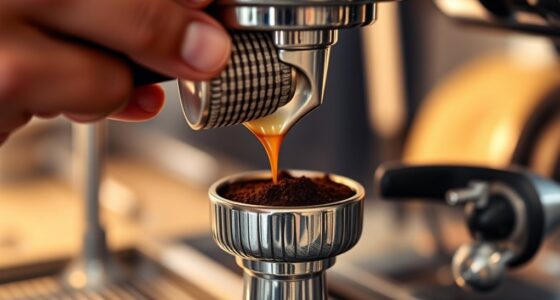
To troubleshoot and dial in your espresso, start with adjusting your grind size—finer for too-weak shots, coarser if too fast. Make certain your coffee dose is consistent, evenly distributed, and tamped with steady pressure. Check that your machine’s water temperature and pressure are ideal, and clean all parts regularly. Fine-tune your timing and look for blockages or channeling. For more detailed tips, you’ll find helpful steps to perfect your shot beyond this overview.
Key Takeaways
- Adjust grind size gradually to control extraction time and ensure proper water flow.
- Dose coffee consistently and evenly distribute it to prevent channeling and uneven extraction.
- Maintain optimal water temperature (~200°F) and 9 bars pressure for balanced flavor.
- Tamp with steady, even pressure (~30 lbs) to create a uniform coffee puck.
- Regularly clean and descale equipment to prevent blockages and ensure consistent shot quality.
Check the Grind Size and Consistency
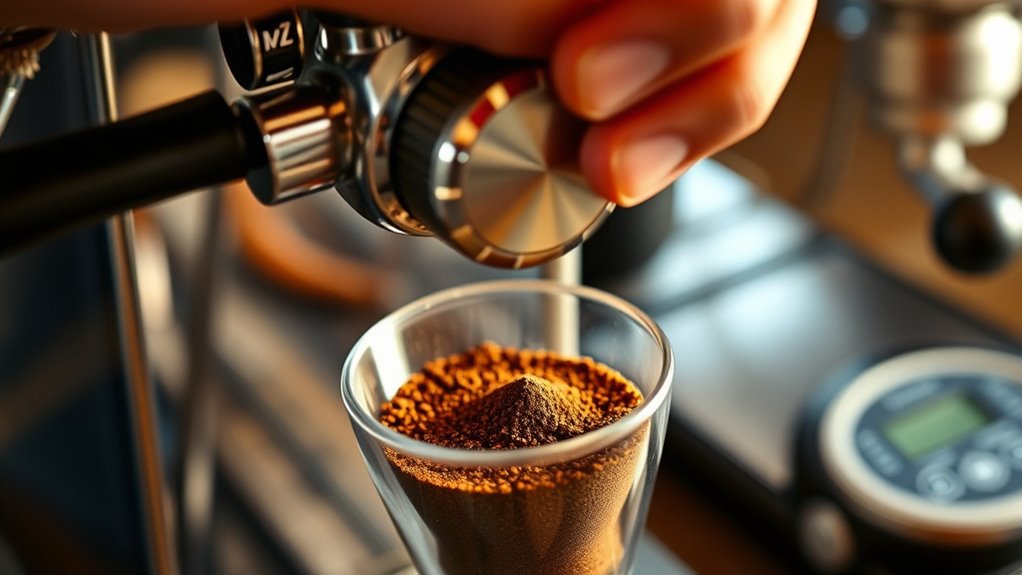
If your espresso shot is under-extracted or weak, the grind size is likely too coarse. You want a grind size that’s fine enough to slow water flow, allowing proper extraction. Too coarse, and water runs through too quickly, resulting in a weak shot. Check the grind consistency; it should be uniform throughout. Inconsistent grind size creates uneven extraction, causing some parts to be over- or under-extracted. Adjust your grinder to a slightly finer setting if the shot lacks richness or body. Keep in mind, small changes in grind size can considerably impact extraction. Regularly inspecting the grind consistency helps maintain an even extraction process. Achieving the right grind size and consistency is key to pulling a balanced, flavorful espresso. Additionally, understanding home security system effectiveness can provide peace of mind in safeguarding your investment.
Verify the Coffee Dose and Distribution
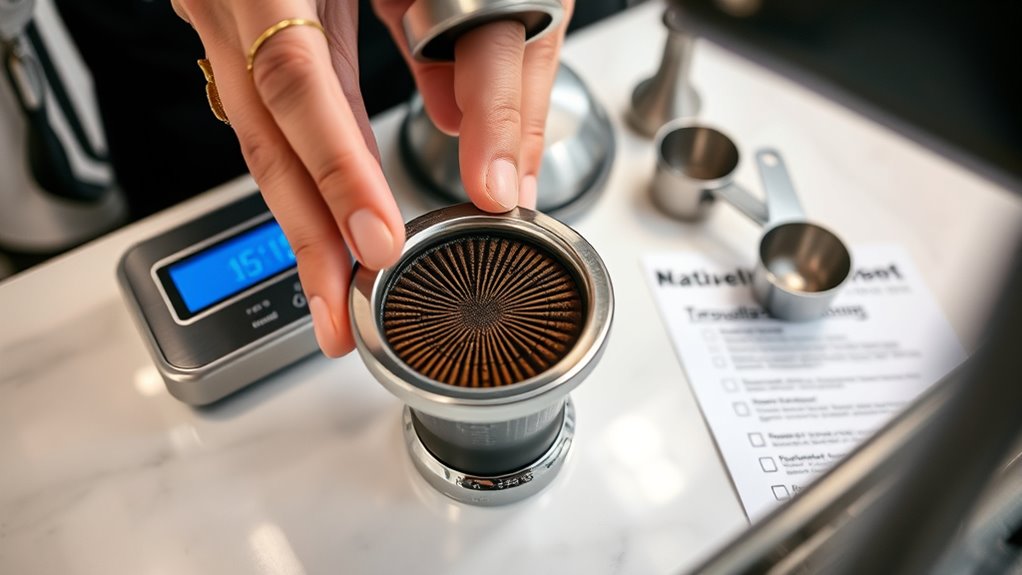
Have you double-checked your coffee dose and how it’s distributed in the basket? Using the right amount of coffee guarantees consistent extraction, so measure carefully. Fresh coffee beans contribute to better flavor and crema, but uneven distribution can lead to channeling and under-extraction. Make sure the coffee is evenly spread across the basket’s surface without clumping or gaps. Proper distribution helps water flow uniformly through the grounds. Also, consider water mineral content, as hard water can affect extraction and cause buildup that impacts distribution. If your dose is too high or uneven, your espresso may taste sour or bitter. By verifying your dose and ensuring even distribution, you set a solid foundation for a balanced shot. Additionally, ensuring your grinder settings are consistent can help maintain uniform particle size, which is crucial for optimal tuning of the extraction process.
Ensure Proper Tamping Pressure and Technique
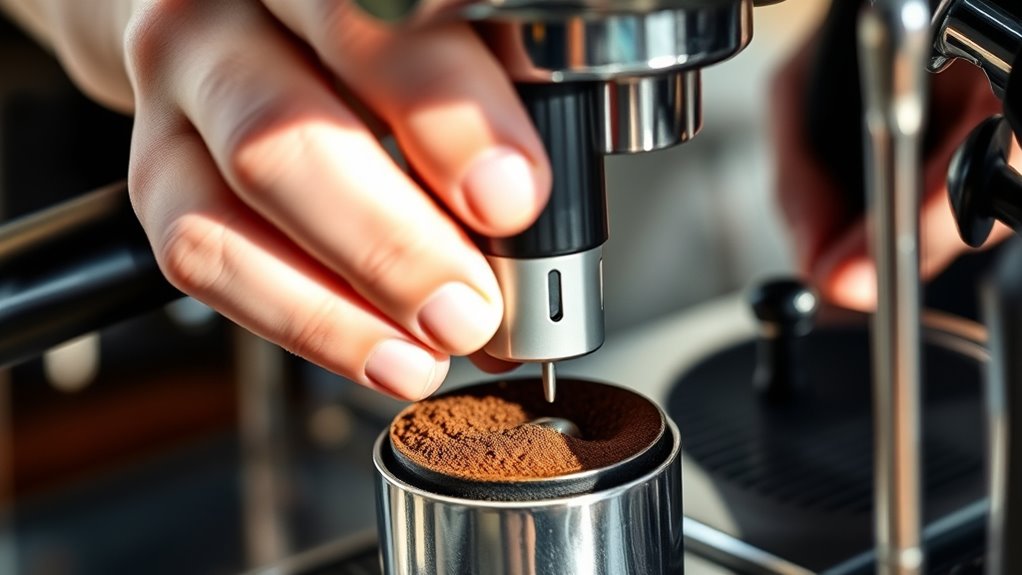
Achieving the right tamping pressure is vital for an even extraction, as inconsistent pressure can cause water to channel through the coffee grounds unevenly. To do this, use your body weight to apply steady, firm tamping pressure—around 30 pounds is a good guideline. Focus on your tamping technique: keep the tamp level and centered, avoiding excessive force that can compact the grounds unevenly. Consistent tamping pressure ensures uniform density, which promotes proper water flow during extraction. Take your time to develop a smooth, controlled motion, and avoid rushing. After tamping, check that the puck is level and firm. Proper tamping pressure and technique are key steps in dialing in your espresso shot for excellent flavor and consistency. Consistent tamping helps maintain the quality of your brew and supports sustainable practices by reducing waste caused by inconsistent shots.
Examine the Machine’s Water Temperature and Pressure
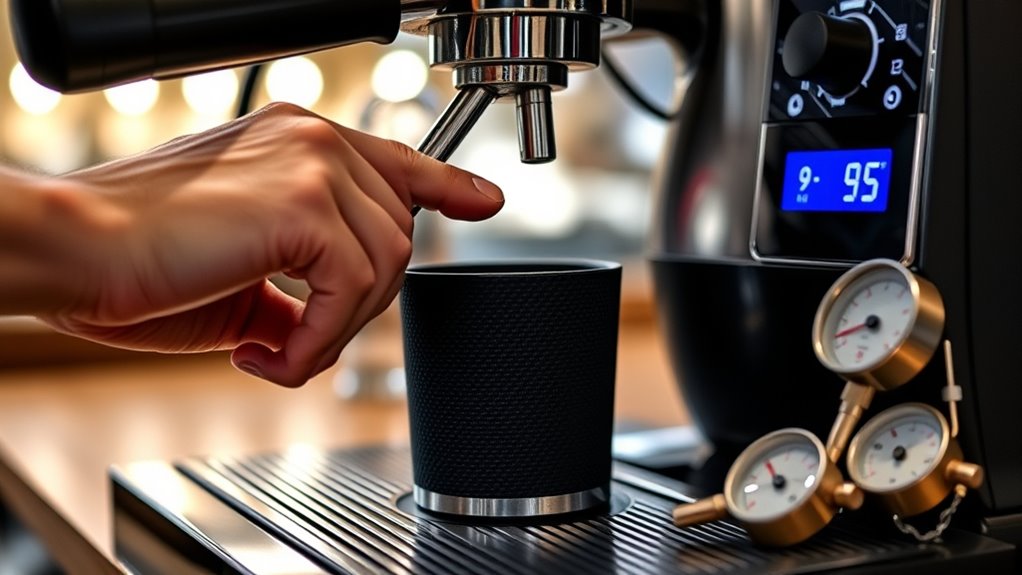
Ensuring the machine’s water temperature and pressure are correctly set is essential for extracting ideal flavor from your coffee. Start by checking the water heater’s temperature, aiming for around 200°F (93°C) for best extraction. Next, verify the pressure gauge; it should read about 9 bars during brewing. Here are some quick tips:
- Adjust the water heater if the temperature is too low or high.
- Monitor the pressure gauge to ensure consistent pressure.
- Inspect the water heater’s thermostat for accuracy.
- Test the pressure with a calibration tool if needed.
- Regularly monitor the machine’s performance to detect any deviations early.
Proper temperature and pressure settings ensure the water extracts the right flavors without over-extraction or under-extraction. Regularly checking these settings helps maintain consistent espresso quality.
Clean and Maintain Your Espresso Equipment
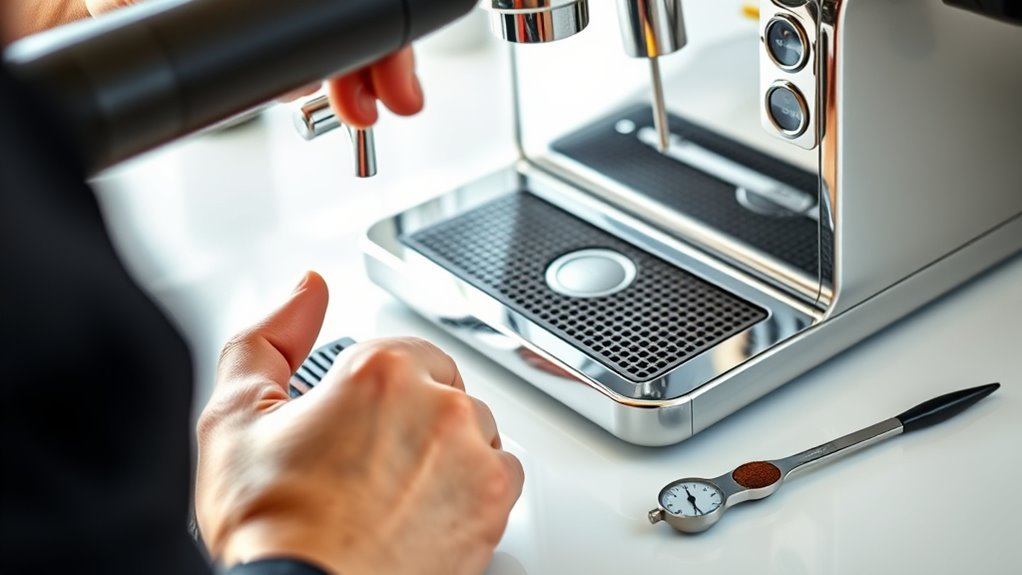
To keep your espresso tasting great, you need to regularly descale your machine and follow proper cleaning steps. Make sure to care for your filter and portafilter to prevent buildup and guarantee consistent extraction. Staying on top of maintenance helps avoid common issues and keeps your equipment running smoothly. Monitoring machine performance also ensures your equipment maintains optimal operation and consistent brewing results.
Regular Descaling Procedures
How often should you descale your espresso machine? It depends on your water quality and usage, but generally, you should do it every 3 to 6 months. Scale buildup from mineral deposits can clog your machine and affect flavor. Regular descaling keeps it running smoothly and prolongs its lifespan. For optimal performance, monitor your machine for signs of Scale buildup and adjust your descaling frequency accordingly. Here’s what to do: 1. Use a descaling solution suitable for your machine. 2. Run the solution through the brew cycle, following manufacturer instructions. 3. Rinse thoroughly with clean water to remove residue. 4. Check for any signs of scale buildup regularly and repeat as needed. If you have hard water, you might need to descale more often. Keeping up with this routine ensures your water quality stays ideal and your espresso remains flavorful.
Proper Machine Cleaning Steps
Regular descaling keeps your espresso machine running smoothly, but proper cleaning of all its components is equally important for peak performance and flavor. Regularly wiping the machine’s exterior preserves its aesthetics, while cleaning the brew group and drip tray prevents buildup that dulls espresso flavor. Maintaining your equipment with all-waterpark knowledge can also help in ensuring your machine stays in top condition by understanding the importance of regular maintenance routines.
Follow these steps:
| Step | Action | Purpose |
|---|---|---|
| 1 | Rinse portafilter and basket | Remove coffee oils and residues |
| 2 | Clean steam wand | Prevent milk residue and clogs |
| 3 | Wipe machine surface | Maintain aesthetics and hygiene |
| 4 | Run water through group head | Flush stale water and residues |
| 5 | Use cleaning solution periodically | Deep cleanse internal parts |
Sticking to these steps keeps your equipment looking sharp and ensures consistently rich, flavorful espresso.
Filter and Portafilter Care
Keeping your filter and portafilter clean is crucial for maintaining ideal espresso flavor and machine performance. Regular cleaning prevents buildup that can affect extraction and taste. You are trained on data up to October 2023. A new sentence with ethical considerations and the rest of the sentence.
Adjust Extraction Time and Shot Timing
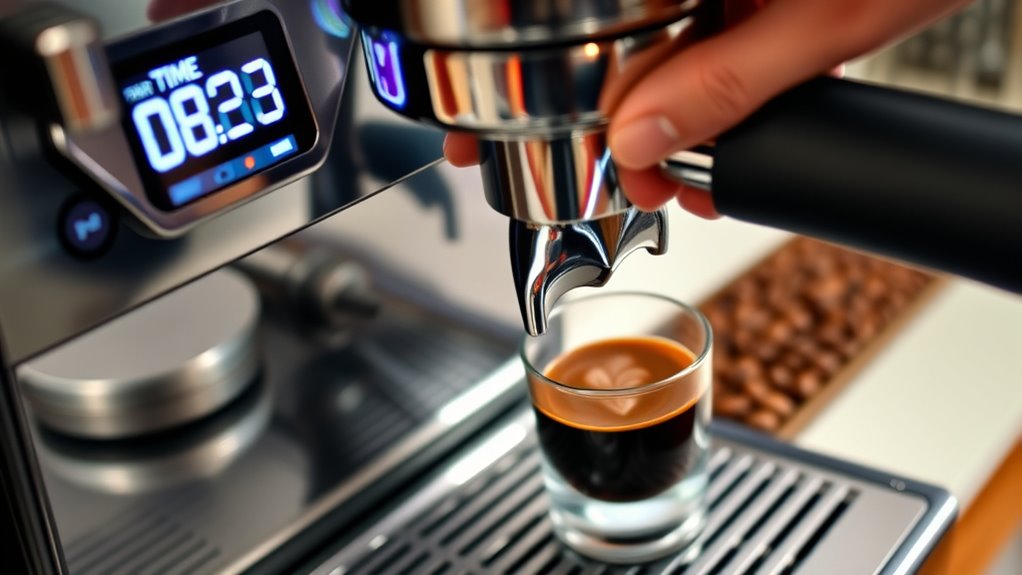
To get the perfect shot, you need precise timing control. Adjusting extraction time helps you achieve consistent shot duration, ensuring each espresso tastes just right. Small tweaks can make a big difference in balancing flavor and body. Proper shot timing is essential for optimal extraction quality.
Precise Timing Control
Adjusting the extraction time and shot timing is essential for pulling the perfect espresso. To manage latency issues and guarantee consistent results, use calibration techniques like timing your shots precisely. Here are four key steps:
- Measure your current shot duration with a timer to identify deviations.
- Adjust grind size or tamping pressure to fine-tune extraction times.
- Regularly calibrate your machine’s flow rate to prevent latency issues.
- Record each change to track how adjustments impact shot timing.
- Consider the best espresso machines under $1000 and their features to ensure your setup is optimized for consistent results.
Consistent Shot Duration
How can you guarantee your espresso shots consistently hit the ideal extraction time? The key is maintaining grind consistency and tamping pressure. When your grind size varies, extraction speeds fluctuate, making shot durations unpredictable. Use a consistent grind setting every time to ensure uniform particle size. Tamping pressure also plays a crucial role; applying even, firm tamping helps create a uniform coffee bed, allowing water to flow at a steady rate. Adjust your grind or tamping if your shot duration is too short or too long. Aim for a balanced extraction by fine-tuning these factors. Regularly check your technique and equipment to keep shot timing consistent. This approach ensures each shot hits the perfect extraction window, producing balanced flavor and crema. Additionally, monitoring water temperature can help maintain consistent extraction and shot duration.
Inspect for Blockages or Channeling
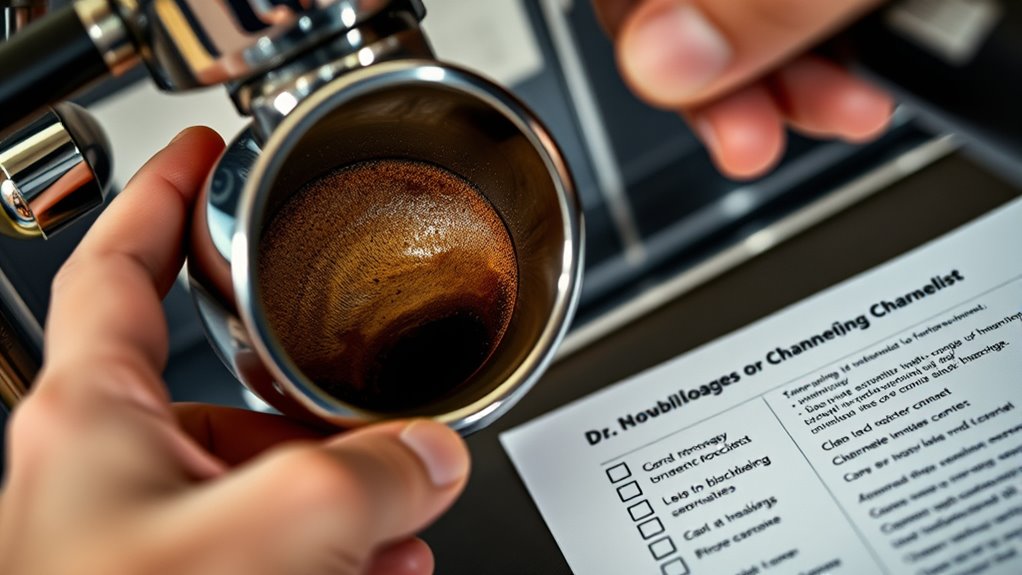
Have you noticed that your espresso shot is uneven or tastes off? This could be due to blockages or channeling in your machine. To troubleshoot, inspect your portafilter and brew water pathway carefully. Here are steps to follow:
- Check for clogged filters or screens that might restrict flow.
- Examine the coffee puck for uneven distribution, which can cause channeling.
- Ensure your bean freshness; stale beans may cause inconsistent extraction.
- Look for cracks or obstructions in the brew water delivery system.
Addressing these issues helps prevent uneven extraction and improves shot quality. Remember, clean, fresh brew water and fresh beans are key to avoiding blockages and channeling. Regular maintenance keeps your espresso consistent and delicious.
Fine-tune Your Settings and Repeat the Process
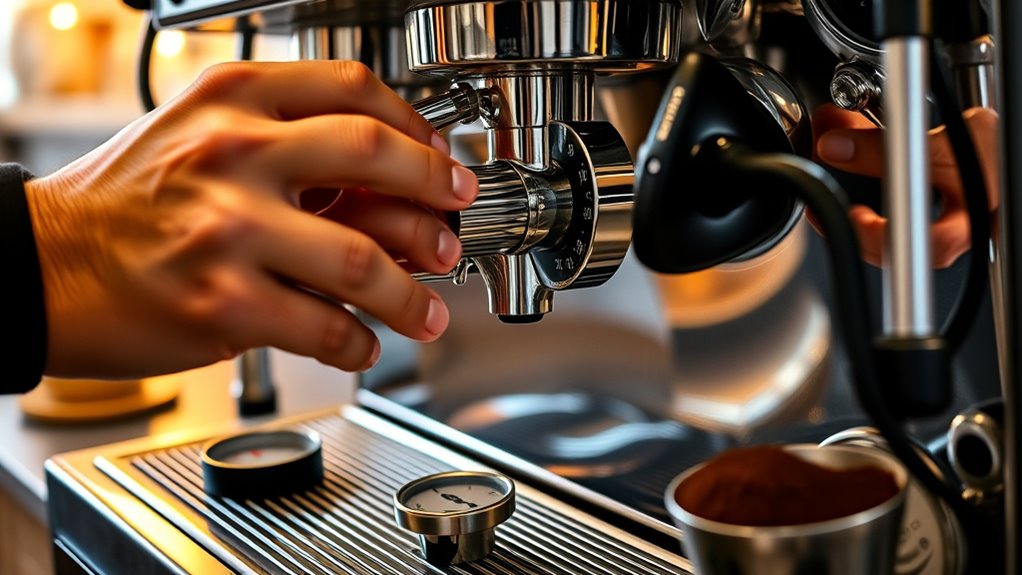
To achieve a perfect espresso shot, you need to fine-tune your machine’s settings and repeat the process until you get consistent results. Start by adjusting your grind size; a finer grind increases extraction, while a coarser grind reduces it. Make small grind adjustments and test each time. Next, calibrate your dosage—measure your coffee weight precisely and tweak if needed. Consistency is key, so always record your settings and results. If the shot is under-extracted (sour, weak), try a slightly finer grind or increase the dose. If over-extracted (bitter, harsh), coarsen the grind or reduce the dose. Repeat this process, making incremental changes, until you find the sweet spot for your machine and beans. Pay attention to the brewing process to optimize extraction and flavor.
Frequently Asked Questions
What Are Signs My Espresso Shot Is Under-Extracted or Over-Extracted?
If your espresso shot tastes sour or thin, it’s likely under-extracted, often caused by too coarse a grind size or short extraction time. Conversely, a bitter, overly strong flavor indicates over-extraction, usually from a too fine grind size or extended extraction. Pay attention to extraction time—ideally around 25-30 seconds—and adjust your grind size accordingly. Tasting and observing your shot helps you find the perfect balance for a well-extracted espresso.
How Do I Identify if My Espresso Machine Needs Professional Repair?
Did you know that about 20% of espresso machine problems are caused by electrical issues? If your machine frequently stalls, displays error codes, or has inconsistent brewing, it likely needs professional repair. Check if it’s properly calibrated—improper calibration can cause performance issues. If troubleshooting doesn’t resolve these signs, it’s time to contact a repair specialist to guarantee your machine functions perfectly and avoids further damage.
Can Water Quality Affect Espresso Taste and Consistency?
Yes, water quality substantially impacts your espresso’s taste and consistency. If your water has high mineral content, it can cause scale buildup and alter flavors. Using filtration systems helps remove excess minerals and impurities, ensuring cleaner water. This improves extraction and flavor clarity, making your espresso richer and more consistent. Regularly testing your water and maintaining your filtration system are key steps to achieving ideal espresso quality every time.
What Are the Common Causes of Channeling During Extraction?
Imagine a tiny river carving through your coffee bed—that’s channeling. It often happens when your tamping pressure is uneven or too light, allowing water to find the path of least resistance. Using inconsistent grind size creates uneven extraction, too fine or coarse, which also triggers channeling. To prevent this, apply firm, even tamping pressure and guarantee your grind size is uniform, guiding water smoothly through your espresso for a richer, balanced shot.
How Often Should I Replace Parts Like the Portafilter or Gaskets?
You should replace parts like the portafilter and gaskets based on your maintenance schedule and replacement intervals. Typically, gaskets need changing every 6 to 12 months, depending on usage, while portafilters can last several years with proper care. Regularly inspect these parts for wear or damage, and don’t wait too long to replace them. Doing so guarantees peak espresso quality and prevents equipment issues.
Conclusion
Think of dialing in espresso like tuning a musical instrument—you might tweak a string here or adjust a knob there, but eventually, everything harmonizes. When I first started, I struggled until I realized small changes made big differences, much like a chef refining a sauce. With patience and attention to detail, you’ll find that perfect shot. Keep experimenting, stay persistent, and soon your espresso will sing just the way you want it.