
To effectively track your coffee journey, choose a durable notebook or digital app that matches your style, encouraging regular updates. Record details like bean origin, roast level, grind size, brew ratios, and equipment settings. Note flavor profiles, aromas, and tasting notes with visuals and color-coding for quick recognition. Recognizing patterns helps refine techniques and preferences over time. Stay consistent by integrating journaling into your routine, so you’re always enhancing your coffee experience—curious what comes next?
Key Takeaways
- Use structured layouts with designated sections for brewing details, tasting notes, and sensory impressions to organize your journal effectively.
- Record specific variables such as bean origin, roast level, grind size, water temperature, and brew time for accurate tracking and pattern recognition.
- Incorporate visual cues like color-coding and icons to quickly identify flavor profiles, brewing methods, and preferences.
- Document tasting notes with detailed flavor, aroma, acidity, and aftertaste descriptions to refine your palate over time.
- Establish a consistent journaling routine by integrating it into your daily coffee ritual, using cues and prompts to maintain long-term habit.
As an affiliate, we earn on qualifying purchases.
Choosing the Right Coffee Journal or Notebook
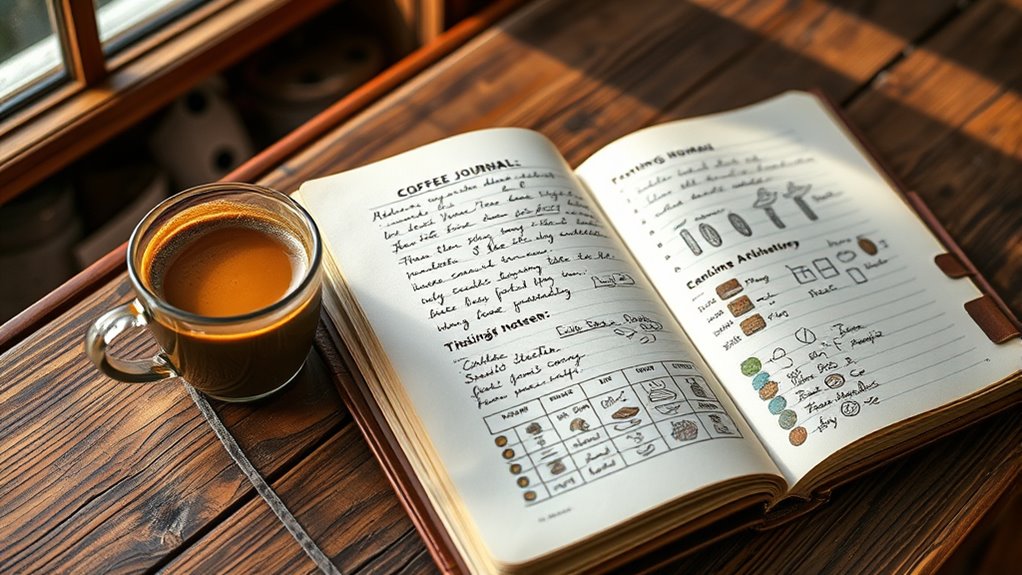
When selecting a coffee journal or notebook, it’s important to find one that suits your style and needs. If you prefer a tactile experience, choose a binding notebook with sturdy pages, so your notes stay secure as you brew. A bound notebook offers a classic, portable option that’s easy to carry around. On the other hand, if you like digital convenience, a digital journal lets you log details quickly and easily, with options for editing and organizing your entries. Digital journals also allow you to incorporate photos and links, making your coffee journey more interactive. Consider how you prefer to jot down notes—by hand or digitally—and pick a format that encourages regular use. The right choice makes your coffee journaling experience enjoyable and sustainable. Additionally, using a structured layout can help you better track and analyze your brewing habits and tasting notes over time. To enhance your experience, consider incorporating a dedicated space for personal reflections to capture your evolving preferences and memorable tasting experiences. Incorporating flavor profiles can also deepen your understanding of different coffee varieties and improve your tasting skills. Furthermore, utilizing digital tools with cloud syncing ensures your notes are always backed up and accessible across devices. Staying aware of data privacy concerns is crucial when choosing digital options to keep your notes secure.
Recording Details of Your Coffee Beans and Roast Profiles
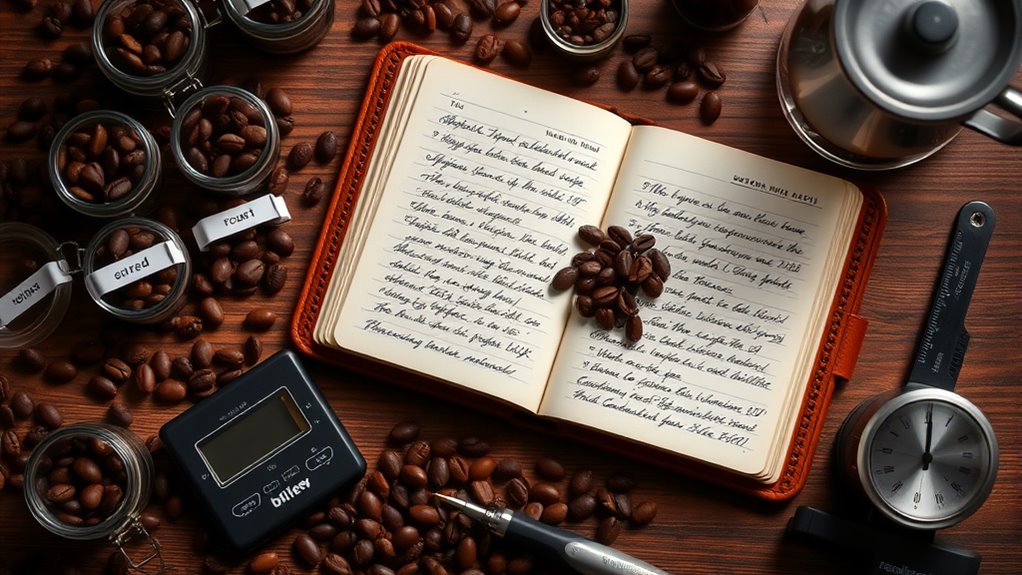
After choosing the right journal or notebook, the next step is to document the specifics of your coffee beans and roast profiles. Start by noting the bean origin, including country, region, and farm if available. This information helps you understand how different origins influence flavor. Record the roast level, whether light, medium, or dark, to track how it affects taste and aroma. Include details like roast date and any roasting notes, such as time or temperature adjustments. These details create a reference point for future comparisons and help you refine your preferences. Being precise with these records guarantees you can identify patterns in flavor profiles related to bean origin and roast level, ultimately guiding you to better coffee choices. Additionally, understanding the effects of various roast profiles can help optimize flavor development and consistency across batches, especially when considering different air quality conditions that may influence roasting outcomes. Recognizing how air purifier features and technologies impact indoor air quality can also influence your home roasting environment, leading to more controlled and consistent results.
Documenting Brewing Methods and Equipment Settings

To improve your coffee skills, start recording your brewing methods and equipment settings. Keep track of grind sizes, brew ratios, and machine adjustments to see what works best. Comparing different techniques helps you fine-tune your process for consistently great results. Additionally, documenting your brewing process can help identify patterns and preferences over time. Paying attention to tuning modifications in your equipment can further refine your coffee experience. Incorporating mindfulness during the recording process can also deepen your spiritual awareness and enhance your overall enjoyment of coffee. Understanding spinal alignment and its impact on comfort can also inform your choice of setup and posture during brewing sessions. Recognizing the importance of hyundai tuning concepts can inspire you to experiment with various adjustments to optimize your brewing environment.
Recording Equipment Settings
Keeping detailed records of your equipment settings is essential for replicating your favorite coffee brews and refining your techniques. Just like in digital audio, where precise microphone placement impacts sound quality, adjusting your brewing equipment influences flavor. Note down water temperature, grind size, brew time, and equipment specifics such as grinder settings or espresso machine pressure. Document any tweaks you make to your setup, so you can identify what yields the best results. Consistent recording allows you to troubleshoot variations and improve your process over time. Think of your brewing setup as your own “digital audio” system—every detail matters, and clear documentation helps you recreate the perfect cup repeatedly. Keep your notes organized for quick reference and continuous improvement. Additionally, understanding your headphones connections and settings can enhance your overall tasting experience, especially if you use headphones to listen to brewing instructions or tasting recordings. Regularly reviewing your notes can also inspire new brewing ideas and refinement techniques, helping you elevate your coffee craft even further. Incorporating knowledge about benefits of wood-burning stoves can also remind you of the value of proper system setup and maintenance for optimal results. Furthermore, maintaining wall organization systems around your brewing area can improve efficiency and aesthetic appeal, making your coffee station more enjoyable and functional. Paying attention to air quality in your environment can also impact the freshness and aroma of your beans, contributing to a better tasting experience.
Comparing Brewing Techniques
When comparing different brewing techniques, documenting your equipment settings and methods is crucial for understanding what produces the best results. For example, with pour over techniques, note the water temperature, pouring speed, and filter type. In French press methods, record steeping time, water-to-coffee ratio, and agitation style. This helps identify patterns and optimize each approach. Incorporating consistent exfoliation with glycolic acid can also enhance skin texture, making it easier to evaluate the true impact of your brewing adjustments.
Noting Grind and Ratios
Recording your grind size and coffee-to-water ratios is essential for replicating and refining your brewing process. Keep track of your grind consistency to ensure each brew remains similar, helping you identify what produces your best flavors. When adjusting ratios, note the exact measurements to observe how changes impact taste and strength. Small ratio adjustments can make a big difference, so documenting these details helps you fine-tune your method over time. Use a consistent grind setting and measure precisely to maintain accuracy. Whether you’re experimenting with pour-over, French press, or espresso, tracking grind and ratios allows you to compare results and discover your ideal balance. This detailed journaling creates a reliable reference point, making future brews more intentional and satisfying. Incorporating organization techniques such as designated zones and clear labeling can further streamline your process and enhance your overall coffee experience.
Noting Tasting Notes and Flavor Descriptions

Noting tasting notes and flavor descriptions allows you to deepen your appreciation of each coffee experience. By paying attention to flavor profiles, you can identify subtle nuances that make each brew unique. Focus on aroma descriptions to capture the scents you perceive before tasting, which often influence flavor perception. To enhance your journaling, consider these aspects:
- Specific flavors like fruity, nutty, or chocolaty notes
- The balance and intensity of sweetness, acidity, and bitterness
- The lingering aftertaste and its complexity
Recording these details helps you recognize patterns over time, refine your palate, and discover favorites. The more precise your notes, the richer your coffee journey becomes, turning each cup into an opportunity for deeper sensory exploration.
Tracking Brew Ratios and Extraction Times

Tracking your brew ratios and extraction times is essential for achieving consistent and ideal coffee results. By monitoring your brew ratio optimization, you can fine-tune the amount of coffee to water, ensuring each cup maintains the desired strength and flavor balance. Precise extraction timing helps prevent under- or over-extraction, which can lead to sour or bitter notes. Record the weight of coffee grounds versus water used, along with the duration of extraction. Doing so allows you to identify patterns and adjust your process accordingly. Over time, this detailed tracking improves your ability to replicate successful brews and refine your technique. Consistent documentation of brew ratios and extraction timing is key to elevating your coffee game and discovering the best flavors from your beans.
Incorporating Sensory Analysis and Personal Preferences

Incorporating sensory analysis and personal preferences into your coffee journey allows you to truly connect with each cup. Focus on aroma profiling to identify subtle scents that evoke specific memories or feelings. Pay attention to flavor balance, noting how acidity, sweetness, and bitterness complement each other. To deepen your understanding, consider these aspects:
- Track specific aromas like fruity, nutty, or floral notes
- Note how the flavor profile evolves with different brewing methods
- Record your preferences for intensity, body, and aftertaste
- Remember that essential oil safety principles can also inform your approach to experimenting with aroma components, ensuring a safe and enjoyable tasting experience.
- Exploring sensory training techniques can enhance your ability to distinguish and appreciate complex flavor profiles.
- Incorporating AI security principles, such as data organization and pattern recognition, can help you systematically analyze and improve your sensory experiences over time.
- Utilizing tasting journals can aid in documenting subtle changes and tracking your evolving palate.
- Developing a consistent approach to sensory evaluation can lead to more insightful and enjoyable coffee tasting sessions.
Using Visuals and Color-Coding to Organize Entries
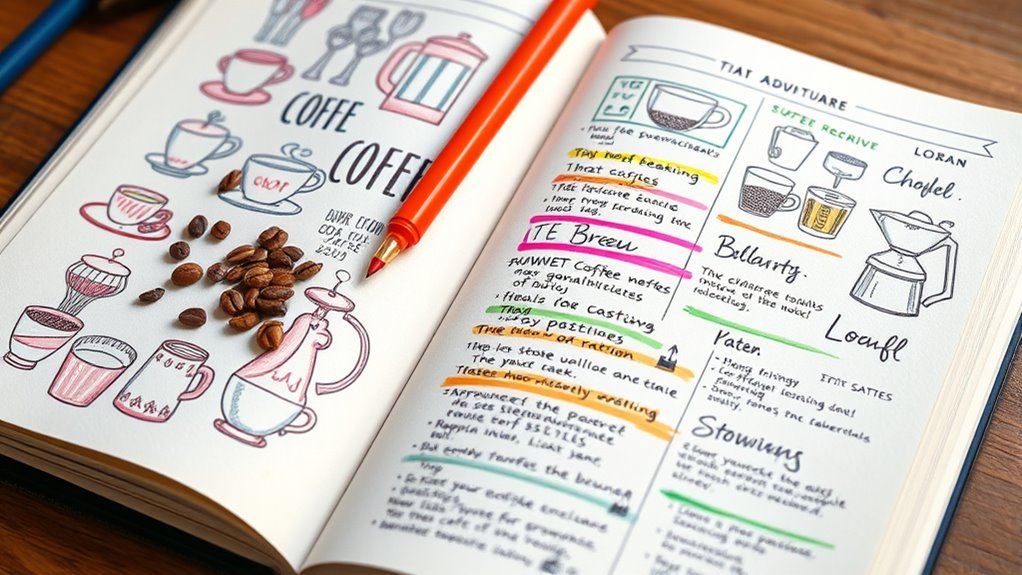
Using visuals and color-coding can make your coffee journal more organized and easy to navigate. You can assign different colors to specific flavors, brew methods, or days of the week, making patterns stand out. Try out various strategies to see what helps you quickly find and reflect on your favorite coffee experiences. Incorporating color-coding techniques can also help you identify trends in your coffee preferences over time.
Color Coding Strategies
Color coding your journal entries can make it easier to quickly identify different aspects of your coffee journey. By implementing a system of visual categorization, you streamline your review process and spot patterns faster. Consider assigning specific colors to categories like brew methods, flavor profiles, or roast levels. For example, you might use green for light roasts or blue for espresso shots. To deepen your system, think about:
- Using consistent color schemes for each category to avoid confusion
- Incorporating symbols or icons alongside colors for added clarity
- Updating your color codes as your preferences evolve or new categories emerge
This approach allows you to scan your journal effortlessly and access relevant information at a glance. Effective color coding enhances your overall experience and helps you refine your coffee journey with precision.
Visual Organization Tips
Visual organization can transform your coffee journal into an easy-to-navigate tool by combining visuals with color-coding. Use strategic color schemes to categorize different aspects, like brew methods, flavor profiles, or tasting notes. Incorporate icons or images alongside text to quickly identify entries, making your journal more engaging and accessible. Pay attention to layout design—spread out information evenly, create sections for different coffee types, and leave space for future notes. Consistent use of colors and visuals helps you recognize patterns at a glance, saving time and enhancing your understanding of your coffee journey. By thoughtfully integrating visuals and a clear layout, you’ll find tracking your brews becomes more intuitive and enjoyable.
Analyzing Patterns to Refine Your Coffee Technique

By paying close attention to the patterns in your coffee experiences, you can identify what works best and discover areas for improvement. Track how factors like grind size, water temperature, and brew time influence flavor development and brewing consistency. Recognizing these patterns helps you fine-tune your technique for better results. For example, if a certain grind yields a richer flavor, stick with it. If brewing times vary, aim for consistency to enhance flavor development. To deepen your analysis, consider these aspects:
- Correlate specific adjustments with changes in flavor notes
- Note recurring issues like over-extraction or under-extraction
- Track the impact of different beans or roast levels on your overall experience
This focused approach sharpens your skills and elevates every cup.
Incorporating Feedback and Adjustments for Future Brews

To improve your coffee skills, actively incorporate the feedback you gather from each brew into your future adjustments. Feedback incorporation helps you understand what worked and what didn’t, guiding your refinement process. Review your tasting notes and identify patterns—are your coffees consistently too bitter or weak? Use this insight to develop adjustment strategies, like tweaking grind size, brew time, or water temperature. Small, targeted changes based on your feedback can profoundly enhance your results. Keep track of each adjustment in your journal to see how it influences flavor. By systematically applying feedback, you’ll refine your technique over time and develop a more intuitive sense of what makes each brew perfect. This iterative process ensures continuous growth in your coffee journey.
Maintaining Consistency and Making Journaling a Habit

To keep up with your coffee journaling, it helps to establish routine habits that make it a natural part of your day. Using reminders or cues, like a specific time or place, can reinforce your habit and prevent skipped entries. Consistency turns journaling from a chore into a seamless part of your coffee experience.
Establish Routine Habits
Establishing a consistent journaling routine can transform it from an occasional task into a meaningful habit. When you integrate journaling into your morning rituals, it becomes a natural part of starting your day. To build this habit, consider using motivational prompts that inspire you to reflect on each brew. Consistency is key, so find a time that works daily, whether it’s right after your first cup or during a midday break. Creating cues, like a dedicated notebook or setting an alarm, helps reinforce your routine. Keep your environment inviting and simple, so journaling feels effortless. By doing so, you’ll develop a habit that enriches your coffee journey and deepens your appreciation for each cup.
Use Reminders and Cues
Using reminders and cues can substantially boost your ability to stick with your journaling routine. Cognitive cues, like setting a specific time or linking journaling to a daily activity, help trigger your memory. Environmental reminders, such as placing your journal near your coffee setup or on your desk, serve as visual prompts to journal after each brew. These cues reinforce the habit by making journaling a natural part of your coffee routine. Consistently pairing your journaling with familiar cues reduces the mental effort needed to remember, making it easier to stay committed. Over time, these prompts become automatic triggers, helping you maintain consistency and turn journaling into a lasting habit.
Frequently Asked Questions
How Can I Personalize My Coffee Journal to Reflect My Taste Preferences?
To personalize your coffee journal, start by noting your favorite flavor profiles and brewing techniques. Record specific tastes you enjoy, like fruity or nutty notes, and experiment with brewing methods such as pour-over or French press. When tasting new coffees, jot down how they match your preferences. Over time, you’ll see patterns, helping you refine your choices and create a journal that truly reflects your unique coffee journey.
What Are the Best Ways to Organize Multiple Coffee Varieties in One Journal?
Research shows that organizing coffee varieties by flavor categorization and brewing method helps you easily compare and find your favorites. You might create sections for different flavor profiles—fruity, nutty, or spicy—and mark brewing methods like French press or pour-over. Use tabs or color coding to keep everything clear. This way, when you review your journal, you’ll quickly understand which brewing techniques and flavor profiles resonate most with you.
How Do I Incorporate Seasonal Changes Into My Coffee Tasting Notes?
To incorporate seasonal changes into your coffee tasting notes, focus on how seasonal flavors and harvest variations influence each brew. Note differences in acidity, body, and aroma that reflect the time of year, and record how weather or harvest conditions impact flavor profiles. By tracking these seasonal nuances, you’ll deepen your appreciation of each coffee’s unique character and better understand how nature shapes your coffee experience.
What Tools or Apps Complement Traditional Coffee Journaling?
You’re really on the ball when you explore tools that complement traditional coffee journaling. Digital integrations like coffee logging apps sync seamlessly, making tracking easier. Photo logging lets you capture every brew visually, adding a rich layer to your notes. These tools work hand in glove with your journal, keeping you in the know and helping you refine your palate—sometimes, a picture is worth a thousand words!
How Can I Ensure My Coffee Journal Remains Engaging Over Time?
To keep your coffee journal engaging, you should use creative prompts and seek visual inspiration. Challenge yourself with themed entries or experiment with new brewing methods. Incorporate sketches, photos, or colorful notes to make each page visually appealing. Regularly setting fresh goals or exploring different coffee origins keeps the process exciting. This variety will sustain your interest and turn journaling into a delightful, ongoing coffee adventure.
Conclusion
As you keep journaling your coffee journey, you’ll notice subtle patterns emerging—like that one perfect roast or brewing method that strikes just right. Coincidences become clues, guiding you to better brews every time. By staying consistent and attentive, you turn everyday coffee moments into a rich, personal exploration. Before long, your journal isn’t just a record—it’s a roadmap to your ultimate coffee experience. Cheers to discovering your perfect cup!