

Understanding Fair Trade, Direct Trade, and Organic labels helps you choose coffee that supports farmers, respects the environment, and guarantees quality. Fair Trade certifies farmers receive fair wages and follow sustainable practices, while Direct Trade emphasizes close relationships between roasters and farmers for better quality and fairness. Organic labels ensure coffee is grown without synthetic chemicals, promoting eco-friendly farming. Knowing these differences helps you make ethical choices and supports a more sustainable coffee industry—learn more to become an informed coffee consumer.
Key Takeaways
- Fair Trade certifies social and environmental standards, ensuring fair wages, sustainable practices, and transparent trading relationships.
- Direct Trade emphasizes close relationships with farmers, focusing on quality, fair pricing, and community support.
- Organic certification guarantees coffee grown without synthetic pesticides or fertilizers, promoting ecological balance and health benefits.
- Ethical labels influence coffee quality by encouraging sustainable farming, better labor conditions, and responsible packaging.
- Consumers can support ethical coffee by choosing certified products, researching brands, and prioritizing transparent supply chains.

Amazon Fresh, Organic Fair Trade Peru Whole Bean Coffee, Medium Roast, 12 Oz
- Fragrant Medium Roast Coffee: Smooth finish and rich aroma
- 12-Ounce Whole Bean Bag: Freshly roasted coffee beans
- 100% Arabica from Peru: Premium quality coffee beans
As an affiliate, we earn on qualifying purchases.
As an affiliate, we earn on qualifying purchases.
What Is Fair Trade Certification and Its Impact
Ever wondered what makes a coffee truly fair? Fair Trade certification aims to promote sustainable farming and farmer empowerment. When you choose Fair Trade coffee, you’re supporting farmers who follow environmentally friendly practices, ensuring their land stays healthy for the future. This certification guarantees that farmers receive fair wages and better working conditions, helping them invest in their communities. It also encourages transparent trading relationships, reducing exploitation and unfair practices. By prioritizing sustainable farming methods, Fair Trade helps preserve ecosystems and protect biodiversity. Your purchase directly impacts farmers’ lives, giving them more control over their work and income. Ultimately, Fair Trade certification creates a more equitable coffee supply chain, making your daily cup a symbol of positive change.
The Principles Behind Direct Trade Practices

When you choose direct trade coffee, you support building close relationships with farmers, which helps guarantee transparency. Focus on quality control allows for better tasting beans and fairer pricing. By emphasizing fair compensation, you contribute to sustainable practices that benefit everyone involved.
Building Direct Relationships
Building direct relationships with coffee producers is fundamental to transparent and ethical trade practices. When you engage directly, you support sustainable farming methods that prioritize environmental health and long-term viability. These connections also empower farmers by giving them fairer prices and a voice in the supply chain. By fostering open communication, you gain a better understanding of their challenges and needs, encouraging practices that improve both quality and community well-being. Building trust ensures that the coffee you purchase aligns with ethical standards, promoting transparency from farm to cup. This approach shifts the focus from profit alone to shared growth, emphasizing the importance of supporting farmers’ livelihoods and sustainable land use for a more equitable coffee industry. Additionally, understanding the role of projector technology in various settings can help consumers appreciate the importance of quality tools that support visual storytelling and education. Recognizing the significance of sustainable farming practices further underscores the commitment to environmental stewardship and long-term community health. Moreover, establishing direct trade relationships can lead to better access to quality control and consistent product standards, benefiting both producers and consumers. Developing traceability systems also enhances transparency, allowing consumers to verify the origins and ethical standards of their coffee. Furthermore, incorporating certification labels can help consumers easily identify coffees that meet specific ethical and environmental criteria, reinforcing trust in the supply chain.
Emphasizing Quality Control
Focusing on quality control is a natural extension of establishing direct relationships with coffee producers. When you work closely with farmers, you gain better insight into their sustainable farming practices, ensuring the coffee meets high standards. Traceability systems are essential here—they allow you to track beans from farm to cup, verifying origin and quality. This transparency helps identify any issues early and encourages farmers to maintain consistent, premium practices. Implementing quality assurance measures is crucial for maintaining high standards throughout the supply chain. This approach fosters trust and accountability, reinforcing the principles behind direct trade and ensuring that quality is maintained at every step. Additionally, adopting sustainable farming practices can further enhance the overall quality and environmental responsibility of the coffee. Incorporating quality control techniques, such as cupping and sensory analysis, further guarantees the consistency and excellence of the final product.
Ensuring Fair Compensation
Ensuring fair compensation is fundamental to the principles behind direct trade practices, as it directly impacts the livelihoods of coffee farmers. By prioritizing price transparency, you can understand exactly what farmers earn, fostering trust and accountability. Direct trade aims to empower workers by paying above market prices, which supports worker empowerment and sustainable farming. When prices are transparent, farmers receive fair pay that reflects the quality and effort involved, rather than arbitrary market fluctuations. This approach encourages better farming practices and long-term relationships. As a consumer, supporting direct trade means you’re advocating for fair compensation that uplifts farmers and promotes ethical standards across the coffee industry. Ultimately, fair pay isn’t just about economics; it’s about respecting the labor and dedication behind every cup. Additionally, the emphasis on price transparency helps ensure that farmers are fairly compensated and that ethical standards are maintained throughout the supply chain. Recognizing the importance of sustainable farming practices further reinforces the commitment to ethical sourcing and long-term industry health. Incorporating community development initiatives can further enhance the well-being of farming communities and promote sustainable growth.
Understanding Organic Certification and Its Benefits
Organic certification standards guarantee your coffee is produced without synthetic chemicals or GMOs, promoting safer consumption. Choosing certified organic beans can also boost health and safety by reducing exposure to harmful substances. Additionally, organic farming practices help lessen environmental impact by conserving resources and supporting biodiversity. Incorporating Sustainable farming methods is often a key component of organic certification, further emphasizing environmentally responsible practices. These practices also often include soil health management, which enhances long-term farm sustainability and productivity. Incorporating wildlife habitat preservation is another crucial aspect, ensuring that farming supports local ecosystems and biodiversity. Moreover, adhering to integrated pest management strategies minimizes chemical use and promotes ecological balance.
Organic Certification Standards
Have you ever wondered what sets organic coffee apart from conventional options? It all comes down to certification standards that guarantee the coffee meets strict guidelines. Organic certification standards focus on maintaining soil health by avoiding synthetic fertilizers and pesticides, which helps preserve the land’s vitality. These standards also require farmers to use sustainable practices that protect biodiversity and prevent soil erosion. To earn certification, producers must go through a rigorous inspection process verifying their adherence to organic practices. This certification guarantees that your coffee is produced without harmful chemicals, promoting better environmental practices. Additionally, the rise of cryptocurrency integration in financial sectors highlights the importance of supporting sustainable and transparent practices in all industries. By choosing coffee that meets these standards, you support farming methods that prioritize ecological balance and sustainability, making your coffee choice both ethical and eco-friendly. Emphasizing regulatory oversight ensures these standards are maintained and enforced effectively, which is crucial for maintaining soil health and environmental integrity.
Furthermore, certification processes help ensure that certified organic products truly adhere to these high standards, fostering consumer trust.
Health and Safety Benefits
Choosing certified organic coffee means you’re actively reducing your exposure to harmful chemicals often found in conventional products. Organic farming practices avoid synthetic pesticides and fertilizers, which can leave residues that may affect your health. This can help you better control your caffeine dosage, especially if you’re sensitive to its effects. Proper brewing techniques, like using a paper filter, can also minimize the intake of any residual chemicals or compounds. Organic beans tend to be fresher and retain more natural antioxidants, supporting your overall health. Additionally, organic coffee production emphasizes safety standards, reducing the risk of contamination. Incorporating Hybrid Tuning techniques in coffee processing can further optimize flavor and safety standards. By selecting organic, you enjoy a cleaner, safer coffee experience that aligns with your health and safety priorities, and understanding organic certification can help you identify truly safe options. The emphasis on sustainable farming practices also ensures environmental safety and long-term quality. Regular monitoring and adherence to food safety standards are essential to maintaining these benefits and protecting consumers.
Environmental Impact Reduction
Understanding organic certification is key to recognizing how your coffee choices can reduce environmental harm. Organic farming methods prioritize soil health and eliminate synthetic chemicals, which helps lower the coffee’s carbon footprint. By avoiding chemical fertilizers and pesticides, organic farms emit fewer greenhouse gases, supporting climate change mitigation. Additionally, organic practices promote water conservation through natural pest management and soil enrichment techniques that improve water retention. These farms often use less water overall, reducing strain on local water resources. Choosing organic coffee means supporting agricultural methods that prioritize sustainability and minimize ecological impact. Your choice can contribute to a healthier environment by encouraging farming practices that protect ecosystems, conserve water, and lower greenhouse gas emissions—making each cup a step toward a more sustainable future. Implementing sustainable farming practices further enhances environmental benefits by promoting biodiversity, soil vitality, and organic certification, which ensures adherence to eco-friendly standards.
Comparing Fair Trade and Direct Trade: Key Differences
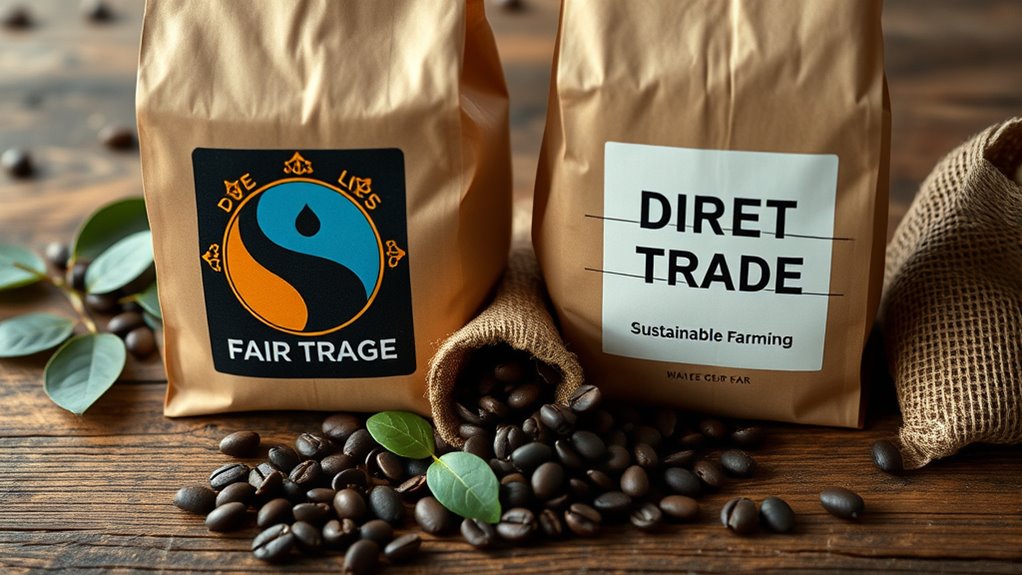
While both Fair Trade and Direct Trade aim to promote ethical sourcing, they differ markedly in their approaches and impact. Fair Trade emphasizes certification standards, ensuring consistent premiums and fair prices, which boost producer empowerment and supply chain transparency. In contrast, Direct Trade involves direct relationships between roasters and farmers, often leading to better quality and more personalized support. Fair Trade’s focus is on systemic certification, while Direct Trade prioritizes transparency through direct communication. Here’s a comparison:
| Aspect | Fair Trade | Direct Trade |
|---|---|---|
| Supply Chain Transparency | Certification-based, standardized info | Personal relationships, direct info |
| Producer Empowerment | Fair prices, community projects | Custom deals, quality bonuses |
| Approach | Certification-driven | Relationship-driven |
Additionally, transparency in fair trade practices ensures consumers can verify product claims and support ethical sourcing more confidently.
The Role of Organic Labels in Coffee Production
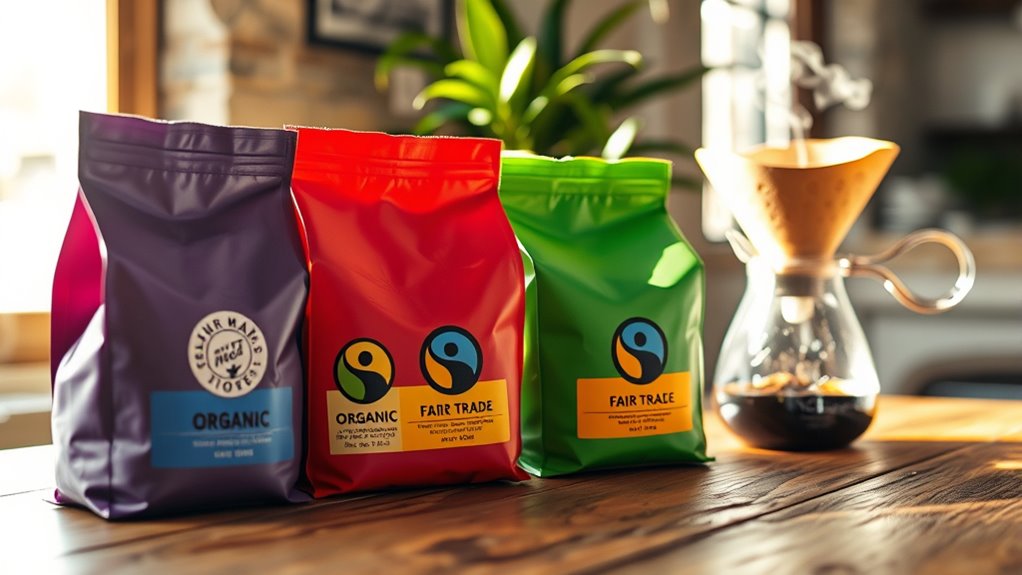
Organic labels play a essential role in coffee production by certifying that the beans are grown without synthetic pesticides, fertilizers, or genetically modified organisms. This certification supports sustainable farming practices that protect the environment and promote soil health. When you see an organic label, you can trust that the coffee was produced with methods that minimize ecological impact. The certification process involves strict standards and regular inspections to ensure compliance, giving you confidence in the coffee’s origin. Organic farming often encourages biodiversity and reduces chemical runoff, benefiting local ecosystems. By choosing organic, you contribute to a more sustainable coffee industry that values ecological balance and responsible cultivation. Ultimately, organic labels help you make informed choices aligned with environmental and health priorities.
How Ethical Labels Influence Coffee Quality and Flavor
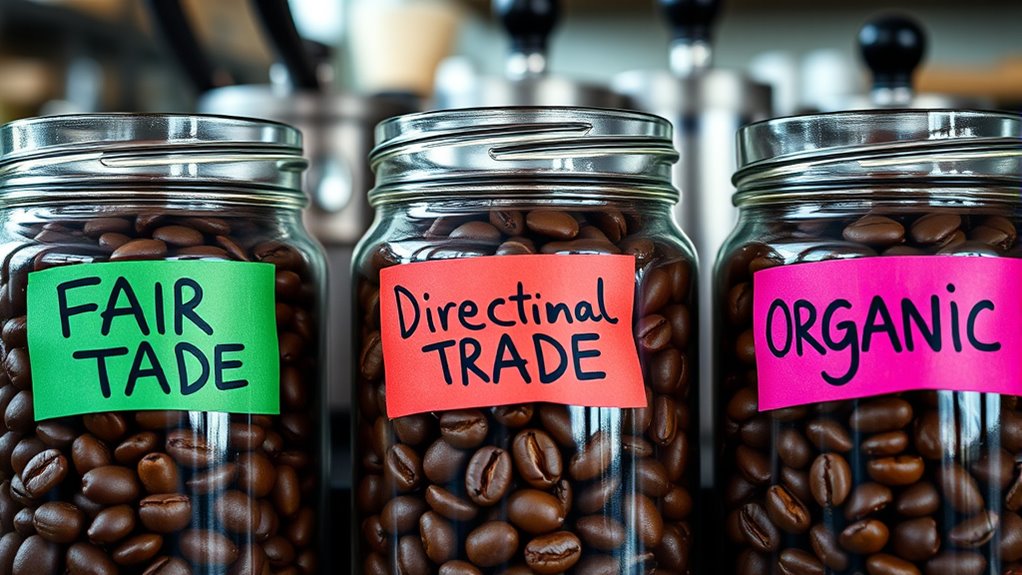
Ethical labels on coffee not only reflect the farm’s commitment to responsible practices but also have a direct impact on the beans’ quality and flavor. When producers adopt sustainable packaging, it helps preserve freshness and prevents contamination, enhancing overall flavor. Certifications like Fair Trade and Organic often promote better farming methods, resulting in healthier, more vibrant beans. Additionally, ethical labels emphasize community development, which fosters motivated workers and stable communities, leading to more attentive harvesting and processing. These factors contribute to consistent quality and unique flavor profiles. By choosing coffee with ethical labels, you support practices that prioritize both superior taste and positive social and environmental impacts, ensuring your coffee experience is both enjoyable and responsible.
Challenges and Criticisms of Coffee Certification Systems
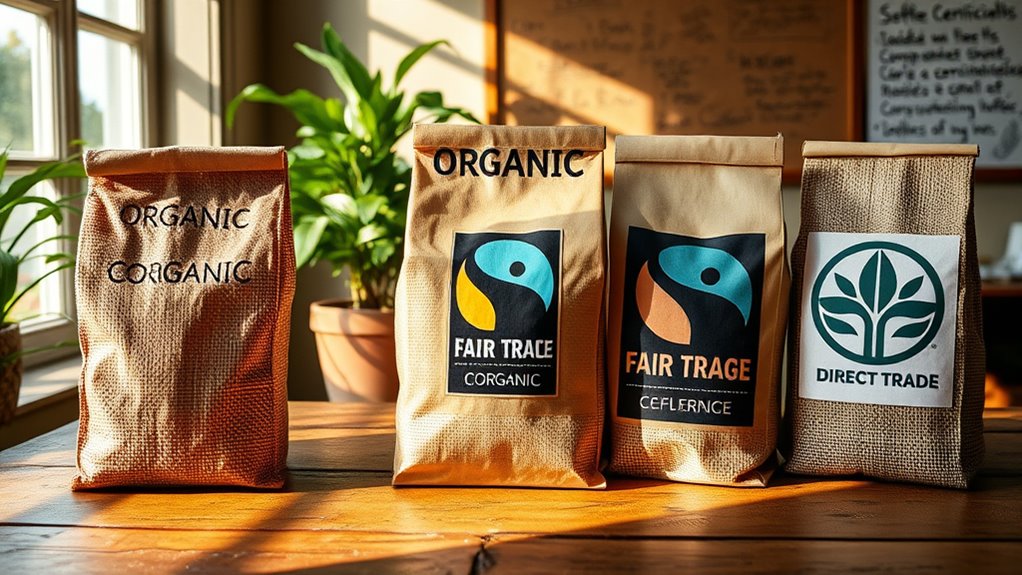
Despite the positive intentions behind coffee certification systems, they face significant challenges that can undermine their effectiveness. One major issue is limited market accessibility for small-scale farmers, who often lack the resources or knowledge to obtain certifications. This creates barriers, preventing many producers from benefiting from premium prices or fair trade practices. Additionally, certification transparency remains inconsistent; some programs lack clear standards or verification processes, leading to skepticism about their credibility. This can cause consumers to doubt whether labels truly ensure ethical practices. Moreover, the complexity and costs associated with certification can lead to misrepresentation or superficial compliance. As a result, these challenges hinder the goal of promoting truly ethical and sustainable coffee production, making it harder for consumers to make informed, responsible choices.
Tips for Choosing Ethically Sourced Coffee

Choosing ethically sourced coffee can seem overwhelming, but with a few simple tips, you can make more responsible choices. First, look for certifications like Fair Trade, Organic, or Rainforest Alliance, which promote sustainable farming practices and ethical sourcing. Research brands that prioritize transparency about their supply chains, ensuring they support fair wages and safe working conditions for farmers. Consider buying directly from farmers or cooperatives, which often guarantees better income and sustainable farming methods. Avoid coffees with vague labels or those lacking certification, as they may not meet ethical standards. Finally, educate yourself about the origins of your coffee and the impact of your purchase. Making informed choices helps support sustainable farming and encourages the ethical sourcing of coffee worldwide.
Frequently Asked Questions
How Do Ethical Labels Impact Coffee Pricing and Affordability?
Ethical labels often lead to price premiums, making coffee more expensive for you. These labels signal that farmers and workers receive fair wages and sustainable practices, which can limit market accessibility for budget-conscious consumers. While you might pay more upfront, you support better conditions and environmentally friendly methods. Ultimately, ethical labels influence pricing by adding costs that reflect fair trade practices, impacting how easily you can access and afford ethically sourced coffee.
Can Coffee Certifications Guarantee Fair Treatment for Workers?
Imagine a time when coffee was grown with little regard for worker safety. Certifications aim to guarantee fair treatment, but they can’t ensure it completely. They help improve standards and add credibility, yet enforcement varies. You should still question the certification’s credibility and research the practices behind it. Ultimately, certifications are a helpful guide, but they don’t fully guarantee fair treatment for every worker.
Are There Differences in Sustainability Between Certifications?
You might wonder if certifications truly differ in sustainability. Certifications can vary in their focus on environmental impact and how credible they are. Some emphasize social fairness, while others prioritize eco-friendly practices. You should look for reputable labels to make sure the certification genuinely promotes sustainability. Keep in mind, a certification’s credibility influences how well it guarantees ongoing commitment to ethical and environmental standards.
How Transparent Are Certification Organizations About Their Standards?
Imagine walking through a clear glass corridor, where every step reveals the truth inside. Certification organizations aim for this transparency, but their clarity varies. Some openly share supply chain details, building certification credibility, while others keep parts murky, leaving doubts. You’re encouraged to seek out brands that prioritize openness, because transparency isn’t just a label — it’s the key to trusting your coffee’s journey from farm to cup.
Do Ethical Labels Influence Consumer Purchasing Behavior Significantly?
You might notice ethical labels influence your purchasing decisions, but their impact varies. When labels are widely recognized and trusted, they boost your consumer trust, encouraging you to choose more socially responsible coffee. However, if labels lack recognition or transparency, they might not substantially sway your choices. Overall, clear and credible labels tend to increase your confidence, making you more likely to buy ethically sourced coffee.
Conclusion
By understanding these ethical labels, you can make more informed coffee choices that support fair wages, sustainable practices, and better quality. But with so many certifications and claims, how do you know you’re truly making an ethical impact? The next time you sip your coffee, remember that your choices can drive positive change—so why not choose brands that prioritize transparency and sustainability? Your cup can be a small step toward a bigger difference.